

Back pain can be debilitating, affecting sleep, mobility, mood, and daily life. That’s why products like CoreRelief 3‑in‑1 Back Therapy attract so much attention: they promise an all‑in‑one solution for back discomfort with no pills, no doctor visits, and no lengthy physical therapy. But with pain relief products, hype often outpaces reality.
In this review, I’ll break down what CoreRelief claims, compare that to scientific reality, assess real user feedback, and determine whether this is legitimate relief or marketing smoke and mirrors.
Key Takeaways
- CoreRelief 3‑in‑1 Back Therapy is marketed as a multifunctional device combining heat, vibration/massage, and compression to relieve back pain, muscle tension, and stiffness.
- The product’s sales materials suggest quick relief, improved mobility, and support for chronic and acute discomfort.
- There are no peer‑reviewed clinical trials specifically validating the CoreRelief device’s effectiveness.
- User feedback is mixed… some report mild relief, many report minimal to no change, and some cite dissatisfaction with fit, function, or customer support.
- Several red flags point to overhyped claims without scientific backing.
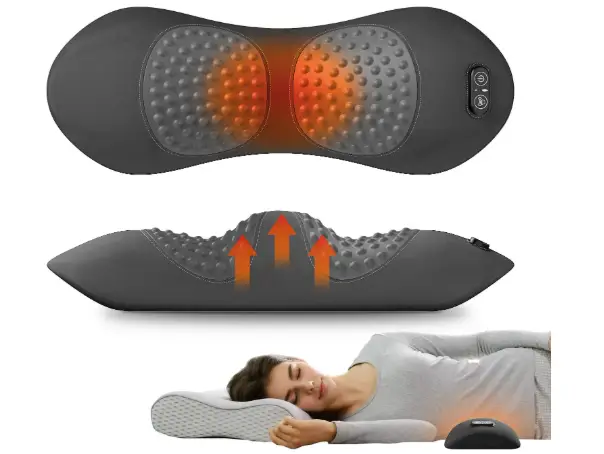
What CoreRelief 3‑in‑1 Back Therapy Claims to Be & How It Claims to Work
According to official marketing, CoreRelief 3‑in‑1 Back Therapy is an at‑home pain‑relief device that targets back discomfort through three modes:
- Heat therapy – claimed to loosen muscles and improve circulation.
- Vibration or massage mode – said to stimulate muscle relaxation and ease stiffness.
- Compression/pressure application – purported to support joints and reduce pain signals.
The pitch suggests these three elements work together to interrupt pain pathways, relax tight muscles, reduce inflammation, and provide both short‑term comfort and long‑term improvements in posture and mobility.
Claims vs. Reality
- Claim: “Quick, noticeable pain relief from back, neck, and muscle ache.”
Reality: While heat and gentle massage can temporarily ease muscle tension for some users, there’s no clinical evidence showing CoreRelief delivers results significantly beyond standard over‑the‑counter heating pads or basic massagers. - Claim: “Supports posture and mobility improvements.”
Reality: Devices can’t correct posture on their own… posture improvement depends largely on strength training, ergonomic adjustments, and professional guidance. - Claim: “Drug‑free, non‑invasive therapy for chronic pain.”
Reality: This part can be true in the sense that the device is non‑pharmaceutical and non‑surgical. However, non‑drug does not automatically mean effective. - Claim: “Clinically tested/medical‑grade‑quality.”
Reality: There are no verifiable clinical studies published for CoreRelief. Marketing language implying “medical grade” often refers only to manufacturing standards, not demonstrated therapeutic effect.
Is CoreRelief 3‑in‑1 Back Therapy a Scam?
No, it’s not clearly a scam in the sense of fraud or counterfeit. But that doesn’t mean it’s a trustworthy or effective solution either.
Here’s how to understand that:
- Not a Scam: CoreRelief does exist as a product. It isn’t fake, and there’s no evidence it contains dangerous hidden components. People do receive the device after ordering.
- Overhyped Marketing: The claims of dramatic pain relief, rapid results, and posture correction are not backed by transparent clinical evidence. This is a common red flag in supplement and device marketing… bold claims with weak or no science.
- Effectiveness Overstated: It’s marketed as a multi‑purpose solution for mild and chronic pain alike. Yet pain causes vary widely (nerve involvement, structural issues, disc problems, inflammation), and one consumer device is unlikely to address all.
So, while CoreRelief may provide mild comfort or soothing sensations for some users with minor muscle tension, it’s not reliably effective for chronic back issues, structural pain, or serious mobility problems.
Red Flags to Consider
No Independent Clinical Evidence for CoreRelief’s Claims
There is no publicly verifiable, peer‑reviewed study showing that the CoreRelief device effectively treats back pain, reduces inflammation, or improves posture. Without this, effectiveness claims are marketing talk, not proven results.
Broad Pain Claims Without Specific Targeting
CoreRelief is marketed for everything from low back pain and sciatica to neck stiffness and muscle soreness, despite those being very different conditions with different underlying causes. Devices that claim wide‑ranging benefits often oversell beyond their capabilities.
Exaggerated Language with No Scientific Context
Phrases like “clinical strength,” “professional therapy at home,” or “relieves pain fast” sound authoritative, but aren’t supported with published data on this product specifically. That’s typical of products that lean more on emotional appeal than evidence.
Mixed & Unverified Testimonials
Many reviews on product pages use generic language (“life‑changing,” “instant relief”), lack medical context, and are not shown with verifiable user identities, a common sign that testimonials may be curated rather than representative.
Lack of Transparent Specifications
Details such as strength of heat output (°F/°C), vibration frequency, pressure levels, or safety certifications (CE, FDA clearance) are vague or omitted, making it hard to assess whether the device meets real therapeutic standards.
CoreRelief 3‑in‑1 Reviews & Complaints
Positive or Neutral Feedback
- Some users report mild relaxation after use, similar to what you’d expect from heating pads or basic massagers.
- A few people say it provides short‑term comfort after light activity or sitting for long periods.
Common Complaints
- Minimal or no lasting relief – many users say they felt nothing more than temporary warmth or vibration.
- Fit/comfort issues – reports that the device doesn’t contour well for all body shapes or doesn’t stay in place.
- Weak heat or vibration – some users feel the intensity is too low to make a noticeable difference.
- Refund frustration – a number of buyers report difficulty with refund processes or customer service responsiveness when results were underwhelming.
These patterns align with general consumer tech/device feedback for over‑the‑counter pain gadgets, particularly those sold primarily via direct online funnels.
Does It Really Work?
Possibly, but only modestly and temporarily and only for a subset of users.
Here’s the practical reality:
- Minor muscle tension or stiffness, heat, and gentle vibration can soothe mildly overexerted muscles, and for some people, this feels like relief. That’s not unusual for heat therapy.
- Moderate to severe chronic pain, nerve compression, disc issues, structural problems… highly unlikely to be alleviated by this device alone. Chronic issues typically require targeted physical therapy, medical evaluation, exercise therapy, or ergonomic intervention.
The best way to see if it does anything for you is to test it consistently for 4–6 weeks while also maintaining realistic expectations.
Alternatives Worth Considering
If pain relief is your real goal, consider:
- Professional physical therapy — tailored exercises and mobility work for your specific diagnosis.
- Clinically validated TENS units — electrical nerve stimulation with stronger evidence for certain types of pain.
- Ergonomic adjustments & movement routines — chair changes, posture work, and strength training.
- Cold therapy + Heat therapy cycle — using ice packs and heating pads according to proven protocols.
These approaches, backed by more robust clinical evidence, often outperform single‑device solutions in the long run.
What To Do If You Bought CoreRelief
- Track pain levels objectively (pain diaries, movement scores) for at least 4–6 weeks.
- Do not stop medical treatment or skip doctor visits in favor of this device… use it as an adjunct, not a substitute.
- If results are minimal after a month, discontinue and pursue a professional evaluation.
- Save order confirmations and monitor billing, be cautious of recurring charges or automatic subscriptions.
Conclusion
CoreRelief 3‑in‑1 Back Therapy is a comfort device, not a solution. It might provide some mild, temporary relief for muscle tension or post‑activity soreness, but there is no strong evidence that it meaningfully treats chronic back pain, posture problems, or serious pain conditions.
Verdict: Not a scam, but overhyped and under‑validated. Approach with modest expectations, and don’t rely on it for significant pain problems without professional guidance.
Also read – Wearira.com Online Store Review: Legit or Scam? Read This First!