

Can this tiny plug-in device actually reduce your fuel consumption, or is it one of those “too good to be true” car gadgets?
With fuel prices constantly rising, anything promising “10–30% fuel savings” sounds almost irresistible. The NeoSocket Fuel Saver is marketed as a simple plug-and-play solution… no installation, no tuning, just insert it into your car’s cigarette lighter and supposedly start saving money immediately.
In this review, we’ll break down what NeoSocket actually is, how it claims to work, and whether there’s any real evidence behind those claims.
Key Takeaways
- NeoSocket is marketed as a plug-in fuel-saving device for cars.
- Claims include better mileage, more horsepower, and cleaner emissions.
- It supposedly works by “stabilizing voltage” in the car system.
- There are no credible scientific studies proving it works.
- Similar devices are widely regarded as ineffective or misleading.
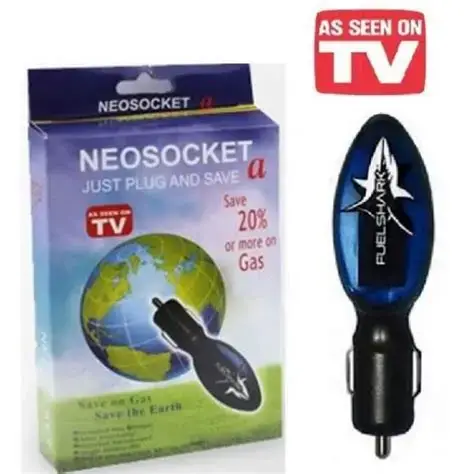
What is the NeoSocket Fuel Saver?
NeoSocket Fuel Saver is a small electronic device that plugs into your car’s 12V cigarette lighter socket, marketed as a way to improve fuel efficiency and overall vehicle performance.
It’s typically sold online for around $5-$6, often through marketplaces and promotional listings.
How It Claims to Work
According to product listings, NeoSocket works by:
- stabilizing the car’s electrical current
- improving engine efficiency
- optimizing fuel combustion
- increasing mileage and reducing fuel consumption
Some claims go further, suggesting:
- increased horsepower
- better acceleration
- longer battery life
Reality Check
This is where things fall apart quickly.
- A car’s fuel consumption is controlled by the engine control unit (ECU), not a plug-in device
- Voltage stabilization in a cigarette lighter socket has no meaningful effect on fuel injection or combustion
- There is no scientific mechanism explaining how this device could deliver the claimed results
Even broader research on similar products shows that:
- many contain very basic components (like capacitors and LEDs)
- they don’t interact with the engine system at all
Red Flags to Consider
Unrealistic fuel savings claims
Promises of 10–30% fuel reduction are extremely high and not supported by automotive science.
No credible testing or certification
There are no independent studies or automotive certifications verifying performance.
Plug-and-play simplicity
If a simple plug-in could save that much fuel, car manufacturers would already include it.
Vague technical explanation
“Voltage stabilization” is used as a buzzword, but without measurable proof.
Generic rebranding
This exact product exists under multiple names (e.g., “Fuel Shark”), indicating mass-produced rebranding.
Mixed to low-quality reviews
Ratings are limited and inconsistent across platforms, with little verified feedback.
Does It Really Work?
Realistically:
- It may light up when plugged in
- It may slightly draw power from the battery
But it will not:
- reduce fuel consumption in any meaningful way
- improve horsepower or acceleration
- change engine efficiency
From user and mechanic discussions:
“Literally does nothing but power an LED.”
“Absolute scam… they do nothing.”
Pricing
- Typically around $5-$6
- Often sold with discounts or urgency messaging
- Available under multiple names and listings
The low price is part of the appeal, but also a red flag for a product claiming major mechanical impact.
Alternatives
If your goal is to save fuel, actual proven methods include:
- regular vehicle maintenance (spark plugs, filters, tire pressure)
- smoother driving habits
- reducing excess weight
- proper engine tuning
These have real, measurable impact… unlike plug-in gadgets.
Conclusion
NeoSocket Fuel Saver is a classic example of a plug-in car gadget making big promises without real backing. The claims sound impressive, but they don’t align with how vehicles actually work.
There’s no credible evidence that it improves fuel efficiency, and most signs point to it being ineffective at best and misleading at worst.
If something claims to cut your fuel costs by 20% with zero effort, it’s worth questioning, and in this case, the scepticism is justified.
Also read – LeeFar Cutting Drink Mix Review: I Almost Bought It (Here’s Why I Didn’t)