

Are NeuroLabs “research peptides” actually safe or effective supplements or are they being misunderstood (and misused) entirely?
If you’ve been seeing NeuroLabs Research Peptides online, chances are they’re being marketed in a way that sounds like high-performance supplements… fat loss, recovery, anti-ageing, cognitive boost. But here’s the issue: these are not actually supplements in the normal sense.
In this review, we’ll break down what NeuroLabs is really selling, how these peptides are supposed to work, and the critical reality most people miss.
Key Takeaways
- NeuroLabs sells “research-use-only” peptides… not supplements.
- Products are explicitly labeled NOT for human consumption.
- There are no clinical trials validating NeuroLabs products for real-world use.
- These compounds are meant for laboratory research, not personal use.
- Marketing often blurs the line between research chemicals and health products.
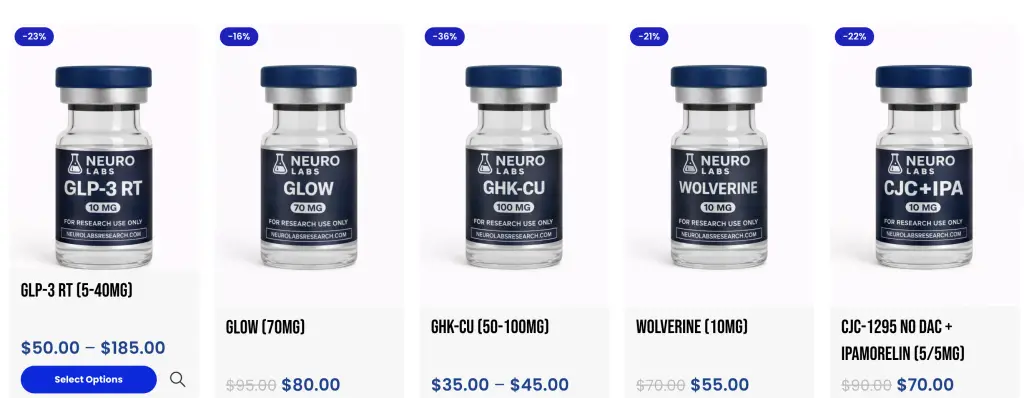
What is the NeuroLabs Research Peptides?
NeuroLabs Research Peptides is a supplier of synthetic peptides intended for laboratory and experimental research, not consumer health use.
Their catalog includes compounds like:
- BPC-157
- CJC-1295 + Ipamorelin
- GHK-CU
- Semax / Selank
- NAD+
These are short chains of amino acids used in scientific research to study biological processes like signalling, metabolism, and recovery.
And here’s the key disclaimer (this matters a lot):
Products are “not intended for human consumption”.
How It Claims to Work
The implied (not always officially stated) benefits around these peptides usually include:
- muscle growth and recovery
- fat loss
- anti-aging effects
- improved cognition
- hormonal optimization
These claims come from early-stage or experimental research, not approved medical use.
Reality Check
This is where you need to be very clear:
- These peptides are experimental compounds
- Many are not FDA-approved for treatment or supplementation
- Most research is preclinical, limited, or ongoing
Even the company itself states:
- they are not a pharmacy
- they do not sell for treatment or consumption
So if you’re seeing them marketed like supplements, that’s already a disconnect.
Red Flags to Consider
“Not for human consumption” disclaimer
This is the biggest one. The products are legally sold as research chemicals… not supplements.
No clinical validation for consumer use
There are no studies proving safety or effectiveness for everyday users.
Grey market usage
Despite the disclaimer, these products are often used outside research settings… without regulation.
Quality variability concerns
From research community discussions:
“Many labs… verify batches independently rather than relying only on suppliers.”
This suggests trust alone isn’t enough… even in professional settings.
Misleading marketing context
Websites often talk about “performance,” “recovery,” and “wellness,” which can blur the intended use.
Regulatory gap
These products sit in a space that is not tightly regulated like pharmaceuticals or supplements.
Does It Really Work?
This depends entirely on context:
In research settings:
- Yes, peptides are valuable scientific tools
- They help study biological signaling and cellular processes
For personal use:
- There is no reliable evidence of safe, consistent results
- Effects are unpredictable and not medically validated
In short:
- They are not designed to “work” like supplements
- They are designed to be studied, not used casually
Pricing
From available listings:
- ~$30 – $90+ per vial depending on compound
- more complex peptides can go $100–$180+
Pricing reflects research-grade materials… not consumer products.
Alternatives
If your goal is:
Performance/recovery:
- proper training + nutrition
- sleep optimization
- evidence-based supplements
Medical concerns:
- consult a licensed healthcare provider
- use approved and tested treatments
These are safer, regulated, and proven pathways.
What To Do If You Encounter These
- do not treat them like regular supplements
- verify the purpose (research vs personal use)
- avoid purchasing based on performance claims
- be cautious of sites blurring the intended use
Conclusion
NeuroLabs Research Peptides are not inherently a scam, but they are widely misunderstood.
They are legitimate in the context of laboratory research, but when marketed or perceived as health or performance supplements, that’s where the problem starts.
The biggest takeaway: This is not a “does it work?” product. It’s a “this isn’t meant for you to use like that” situation. And that distinction is critical.
Also read – I Used the RENPHO Smart Scale — Here’s My Brutally Honest Review of it