

Amla supplements have become increasingly popular online lately, especially in beauty and wellness spaces promoting natural solutions for hair growth, glowing skin, digestion, immunity, and anti-aging support.
Alevia Amla positions itself as a wellness supplement centred around amla (Indian gooseberry), a fruit long used in traditional Ayurvedic practices and often marketed as a powerful antioxidant source.
In this review, we dug through the ingredient science, marketing claims, and customer experiences to see whether Alevia Amla offers meaningful wellness support or mainly relies on the growing “natural superfood” trend.
Key Takeaways
- Marketed for hair, skin, and wellness support
- Amla does contain antioxidants and vitamin C
- Claims often extend far beyond the actual evidence
- No published clinical studies on the finished product itself
- Results appear likely to be subtle and inconsistent
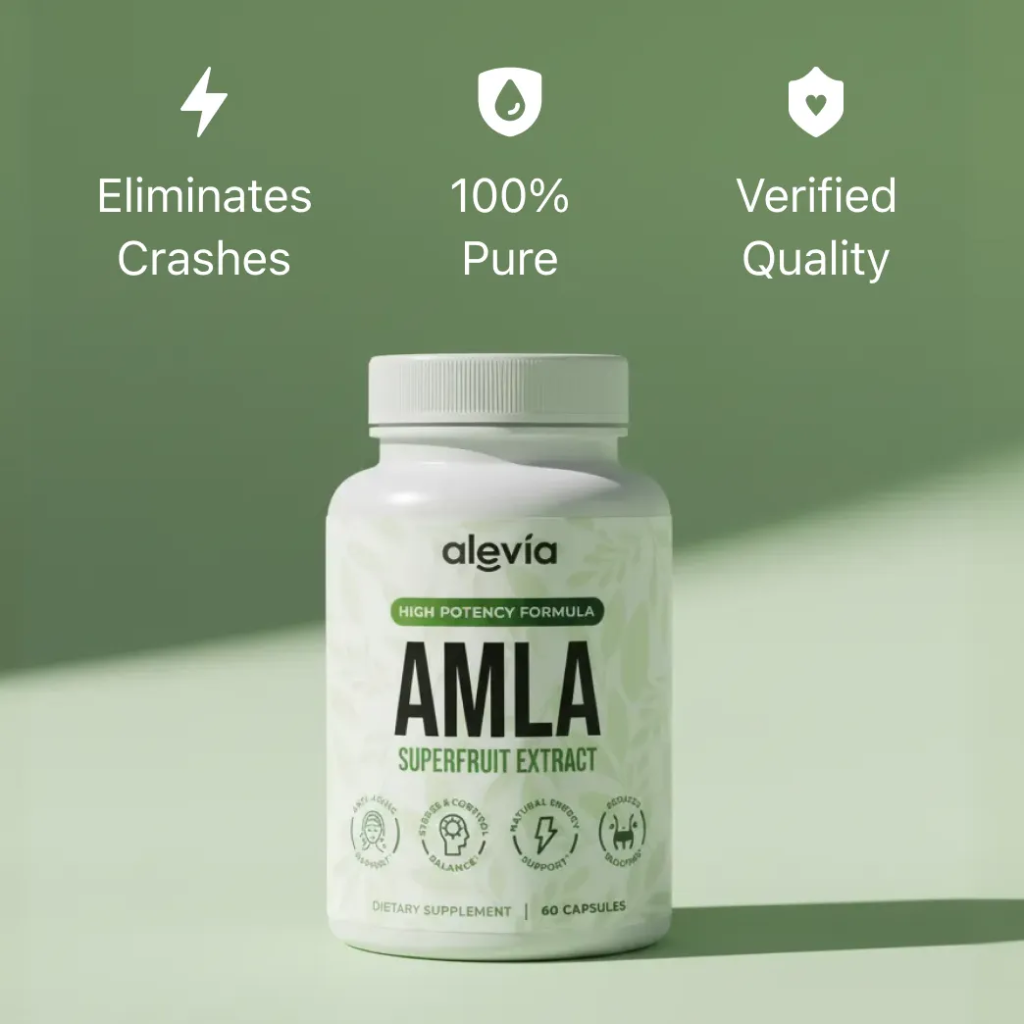
What is the Alevia Amla Supplement?
Alevia Amla is a wellness supplement built around amla, also known as Indian gooseberry, a fruit traditionally used in Ayurvedic wellness practices.
The product appears to market itself around:
- hair wellness
- skin glow support
- antioxidant protection
- digestion
- immune support
- anti-aging benefits
And honestly, once we looked deeper, the product started feeling much more like a modern “superfood wellness” supplement than a scientifically groundbreaking health formula.
At its core, it’s an amla-based wellness supplement… not a medically proven beauty or anti-ageing treatment.
How It Claims to Work
Alevia Amla claims to support overall wellness through the antioxidant and nutrient content naturally found in amla.
The marketing suggests it may help with:
- healthier-looking hair
- skin radiance
- digestion support
- immune health
- oxidative stress support
Some promotional pages also strongly imply broader anti-ageing and vitality benefits. The overall message is basically “support beauty and wellness naturally from within”.
Red Flags to Consider
The marketing feels extremely broad
One thing that immediately stood out was how many different benefits the product seemed to promise.
Depending on the page, it may hint at support for hair, skin, immunity, digestion, aging, energy, and detoxification.
Whenever one supplement starts sounding like a solution for nearly everything, it’s worth approaching the claims carefully.
Traditional use is being treated like clinical proof
Amla absolutely has historical wellness use. But a lot of modern supplement marketing blurs the line between “traditionally used for wellness” and “scientifically proven to produce major modern health outcomes”
Those are not automatically the same thing.
“Natural” marketing can create unrealistic expectations
The product leans heavily on natural-health language and antioxidant positioning. But natural ingredients can still produce:
- mild effects
- inconsistent results
- or no visible changes for some users
That’s something the advertising rarely emphasises.
Beauty claims appear stronger than the evidence
Some promotional materials strongly imply noticeable beauty transformations involving hair thickness, glowing skin, or anti-aging support.
But during our research, the evidence supporting dramatic visible changes appeared much weaker than the marketing suggests.
Customer experiences appear inconsistent
Some users online describe feeling healthier overall or noticing mild improvements in hair or skin appearance.
Others report little noticeable difference after consistent use.
Honestly, that inconsistency is extremely common with wellness supplements in this category.
No product-specific clinical validation
During our research, we couldn’t find peer-reviewed human studies proving that Alevia Amla itself produces significant beauty, anti-ageing, or wellness outcomes.
Does It Really Work?
It may provide mild nutritional or antioxidant support depending on the formula and consistency of use.
But after comparing the marketing to the actual evidence, the product does not appear capable of producing the dramatic beauty and wellness transformations implied in some advertisements.
Any noticeable effects are likely to be gradual, subtle, and highly individual.
Pricing
Alevia Amla products are commonly sold between $20–$50, often with bundle promotions and wellness subscription offers.
What To Do If Scammed
If a wellness supplement starts sounding like a cure-all for beauty, aging, digestion, and energy all at once, it’s usually worth slowing down and separating realistic nutritional support from exaggerated marketing promises.
Conclusion
After digging through the ingredient science, claims, and customer feedback, Alevia Amla felt much more like a standard antioxidant wellness supplement than a major beauty or health breakthrough.
It’s not necessarily nonsense, but the advertising clearly stretches the science much further than the current evidence supports.
In reality, it functions more as an antioxidant-rich wellness supplement… marketed like a complete beauty and vitality transformation system.
Also read – Vivosur.com Review: 5 Solid Reasons To Approach This Online Store Cautiously