

If you receive a text claiming that you have an unpaid RingGo parking fee and asking you to click a link to settle it, stop before you click. The message may look like a routine parking notification, particularly if you have recently used a parking app, but RingGo is currently warning users about an increase in fraudulent SMS messages making exactly this claim.
This is not a case of RingGo itself being a scam. RingGo is a legitimate UK cashless parking service used across thousands of locations. The scam involves criminals impersonating the company and directing victims to fake websites designed to collect personal and payment information.
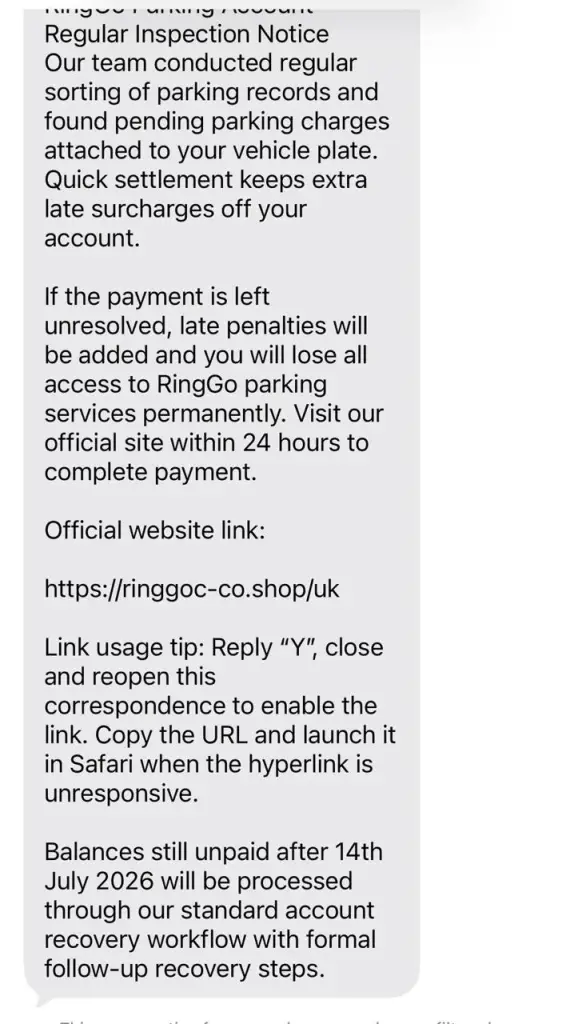
What Is the RingGo Parking Text Scam?
The scam typically begins with an unsolicited SMS claiming that you have an unpaid parking charge, incomplete payment or outstanding parking fee. The message then provides a link and encourages you to settle the supposed balance.
The amount requested may be relatively small, which is part of what makes the scheme effective. A person who believes they may have forgotten to pay £3 or £5 is much more likely to click than someone being asked for hundreds of pounds.
The problem starts when the link takes you away from the legitimate RingGo service.
Scammers create convincing copies of legitimate websites and use them to collect information such as vehicle registration details, personal information and payment card details. Recent reporting on the scam has found sophisticated counterfeit RingGo pages being used for this purpose.
How the Scam Works
The scam relies heavily on context and timing. Imagine receiving a text saying you have an unpaid parking fee shortly after you have actually parked somewhere.
Your immediate thought probably isn’t:
“Excellent. A phishing attempt.”
It’s:
“Oh damn, did my payment fail?”
That is precisely the reaction the scammers want. The message doesn’t need to contain particularly sophisticated technology. It simply needs to arrive at the right moment and give you a believable reason to click.
Once you follow the link, the fake website does the rest. You may be asked to confirm your vehicle registration, enter personal details or provide your card information to supposedly settle the outstanding fee. The small parking payment is therefore only part of the deception; the information being collected can be considerably more valuable.
Why Does the Text Look So Convincing?
There are several tricks at work.
It uses a familiar brand
RingGo is a legitimate and recognisable parking service, so seeing its name in a text doesn’t immediately raise suspicion.
It creates a believable problem
An unpaid parking session is plausible. People forget to pay, payment cards expire and automated payments can fail.
In fact, genuine unpaid sessions can occur on RingGo. RingGo says these can happen, for example, when an AutoPay transaction fails. The important difference is that a genuine unpaid session can be checked through your RingGo account rather than through a random SMS link.
It creates urgency
Parking-related penalties are particularly effective scam bait because people don’t want a relatively minor parking issue to turn into a larger fine.
That sense of “I should deal with this immediately” is exactly what makes people bypass their usual caution.
The website may look legitimate
Modern phishing pages can reproduce the appearance of legitimate companies remarkably well. The presence of RingGo’s logo, colours and familiar wording does not prove that you are actually on RingGo’s website.
The URL matters more than the appearance of the page.
The “Reply Y” Trick
One particularly suspicious version of the scam tells recipients to reply “Y” to activate the link, sometimes followed by instructions to copy and paste the link into a browser if it doesn’t work.
This tactic has been reported in current RingGo scam messages. It’s also a useful reminder that scammers are constantly adapting their messages to the way phones handle suspicious links.
If an unexpected parking message is telling you how to make its suspicious link work, that’s not customer service. That’s a giant flashing NOPE sign.
How to Tell If a RingGo Text Is Fake
The safest approach is actually very simple:
Don’t use the link in the text.
Instead, open the official RingGo app yourself or manually access the legitimate RingGo website and check your parking sessions.
RingGo specifically warns customers not to click links in these SMS messages and says parking-session information can be checked through the app or its website.
Other warning signs include:
- An unexpected message claiming you owe money.
- A link leading to a strange or unfamiliar domain.
- Spelling or grammatical errors.
- Pressure to pay immediately.
- Requests for card or banking information through an SMS link.
- Instructions to reply to the message to activate a link.
- A website that looks like RingGo but has an unfamiliar web address.
RingGo says its official websites are ringgo.co.uk and myringgo.co.uk, and advises customers to use those official channels rather than links from suspicious messages.
But What If You Actually Have an Unpaid RingGo Session?
This is where the scam gets clever. Don’t assume that every unpaid-parking message is fake simply because genuine unpaid sessions exist.
If you’re concerned, check your account independently. RingGo explains that an unpaid session can genuinely appear when an AutoPay transaction fails, such as when a payment card has expired or there are insufficient funds. You can log in to your RingGo account and settle a genuine outstanding session there.
You therefore don’t need the text message to resolve the issue.
That’s the key distinction: Real problem? Check it through the official service. Random text demanding payment? Don’t follow its instructions.
What If You Already Clicked?
Don’t panic, but don’t ignore it either. If you only clicked the link and didn’t enter any information, close the page and avoid interacting with it further.
If you entered card or banking information, contact your bank or card provider immediately. RingGo itself advises customers who have entered payment details into a suspicious site to contact their bank or card provider.
If you entered your RingGo login credentials, change your password immediately, particularly if you reuse that password elsewhere.
And keep an eye on your bank account for unfamiliar transactions.
Conclusion
The RingGo parking text scam is a classic phishing operation dressed up as something incredibly mundane: a parking bill.
That’s what makes it effective. The scammers don’t need to convince you that you’ve won £5 million or that a Nigerian prince desperately needs your assistance. They only need you to believe that you might have forgotten to pay for parking.
Once you’ve accepted that premise, everything else feels reasonable: the warning, the payment request, the link and the demand to resolve the issue quickly.
But RingGo has explicitly warned about an increase in fraudulent SMS messages claiming that users have unpaid parking fees. The company’s advice is straightforward: don’t click links in these messages. Check your parking information directly through the official RingGo app or website instead.
The parking fee might be £3, but the information they’re trying to steal is worth considerably more.
Also read my similar review on The Elizabeth River Tunnels Text Scams