

Gluco Cleanse Tea is marketed as a natural way to balance blood sugar, reduce cravings, boost metabolism and lose weight. But some versions of the sales page go considerably further, claiming that drinking the tea can actually “fix” type 2 diabetes, restore normal blood sugar and even help people lose substantial amounts of weight without dieting.
That immediately made this one worth investigating. There are legitimate ingredients in the formula, including cinnamon, fenugreek, bitter melon, gymnema, green tea and white mulberry. But “some ingredients have research behind them” is very different from “this 19-herb tea can reverse diabetes.” After tracing the claims and looking at how the product is being marketed, I found several reasons to be sceptical.
Key Takeaways
- Gluco Cleanse Tea is marketed as a 19-ingredient herbal tea for blood sugar and weight management.
- Some of its ingredients have been studied for blood glucose or metabolic effects.
- I couldn’t find clinical evidence showing that the finished Gluco Cleanse Tea reverses type 2 diabetes.
- Some sales pages explicitly claim the tea can “fix” type 2 diabetes and even “reignite” the pancreas.
- One version claims people can lose 21 pounds in one month.
- Multiple websites sell something under the Gluco Cleanse Tea name, with somewhat different claims and presentation.
- The websites repeatedly use “FDA-approved” language, but being manufactured in an FDA-registered facility is not the same as the product being FDA-approved.
- If you’re taking diabetes medication, adding a collection of glucose-lowering herbs without medical supervision could potentially cause hypoglycemia.
- I would not use Gluco Cleanse Tea as a treatment for diabetes or replace prescribed medication with it.
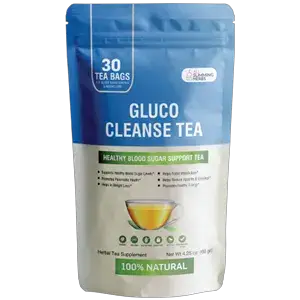
What Is Gluco Cleanse Tea?
Gluco Cleanse Tea is a powdered or bagged herbal tea marketed toward people concerned about blood sugar, cravings, metabolism and weight.
The formula advertised on several versions of the website contains 19 ingredients, including: Gymnema sylvestre Triphala, Bitter melon, White mulberry leaf, Cinnamon, Turmeric, Fenugreek, Banaba leaf, Juniper berries, Green tea, Oolong tea, Orange peel, Lemongrass, Ginger, Dandelion leaf, Ginseng, Garcinia cambogia, Peppermint, and Monk fruit.
On paper, that sounds impressive. Nineteen ingredients! Ancient herbs! Metabolism! Blood sugar!
But this is where I always slow down. A long ingredient list isn’t evidence that the finished product works.
How Does Gluco Cleanse Tea Claim to Work?
The marketing essentially divides the formula into several jobs. Some ingredients are supposed to help control blood sugar. Others supposedly improve insulin sensitivity. Others are there for digestion, appetite suppression or metabolism.
For example, the website describes bitter melon as acting like a “natural insulin,” cinnamon as improving insulin sensitivity, white mulberry as slowing sugar digestion, and green and oolong tea as helping burn fat.
That sounds very scientific when presented ingredient by ingredient. But there is a problem. Even if an ingredient has demonstrated some biological effect in research, that doesn’t mean:
ingredient → tea → diabetes reversal. That’s a much bigger claim.
My Investigation: Does It Actually “Fix” Type 2 Diabetes?
This is the claim I cared about most. And the answer is no, there isn’t evidence establishing that Gluco Cleanse Tea fixes type 2 diabetes.
Some of the product pages literally tell consumers:
“Start Drinking Gluco Cleanse Tea And You’ll FIX Type 2 Diabetes Naturally.”
They also claim that regular consumption can “reignite your pancreas” and bring blood sugar back to normal.
That’s a huge claim.
Type 2 diabetes isn’t simply a condition where the body needs a particular herb to “cleanse” excess sugar.
It involves complex changes in insulin sensitivity, insulin production, liver glucose production, pancreatic function and other metabolic processes.
There are people who can achieve remission of type 2 diabetes, particularly with substantial and sustained lifestyle or medical interventions. But that is not the same thing as drinking a particular herbal tea and fixing the disease.
I couldn’t find a randomized controlled trial demonstrating that Gluco Cleanse Tea produces diabetes remission.
What About the 19 Ingredients?
This is where things get more nuanced.
Bitter Melon
Bitter melon is probably one of the more interesting ingredients in the formula. It has been investigated for possible glucose-lowering effects, and it contains compounds that may influence glucose metabolism. But that doesn’t mean it functions as “natural insulin,” as the marketing suggests.
More importantly, evidence concerning bitter melon supplements isn’t strong enough to make it a replacement for established diabetes treatment.
Gymnema Sylvestre
Gymnema is another ingredient with genuine research interest. Some studies have investigated its effects on blood glucose and insulin-related measures.
Again, though, there’s a big difference between potentially influencing glucose metabolism and reversing type 2 diabetes.
The website takes the former and markets it as the latter.
Fenugreek
Fenugreek has also been studied for blood sugar control. Some research suggests it may modestly affect glucose levels, particularly when consumed in certain quantities.
But the amount and preparation matter, and results from studies of fenugreek don’t automatically apply to the amount contained in Gluco Cleanse Tea.
Cinnamon
Cinnamon is another familiar blood-sugar supplement ingredient. Some research suggests possible modest effects on glucose regulation, but the evidence is inconsistent and certainly doesn’t establish cinnamon as a diabetes cure.
And again, we don’t even know that the specific amount in this tea produces the effects seen in research.
White Mulberry
White mulberry leaf is interesting because compounds in it can inhibit certain digestive enzymes involved in carbohydrate breakdown.
That theoretically could reduce the rate at which glucose enters the bloodstream after a meal.
That’s a reasonable mechanism. But “may slow carbohydrate digestion” is not the same thing as “fixes type 2 diabetes.”
Green Tea and Oolong Tea
These are primarily used for their antioxidant and metabolic properties. Green tea has been studied extensively, including in relation to body weight and metabolic health.
But the expected effect on weight is generally modest… not the kind of effect suggested by claims of losing 21 pounds in a month.
The “21 Pounds in One Month” Claim
This is one of the claims I found particularly difficult to take seriously. One version of the Gluco Cleanse Tea website says the product can enable users to “lose 21 pounds in one month.”
That’s an extraordinary weight-loss claim. And it becomes even more questionable because another version says people can lose weight without dieting.
If a tea genuinely caused an average person to lose 21 pounds in a month without dietary changes, we’d be talking about an extraordinarily powerful intervention.
The website doesn’t provide a credible clinical trial demonstrating that result. So I’d treat that claim as marketing, not an expected outcome.
Red Flags to Consider
“Fix Type 2 Diabetes”
This is the biggest one. The product isn’t merely saying “supports healthy blood sugar.” Some versions literally say it can fix type 2 diabetes.
That’s a completely different level of claim. And it’s potentially dangerous because someone with diabetes could interpret it as permission to stop taking medication.
“Reignite Your Pancreas”
The site claims Gluco Cleanse Tea can “reignite your pancreas.” That isn’t how I’d expect a responsible supplement company to describe a complicated medical condition.
It’s emotionally compelling marketing because it makes the product sound as though it’s restoring a broken organ.
But the website doesn’t provide clinical evidence showing that its tea restores pancreatic function in people with type 2 diabetes.
“FDA Approved”
Several versions of the site display an “FDA Approved” badge, while elsewhere explaining that the product is made in an FDA-registered facility.
Those are not the same thing. The FDA does not generally pre-approve dietary supplements for effectiveness before they’re sold.
So “manufactured in an FDA-registered facility” does not mean “FDA approved the tea as a diabetes treatment.”
That distinction is important.
Multiple Websites
I found a surprisingly large number of domains selling or presenting themselves as official Gluco Cleanse Tea websites.
Some have slightly different wording, different review counts and somewhat different presentations. One version advertises an 18-ingredient formula, another says 19 ingredients, and another presents a slightly different description of the product.
That doesn’t automatically prove fraud, but it makes me much less comfortable with the brand’s online identity.
If I’m buying something for blood sugar, I want to know exactly who manufactures it, exactly what’s inside it and exactly which company is responsible for the claims.
“Thousands of Success Stories”
The websites display testimonials from people claiming dramatic improvements in blood sugar, weight and energy.
Some even describe blood sugar returning to normal after just a few weeks. Testimonials can be genuine. But they’re still anecdotes.
They don’t tell us whether the people changed their diet, started medication, exercised more, lost weight or simply experienced normal variation in their glucose readings.
And there’s no way for a consumer to turn a collection of testimonials into a reliable estimate of the tea’s effectiveness.
Could Gluco Cleanse Tea Lower Blood Sugar?
Possibly, in some circumstances.
That’s actually the part of this investigation where I don’t want to exaggerate in the other direction. Several ingredients in the formula have potential glucose-lowering effects.
So it’s entirely plausible that some people could see changes in blood glucose while taking a product containing several of these herbs.
But that creates another problem. If someone is already taking insulin or another glucose-lowering medication, adding multiple potentially glucose-lowering ingredients could push blood sugar too low.
That’s why “natural” doesn’t automatically mean “risk-free.”
What About the “Detox” Claims?
Gluco Cleanse Tea also uses the language of cleansing and detoxification. The website says ingredients such as dandelion, ginger, lemongrass and juniper support natural cleansing pathways, liver function and fluid balance.
This is another area where I think the marketing gets ahead of the science. Your liver and kidneys already handle the body’s metabolic waste.
There’s no evidence that drinking this particular tea somehow “flushes” diabetes or cleans sugar out of the bloodstream.
And blood glucose isn’t a toxin that needs to be detoxed. The body regulates it through hormones and metabolic processes.
Does Gluco Cleanse Tea Actually Work?
My answer is: The ingredients may have some legitimate metabolic effects, but the product’s biggest claims aren’t supported by adequate evidence.
I wouldn’t say:
“This tea does absolutely nothing.”
That would be unfair.
I would say:
There isn’t convincing evidence that this specific tea can reverse diabetes, restore pancreatic function or produce dramatic weight loss.
Those are very different statements. The formula contains several ingredients worth researching, but the website takes evidence for individual ingredients and builds a much larger conclusion around them.
And that’s exactly where I think consumers need to be careful.
Is It Safe?
For a healthy adult, a cup of herbal tea containing these ingredients may not necessarily cause a serious problem.
But someone with diabetes is a different story. Several ingredients in the formula can potentially affect blood glucose. If they’re combined with insulin or other diabetes medications, there is a possibility of hypoglycemia.
Green tea also contains caffeine unless the particular formulation is decaffeinated, and concentrated herbal ingredients can interact with medications.
So if you have diabetes, I would not start Gluco Cleanse Tea without discussing it with your healthcare provider and monitoring your blood glucose appropriately.
And absolutely don’t stop insulin, metformin or another prescribed medication because a website says the tea can “fix” your diabetes.
Pricing and Where to Buy
The price varies considerably depending on which Gluco Cleanse Tea website you’re looking at. One sales page lists:
- 1 pouch: $69
- 3 pouches: $177
- 6 pouches: $294
Other versions advertise the product for around $49 per bottle, often with multi-bottle discounts. Several sites advertise 60-day money-back guarantees, while another page claims a 180-day guarantee.
That variation is another reason I’d be careful about assuming every website selling the product is operated by exactly the same company.
Alternatives
If the goal is better blood sugar control, I’d put my money and effort toward things with much stronger evidence:
- Following your prescribed diabetes treatment
- Regular physical activity
- Eating more fiber-rich foods
- Managing carbohydrate portions
- Losing excess weight when appropriate
- Getting adequate sleep
- Monitoring blood glucose as recommended
- Working with a doctor or diabetes specialist
If you’re interested in herbs as an addition to your existing routine, that’s something you can discuss with your healthcare provider.
But I’d keep the hierarchy clear: Herbal tea = possible supplement. Diabetes treatment = medical care.
What To Do If You Were Scammed
If you purchased Gluco Cleanse Tea because you were promised that it would fix diabetes, get you off medication or cause dramatic weight loss, save screenshots of those claims.
Keep:
- Your order confirmation
- Payment receipt
- Product packaging
- Website screenshots
- Emails from the seller
- Any advertisements that influenced your purchase
If you want a refund, use the guarantee associated with the website you actually purchased from. Some versions advertise a 60-day guarantee.
If the seller refuses to honour its refund policy or you discover unauthorised recurring charges, contact your payment provider.
Conclusion
Gluco Cleanse Tea is a good example of how a supplement can contain legitimate ingredients while making illegitimate conclusions about what those ingredients can accomplish.
There is nothing inherently ridiculous about researching cinnamon, fenugreek, bitter melon, gymnema or white mulberry for metabolic health. Several of these ingredients have genuine scientific interest.
But that’s not what the most aggressive Gluco Cleanse Tea advertisements are promising.
They’re promising to fix type 2 diabetes, “reignite” the pancreas, normalise blood sugar and potentially make people lose enormous amounts of weight.
I couldn’t find clinical evidence demonstrating those outcomes for the finished tea. The FDA language also deserves scrutiny: an FDA-registered manufacturing facility isn’t the same thing as FDA approval of the product or its diabetes claims.
So, is Gluco Cleanse Tea a completely fake product? Not necessarily. Is it a proven treatment for diabetes? Absolutely not.
And if a website tells someone they can drink a tea for a few months and “fix” type 2 diabetes, I’d be much more concerned about that promise than impressed by the 19 herbs in the bag.
Also read – Dr. Mary Newport Alzheimer’s Cure Scam: What I Found About the Coconut Oil Claims