

Memory supplements tend to make their biggest promises to people who are worried about forgetfulness, brain fog, or losing their mental sharpness. Cognizil is marketed as a convenient liquid supplement for memory, focus, and mental clarity. But I wanted to know whether the formula actually makes sense for those purposes or whether the marketing is doing most of the heavy lifting.
What caught my attention was not just the brain-health advertising, but the ingredient label and the different claims appearing across websites using the Cognizil name. When a product promises cognitive support, I expect the formula and the evidence behind it to be reasonably clear. So, is Cognizil legit? Let’s take a closer look.
Key Takeaways
- Cognizil is marketed as a daily memory and focus supplement, but I found no convincing published clinical trial demonstrating that the finished product improves memory.
- Its label lists chromium at 7 micrograms and a proprietary blend of 21 other ingredients totaling just 15.47 milligrams. The amounts of the individual ingredients are not disclosed.
- Different websites using the Cognizil name appear to promote different formulas, making it important to check the exact product label.
- The refund guarantee is inconsistent across the sales materials I reviewed, with a 180-day promise advertised in some places and a 60-day policy reported elsewhere.
- I would skip it as a memory supplement, particularly if the goal is to address genuine or worsening memory problems.
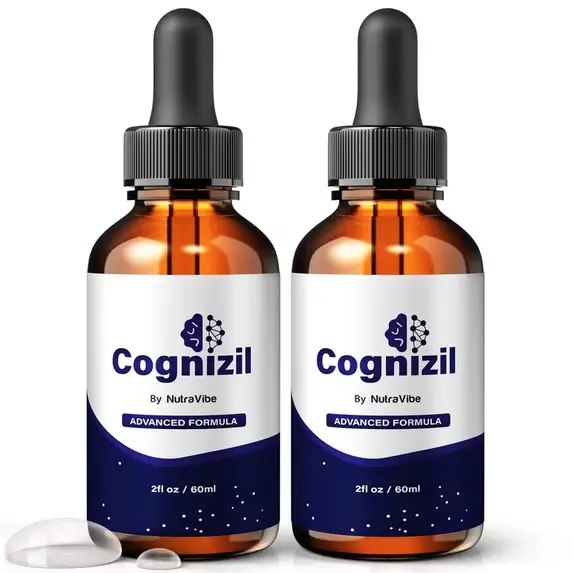
What Is Cognizil?
Cognizil Advanced Memory Support is a liquid dietary supplement sold in a small dropper bottle. The advertised directions are to take one 1 mL serving daily. The product is promoted for everyday memory, concentration, focus, mental clarity, and mental energy. Its marketing combines botanicals, amino acids, and a small amount of chromium, presenting them as a formula intended to support cognitive wellness.
The label I examined lists chromium picolinate and a proprietary blend containing ingredients such as maca, African mango, grape seed, guarana, eleuthero, astragalus, green tea, ginseng, several amino acids, and other plant extracts.
The issue is that an ingredient list is not proof of effectiveness. What matters is whether the ingredients are present in appropriate quantities, whether the combination has been tested, and whether the research supports the specific benefits being advertised.
That is where Cognizil starts to look less convincing.
Why I Looked Into Cognizil
I wanted to establish whether Cognizil was formulated around ingredients with meaningful evidence for memory and whether the company provided enough information to evaluate the product properly. I also wanted to distinguish the supplement’s claims from the more alarming advertising surrounding some memory products. Marketing that invokes Alzheimer’s disease, dementia, or supposed hidden causes of memory loss can make people feel that buying a supplement is urgent.
I would not treat those claims as evidence. Memory changes can have many causes, including sleep problems, medication effects, nutritional deficiencies, and medical conditions. A supplement should not be presented as a substitute for investigating those causes.
My main questions were simple: Does Cognizil contain useful amounts of its ingredients? Has the finished formula been tested? And can I establish which product and seller a customer is actually buying from?
My Investigation: The Ingredient Blend Is the Biggest Problem
The Supplement Facts panel reported for this version of Cognizil lists:
- Chromium, as chromium picolinate: 7 micrograms per serving.
- Proprietary blend: 15.47 milligrams in total, shared by 21 ingredients.
That second figure is the part I find difficult to overlook. Twenty-one ingredients sharing 15.47 mg means the average would be approximately 0.74 mg per ingredient if divided equally. The actual distribution may be different, but the company does not disclose individual quantities, so customers cannot tell how much of each ingredient they receive.
Many ingredients in the blend are usually studied at specific doses that are substantially larger than fractions of a milligram. Without individual amounts, I cannot make a meaningful comparison between Cognizil’s formula and the doses used in relevant research.
The problem is not simply that the formula contains many ingredients. It is that the label does not show how much of each ingredient is present, making it difficult to judge whether the blend could reasonably produce the advertised effects.
Do Cognizil’s Ingredients Actually Support Memory?
Some of the listed ingredients have been investigated for different health effects, but that does not mean they all improve memory or that the combination works.
Ginseng and maca: These are often marketed for energy, stamina, or general wellness. Evidence for those uses does not establish that Cognizil improves memory or concentration.
Guarana and green tea extract: Both can contribute caffeine. Caffeine may temporarily improve alertness, but feeling more awake is not the same as improving long-term memory. The undisclosed amounts also make it difficult to assess the stimulant exposure from this product.
L-tyrosine: This amino acid is involved in producing certain neurotransmitters. Research has explored its potential role in performance under stressful conditions, but that does not prove that an undisclosed amount improves everyday memory.
GABA and L-tryptophan: These are associated with biological processes involving the nervous system. Their presence on a supplement label does not demonstrate that the finished product produces a meaningful cognitive benefit.
Chromium: Chromium is an essential trace mineral involved in normal nutrient metabolism. Its presence does not establish that Cognizil enhances memory, and the listed 7 micrograms is a nutritional quantity rather than evidence of a cognitive treatment.
There are other ingredients on the label, but the same problem applies: the product does not provide enough information to establish whether the amounts are relevant to the effects being claimed. I would also be cautious about assuming that a long ingredient list is better than a shorter one. Adding more ingredients does not automatically create a more effective formula, especially when the total blend is so small.
Has Cognizil Been Clinically Tested?
I could not find convincing published clinical research demonstrating that the finished Cognizil formula improves memory, focus, or cognitive performance. A company can cite studies involving individual ingredients, but those studies do not automatically validate a commercial supplement. The research may involve different doses, different preparations, or people with different health characteristics.
For Cognizil, a useful clinical trial would compare the actual finished product with a placebo, measure defined cognitive outcomes, and report both the results and adverse effects. I could not establish that such a trial has been conducted.
The distinction matters because a supplement may contain ingredients that have been studied individually without the finished product having demonstrated any meaningful benefit. For that reason, I would not describe Cognizil as clinically proven.
The Cognizil Website Confusion
This is another issue I would want buyers to investigate before placing an order. I found multiple websites using the Cognizil name or very similar spellings. The formulas and marketing are not consistent across all of them. One version lists the 15.47 mg proprietary blend of 21 ingredients, while another Cognizil-branded website presents a different product identity and formula.
That means a review of one bottle cannot automatically be applied to every product advertised under the name. I could not establish a clear, independently verified relationship between all these sites or confirm that they are operated by the same company. I would therefore avoid assuming that a website is the official source simply because it uses the product name and similar branding.
Before buying, I would compare the Supplement Facts panel, manufacturer or distributor details, seller identity, and return policy on the exact website being used.
The Money-Back Guarantee Deserves a Closer Look
The refund terms are another concern. The product materials reviewed by an independent supplement investigation described a 180-day guarantee advertised in some sales materials, while the linked refund policy reportedly stated a 60-day money-back period measured from the shipping date. Those are materially different conditions. A buyer should not have to guess which deadline applies after paying for a product.
The same investigation reported package pricing of $79 per bottle for a two-bottle bundle, $69 per bottle for three bottles, and $49 per bottle for six bottles. That puts the advertised total at $158, $207, or $294, respectively, before any applicable shipping or other charges.
The larger packages reduce the per-bottle price, but they also require a substantial upfront payment. I would not buy six bottles just to secure a discount when the product’s benefits have not been established.
If someone is still considering an order, I would recommend getting written confirmation of the applicable refund window and total cost before paying.
Red Flags to Consider
The proprietary blend is extremely small.
The label lists 21 ingredients sharing 15.47 mg, without disclosing individual amounts. This makes it difficult to establish whether the formula contains meaningful doses.
The product has not been shown to improve memory in a convincing clinical trial.
I could not find reliable product-specific evidence demonstrating that Cognizil improves cognitive performance.
The formula does not match every claim made across the websites.
Different websites using the Cognizil name promote different formulations. Customers need to verify the actual bottle rather than rely on a general product description.
The guarantee terms conflict.
The reported difference between 180 days advertised and a 60-day written policy is significant. I would want this clarified before making a purchase.
The manufacturer and seller relationships are not fully clear.
The available materials use several business or retailer names. I could not independently establish how all of them relate to the product.
FDA-related wording can be misleading.
A claim that a product is made in an FDA-registered facility does not mean the FDA has approved Cognizil for memory improvement. Dietary supplements are not approved by the FDA for effectiveness before marketing in the same way as prescription medicines.
These points do not prove that Cognizil is fraudulent. They do mean that I cannot recommend it confidently as an evidence-based memory supplement.
Is Cognizil Worth the Price?
Based on the reported prices, Cognizil is not a particularly attractive purchase for me. Even the smaller bundle requires a meaningful upfront payment, while the larger packages commit buyers to spending more on a formula whose individual ingredient quantities are mostly undisclosed.
I would be more comfortable considering a supplement if its label clearly disclosed the doses, the manufacturer could be verified, and there were credible evidence supporting the finished formula’s intended use. Cognizil does not meet that standard based on the information I could verify.
I also would not treat the money-back guarantee as a reason to take the risk. A guarantee is only useful if the terms are clear and the seller follows them.
Who Might Consider It?
Someone who prefers a once-daily liquid supplement may find the format convenient. However, convenience is not evidence of effectiveness. If you are considering Cognizil, I would first ask for a complete label with individual ingredient quantities, confirmation of the manufacturer, and written clarification of the refund terms.
I would not choose it specifically to improve memory, prevent dementia, or treat cognitive symptoms on the strength of the current marketing.
Who Should Skip It?
I would particularly advise the following people to avoid relying on Cognizil:
- Anyone experiencing new or worsening memory problems. These deserve proper assessment rather than being treated with an unproven supplement.
- People looking for a clinically tested memory formula. I could not establish that Cognizil’s finished formula has been tested in a convincing clinical trial.
- People sensitive to stimulants. The formula includes guarana and green tea extract, but the amounts are not individually disclosed.
- Anyone taking medication or managing a medical condition. A healthcare professional or pharmacist should check the full ingredient list for potential interactions.
- Budget-conscious buyers. Spending up to $294 on multiple bottles is difficult to justify when the product’s benefits remain uncertain.
If memory changes are interfering with everyday life, arrange a medical assessment. Sudden confusion or an abrupt change in mental function warrants urgent medical attention.
Alternatives I Would Consider
I would start by identifying what is actually causing the memory or concentration problem rather than immediately buying a supplement.
- For persistent brain fog or forgetfulness: Speak with a healthcare professional about sleep, medication effects, mood, nutritional issues, and other possible causes.
- For concerns about cognitive health: Focus on established health measures such as adequate sleep, regular physical activity, and managing conditions that affect cardiovascular health.
- For a supplement recommended for a specific deficiency: Consider it with professional guidance and choose a product with a clear label and appropriate quality information.
I would not recommend simply replacing Cognizil with another product that promises to reverse memory loss or prevent Alzheimer’s disease. Those are serious claims that require much stronger evidence than marketing testimonials.
Conclusion
I would skip Cognizil. The product is marketed for memory, focus, and mental clarity, but its label raises serious questions about whether the formula contains meaningful amounts of its ingredients. Twenty-one ingredients sharing a 15.47 mg blend is not reassuring, especially when individual quantities are not disclosed.
I also could not find convincing clinical evidence that the finished product improves memory. The existence of multiple websites using the Cognizil name and the conflicting refund terms add further uncertainty. I am not claiming that Cognizil has been conclusively proven to be a scam. My concern is that the evidence is not strong enough to justify buying it for the cognitive benefits being advertised.
For me, the combination of unclear dosing, limited product-specific evidence, and confusing sales terms makes this an easy pass. I would rather choose a product with transparent ingredients and credible evidence, or seek medical advice if I were experiencing genuine memory difficulties.
Also read – Is the Char-Broil Big Easy 3-in-1 Worth It? My Honest Review