

Can Bioma really “fix your gut and help you lose weight”, or is it another probiotic wrapped in aggressive marketing?
Gut health is one of the easiest angles to sell supplements right now. Fix your microbiome → fix your digestion → fix your weight. That’s the chain of logic products like Bioma Probiotics rely on.
In this review, we’ll break down what Bioma Probiotics really is, how it claims to work, and whether those claims hold up when you look past the marketing.
Key Takeaways
- Bioma is a synbiotic supplement (prebiotic + probiotic + postbiotic).
- Claims include weight loss, reduced cravings, better digestion, and more energy.
- There are no clinical trials on the Bioma product itself.
- Benefits are based on general probiotic research… not this formula.
- Strong pattern of subscription complaints and mixed user results (especially long-term).
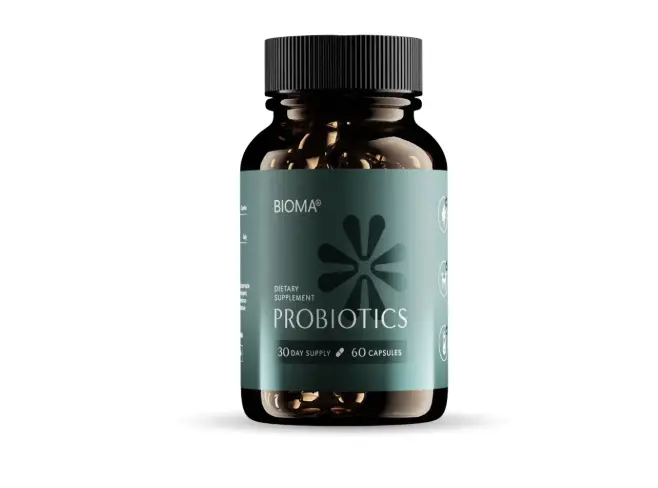
What is the Bioma Probiotics?
Bioma Probiotics is a gut health supplement designed to improve digestion, balance the microbiome, and support weight management using a combination of prebiotics, probiotics, and postbiotics.
Key components typically include:
- Bifidobacterium strains (gut bacteria support)
- Xylooligosaccharides (XOS) – prebiotic fiber
- Tributyrin – a postbiotic linked to gut lining support
It’s positioned as a “complete gut solution”, not just a standard probiotic.
How It Claims to Work
Bioma claims to work by:
- feeding good bacteria (prebiotics)
- adding beneficial strains (probiotics)
- repairing gut lining (postbiotics)
From there, it connects gut health to:
- reduced cravings
- improved metabolism
- weight loss
- better energy
This “gut → weight loss” connection is the core selling point.
Reality Check
This is where things get more grounded:
- Probiotics can help with digestion and gut balance (in some people)
- Certain strains may support bloating or regularity
BUT:
- Weight loss from probiotics is inconsistent and usually small
- Effects depend heavily on strain, dose, and individual biology
- There are no studies proving Bioma itself causes weight loss
So yes, the concept has some basis.
But the results are often overstated.
Red Flags to Consider
No product-specific clinical trials
Everything is based on ingredient-level research… not Bioma itself.
Weight loss positioning
This is the biggest stretch. Probiotics are not reliable fat-loss tools.
Ingredient transparency limits
Exact CFU counts and dosing clarity are often missing or unclear.
Subscription model complaints
From real users:
“They don’t tell you when the subscription charges…”
“I can’t tell any difference from store probiotics.”
Aggressive marketing funnel
Heavy discounts, bundles, and urgency messaging.
Overextended claims
Digestion, metabolism, cravings, energy, weight… all in one product.
Does It Really Work?
From actual user patterns:
Some people report:
- reduced bloating
- slightly better digestion
- mild appetite changes
“Noticed a bit less bloating after meals.”
Others report:
- no weight loss
- no noticeable difference
- worse bloating
“Didn’t lose a single pound… didn’t feel any better.”
So overall:
- Digestive support → possible (in some people)
- Weight loss → unreliable and often minimal
Pricing
Typical pricing:
- around $47–$65 per bottle
- discounts for multi-bottle bundles
- subscription-based billing common
This is on the higher end for probiotics.
Alternatives
For gut health:
- fiber-rich diet (most impactful)
- fermented foods (yogurt, kefir, etc.)
- simpler, well-dosed probiotics
For weight loss:
- calorie balance
- physical activity
- sleep and stress management
These have far more consistent results.
What To Do If Scammed
- check for auto-renew subscriptions immediately
- contact support and cancel early
- keep screenshots and order confirmations
- dispute with your bank if needed
Conclusion
Bioma Probiotics is not a random or useless formula… It’s built on real concepts (gut health, microbiome balance). But the way it’s marketed, especially for weight loss, is where things become questionable.
At best, it may help with digestion and bloating.
At worst, it becomes an expensive probiotic with overhyped expectations and subscription headaches.
Overall, this is a product where the science exists, but the claims go further than the evidence. And the marketing does a lot of the heavy lifting
Also read – Is Zoozoz.com a Legit Pet Toy Store? Read This Before Your First Order!