

With the explosive popularity of GLP-1 medications like Wegovy and Ozempic, now even available in prescription pill form approved by the FDA, the market is flooded with supplement-style alternatives claiming to offer similar metabolic and appetite-controlling benefits without a prescription. One such product is Lipovia GLP-1 Patches, marketed as a transdermal (stick-on) patch that supposedly activates your GLP-1 hormone system, suppresses appetite, crushes cravings, and melts stubborn fat just by wearing it.
In this review, I’ll break down what Lipovia GLP-1 Patches claim, examine the science (and limitations) behind GLP-1 delivery, highlight major red flags in the marketing, and help you decide whether this patch is a legitimate weight-loss tool or an overhyped product best avoided.
Key Takeaways
- Lipovia GLP-1 Patches are marketed as a daily patch that “activates” your body’s GLP-1 system to suppress appetite and boost fat burning.
- The product uses plant extracts purported to increase GLP-1 production rather than delivering actual GLP-1 drugs.
- There are no FDA-approved GLP-1 patches for weight loss or metabolic disease, and commercial patches do not contain real GLP-1 agonists.
- Scientific consensus suggests these patches cannot deliver therapeutic GLP-1 activity through the skin, and any patch used by consumers contains herbal/supplement ingredients, not pharmaceutical-grade peptides.
- User reports and independent sources frequently describe these products as ineffective or misleading marketing, not a substitute for real GLP-1 therapy.
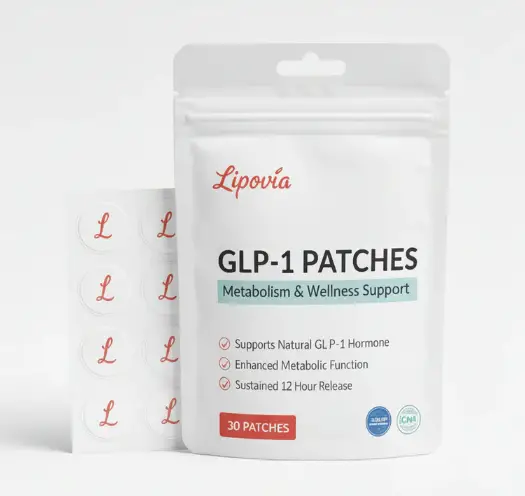
What Lipovia GLP-1 Patches Claim & How They Are Supposed to Work
According to the official product page, Lipovia GLP-1 Patches are a transdermal patch system designed to “fix your broken hunger signals,” suppress appetite, reduce cravings, activate fat-burning signals, and support steady energy all day long. The marketing language implies that the patches help your body:
- Increase GLP-1 production by up to 47% via plant-based extracts.
- Suppress appetite and cravings “within 24–48 hours.”
- Boost metabolic signaling and fat-burning pathways over weeks of use.
The narrative suggests that natural plant compounds like berberine, bitter melon, green coffee bean, and cinnamon, delivered through the skin, can mimic or enhance the metabolic effects underlying real GLP-1 medications.
Scientific Reality vs. Marketing Hype
Glucagon-like peptide-1 (GLP-1) is a complex hormone that influences insulin secretion, appetite regulation, and gastric emptying. Modern prescription GLP-1 agonists (like semaglutide and tirzepatide) are biologic drugs designed to mimic this hormone with precise dosing and controlled pharmacokinetics. These drugs have undergone extensive clinical trials and FDA review before being approved for specific medical uses (diabetes management and weight loss).
By contrast:
- No OTC GLP-1 patch has been FDA-approved as a medical treatment for weight management or metabolic disease.
- Commercial patches marketed to “activate” GLP-1 generally do not contain pharmaceutical-grade GLP-1 agonists like semaglutide or tirzepatide.
- The GLP-1 hormone is a large peptide molecule that cannot pass through the skin barrier via standard patch delivery the way nicotine or hormone replacement patches do, the skin simply doesn’t allow GLP-1 peptides to enter systemic circulation in meaningful amounts.
In other words, these consumer patches don’t deliver the actual molecules that have been shown in clinical trials to manage appetite or metabolic outcomes.
Red Flags to Consider
No FDA Approval or Regulatory Oversight
Despite the name leveraging “GLP-1,” no transdermal patch product has been approved by the FDA for weight loss or blood sugar management. Products claiming GLP-1 effects are not regulated as medications and cannot legally claim equivalence to prescription drugs.
Impossible Transdermal Delivery Claim
GLP-1 peptides are too large to be absorbed through skin via typical patches, meaning consumer patches do not deliver real GLP-1, they rely on herbal ingredients that don’t mimic prescription drug action.
Vague “Clinically Proven” Assertions
Words like “clinically proven” or “GLP-1 activation” appear on marketing pages without citation of actual human clinical trials proving the finished patch formula works as a metabolic therapy.
Inflated Review Counts & Scarcity Tactics
Sites often display large review counts and countdown timers (“sold out X times!”) to create urgency, a hallmark of high-pressure direct-to-consumer marketing funnels rather than evidence-based health solutions.
User Reports Suggest Placebo or Minimal Effect
Consumer discussions on open forums describe these products as placebo-like or ineffective, and many note the patches contain simple plant extracts rather than validated glucose- or appetite-regulating agents.
Does Lipovia GLP-1 Patches Really Work?
No, not in the way the marketing implies. Because:
- Real GLP-1 agonist medications (semaglutide, tirzepatide) require prescription and clinical oversight.
- Patches marketed like Lipovia do not contain active GLP-1 drugs and cannot replicate their hormonal effects.
- There is no credible scientific evidence showing these patches deliver meaningful weight loss or appetite suppression beyond what placebo responses or lifestyle changes could produce.
At best, consumers might feel mildly better because of placebo or small effects from herbal ingredients if absorbed, but this is far from proven and nothing like the weight-loss outcomes seen with prescription therapy.
Consumer Feedback & Reported Complaints
Independent user discussions online typically reflect skepticism and disappointment. Many consumers say that:
- The patches do not work as advertised.
- Some reviewers mention skin irritation or rashes from the adhesive.
- Many reviews are suspected of being fake or influencer-driven, aimed at promoting sales rather than reflecting genuine experience.
Overall, the sentiment in community forums is that these products are marketing gimmicks built on trend words rather than serious metabolic tools.
Where Real GLP-1 Science Stands
Genuine GLP-1 medications, like Ozempic, Wegovy, and related therapies, have decades of research backing and meaningfully support weight loss and glucose control, but they:
- Are prescription medications administered under medical supervision.
- Have well-understood side effect profiles (nausea, digestive symptoms, etc.).
- Work by directly binding to GLP-1 receptors in ways that supply enough active hormone to affect metabolism — something OTC patches cannot replicate.
For serious metabolic or weight-management needs, these approved therapies remain the evidence-based standard… not over-the-counter patches.
Conclusion
Lipovia GLP-1 Patches leverage a buzzword-heavy trend, GLP-1, to sell an unproven transdermal supplement product. There is no clinical evidence or regulatory approval to support the claim that these patches deliver real GLP-1 activity, suppress appetite, or produce meaningful weight loss. At best, these are herbal “support” patches with placebo potential; at worst, they are misleading marketing that confuses customers with pseudo-medical language.
Verdict: Avoid as a weight-loss or metabolic therapy. These patches are not a substitute for real evidence-based treatments.
Also read – Is Hosnex.com a Legit Crypto Gaming Platform? Find Out Here!
i have recieved my patches . i dont want anymore of these.