

Blood glucose monitoring is critical for people with diabetes and anyone managing blood sugar levels… It’s not something where half-baked technology should be trusted. Enter the Ring Minds Glucose Monitor: a smart ring that claims to monitor your blood sugar non-invasively, without any finger pricks or sensors under the skin.
In this review, I’ll break down what Ring Minds promises, what the medical and regulatory reality actually is, where the red flags lie, and whether this device is a legitimate glucose tracker or a misleading gadget that could put users at risk.
Key Takeaways
- Ring Minds is marketed as a smart glucose-monitoring ring that claims non-invasive blood sugar readings.
- There is currently no clinically validated technology that can accurately measure glucose levels without piercing the skin.
- FDA warnings explicitly state that no smart ring or smartwatch has been authorized to measure blood glucose levels.
- Investigation suggests Ring Minds may just be a rebranded generic pulse-oximeter’s hardware with deceptive medical claims.
- Relying on inaccurate glucose data can lead to dangerous health decisions, especially for diabetic users. U.S. Food and Drug Administration
What Ring Minds Claims to Be & How It Claims to Work
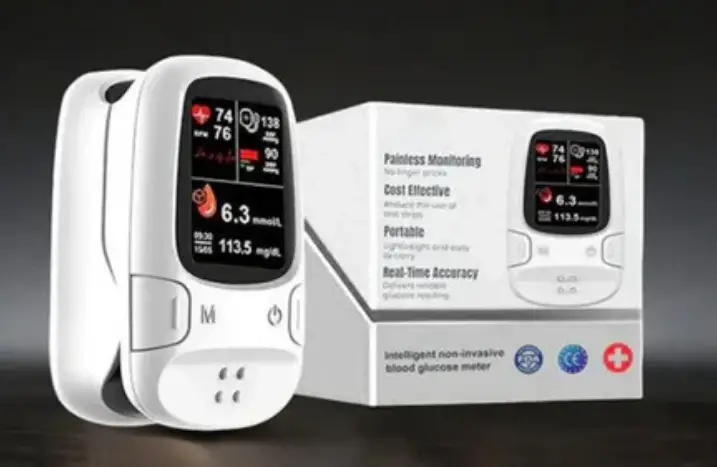
Ring Minds presents its product as a smart wearable capable of measuring blood glucose levels, in addition to heart rate, oxygen saturation, and other vitals, using a ring worn on the finger. It markets itself as non-invasive, fast, FDA-certified, and suitable for monitoring glucose without needles or sensors beneath the skin. These claims are typically paired with badges, “trusted” language, and large-number testimonials designed to emulate medical credibility.
Claims vs. Reality
While the idea of non-invasive glucose monitoring is pursued by many researchers and tech companies, no consumer wearable on the market, including smart rings, has ever been shown to accurately measure blood sugar without skin penetration. Accurate glucose monitoring as part of clinical diabetes care currently requires devices like finger-stick meters or FDA-cleared continuous glucose monitors (CGMs) that insert a tiny sensor under the skin.
The FDA has explicitly warned that no smartwatch or smart ring should be used to measure glucose levels because such devices are not authorized or cleared for that purpose, and they cannot provide accurate blood sugar data on their own.
Red Flags to Consider
No Approved Non-Invasive Glucose Monitoring Technology Exists
Despite Ring Minds’ claims, the FDA and medical experts confirm that there is no accurate, non-invasive glucose-monitoring device currently approved for consumer use, and that includes smart rings.
Misleading Claims of Certification
Ring Minds’ marketing often invokes “FDA certification” and “medical endorsements,” yet there is no public record of any such regulatory clearance for their glucose monitoring feature, another major red flag.
Recycled Generic Hardware
Investigations suggest that Ring Minds’ hardware resembles inexpensive pulse-oximeter devices, which measure oxygen saturation, not blood glucose, simply relabeled and marketed with false capabilities.
Fake or Generic Testimonials
Much of the testimonial content on Ring Minds’ sites appears generic and unverified, a tactic often used in misleading or scam-style marketing.
High Health Risk If Used for Medical Decisions
Because glucose management directly influences medication dosing and lifestyle choices, inaccurate measurements from an unauthorized device can lead to dangerous errors, including incorrect insulin doses, difficult hypo/hyperglycemia, and even life-threatening situations.
Does It Really Work?
No, Ring Minds does not provide accurate blood glucose monitoring. Current sensor technology that could feasibly provide reliable glucose information involves either invasive measurement (like commercial CGMs) or very early and unproven experimental techniques. Wearable rings that claim non-invasive glucose readings simply do not meet regulatory accuracy standards or clinical validation.
Using such a device under the assumption it accurately reflects blood sugar could lead to dangerous decisions, especially for people on insulin or other glucose-affecting medications.
Is Ring Minds a Scam?
Based on available evidence and FDA warnings, Ring Minds exhibits multiple scam-like characteristics: misleading medical claims, false certification badges, repurposed hardware not capable of the promised function, and marketing that exploits urgent health needs. While “scam” is a strong term, the device’s claims of accurate glucose monitoring are scientifically unfounded and potentially harmful if trusted.
What You Should Do Instead
- Do not use Ring Minds or similar wearables to monitor blood glucose.
- Use FDA-authorized devices for blood sugar monitoring: finger-stick meters and CGMs.
- Consult a healthcare provider for proper diabetes monitoring tools.
- Report misleading device claims to regulatory agencies like the FDA if you encounter them.
Conclusion
Ring Minds Glucose Monitor markets itself as a breakthrough in non-invasive glucose tracking, but there’s no technology currently available that can deliver what it promises. Regulatory authorities like the FDA explicitly state that no smart ring or smartwatch is approved to measure blood glucose levels, and investigations indicate Ring Minds may just be a relabeled generic pulse-oximeter with deceptive marketing.
Verdict: Strongly avoid trusting Ring Minds for glucose monitoring. It is not a legitimate medical device and is highly misleading at best dangerous at worst.
Also read – Is the Tao Clean Sonic Toothbrush Overhyped? My Honest Review After Use