

Memory supplements tend to make the same promises: better concentration, sharper recall, and less mental fog. Memofix is marketed as a daily supplement for people who want to stay focused and mentally alert without relying on caffeine. Its formula combines several familiar botanical extracts with amino acids.
What caught my attention was the price, the claims about cognitive support, and whether the formula actually contains enough of its ingredients to justify those claims. I also wanted to know whether the company has tested the finished product rather than simply relying on research about individual ingredients. So, is Memofix legit? Let’s take a closer look.
Key Takeaways
- Memofix contains five listed active ingredients: BCAAs, bacopa, rhodiola, L-theanine, and Panax ginseng.
- Some ingredients have been studied for memory, attention, or fatigue, but the evidence is mixed, and the finished Memofix formula has no independently verified clinical trial.
- The label lists ingredient quantities, which is useful, but it does not provide standardization details for its bacopa and ginseng extracts.
- The advertised price ranges from $79 per bottle for the two-bottle package to $49 per bottle for the six-bottle package.
- I would not spend hundreds of dollars on Memofix expecting a proven improvement in memory or concentration.
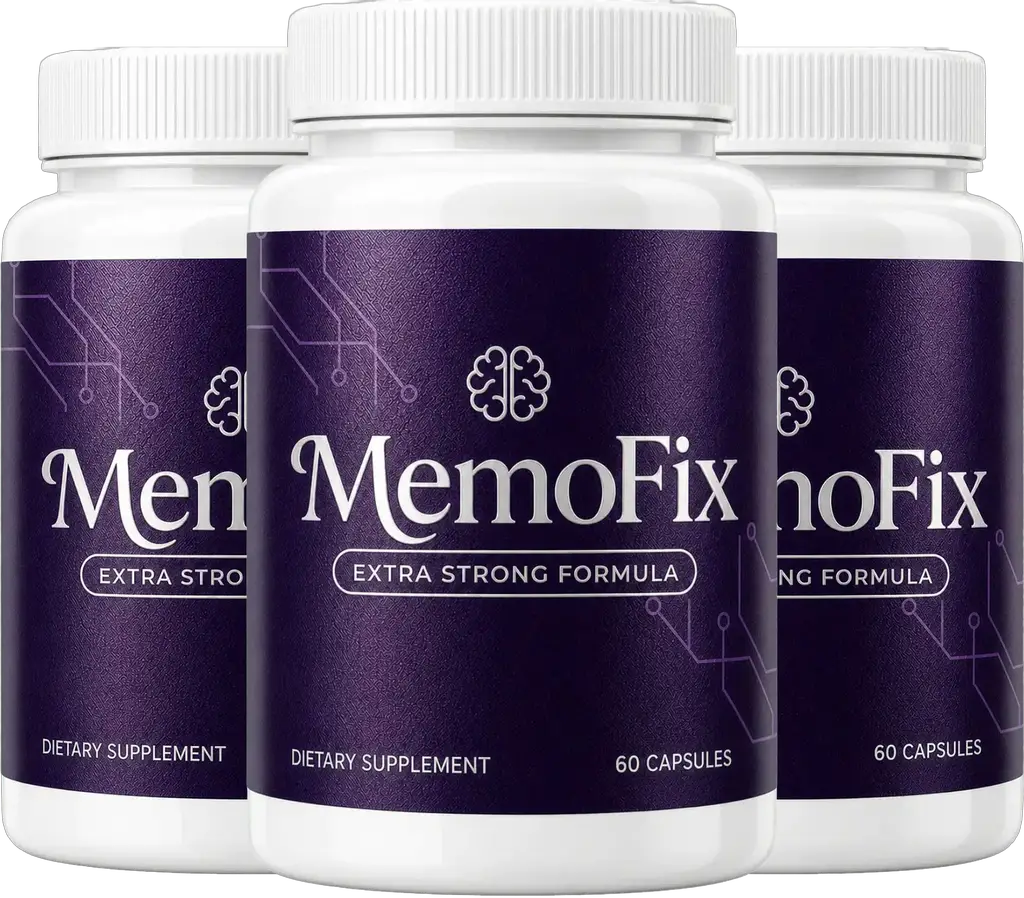
What Is Memofix?
Memofix Extra Strong Formula is a dietary supplement sold in capsule form. It is marketed to adults who want support with memory, concentration, focus, and everyday mental clarity. The product’s Supplement Facts information lists five active ingredients per two-capsule serving:
- BCAAs 2:1:1: 540 mg
- Bacopa monnieri extract: 200 mg
- Rhodiola rosea extract: 100 mg, standardized to 3% salidroside
- L-theanine: 100 mg
- Panax ginseng extract: 90 mg
Each bottle contains 60 capsules, equivalent to 30 servings at the recommended two-capsule dose. The seller describes the formula as caffeine-free. That gives us a clearer starting point than a supplement that hides all its ingredients inside an undisclosed proprietary blend. But an ingredient list is only the beginning. The amounts, extract quality, clinical evidence, and safety information all matter when assessing whether a product is worth buying.
Why I Looked Into Memofix
I wanted to establish whether Memofix offers something meaningful beyond combining ingredients that already appear in other cognitive supplements. The marketing presents the formula as a way to support memory, concentration, and mental clarity. Those are appealing goals, especially for anyone dealing with demanding work, studying, or long periods of concentration.
However, I am careful about supplements that use broad cognitive claims without demonstrating that the actual product has been tested. Research showing that an ingredient may influence a particular cognitive measure does not automatically establish that a five-ingredient combination produces noticeable benefits.
I also noticed that the product is relatively expensive if purchased in smaller quantities. Before committing to several bottles, I would want evidence that the formula is worth taking and enough information to evaluate its ingredients properly.
Has Memofix Been Clinically Tested?
This is where I would be most cautious. The seller discusses research on the ingredients and describes how they are supposed to support cognitive wellness. But I could not find independently verified clinical research demonstrating that the finished Memofix formula improves memory, concentration, or mental clarity compared with a placebo.
A product-specific study would need to test the actual formula, at the intended dose, and measure meaningful outcomes over an appropriate period. Without that evidence, there is no reliable way to determine whether the combination performs better than taking no supplement.
The distinction matters because studies on individual ingredients often use specific extracts and doses. Memofix’s formula may not match those preparations.
I would therefore describe Memofix as a supplement with ingredients that have been investigated for cognitive or fatigue-related effects, not as a clinically proven memory enhancer.
What About Customer Reviews?
Memofix’s official website promotes customer testimonials and positive descriptions of the product’s intended benefits. However, those testimonials are published by the seller, and I could not independently establish that they represent typical customer outcomes.
Customer feedback can be useful for understanding practical issues, such as whether capsules are easy to take or whether customers report problems with delivery. It is much less reliable as proof that a supplement improves memory.
Memory and concentration can fluctuate for many reasons, including sleep, stress, medication, and changes in daily routine. A person who feels more focused after starting a supplement cannot necessarily attribute that change to the product.
I also did not find sufficient independently verified customer data to establish a reliable pattern of effectiveness or adverse experiences. My conclusion is that the available testimonials are not enough to settle the question of whether Memofix works.
Red Flags to Consider
There are several issues I would consider before purchasing Memofix.
No verified clinical trial of the finished formula
The seller relies on the potential benefits of individual ingredients, but I could not verify a controlled clinical trial demonstrating that Memofix itself improves memory or concentration.
Incomplete extract specifications
The label lists amounts for all five active ingredients, but the bacopa and ginseng extracts lack standardization details. That limits meaningful comparisons with clinical research.
The benefits are broader than the evidence
Supporting a particular memory measure in a study is not the same as proving that a supplement improves everyday mental clarity, concentration, and recall for all users.
The price encourages bulk purchasing
The lowest advertised price per bottle is available through a six-bottle package. That means spending $294 upfront to obtain a lower unit price for a product whose effectiveness remains uncertain.
Quality claims are not the same as independent verification
The seller describes manufacturing and quality-control standards. I could not independently verify all those claims through batch-specific testing documentation. I would want to see appropriate certificates of analysis and clear manufacturer information before relying on such assurances.
A money-back guarantee is not proof of effectiveness
The website advertises a 60-day money-back guarantee. That may provide a route to request a refund, but it does not demonstrate that the supplement works. I would read the current terms carefully and keep the purchase confirmation. These concerns do not prove that Memofix is fraudulent. They do mean that I would not accept the marketing claims at face value.
Is Memofix Worth the Price?
The advertised package prices are:
- Two bottles: $158 total, or $79 per bottle, plus $9.99 shipping.
- Three bottles: $207 total, or $69 per bottle, with advertised free shipping.
- Six bottles: $294 total, or $49 per bottle, with advertised free shipping.
Each bottle contains 60 capsules, which amounts to a 30-day supply when taking two capsules daily. The larger packages offer a lower advertised price per bottle, but the savings come with a higher upfront payment. I would not spend $294 on a supplement simply because buying more bottles makes the unit price look better.
The seller’s 60-day money-back guarantee is worth checking, but I would confirm the current return conditions directly before placing an order. For me, the price is difficult to justify without stronger evidence that the finished formula delivers the benefits being advertised.
Who Might Consider Memofix?
Memofix may appeal to healthy adults who prefer a caffeine-free capsule and are interested in supplements containing botanical extracts and amino acids.
However, I would not recommend it as a proven solution for poor memory, persistent brain fog, or concentration difficulties. Those symptoms can have several causes, and a supplement should not be used as a substitute for identifying an underlying problem.
Anyone considering Memofix should review the complete label and discuss it with a qualified healthcare professional or pharmacist if they take medication or have a medical condition.
Who Should Skip It?
I would particularly advise the following people to avoid relying on Memofix:
- Anyone expecting guaranteed improvements in memory or focus. The finished product has not been shown in a verified clinical trial to deliver those outcomes.
- People experiencing persistent or worsening memory problems. They should seek an appropriate medical assessment rather than relying on a supplement.
- People taking prescription medication. Ginseng and other botanical ingredients may cause interactions, so the full formula should be reviewed first.
- People sensitive to supplements that affect sleep or cause stomach upset. The ingredients may not be suitable for everyone.
- Budget-conscious buyers. The upfront cost is substantial relative to the evidence supporting the finished product.
Memofix should not be treated as a remedy for dementia, Alzheimer’s disease, or another diagnosed cognitive condition.
Alternatives I Would Consider
Rather than immediately buying another memory supplement, I would first consider options with a clearer rationale.
- For concentration and mental fatigue: Review sleep quality, workload, stress, and medication effects. Persistent fatigue or brain fog may warrant a medical assessment.
- For ongoing memory concerns: Speak with a healthcare professional to investigate possible causes and appropriate next steps.
- For nutritional concerns: A clinician can help determine whether a dietary deficiency or another health issue needs to be addressed.
- For anyone still interested in supplements: Compare products with fully disclosed ingredient quantities, well-characterized extracts, independent quality testing, and credible evidence for the specific outcome being claimed.
I would not simply replace Memofix with another product making equally broad claims. Transparency and evidence matter more than the number of ingredients on the label.
Conclusion
I would not recommend buying Memofix specifically to improve memory or concentration. The formula contains several ingredients that have attracted scientific interest, particularly bacopa. Its label also provides individual quantities for all five active ingredients, which is a useful starting point. However, the missing standardisation details for two botanical extracts and the lack of a verified clinical trial of the finished product leave important questions unanswered.
The price adds to my hesitation. Spending $158 to $294 upfront is a significant commitment when the advertised cognitive benefits have not been established for the actual formula. I am not calling Memofix a scam. I have not found enough evidence to support that conclusion. My concern is that the marketing promises more certainty than the available research justifies.
My recommendation is to skip it for now. I would reconsider if the company provided a complete, verifiable quality dossier and credible clinical evidence showing that the finished formula produces meaningful benefits.
Also read – Is the Rayhong Electromagnetic Antifreeze Car Device a Scam? Read This Before Buying