

If you’ve come across a video claiming that Sam Elliott and Barbara O’Neill have revealed a breakthrough treatment for COPD, followed by a recommendation for BreatheEaseX, there is a major problem with the presentation.
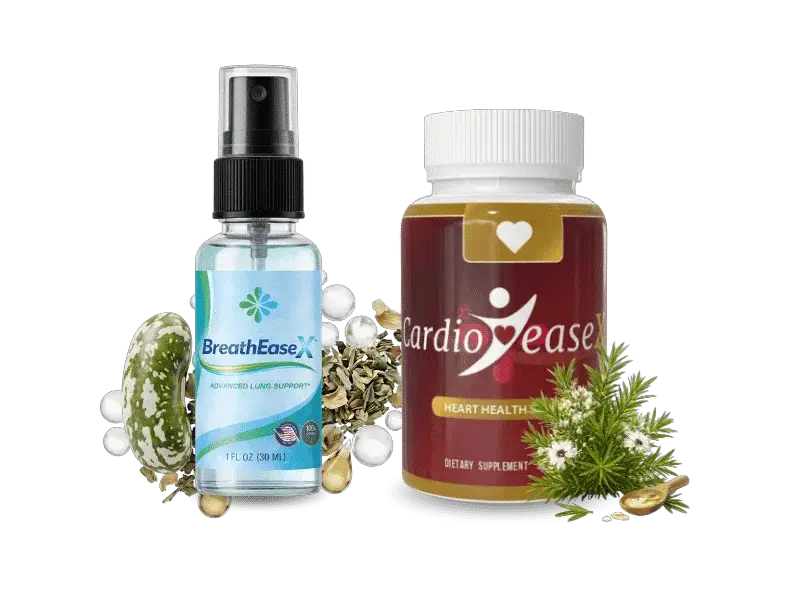
The product itself is a real supplement being marketed online, but the advertising surrounding it makes claims that go far beyond what the available evidence supports. One version of the BreatheEaseX sales page claims that the product can clear a supposed “carbon buildup” coating the lungs and restore lung function, while another version promotes it alongside CardioEaseX as a way to “restore your lung and heart health” in less than a month.
More importantly, the BreatheEaseX material I found does not establish that Sam Elliott or Barbara O’Neill endorse the product. The official-looking product pages I could locate make no credible case for such an endorsement. Instead, the product appears to be promoted through online advertising and landing pages using claims about celebrities, doctors and supposed medical discoveries.
That is why I would separate two questions here: Is BreatheEaseX a real supplement? Yes. Is the viral COPD video a legitimate celebrity/medical endorsement? The evidence does not support treating it as one.
Key Takeaways
- BreatheEaseX is marketed as a respiratory-support supplement.
- One version contains Manuka honey, NAC, quercetin, olive leaf extract, vitamin D3 and L-theanine.
- Another BreatheEaseX site currently describes a completely different formula containing mullein, marshmallow root, cordyceps, ginger, peppermint and astragalus.
- There is no published clinical trial on the finished BreatheEaseX product that demonstrates it can treat or reverse COPD.
- The stronger sales claims about clearing carbon deposits from the lungs and regenerating alveoli aren’t supported by evidence presented on the product page.
- The product’s own disclaimer says BreatheEaseX is not intended to diagnose, treat, cure or prevent COPD or other diseases.
- The celebrity endorsements attributed to Sam Elliott and Barbara O’Neill should not be treated as genuine simply because their faces or voices appear in a video.
- I found significant inconsistencies between different BreatheEaseX websites and formulas, which make the product particularly difficult to evaluate.
What Is BreatheEaseX?
BreatheEaseX is marketed as a natural respiratory-support supplement. And this is where things get confusing, because there doesn’t appear to be one consistent BreatheEaseX formula across the websites currently using the name.
One sales page describes BreatheEaseX as an oral spray containing Manuka honey, N-acetylcysteine (NAC), quercetin, olive leaf extract, vitamin D3 and L-theanine.
Another website describes Breathe Ease X as a botanical spray containing mullein, marshmallow root, cordyceps, ginger, peppermint and astragalus.
Those aren’t minor differences. They’re completely different formulas. That alone makes me cautious about treating claims made in a viral advertisement as though they refer to one clearly established pharmaceutical-style product.
The Sam Elliott & Barbara O’Neill Video
This is the part that deserves the most attention. The advertising apparently uses AI-generated or manipulated video involving recognisable public figures, presenting them as though they are discussing a breakthrough treatment for COPD.
The basic formula for this type of advertisement is familiar: take a recognizable face, give the person a convincing-sounding medical script, introduce a supposedly hidden cause of a disease, and then present a supplement as the solution that doctors or pharmaceutical companies don’t want people to know about.
The problem is that a person appearing to recommend something in a video is not evidence that they actually made that recommendation.
AI voice cloning and face manipulation make this particularly easy to fake. And when the product itself doesn’t provide independent evidence that the celebrity actually endorsed it, the video should be treated as advertising… not medical testimony.
The COPD Claim Doesn’t Hold Up
The BreatheEaseX marketing describes a supposed layer of “carbon” coating the alveoli and interfering with oxygen exchange. One version tells consumers that microscopic carbon particles settle on the alveoli and eventually form a barrier that prevents the lungs from functioning properly.
That makes for a very effective sales story. It also gives the viewer a simple explanation for why they’re short of breath: There’s something dirty coating your lungs, and this product will clean it off.
But COPD isn’t caused by a removable layer of carbon film sitting over the alveoli. COPD involves persistent abnormalities of the airways and lung tissue, including chronic inflammation, airway narrowing and destruction of lung tissue in emphysema. It isn’t something that can simply be “flushed” out with a dietary supplement.
That’s a major problem with the advertising.
The Bigger Problem: There Isn’t One Consistent Formula
This is actually one of the strongest red flags I found. One BreatheEaseX website says the spray contains six ingredients: Manuka honey, NAC, quercetin, olive leaf extract, vitamin D3 and L-theanine.
Another Breathe Ease X site says the product contains: mullein, cordyceps, ginger, peppermint, astragalus and marshmallow root.
If these are supposed to be the same product, that’s a serious transparency problem. It also means that when an advertisement says something like “BreatheEaseX contains clinically studied ingredients,” I need to know which BreatheEaseX we’re talking about.
I can’t evaluate a formula that changes depending on which website I land on.
Reality vs. Claims
There are individual ingredients here that have legitimate research behind them.
That’s not the same as proving the product works. The BreatheEaseX site itself acknowledges that there is no published clinical trial on BreatheEaseX as a finished product. Instead, it points to research on individual ingredients.
That distinction is important. For example, evidence that NAC can affect mucus doesn’t establish that a particular BreatheEaseX spray can restore lung function.
Likewise, evidence that quercetin has antioxidant properties doesn’t establish that it can regenerate alveoli. And research on an ingredient can’t automatically be transferred to a commercial product without knowing the dose, formulation and clinical outcome.
Red Flags to Consider
The AI Celebrity Endorsement
A video showing Sam Elliott or Barbara O’Neill apparently recommending a product isn’t proof of an endorsement. If the video is AI-generated or manipulated, the entire medical testimonial is fabricated.
That’s especially concerning when the video is being used to persuade people with a serious medical condition to purchase a supplement.
The “Carbon Film” Explanation
The claim that a hidden carbon coating is accumulating over the alveoli and causing breathing problems is a particularly effective marketing narrative because it turns a complicated disease into something that sounds physically removable.
But that isn’t an established explanation for COPD. The product page itself uses this concept to sell the idea that BreatheEaseX can restore breathing by clearing these deposits.
No Clinical Trial on BreatheEaseX
The product’s own site admits that there is no published clinical trial on the finished BreatheEaseX formula. That’s a problem when the advertising implies that the product can restore lung function or provide dramatic improvements in breathing.
Conflicting Ingredient Lists
Different websites using the BreatheEaseX name currently show substantially different formulas. That makes it difficult to establish exactly what consumers are purchasing.
“FDA” and “GMP” Language
The BreatheEaseX pages display badges relating to FDA-registered facilities and GMP manufacturing. But the site’s own disclaimer correctly notes that FDA registration of a manufacturing facility is not FDA approval of the supplement.
That’s an important distinction because “FDA-registered” can sound much more impressive than it actually is.
Does BreatheEaseX Actually Treat COPD?
There is no good evidence that it does. Some of the ingredients may have legitimate respiratory or general health applications. But COPD is a chronic medical disease, and there is no evidence here demonstrating that BreatheEaseX can reverse the underlying lung damage.
The product’s own disclaimer actually says it is not intended to diagnose, treat, cure or prevent COPD. That disclaimer is much more modest than some of the advertising.
And that’s exactly why I’d pay attention to the distinction between what the supplement technically claims and what the advertisement makes you believe it can do.
Is BreatheEaseX Safe?
I wouldn’t automatically describe the ingredients as dangerous. But someone with COPD should be particularly careful about replacing proven treatment with an unproven supplement.
The BreatheEaseX disclaimer itself advises people with diagnosed respiratory conditions such as COPD to speak with a doctor before using the product and explicitly says it is not a substitute for prescription treatment or a rescue inhaler.
That warning is worth taking seriously. If someone is experiencing significant breathing difficulty, chest pain, wheezing or a persistent cough, relying on an online supplement advertisement instead of getting medical care could be dangerous.
Pricing and Where to Buy
The BreatheEaseX sales pages advertise heavily discounted multi-bottle packages. One version lists the product at $69 for one bottle, $59 per bottle for three and $49 per bottle for six, with a 60-day money-back guarantee.
Another version markets BreatheEaseX together with CardioEaseX, with substantially different package prices. Once again, the differences between the websites make me hesitant to treat any particular offer as definitive without checking the exact product and checkout terms.
What To Do If You Bought It Because of the Video
If you purchased BreatheEaseX after seeing the Sam Elliott or Barbara O’Neill video, save the advertisement. Take screenshots or record the page before it disappears.
Keep your order confirmation, receipt and any emails from the seller. If the product was represented as being endorsed by a celebrity or medical professional and you later discover that the endorsement was fabricated, that advertising material may be relevant if you need to dispute the purchase.
And most importantly, don’t stop COPD medication or an inhaler because an advertisement told you that a supplement can “clean” or regenerate your lungs.
Conclusion
BreatheEaseX is a real product being sold online, but that doesn’t make the claims in the viral COPD videos legitimate. The biggest problem isn’t actually the existence of NAC, quercetin, mullein or the other ingredients. Several of these compounds have legitimate scientific research behind them.
The problem is the enormous gap between that research and what the advertising implies. There is no published clinical trial showing that BreatheEaseX itself can reverse COPD or regenerate damaged lung tissue. The product’s own website acknowledges this.
Then there’s the supposed celebrity endorsement. I found no credible evidence establishing that Sam Elliott or Barbara O’Neill actually endorsed BreatheEaseX. A video that makes them appear to recommend a product, therefore, shouldn’t be treated as an authentic testimonial… particularly if AI manipulation is involved.
And the “carbon coating” explanation is another major warning sign. The sales page presents a supposedly hidden substance accumulating over the alveoli and positions BreatheEaseX as the solution. That’s a compelling sales story, but it isn’t a credible explanation for COPD that justifies the product’s dramatic promises.
There’s also the bizarre issue of multiple BreatheEaseX websites advertising different formulas. One lists NAC, quercetin and Manuka honey; another lists mullein, cordyceps, ginger and marshmallow root.
So, is the BreatheEaseX COPD video a scam? If the video is using AI to make Sam Elliott or Barbara O’Neill appear to endorse the product when they did not actually do so, then yes… the video itself is deceptive advertising.
Also read – I Finally Tried the Viral d’Alba First Spray Serum — Was It Worth the Hype?