

I’ll be honest, I originally bought the PurePod mostly because I got tired of washing fruits and vegetables and I was still wondering if they were actually clean.
Especially with things like grapes, strawberries, lettuce, and apples… where you know there’s probably still something lingering on them, no matter how long you rinse.
And after seeing endless videos online of cloudy water and “hidden dirt” magically appearing after using produce cleaners, I finally gave in and decided to try one myself.
But while using the PurePod, something happened that honestly left me more confused than anything else. Not necessarily in a bad way. Just… confused.
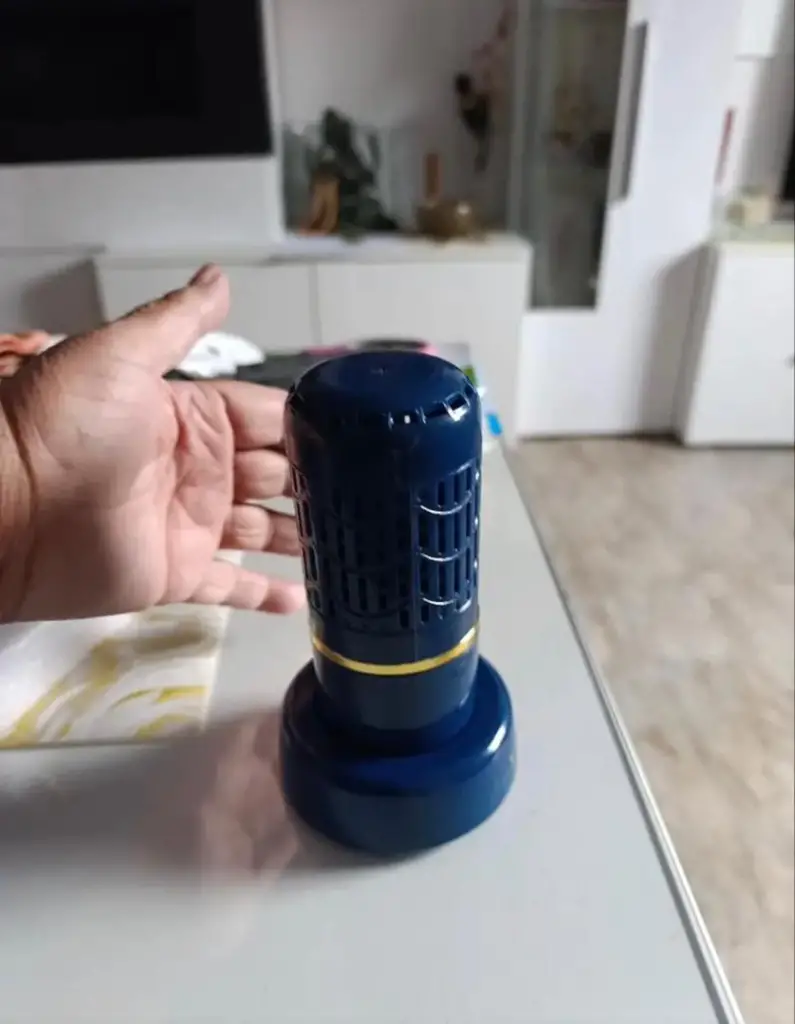
What is the PurePod Produce Cleaner?
The PurePod Produce Cleaner is a portable cleaning device designed to clean fruits, vegetables, and sometimes even kitchen items using water purification technology. The idea is that you place produce into water, activate the device, and allow it to help remove:
- dirt
- residue
- pesticides
- and other contaminants
The entire appeal is convenience.
Instead of aggressively scrubbing every single grape individually like a stressed-out raccoon, the device is supposed to make the cleaning process easier and more thorough overall.
And honestly, that’s what interested me most.
Why I Tried It
Part of it was definitely curiosity. But part of it was also the fact that I genuinely eat a lot of fresh produce and sometimes wonder how much washing with plain water is actually doing. Because realistically, rinsing strawberries for five seconds under the tap never fully feels convincing.
I also noticed a lot of people online describing produce cleaners almost like they had unlocked some secret level of adulthood and kitchen hygiene.
Some people swore the water became visibly dirty afterward and claimed they could never go back to regular washing again.
Meanwhile, sceptics kept arguing, “It’s just another trendy kitchen gadget making dramatic promises.” So naturally, I wanted to see for myself.
My Experience Using It
The setup itself was honestly very simple. Fill a bowl or sink with water, place the produce inside, turn the PurePod on, and let it run for the recommended time.
And to be fair, the process felt satisfying. I know that sounds strange, but there’s something psychologically convincing about actively “deep cleaning” produce instead of just quickly rinsing it under a faucet.
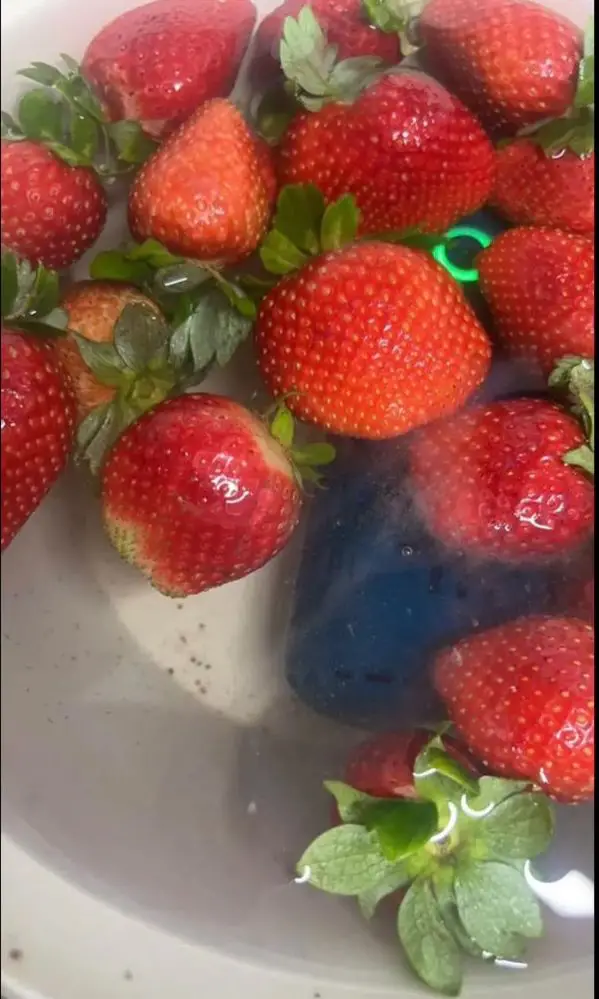
The fruits also genuinely looked fresher afterwards sometimes, especially things like strawberries, grapes and lettuce. There were also particles in the water, which made me feel like it cleaned more.
But the biggest thing that stuck with me happened during one random experiment.
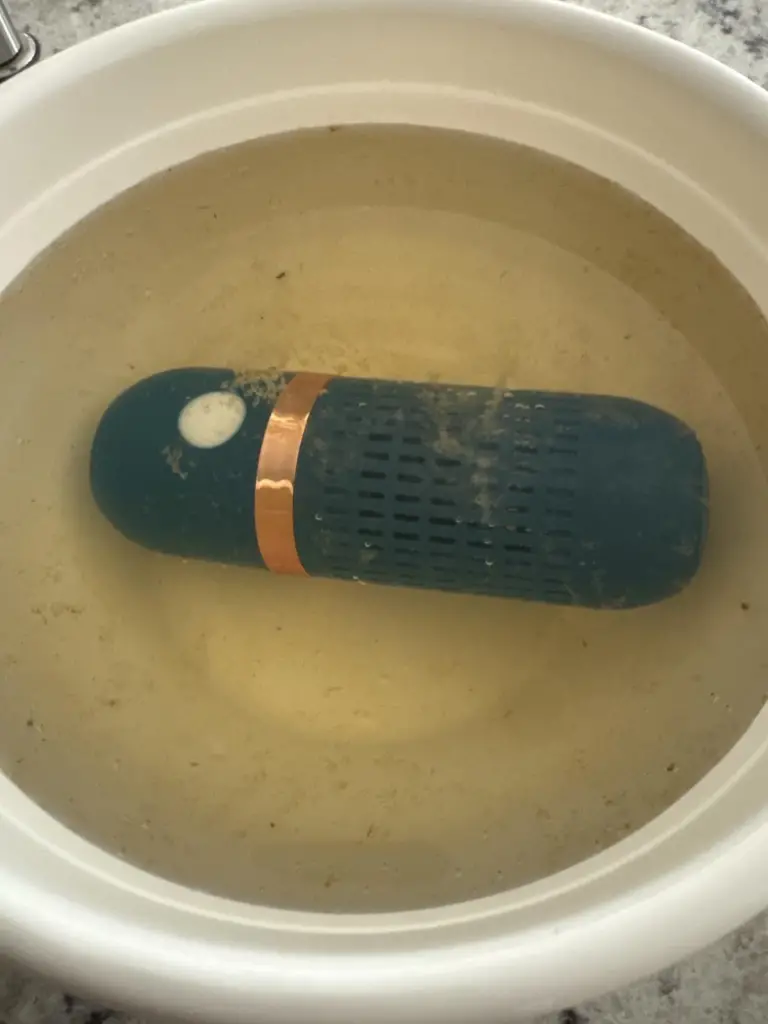
At one point, purely out of curiosity, I decided to test the PurePod in a completely clean bowl of water with absolutely no fruits or vegetables inside.
And weirdly… the water still started changing slightly.
I noticed:
- discoloration
- tiny floating particles
- and a sort of cloudy appearance developing over time
At first, I assumed the device itself probably wasn’t fully clean. So I washed it thoroughly. Then cleaned it again. Then used an entirely fresh bowl of water.
Same thing. And honestly? I still don’t fully know what to make of that.
Part of me wondered if it was some normal reaction from the purification process itself.
Another part of me started questioning whether those dramatic “look at all the dirt removed from your produce” videos online might sometimes be a little misleading if the water can change even without produce present.
But at the same time, I also genuinely liked using the device overall.
So my feelings became strangely mixed:
- impressed by the experience
- but also slightly confused by what exactly I was seeing
And weirdly enough, that made me trust my opinion more because it stopped feeling like blind hype.
Product Claims vs. Reality
Do I think it cleans produce better than a quick rinse under tap water? Honestly… probably yes.
Did it make me suddenly believe all fruits are secretly covered in horrifying invisible toxins? Not really.
I think the biggest value here is probably:
- convenience
- peace of mind
- and making produce washing feel more thorough overall
rather than expecting dramatic miracle-level purification.
Pros & Cons
Pros
- Easy and convenient to use
- Makes produce washing feel more thorough
- Fruits and vegetables genuinely looked fresher afterward
- Simple setup with no complicated process
- Became surprisingly easy to incorporate into routine
Cons
- The water discoloration can feel confusing
- Marketing online sometimes feels overly dramatic
- Hard to know exactly how much cleaning is truly happening
- The science behind the process could be explained more clearly
- Some people may see it as unnecessary compared to regular washing
Is It a Scam?
No, I personally wouldn’t call the PurePod a scam.
The device does function, the cleaning process is real, and I can absolutely understand why people enjoy using it regularly.
But I do think some online marketing around produce cleaners can become a little dramatic.
Especially those viral videos where the water suddenly looks horrifying afterward, because after my little “clean water experiment,” I honestly started wondering how much of those visual changes are:
- actual produce residue
- versus reactions happening naturally during the cleaning process itself
And that distinction matters.
Still, even with that confusion, I ended up leaning more positive than negative overall because I genuinely liked the experience of using it and found myself continuing to use it regularly anyway.
Which honestly says a lot.
How to Use
I personally liked using it most for:
- grapes
- berries
- leafy greens
- and apples
Basically the kinds of produce that never fully feel clean after a quick rinse.
I also think using a clear bowl makes the process more interesting because you can actually observe what’s happening in the water.
Though admittedly… that may also raise more questions.
Alternatives to Consider
- AquaPure Fruit and Vegetable Cleaner
- Ozone Generator Fruit and Vegetable Purifier
- Veggie Wash Fruit and Vegetable Wash
Conclusion — Would I Recommend It?
Honestly… yes, cautiously. Not because I suddenly think it’s some magical anti-pesticide machine transforming produce into laboratory-level purity.
But because I genuinely enjoyed using it and found myself feeling better about my produce-cleaning routine overall. At the same time, that weird clean-water experiment still sits in the back of my mind.
Because seeing the water change even without produce inside definitely made me question some of the dramatic before-and-after marketing online.
But strangely enough? That didn’t completely ruin the experience for me.
If anything, it just made me approach the product more realistically. And honestly, I think that’s probably the healthiest way to view products like this anyway.
Also read my review on the Dental Ultrasonic Retainer Cleaners
You performed the obvious experiment by testing the device on water alone. You say you still don’t know what to make of it. However it should be clear (no pun intended) that the device is generating whatever is discoloring and contaminating the water. Refusing to believe your own eyes is doing you no favors. Your experiment and the picture you posted is enough for me to take a pass on this device.
If you want to be more sure of your decision to continue to use it, you should have the water tested before and after a food free test. Culligan (Zero Water) sells an affordable little tester you can use for this purpose as a reference point. It gives you the number of elements or undissolved solids in the water. Better still would be to use ZeroWater for the test so that you start with an element count of “0”.
Thank you, this was my question… tap water vs. CLEAN water… Thanks!
Thanks , keep checking it out.
Was the clean water distilled, bottles spring, RO, tap? It makes a difference.
Thank you. I really enjoyed the review.
Did you try the clean water experiment with distilled water?
What kind of particulates may already be in whatever water (tap, possible minerals present?) you used?
Greetings Nora, I was wondering if you tried the clean water test, if you considered tap water vs. purified water? That would be my first test…. curious…
Thanks if you wanna reply,
Casey
I am wondering the same thing about using distilled water or some other source of more pure water than what comes out of the tap. I have a whole house water filtration system that filters out a lot of stuff including particulates, bacteria, chlorine, etc. I am curious as to whether or not the experiment with some kind of highly filtered water would have been better. Maybe the stuff seen after using the tap water was just contaminants in the local tap water.
Talking about the water only test. Do you think it could be the junk that is in the water, and this just brings it out. Did you try it with distilled water only?
It works using electrolysis according to their website.
According to Search Assist…Electrolysis will reveal dissolved solids and impurities in tap water, causing it to change color and become cloudy as metals, minerals, and chemical residues separate out. This process makes previously invisible contaminants visible, highlighting the overall impurity load in the water.
Electrolysis is not a widely recognized or commonly used method for cleaning fruits and vegetables. Traditional washing techniques, primarily using water, are generally effective for removing dirt and some pesticide residues.
Lack of Evidence: There is no substantial research supporting the effectiveness of electrolysis compared to conventional washing methods.
A little bit of research, thoughtful questions and possibly some help from AI can go a long way….
I can’t understand that it looks like the brownish “stuff” is coming out of the device itself. Makes me think it’s just made to look gross no matter what. And what is it that is coming out of the device?
How does a person get from “Hard to know exactly how much cleaning is truly happening” to “The device does function, the cleaning process is real” in only 4 lines? How could anyone make that determination without test the water before and after the device was used? Do you really believe you know what pesticides look like in water? I regret wasting my time reading this “test”.
This is disconcerting. I KNOW the chemicals that encase most of our fruits and veggies. They are preserved from insects and again for transportation – sometimes across country. But, there is also the issue of what is in our water??? When I first moved I read the “water report’. I never drink tap water now! I buy distilled water. And, if I could shower in distilled water, or if I could afford a whole house filtration system, I would go for it. Unfortunately, that is not on the option list. Frankly, any assistance in cleaning the chemicals off of our fruit and veggies is a good thing. As I test, I bought 2 green apples. They have been in my refrigerator crisper for 5 weeks. They have never changed, shrunk, shown signs of age. What does that tell you!
The test with plain water speaks volumes. Who knows what is being used to produce that. It could be worse than the pesticides. Thanks for the research, this will be a hard pass for me.
I’d like to share what another reviewer on another site said: It is basically nonsense. Fraudulent health spas have used the same bit of electrolysis in foot baths to tell you that it’s removing the contaminants in your body, but it really is just iron precipitating out of the water.
Moreover, due to being shipped from China, etc., the return fees are more than the cost of the unit. The customer service is non-existent. Waste of money.
Has anyone tested the free return, money back policy?