

NervoFlow is marketed as a nerve-health supplement that supposedly reduces burning, tingling and numbness while restoring balance, mobility and overall nerve function. But the more I looked into the product, the more I questioned the science behind the sales pitch and the way the product is being advertised.
The biggest red flag is the promotional funnel itself. NervoFlow is being sold alongside a supposed “pink salt trick,” an apparent fake medical-news presentation and claims involving Dr. Mehmet Oz and FDA approval. The actual product evidence is much less impressive. So, is NervoFlow legit? Let’s take a closer look.
Key Takeaways
- NervoFlow is marketed for neuropathy symptoms including burning, tingling, numbness and poor balance.
- The sales funnel uses a “pink salt” health story and apparent AI/manipulated appearances of recognizable medical figures.
- The company cites research on individual nerve-health ingredients, but there is no published clinical trial on the finished NervoFlow formula.
- Ingredient information is surprisingly difficult to verify, and the product’s online review counts are inconsistent.
- I would skip NervoFlow, especially as a treatment for unexplained nerve pain or neuropathy.
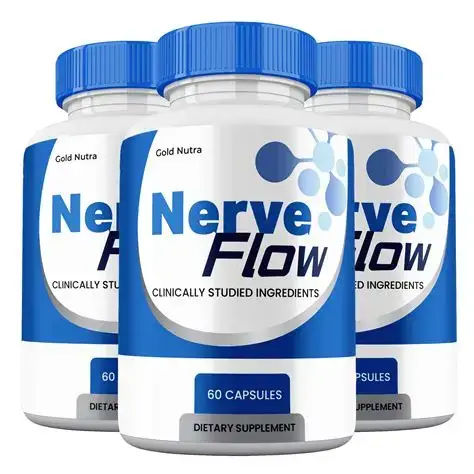
What Is NervoFlow?
NervoFlow is a dietary supplement marketed primarily toward people experiencing nerve discomfort, particularly burning, tingling and numbness in the hands and feet. The sales page promises that the supplement can support healthy nerve function, improve balance and reduce uncomfortable sensations. Some testimonials go considerably further, claiming that users regained mobility, stopped experiencing severe pain and were able to return to normal daily activities.
The product is sold through a direct-response sales funnel using BuyGoods as the retailer. The current offer is $158 for two bottles, $207 for three or $294 for six, with a 60-day money-back guarantee.
The six-bottle package is promoted as the “best value.” That is a lot of product to commit to before establishing whether the formula itself is worth taking.
How NervoFlow Claims to Work
NervoFlow’s marketing uses a few different explanations. The primary sales material presents the supplement as a combination of nutrients and compounds that support the nervous system, reduce oxidative stress and help the body maintain healthy nerve function. But the advertising funnel adds another layer: a supposed “pink salt trick” that is presented as a hidden solution for nerve pain.
The implication is that conventional medicine has overlooked a simple underlying problem and that this salt-based approach, combined with NervoFlow, can quiet nerve discomfort.
That is a much more dramatic proposition than simply saying a supplement provides nutritional support. And it is where the advertising becomes considerably more questionable.
Reality vs. Claims
There are legitimate ingredients associated with nerve health, and alpha-lipoic acid is probably the strongest example. Alpha-lipoic acid has been studied in people with diabetic peripheral neuropathy, including trials looking at symptoms such as burning and pain. Acetyl-L-carnitine and benfotiamine have also been investigated for nerve-related conditions.
That gives the general concept of nutritional nerve support some scientific basis. But NervoFlow has not demonstrated that its particular combination produces the results being advertised. The company’s sales page itself cites studies on individual ingredients rather than a clinical trial of the finished NervoFlow formula. It also says the product’s claims have not been evaluated by the FDA.
That distinction is important. A study showing that alpha-lipoic acid has been investigated for neuropathy does not prove that NervoFlow, containing an undisclosed or poorly documented combination of ingredients, will relieve someone’s neuropathy.
Red Flags to Consider
The “Pink Salt Trick”
This is probably the biggest marketing red flag. The NervoFlow advertising presents a supposed salt recipe as an FDA-approved way to relieve nerve pain before directing consumers toward the supplement.
The problem is that I found no credible evidence that the FDA has approved a pink salt recipe as a treatment for neuropathy. The sales page uses the phrase “FDA Approved” prominently, while the actual supplement disclaimer acknowledges that the product’s statements have not been evaluated by the FDA.
Those two things should not be confused. FDA does not pre-approve dietary supplements for effectiveness in the way the marketing presentation might make consumers think.
The Dr. Oz Connection
The promotional material uses Dr. Mehmet Oz’s name and image in the supposed medical-news story surrounding the pink salt trick. I found no credible evidence that Dr. Oz has endorsed NervoFlow or recommended it as a treatment for neuropathy.
The presentation appears designed to look like a legitimate television health segment rather than an ordinary supplement advertisement. That distinction matters because the credibility of the person appearing in an advertisement can influence whether someone trusts the product.
If the footage is manipulated or AI-generated, the apparent endorsement means nothing.
The Fake “60 Minutes” Style Presentation
Another NervoFlow advertorial uses the visual language of a television investigation, including news-style graphics and a story about a supposedly overlooked breakthrough.
That presentation gives the impression that NervoFlow has been investigated or validated by a major news organization. It has not. I would be especially cautious whenever a supplement advertisement looks like a news report but ultimately leads directly to a product checkout page.
A legitimate television investigation and an affiliate advertorial are two very different things.
The Medical Claims Are Much Bigger Than the Evidence
NervoFlow testimonials describe people whose severe burning and numbness supposedly disappeared, whose balance improved and whose lives returned to normal. The product page also says users may notice less tingling and burning within weeks.
Those are significant claims when the underlying symptoms could be caused by diabetes, vitamin deficiencies, medication effects, nerve compression, autoimmune disease, alcohol use, kidney disease and numerous other conditions.
A supplement cannot reasonably be presented as though it has discovered one universal cause of neuropathy. The first question should be why the nerves are being affected in the first place.
The Review Numbers Are Inconsistent
One NervoFlow review source found conflicting claims of 2,000-plus reviews and 79,200-plus reviews. The official sales pages also rely heavily on dramatic testimonials rather than independently verifiable clinical outcomes.
That does not prove that every testimonial is fabricated. It does mean I would not use the company’s own review numbers as evidence that tens of thousands of people have successfully treated neuropathy with NervoFlow.
“FDA-Registered Facility” Is Not FDA Approval
NervoFlow says it is manufactured in the USA in an FDA-registered facility following GMP standards. That may sound reassuring, but it does not mean the FDA has approved NervoFlow or determined that it works. The company’s own disclaimer actually acknowledges this, stating that the product’s statements have not been evaluated by the FDA.
So I would treat the FDA-registration language as manufacturing information, not proof of efficacy.
Is NervoFlow Effective?
This is where I would separate the ingredients from the product. Alpha-lipoic acid has legitimate research behind it for diabetic peripheral neuropathy. Acetyl-L-carnitine, B vitamins and some other nutrients also have research exploring their roles in nerve function. That makes NervoFlow more plausible than a supplement built around completely meaningless ingredients. But plausible is not proven.
There is no published randomized clinical trial demonstrating that the finished NervoFlow formula reduces neuropathy symptoms, restores damaged nerves or improves balance.
And because the exact formula and individual doses are not presented clearly enough, I cannot even confidently determine whether the product contains the amounts used in relevant research.
So I would not buy NervoFlow expecting it to reverse neuropathy.
Is NervoFlow Safe?
This is another reason I would not treat it as a casual wellness product. Numbness, burning and tingling can be symptoms of an underlying medical condition. Treating the symptoms with a supplement without investigating the cause can delay appropriate care.
Some ingredients commonly associated with nerve supplements can also interact with medications or affect blood sugar. The sales page itself recommends speaking with a healthcare provider before starting NervoFlow, particularly if you have a medical condition or take medication.
I agree with that part. If someone has sudden weakness, rapidly worsening numbness, problems walking, loss of bladder or bowel control or other significant neurological symptoms, that is not something I would attempt to handle with an internet supplement.
Pricing and Where to Buy
NervoFlow’s current direct-response offer is:
- 2 bottles: $158 plus $9.99 shipping
- 3 bottles: $207 with free shipping
- 6 bottles: $294 with free shipping
The six-bottle package is marketed as a 180-day supply and “best value.”
A 60-day money-back guarantee is advertised. The checkout is handled through BuyGoods, which is a payment and retail platform, rather than evidence that BuyGoods has evaluated or endorsed NervoFlow’s medical claims.
What To Do If You Already Bought It
If you already purchased NervoFlow, save the exact sales page, order confirmation, receipt and refund terms. When the bottle arrives, photograph the Supplement Facts label before throwing away any packaging. Compare the physical label with the formula that was advertised when you ordered.
I would also check your payment statement carefully for the exact amount charged. Most importantly, don’t stop prescribed neuropathy, diabetes or blood-pressure medication because a NervoFlow advertisement claims that the supplement addresses the underlying cause.
If your symptoms are persistent, worsening or unexplained, getting the cause investigated is much more valuable than simply masking the symptoms.
Conclusion
NervoFlow is not completely devoid of scientific plausibility. Some of the nutrients it references, particularly alpha-lipoic acid, have genuinely been studied for nerve-related symptoms. But the product’s marketing is a completely different story.
The supposed pink salt breakthrough, FDA-approved recipe claim, television-style advertorial and apparent use of recognizable medical figures create an impression of medical validation that the actual evidence does not support. Add the lack of a finished-product clinical trial, unclear dosing information and inconsistent review claims, and I don’t think there is enough here to justify the price.
My conclusion: I would skip NervoFlow. If the company wants to make strong neuropathy claims, I would want to see one clearly documented formula, exact ingredient doses, independent quality information and a properly conducted clinical trial on the finished product.
Until then, NervoFlow looks much more convincing in its advertisement than it does under investigation.
Also read – ArmandNibosi.com Review: Fake or Reliable Online Shopping Store?