

Olivaro Drops caught my attention because they promise to support healthy blood sugar, reduce cravings, improve energy, and help with weight management using a simple daily liquid supplement. That is quite a lot to promise from a single dropper, particularly when the formula contains more than 20 ingredients.
I wanted to find out whether the formula makes sense, whether the ingredients are present in meaningful amounts, and what the company actually provides to support its claims. I also looked into the pricing, the product’s online presence, and the claims about its manufacturing and quality testing. What I found does not establish that Olivaro is a scam, but I have serious questions about whether the formula is worth the money.
Key Takeaways
- The formula contains 22 ingredients in a proprietary blend weighing just 200 mg. Because the individual amounts are not disclosed, customers cannot determine how much of each botanical or amino acid they are actually getting.
- The chromium dose is exceptionally small. The label lists 0.7 micrograms per serving, equivalent to just 2% of the Daily Value. Research on chromium and blood sugar has often used doses measured in hundreds of micrograms, although the evidence for its benefits remains mixed.
- The marketing stretches across several health goals. Olivaro promotes blood sugar support, appetite control, weight management, and energy, but I could not verify clinical evidence showing that the finished product delivers those results.
- The pricing and seller information deserve scrutiny. The product appears across several similar-looking websites, and the published product information is not consistent across all of them.
- I would not recommend using it to manage diabetes or prediabetes. The evidence does not establish that Olivaro treats these conditions, and some ingredients may interact with medication.
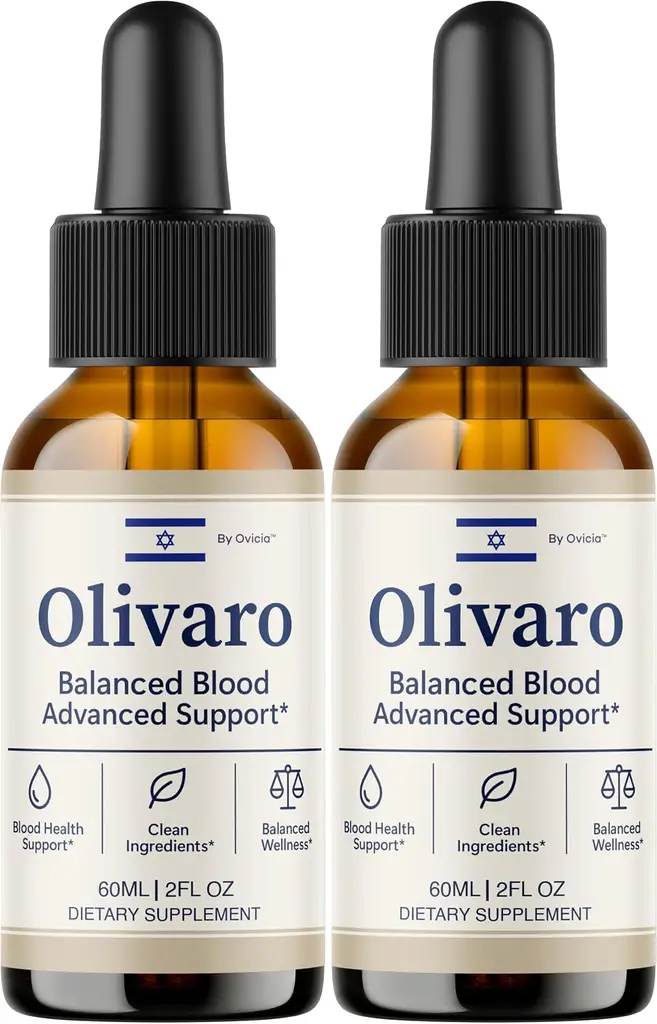
What Is Olivaro Drops?
Olivaro is a liquid dietary supplement sold in a 30 mL dropper bottle. The brand markets it as a daily supplement for blood sugar support, metabolic health, appetite control, and energy. The product’s sales pages suggest that the combination of chromium, herbal extracts, and amino acids can support healthy glucose metabolism while helping users manage cravings and weight.
Olivaro is not an approved diabetes medication, and its own disclaimer states that it is not intended to diagnose, treat, cure, or prevent disease. That disclaimer matters because the marketing still encourages customers to associate the drops with several outcomes related to blood sugar and metabolism.
The product’s official-looking sales pages advertise bundles rather than simply offering one bottle at a straightforward price. The prices I found included:
| Package | Advertised price |
|---|---|
| Two bottles | $158, plus $9.99 shipping |
| Three bottles | $207, with free US shipping |
| Six bottles | $294, with free US shipping |
These prices were listed on a sales page during my research and may change. The two-bottle offer works out to $79 per bottle, while the six-bottle offer reduces the advertised price to $49 per bottle. The lower price per bottle may look attractive, but it also requires spending $294 upfront on a supplement whose effectiveness has not been established.
I Dug Deeper Into the Olivaro Formula
According to the published Supplement Facts information, each 1 mL serving contains:
| Label item | Amount per serving |
|---|---|
| Chromium, as chromium picolinate | 0.7 mcg |
| Proprietary blend | 200 mg |
The proprietary blend contains 22 listed ingredients, including maca, grape seed extract, guarana, African mango, eleuthero, astragalus, green tea, gymnema, coleus forskohlii, capsicum, grapefruit, Panax ginseng, raspberry ketones, and several amino acids.
The other ingredients include glycerin, water, lemon extract, stevia, xylitol, preservatives, citric acid, and natural flavors. At first glance, the long ingredient list might make the formula look comprehensive. However, the total weight of the entire proprietary blend is only 200 mg per serving.
That is the first major issue.
The proprietary blend hides the individual doses
Olivaro lists the ingredients in its blend but does not disclose how much of each one is present. That means a customer cannot determine whether the formula contains a meaningful amount of gymnema, green tea extract, African mango, or any of the other ingredients associated with its marketing claims.
The fact that an ingredient appears on the label does not establish that the amount is sufficient to produce a measurable effect. Research typically examines specific preparations and doses, and those details matter when evaluating whether a commercial product is comparable.
A proprietary blend is not automatically evidence of wrongdoing. Companies can legally use proprietary blends under applicable US labeling rules. However, the format makes it much harder for consumers to assess the formula. When a company promotes more than 20 ingredients for several different health outcomes, I want to know how much of each ingredient is included and why those particular amounts were chosen.
Olivaro does not provide enough information to answer those questions.
The chromium dose is another concern
Olivaro lists 0.7 micrograms of chromium per 1 mL serving. For context, the NIH Office of Dietary Supplements reports that many chromium supplements provide hundreds of micrograms. Research examining possible effects on blood sugar has also used doses substantially higher than the amount listed on Olivaro’s label.
That does not mean taking more chromium necessarily improves blood sugar control. The research is mixed, and the NIH notes that chromium supplementation has not consistently produced meaningful benefits across the populations studied.
But it does raise a question about Olivaro’s formulation. Chromium is prominently featured in the brand’s blood sugar messaging, yet the amount disclosed on the label is only 2% of the Daily Value.
The other ingredients may be intended to contribute to the formula’s overall effect, but their individual quantities are hidden within the 200 mg proprietary blend. I could not establish that this combination compensates for the small chromium dose or that the finished product produces the benefits advertised.
Do Olivaro Drops Actually Support Blood Sugar?
This is the most important question because blood sugar management is the product’s central selling point. Olivaro highlights chromium, gymnema, and Panax ginseng as ingredients that support glucose metabolism. Each has been investigated in some form, but the evidence does not establish that the Olivaro formula reliably improves blood sugar control.
The NIH’s National Center for Complementary and Integrative Health notes that research into herbal supplements for diabetes has generally been limited, and it has not established that these supplements are effective treatments. Even when a study finds a possible benefit from an individual ingredient, that finding cannot automatically be applied to a commercial formula containing an undisclosed amount of the ingredient.
There is also a difference between supporting normal blood sugar in a healthy adult and treating elevated blood glucose in someone with diabetes or prediabetes. Olivaro’s disclaimer says that the product is not intended to treat diabetes. I would take that seriously rather than interpreting the brand’s blood sugar messaging as evidence that the drops can replace medical care.
I could not verify a reliable clinical trial on Olivaro itself demonstrating that it improves fasting glucose, HbA1c, insulin sensitivity, or other meaningful blood sugar outcomes.
Without that evidence, I would not rely on these drops to manage blood sugar.
Can Olivaro Help With Weight Loss and Cravings?
Olivaro also promotes ingredients such as African mango, green tea, capsicum, guarana, and carnitine for appetite control, metabolism, and weight management. These ingredients appear frequently in weight-loss supplements, but their presence does not establish that the product will help customers lose a meaningful amount of weight.
Research into weight-loss supplements often finds limited or inconsistent benefits, and results from one ingredient or preparation do not necessarily apply to another.
The undisclosed amounts make it particularly difficult to evaluate Olivaro. Even if one of the ingredients has shown a modest effect in a particular study, I cannot determine whether the dose in these drops is comparable. The same problem applies to the promise of fewer cravings. The website describes the formula as supporting appetite control, but I could not verify clinical evidence demonstrating that Olivaro reduces cravings or produces sustained weight loss.
I would not pay nearly $300 for six bottles based on these claims alone.
What About the Energy Claims?
Olivaro includes maca, eleuthero, astragalus, guarana, and green tea extract, which the brand associates with energy and everyday vitality. Guarana and green tea can contribute caffeine, although the label does not disclose the amount of caffeine in each serving.
That makes it difficult for a customer to know exactly how much caffeine they are consuming. This is relevant for anyone who is sensitive to caffeine, experiences palpitations, has sleep difficulties, or already consumes several caffeinated drinks each day. The website’s language about steady energy and avoiding an energy crash is marketing language, not proof that the product reliably delivers that experience.
I could not verify a clinical trial establishing that Olivaro improves energy levels or prevents fatigue.
I Found Several Different Olivaro Websites
Another part of my investigation was looking at the brand’s online presence. I found several sites using the Olivaro name, including pages that present themselves as official product websites or retail outlets. Some list a formula with six named ingredients, while others describe the 22-ingredient proprietary blend.
The six-ingredient descriptions include chromium picolinate, gymnema, African mango, green tea, maca, and Panax ginseng. The more detailed Supplement Facts information lists those ingredients alongside a much longer list of botanicals and amino acids. There may be differences between product versions, sellers, or the information published on individual sites. I could not establish a clear explanation that reconciles all these differences.
This matters because a customer should be able to identify the exact product being purchased and confirm that the information on the sales page matches the bottle they receive.
I also found a September 2026 press release announcing the product’s ingredient specifications. The announcement provides additional formula information, but a company-distributed press release is not independent confirmation that the supplement works or that its ingredients have been independently verified.
I would want to establish who manufactures the product, who is responsible for distributing it, and which seller is accountable for customer service and refunds before placing an order.
Multiple websites using the same product name do not, by themselves, prove fraud. But when the formula and seller information vary, the lack of a clear, consistent source of information becomes a legitimate concern.
Is Olivaro FDA-Approved?
Olivaro’s marketing refers to manufacturing in an FDA-registered facility and compliance with manufacturing standards. It is important to understand what those statements mean. The FDA does not approve dietary supplements for safety and effectiveness before they are sold to consumers. A facility’s registration with the FDA is not the same as FDA approval of the product, and it does not establish that the supplement works.
The FDA does impose requirements on dietary supplement manufacturers, including obligations concerning manufacturing practices, product quality, and truthful labeling. However, the existence of those requirements does not mean that every supplement on the market has been independently tested by the agency.
I could not independently verify a batch-specific laboratory report establishing the identity, potency, and purity of the Olivaro drops. That does not prove that the product is contaminated or that the manufacturer’s quality claims are false. It means I could not confirm them from the documentation available to me.
For a supplement intended to influence blood sugar, I would want more than a general statement about manufacturing standards. I would want to see verifiable quality documentation for the actual product.
Safety Concerns: These Drops Are Not Suitable for Everyone
The long ingredient list creates another problem: the formula includes several substances that may be relevant to people taking medication.
Blood sugar medication
Some ingredients promoted for blood sugar support may affect glucose levels. Combining such ingredients with insulin or other glucose-lowering medication could increase the risk of low blood sugar.
Anyone taking diabetes medication should consult a healthcare professional before using Olivaro. Do not stop or reduce prescribed medication because of a supplement.
Grapefruit extract and licorice-related ingredients
The ingredient list includes grapefruit extract and monoammonium glycyrrhizinate, a liquorice-related compound. Grapefruit can interact with certain medications, although the relevance depends on the specific medicine and preparation. Liquorice-derived compounds can also have safety implications depending on their form and amount.
Because Olivaro does not disclose the individual amounts in its blend, it is harder for consumers and healthcare professionals to evaluate the potential significance of these ingredients. If you take prescription medication, ask a pharmacist or clinician to review the complete ingredient list before using the drops.
Xylitol and pets
Olivaro’s other ingredients include xylitol, a sweetener that can be highly toxic to dogs. Keep the bottle securely away from pets. These concerns do not establish that Olivaro is inherently unsafe for every adult. They do mean that its extensive ingredient list should not be treated as harmless simply because the product is marketed as natural.
What Are Customers Saying About Olivaro?
I could not establish a reliable, independently verified body of customer reviews that would allow me to draw a confident conclusion about how well Olivaro works. Some of the websites promoting the product provide detailed descriptions of the formula, pricing, and refund policy, but that information is not a substitute for independently verified customer experiences.
I would also be cautious about relying on testimonials that describe improvements in blood sugar, weight, or energy without supporting medical information. A customer may report feeling better after taking a supplement, but that does not establish that the product caused the change.
For blood sugar in particular, subjective impressions are not enough. Objective measurements such as fasting glucose and HbA1c are more useful for assessing glucose control, and changes should be interpreted with appropriate medical guidance.
I would not treat a collection of promotional testimonials as proof that Olivaro is effective.
Is Olivaro Worth the Price?
The advertised pricing is one of the reasons I would hesitate to buy it. At $158 for two bottles, the customer pays $79 per bottle. The six-bottle package reduces the listed price to $49 per bottle, but requires a $294 upfront purchase.
The larger package is marketed as the better value, but buying more of an unproven product does not make it a better investment. There is also an important evidence problem. Because the amounts of the individual ingredients in the proprietary blend are not disclosed, it is difficult to judge what the customer is receiving for the price.
I would be more comfortable considering a supplement that provides transparent ingredient amounts, a clear rationale for its formulation, verifiable quality testing, and evidence relevant to the intended outcome.
Olivaro does not provide enough independently verifiable information for me to conclude that its price is justified.
Red Flags I Found
These are the issues that stood out during my investigation:
- A 200 mg blend containing 22 ingredients: The total blend weight is disclosed, but the individual amounts are not.
- A very small disclosed chromium dose: The label lists 0.7 micrograms per serving, while the brand emphasizes chromium in its blood sugar marketing.
- Multiple health claims: The product is promoted for blood sugar, cravings, weight management, and energy without verified clinical evidence for the finished formula.
- Inconsistent product descriptions: Some Olivaro sites describe six ingredients, while others publish a 22-ingredient blend.
- Limited independent verification: I could not confirm a batch-specific laboratory report or a reliable clinical trial on the finished product.
- A high upfront cost: The advertised six-bottle package costs $294, despite the unresolved questions about the formula’s effectiveness.
- Potential medication interactions: Grapefruit extract, licorice-related ingredients, and substances intended to affect blood sugar warrant particular caution for people taking medication.
None of these points independently proves that Olivaro is a scam. Taken together, however, they give me little reason to trust the product’s broad marketing claims or spend hundreds of dollars on it.
What Would I Recommend Instead?
If your concern is blood sugar, I would start with objective information about your glucose levels rather than an expensive supplement promising several benefits at once. A clinician can help determine whether blood sugar is within the expected range and whether further testing or treatment is appropriate. For someone with diabetes or prediabetes, evidence-based care is much more important than experimenting with supplements.
If weight management is the primary goal, I would focus on a sustainable eating pattern, regular physical activity, sleep, and medical guidance where appropriate. If a nutritional deficiency or another health issue is contributing to fatigue, identifying that issue is more useful than assuming a broad herbal blend will solve it.
If you still want to consider a supplement, look for one with a complete and transparent label, clearly stated ingredient amounts, independent quality testing, and evidence relevant to your particular goal.
I would not use Olivaro to replace prescribed medication or delay medical assessment.
Conclusion: Is Olivaro Drops Legit or a Scam?
My verdict is to skip Olivaro Drops for now. I could not establish that it is a confirmed scam, but I also could not find enough evidence to justify its claims or its price. The product contains familiar botanical extracts and amino acids, but the formula’s long ingredient list is less impressive when the entire proprietary blend weighs just 200 mg, and the individual amounts are undisclosed.
The chromium dose is also very small, and the research on chromium and herbal supplements does not establish that Olivaro will meaningfully improve blood sugar control. Its claims about cravings, weight management, and energy are similarly unproven for the finished product.
I am also uncomfortable with the inconsistent product descriptions across the different websites selling it. Customers should not have to work out which version of a supplement they are buying or guess whether its ingredients are present in useful amounts. I cannot conclude that the product is fraudulent based on these findings alone. But I would not spend $158 to $294 on it without much stronger evidence, a clearer label, and independently verifiable quality documentation.
For anyone considering Olivaro because of diabetes, prediabetes, or elevated blood sugar, my advice is especially straightforward: do not rely on these drops to manage your condition or replace medical treatment.
Also read – I Bought the Novexa Gummies for My Kids: Here’s My Honest Review of It