

When a supplement promises to cleanse the lungs and help people breathe more easily, I want to know exactly what it contains and how it is supposed to achieve those results. Lungora is marketed as a natural way to support respiratory health, particularly for adults concerned about their lung function as they get older. But looking at the ingredients raises an important question: are these actually ingredients with demonstrated benefits for the lungs, or is the product using general wellness research to sell a more specific promise?
I looked into Lungora’s advertised formula, the evidence behind its ingredients, its pricing, and some inconsistencies surrounding the product’s online listings. There are a few things potential buyers should understand before spending money on it. So, is Lungora legit? Let’s take a closer look.
Key Takeaways
- Lungora is marketed as a lung-cleansing supplement, but its six advertised ingredients do not have convincing evidence demonstrating that this particular formula cleans the lungs or improves breathing.
- The listed ingredients include magnesium glycinate, alpha-lipoic acid, butcher’s broom, L-carnitine, turmeric extract, and CoQ10. Individual ingredient quantities are not clearly disclosed in the main sales information.
- The product is advertised at prices ranging from approximately $49 to $89 per bottle, depending on the seller and package. The larger bundles require a substantial upfront payment.
- Multiple websites use the Lungora name, and at least one presents a different ingredient formula. Buyers should verify the exact product and seller before ordering.
- I would not buy Lungora specifically for lung cleansing, mucus removal, or respiratory problems. The evidence does not support those expectations.
What Is Lungora?
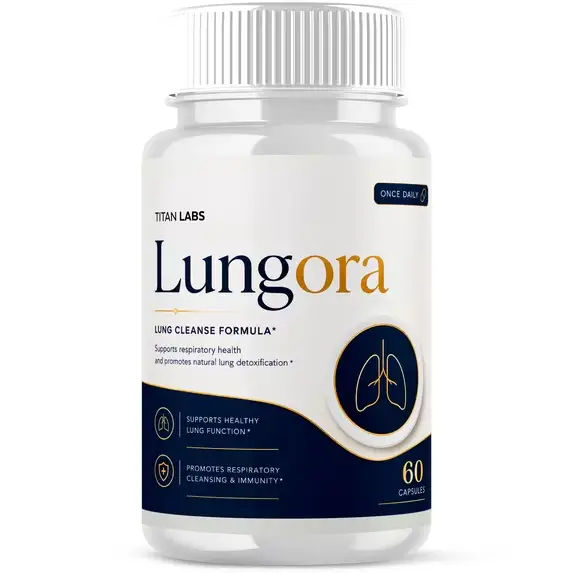
Lungora is a dietary supplement sold in capsule form and marketed for lung health, respiratory support, and natural detoxification.
The main six-ingredient formula lists:
- Magnesium glycinate
- Alpha-lipoic acid (ALA)
- Butcher’s broom root extract
- L-carnitine
- Turmeric extract
- Coenzyme Q10 (CoQ10)
The sales pitch presents these ingredients as a combination intended to support antioxidant protection, circulation, cellular energy, and respiratory wellness.
There is a distinction worth making here. Some of these ingredients have legitimate nutritional or physiological functions. Magnesium, for example, is an essential mineral, while CoQ10 is involved in cellular energy production. Turmeric contains compounds that have been studied for their biological effects.
But none of that automatically means a capsule containing these ingredients can remove accumulated contaminants from the lungs, clear mucus, or improve lung function. That is the central issue with Lungora. The product’s marketing focuses on the lungs, while much of the rationale offered for its formula concerns general wellness, circulation, and antioxidant activity.
Why I Looked Into Lungora
I was particularly interested in the gap between what Lungora promises and what its ingredients are known to do. The product is presented as a lung cleanse formula that supports easier breathing and helps the body with its natural cleansing processes. Those claims can sound convincing, especially to someone who has smoked, lives in an area with air pollution, or experiences persistent respiratory symptoms.
However, I could not find convincing clinical evidence showing that Lungora itself produces those outcomes. I also noticed that the main sales materials do not clearly disclose the individual quantities of all six ingredients. That makes it difficult to compare the formula with the doses used in scientific studies.
For me, those are important shortcomings. Before I would consider buying a supplement marketed for a specific organ, I would want evidence that the formula actually benefits that organ, not merely a list of ingredients with interesting research behind them.
Does Lungora Actually Clean the Lungs?
This is the claim I would examine most carefully. The lungs already have natural mechanisms for clearing mucus and inhaled particles. Mucus traps substances that enter the respiratory tract, while tiny hair-like structures called cilia help move that mucus toward the throat so it can be expelled or swallowed.
A product claiming to cleanse the lungs should provide evidence that it improves these processes or produces another clearly defined respiratory benefit.
Lungora’s marketing does not establish that its formula does this. The American Lung Association explains that there is insufficient scientific evidence to recommend most commercial lung-detox products. It also emphasises that avoiding harmful exposures, particularly tobacco smoke, is important for protecting lung health.
I could not find a convincing controlled human trial demonstrating that Lungora removes accumulated pollutants, clears deep lung mucus, repairs damaged lung tissue, or improves lung function. The antioxidant properties of some ingredients do not fill that gap. Antioxidant activity in laboratory studies is not proof that a supplement detoxifies a human organ.
My conclusion is that Lungora’s central lung-cleansing promise remains unproven.
Has Lungora Been Clinically Tested?
I could not identify convincing published clinical trial evidence showing that the finished Lungora formula improves respiratory outcomes. There is an important difference between citing studies about magnesium, turmeric, CoQ10, or alpha-lipoic acid individually and testing the exact product being sold.
A properly designed trial of Lungora would need to establish what participants receive, compare outcomes against an appropriate control group, and assess whether any changes in breathing or lung function are meaningful.
Without that evidence, the product’s advertised respiratory benefits remain uncertain. The lack of a product-specific trial does not automatically prove that Lungora is fraudulent or that nobody could experience a subjective benefit. It means the company has not established that the formula works as advertised.
I would not describe it as clinically proven.
The Ingredient and Label Transparency Problem
Another concern is the lack of clearly disclosed individual ingredient amounts. The main product information identifies six ingredients, but the available sales materials do not consistently provide a complete breakdown of their quantities. A separate page reports magnesium at 80 mg and a 575 mg proprietary blend containing the six listed components, without specifying the individual amounts of the ingredients within that blend.
Why does that matter? An ingredient’s presence does not tell me whether the dose is meaningful. It also makes it difficult to compare the product with published research or assess potential interactions. This matters particularly when a product combines several ingredients that may affect different aspects of health. Someone taking medication should be able to determine exactly what they are consuming and in what quantities.
I would want a complete, legible Supplement Facts panel before buying Lungora. I would also want the manufacturer to provide reliable information about the ingredient sources, manufacturing standards, and quality testing.
A proprietary blend is not proof of poor quality, but hiding individual amounts makes independent assessment more difficult.
Multiple Lungora Websites: Are They Selling the Same Product?
This is another issue worth noting. During my investigation, I found several websites using the Lungora name. The main six-ingredient formula features magnesium glycinate, alpha-lipoic acid, butcher’s broom, L-carnitine, turmeric, and CoQ10.
However, another site markets a product called Lungora using a different formula containing bromelain, elderberry, quercetin, vitamins C and D, zinc, elastin peptides, and mulberry leaf.
These are not interchangeable ingredient lists. I could not establish that the two websites represent the same manufacturer, the same product, or the same formulation. This does not prove that either product is fake, but it means buyers should not assume that every website using the Lungora name is selling the same supplement.
Before ordering, I would verify the exact website, the seller’s legal identity, the ingredient label, and the applicable refund policy. I would also save a copy of the listing and checkout terms in case the product delivered differs from what was advertised.
The name alone is not enough to establish product identity.
What About the Manufacturing and Quality Claims?
Some Lungora websites advertise manufacturing in the United States, GMP-certified facilities, and quality-control procedures. Those claims may sound reassuring, but they need to be interpreted carefully.
A company’s statement that its supplement is manufactured in a GMP-compliant facility does not establish that the finished product has been independently tested for every relevant quality measure. Similarly, registration of a manufacturing facility with the FDA does not mean that the FDA has approved the supplement for effectiveness.
I could not independently establish all of the manufacturing and testing claims for every website using the Lungora name. I would want to see current documentation from an identifiable manufacturer and, ideally, independent batch-specific testing that confirms ingredient identity, potency, and relevant contaminants.
I would also want to know which company is legally responsible for the product. A fulfilment address or customer-service contact is not necessarily the identity of the manufacturer.
Until those details are clear, I would treat the quality claims as assertions that require verification.
Is Lungora Worth the Price?
The advertised pricing varies across the websites I reviewed. One seller lists packages at approximately $89 per bottle for two bottles, $72 per bottle for three, and $49 per bottle for six. Other Lungora pages advertise different prices and offers. Shipping costs and refund terms may also differ by seller.
That variation is another reason to verify the exact listing before purchasing. Even at the lowest advertised price, I would struggle to justify buying Lungora specifically for lung cleansing. The product has not been convincingly shown to deliver that benefit, and the individual ingredient quantities are not consistently disclosed.
A 60-day money-back guarantee, where offered, may reduce some financial risk, but I would read the full terms before ordering. I would want to know whether opened bottles qualify for a refund, who pays return shipping, and whether there are other conditions or deadlines.
For me, a discount is not a good reason to buy a supplement whose main claims remain unproven.
Who Might Consider It?
Someone looking for a general nutritional supplement might be interested in some of Lungora’s ingredients. However, the appropriate choice depends on individual nutritional needs, health conditions, medications, and the actual quantities contained in the product.
I would not choose Lungora on the assumption that it cleans the lungs, removes pollutants, or treats respiratory symptoms. Anyone considering it should first verify the complete label and discuss potential interactions with a healthcare professional if they take medication or have an existing medical condition.
Who Should Skip It?
I would particularly advise the following people to avoid relying on Lungora:
- Smokers and former smokers looking for a supplement to reverse lung damage or remove years of accumulated pollutants.
- People with persistent coughing or mucus who need to identify the underlying cause.
- People experiencing wheezing or shortness of breath who might delay appropriate medical assessment.
- Anyone taking multiple medications who cannot verify the exact quantities of the ingredients.
- Budget-conscious buyers who do not want to spend money on a supplement without convincing evidence of the advertised benefits.
If you experience new, worsening, or persistent breathing problems, seek appropriate medical advice rather than attempting to treat them with a lung-cleansing supplement. Severe or sudden breathing difficulty requires urgent medical attention.
Alternatives I Would Consider
Rather than purchasing a supplement that promises to cleanse the lungs, I would focus on approaches that address the actual concern.
For smokers or former smokers: Avoiding tobacco smoke and getting support to stop smoking are more defensible ways to protect lung health than relying on an unproven detox supplement.
For persistent mucus or coughing: A healthcare professional can investigate whether the symptoms are related to infection, asthma, allergies, chronic lung disease, or another cause. Treatment should depend on that assessment.
For diagnosed respiratory conditions: Use evidence-based treatments recommended by a qualified healthcare professional. Do not replace prescribed treatment with a supplement marketed for lung cleansing.
For general nutritional support: If you have a specific nutritional deficiency or another reason to supplement, choose a product with a transparent label and an appropriate dose. There is no need to pay a premium for a lung-cleansing claim that has not been demonstrated.
I would not recommend switching to another supplement with equally ambitious claims. I would rather address the underlying problem than spend money on a product that has not established its effectiveness.
Conclusion
I would skip Lungora as a lung-cleansing supplement. The product contains ingredients with legitimate nutritional and biological functions, but I could not find convincing clinical evidence that the finished formula cleans the lungs, removes accumulated mucus, repairs respiratory damage, or improves breathing.
The lack of consistently disclosed ingredient quantities makes the formula harder to assess, and the existence of multiple websites using the Lungora name creates additional uncertainty about which product a customer will receive.
I am not claiming that Lungora has been conclusively proven to be fraudulent. The more defensible conclusion is that its central respiratory claims have not been adequately substantiated.
I would not spend $49 to $89 per bottle on the assumption that this supplement will clean my lungs. I would want transparent ingredient quantities, independently verifiable manufacturing information, and credible clinical evidence for the finished product before reconsidering it.
My recommendation: pass on Lungora if your main reason for buying it is to cleanse your lungs or improve your breathing.
Also read – Is the Mammotion LUBA mini 2 AWD Worth It? An Owner’s Brutally Honest Review