

The Solvora V1 Acupuncture Pen is marketed as an easy way to relieve back pain, joint discomfort, muscle tension, and other aches without needles or medication. The idea is appealing: use a small handheld device at home instead of booking an appointment or spending money on treatments that may not provide lasting relief.
But I wanted to look beyond the polished advertisements. What does this pen actually do, how convincing are its pain-relief claims, and are customers getting a dependable product for their money? The customer feedback raised some concerns, particularly about durability, delivery, and refunds. So, is Solvora worth buying? Let’s take a closer look.
Key Takeaways
- Solvora V1 is an electrical stimulation pen, not a replacement for professional acupuncture or medical treatment.
- The device has nine intensity levels and interchangeable tips, but I found no convincing product-specific clinical evidence establishing its advertised benefits for conditions such as arthritis or sciatica.
- Customer feedback is mixed. Some buyers report temporary relief, while others complain about cheap plastic construction, early failure, missing orders, and difficult returns.
- The advertised price has been around $39 for one pen, although bundles and checkout offers can increase the total.
- I would be cautious about buying it, especially given the gap between its broad medical-sounding claims and the evidence available to support them.
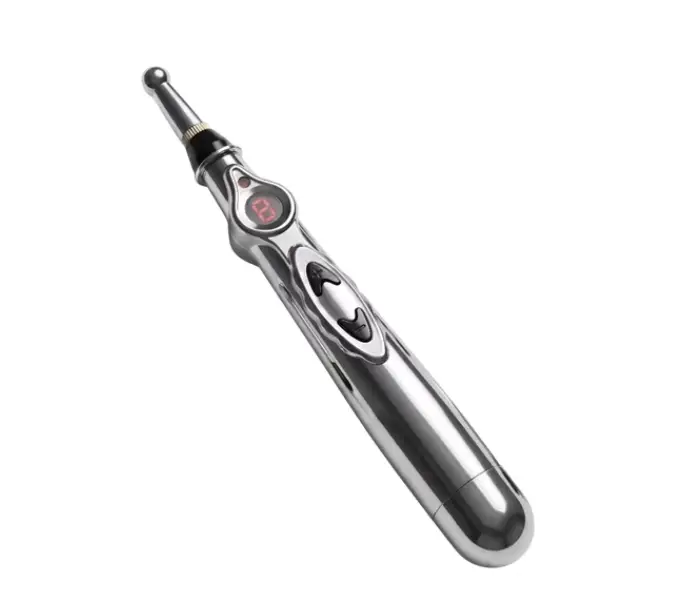
What Is Solvora Acupuncture Pen?
The Solvora V1 is a portable, battery-powered electrical stimulation device sold through the Solvora online store. It is designed to deliver electrical pulses through a small contact tip placed against the skin.
The product has nine intensity levels and comes with interchangeable tips, a carrying case, and promotional extras such as an instructional ebook and a body-point map. Its instructions describe two ways to use it: placing the tip on a specific point or gliding it across a larger area with conductive gel.
The company markets the device for a wide range of complaints, including back pain, joint discomfort, arthritis, sciatica, plantar fasciitis, and sports-related soreness. It also suggests that stimulation can improve circulation, reduce tension, and support the body’s natural healing processes.
That is quite a list for a small handheld gadget. Electrical stimulation can produce noticeable sensations and may offer temporary relief in some circumstances. However, the presence of electrical pulses does not establish that a device can treat every condition listed in its advertising. Those claims need to be assessed individually.
Why I Looked Into Solvora
What caught my attention was the way the product combines the familiar concept of acupuncture with an electrical gadget that anyone can supposedly use at home.
The device is presented as a needle-free alternative that delivers targeted stimulation to specific points on the body. That description can make it sound equivalent to professional acupuncture, but the two are not interchangeable simply because both may involve stimulating selected areas.
Solvora’s device delivers electrical pulses through a handheld contact tip. Traditional acupuncture generally involves inserting very fine needles at selected points, usually as part of treatment provided by a trained practitioner. Electrical stimulation devices have their own potential uses, but the evidence for one method cannot automatically be transferred to the other.
I also wanted to know whether Solvora had been tested as a finished product or whether its marketing relied mainly on general explanations about electrical stimulation and traditional healing points. I could not establish that the Solvora V1 itself has been tested in convincing clinical trials demonstrating the broad benefits advertised on its website.
What I Found About Its Pain-Relief Claims
Solvora claims that its electrical pulses can help relieve discomfort, relax muscles, improve circulation, and support recovery. Its marketing also mentions specific conditions, including arthritis and sciatica. The problem is that these conditions have different causes and may require different treatments.
A sensation of relaxation after using an electrical stimulation device is not the same as treating the underlying cause of persistent joint pain or nerve symptoms. Nor does a tingling sensation prove that inflammation has decreased, damaged tissue has healed, or circulation has improved in a clinically meaningful way.
Some electrical stimulation methods, including certain TENS applications, may provide temporary pain relief for some people. Results vary depending on the condition, the device, and how it is used. That does not mean every electrical pen has been proven effective for every condition mentioned in its advertisements.
I could not find convincing independent clinical evidence establishing that Solvora’s particular device provides the wide-ranging benefits it promotes. I would therefore treat its claims about arthritis, sciatica, and other medical conditions with caution rather than assuming that the device can address them simply because it produces electrical pulses.
Is It Really Acupuncture?
This is one of the distinctions I think buyers should understand before ordering. Solvora uses acupuncture and meridian language to explain how the device supposedly works. The company describes stimulation of specific body points as a way to release tension, improve circulation, and restore balance. However, the device is more accurately understood as a consumer electrical stimulation pen marketed around acupuncture concepts.
That distinction does not automatically make it useless. A device can provide a sensation that some people find soothing without being equivalent to professional acupuncture. The issue is whether the marketing gives buyers a more impressive impression of its capabilities than the evidence justifies.
Solvora also promotes the device for conditions such as plantar fasciitis, sciatica, and arthritis. I would not assume that stimulating a point on the skin can reliably treat these conditions, particularly when the underlying problem has not been diagnosed. If the product provides temporary comfort for some users, that is one thing. Claiming broad therapeutic benefits is another.
What Customers Are Saying
The customer feedback is mixed, and I found some complaints that deserve attention. The Solvora product page displays a rating of 4.6 out of 5 and claims more than 50,000 customers. However, the store’s review widget has also displayed a lower overall rating, and an independent Loox store review page showed a 2.7 rating from 31 reviews when inspected.
Some buyers describe a positive experience, saying they enjoyed the pulsing sensation or felt temporary relief around their shoulders, back, or other sore areas. Others say the device was easy to use and convenient to keep at home. But the negative feedback is difficult to ignore.
Some customers complain that the pen feels cheaply made, stopped working shortly after opening, or broke along its seam after only a short period. Others say the device had little noticeable effect or that they felt more electrical stimulation in their hand than in the area they were trying to treat.
There are also complaints about orders that never arrived, slow delivery, and customer-service exchanges that dragged on while buyers tried to obtain refunds. These reports do not prove that every Solvora pen is defective or that nobody benefits from using it. They do, however, raise legitimate questions about consistency, durability, and the reliability of the buying experience.
I would also be careful about treating the store’s large advertised customer count as independent proof that the device works. A high rating on a seller’s website is not the same as a controlled clinical study, and the available feedback does not establish that the advertised benefits are typical.
Red Flags to Consider
The product promises a lot
Solvora markets the pen for an unusually broad range of complaints, from everyday muscle tension to arthritis and sciatica. Those conditions are not interchangeable, and I found no convincing product-specific clinical evidence supporting the full range of claims.
The advertised ratings deserve context
The website’s headline rating and customer-count claim look impressive, but independent store feedback is considerably more mixed. I would not rely on the advertised rating alone when deciding whether to buy.
Durability complaints are concerning
Reports of devices breaking shortly after opening or stopping after a brief period are especially relevant for an electrical gadget. Even if some customers find the sensation helpful, a device that fails quickly is poor value.
Delivery and refund complaints add risk
Some buyers report non-delivery or difficulty getting a satisfactory resolution from customer support. These are individual accounts rather than proof that every order goes wrong, but they are worth considering before paying.
The shipping and return information may be confusing
The product page has advertised shipping from Texas, while the store’s published business and return information has pointed toward Slovenia, including a return address in Ig. That discrepancy is worth clarifying before ordering because the actual return destination can affect postage costs and the effort involved in returning a product.
The discounts may make the offer look better than it is
The product has been advertised at approximately $39, reduced from a crossed-out price of $85, with extra accessories and digital bonuses presented as additional value. A large discount does not tell me whether the original price reflects what the device is actually worth.
None of these points independently proves that Solvora is fraudulent. Taken together, though, they make me less confident about recommending it.
Is Solvora Worth the Price?
The Solvora V1 has been advertised at around $39 for a single device, with shipping sometimes listed separately. Multi-unit bundles and other offers can raise the total substantially.
That is not necessarily an unreasonable price for a functioning consumer gadget. The problem is that I would be paying for a device whose advertised therapeutic benefits have not been convincingly established and whose customer feedback includes complaints about build quality and reliability.
I would also factor in the possibility of return postage and the time involved in resolving a complaint. A money-back guarantee sounds reassuring, but its practical value depends on the conditions, return destination, and whether the seller handles the request promptly. I would not buy several units just to take advantage of a bundle discount. If the device turns out to be ineffective or unreliable, buying more simply increases the amount at risk.
Who Might Find It Useful?
Someone looking for a handheld electrical stimulation gadget for occasional comfort might find the format convenient. Some customers report enjoying the sensation, and electrical stimulation can provide temporary relief in certain circumstances.
However, I would distinguish that possibility from the broader claims made by Solvora. There is not enough convincing product-specific evidence for me to recommend this particular pen as a treatment for arthritis, sciatica, or other diagnosed conditions.
Anyone considering electrical stimulation should also read the safety instructions carefully. People with pacemakers or other implanted electronic devices should not use the pen without appropriate medical guidance. Depending on the device and the area being treated, additional precautions may apply.
Who Should Skip It?
I would particularly advise the following people to think twice before buying Solvora:
- Anyone expecting a treatment for arthritis or sciatica. The device has not been convincingly shown to treat these conditions.
- People dealing with persistent or unexplained pain. A consumer gadget should not delay an assessment of the underlying problem.
- Buyers who need dependable build quality. Reports of early failure and cheap construction make me hesitant to recommend it.
- Anyone who wants a straightforward return process. The delivery and return complaints suggest that resolving a problem may take more effort than expected.
- People with implanted electronic devices. They should follow the device’s warnings and seek medical advice before considering electrical stimulation.
Alternatives I Would Consider
I would start by identifying what I actually wanted to address rather than automatically buying a device marketed for every type of pain. For temporary muscle discomfort, a pharmacist or healthcare professional can help identify suitable options based on the location and cause of the pain. For recurring joint pain, sciatica, or persistent symptoms, a proper assessment is more useful than relying on a generic stimulation pen.
If electrical stimulation is appropriate, I would compare established TENS devices with clear instructions, transparent safety information, a verifiable manufacturer, and a reliable return policy. I would still check that the particular device is suitable for the intended use rather than assuming all electrical stimulation products are equivalent.
I would also consider professional physiotherapy or acupuncture when appropriate. These options are not guaranteed to work for everyone, but they allow the approach to be matched to the person’s condition rather than relying on the broad promises of a consumer gadget.
Conclusion
I would be cautious about buying the Solvora V1 Acupuncture Pen. The device delivers electrical stimulation through a handheld tip, and some customers report that they find the sensation helpful. However, I could not establish convincing clinical evidence that this particular product provides the broad range of benefits advertised for arthritis, sciatica, and other conditions.
The customer feedback also raises questions about durability, delivery, and refunds. Reports of broken devices and poor customer experiences do not prove that every order will be problematic, but they make the purchase less appealing when the product’s effectiveness is already uncertain.
I am not calling Solvora a confirmed scam. My concern is that the marketing makes the device sound like a versatile pain-treatment system, while the evidence available does not justify that level of confidence.
My recommendation is to skip it unless you can verify the seller, the return terms, and the device’s safety and suitability for your intended use. I would rather choose a clearly documented electrical stimulation device or get advice about the actual cause of the pain than pay for a heavily marketed pen with mixed customer feedback.
Also read – Celestron StarSense Explorer Telescope Review: My Experience Buying It for My Son