

I bought the Celestron StarSense Explorer for my son, and it has been a great introduction to astronomy. He loves looking at the Moon, and the telescope delivers really good views of it. The setup is beginner-friendly, the optics are impressive for the price, and the kit comes with what you need to get started. The main drawback is the stand, which can make the telescope shake during viewing, but overall, we are very satisfied with our purchase.
Key Takeaways
- A great beginner telescope, especially for children interested in astronomy.
- Produces very good views of the Moon.
- The lenses provide impressive viewing quality for the price.
- The included accessories and app-guided setup make getting started easier.
- The stand could be more stable, as the telescope sometimes shakes.
- Additional eyepieces and filters can improve the viewing experience.
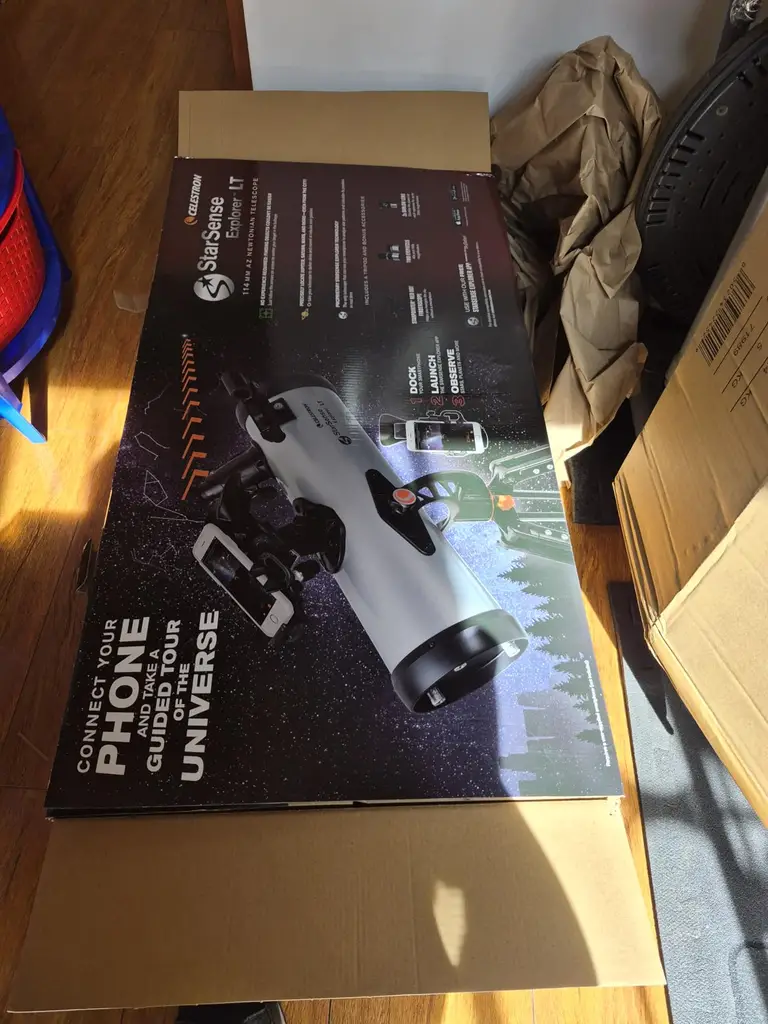
What Is the Celestron StarSense Explorer?
The Celestron StarSense Explorer is a range of telescopes designed to make astronomy more accessible to beginners. Its main selling point is the smartphone-assisted navigation system, which helps users locate objects in the night sky without having to learn complicated star charts first.
Depending on the model, the telescope comes with different optical designs, mounts, eyepieces and accessories. The StarSense Explorer app uses your smartphone’s camera to recognize star patterns and guide you toward celestial objects. On-screen arrows help you move the telescope in the right direction, making it easier to find what you want to observe.
For someone buying their first telescope, that guidance can make a big difference. Instead of spending the entire evening trying to figure out where to point the telescope, you have a tool that helps you get started.
Why I Bought It
I bought this telescope for my son because I wanted to give him a way to explore astronomy and see more of the night sky for himself. The Moon is particularly fascinating to look at through a telescope, and I knew he would enjoy being able to see its surface in greater detail than he could with the naked eye.
I also wanted something suitable for a beginner rather than an expensive, complicated setup that would require a lot of experience to use properly. The Celestron StarSense Explorer seemed like a good fit because it combines a traditional telescope with app-guided navigation. I wanted something that would be enjoyable for my son while still giving him room to learn and explore as his interest in astronomy grows.
So far, I am happy with that decision.
My Experience With the Celestron StarSense Explorer
My Son Loves Looking at the Moon
The biggest success has been seeing how much my son enjoys using the telescope. He loves looking at the Moon, and the telescope gives him very good views of it. Being able to observe the Moon through a telescope makes the experience much more engaging than simply looking up at it in the sky.
You can begin to appreciate details on its surface that are not as obvious to the naked eye, which makes every viewing session feel like an opportunity to discover something new.
For a first telescope, that excitement matters. I wanted something that would encourage my son to keep looking, asking questions and learning about space, and the StarSense Explorer has been great for that. It has made astronomy feel more accessible rather than intimidating.
The Viewing Quality Is Impressive for the Price
I have been pleased with the optical quality. The lenses provide good views, and the Moon looks particularly good through the telescope. For a beginner telescope, I think the viewing experience is one of its strongest points. It gives you a chance to observe celestial objects more closely without immediately having to invest in a much more advanced setup.
I would not expect a beginner telescope to deliver the same experience as a high-end astronomical instrument, but that is not why I bought this one. I wanted something that would introduce my son to the hobby and make looking at the night sky enjoyable. For that purpose, it has done very well.
The Moon is an excellent starting point because it is relatively easy to find and offers plenty to look at. Once you become comfortable using the telescope, you can gradually explore other suitable objects.
Setup and Alignment Are Beginner-Friendly
Another thing I appreciate is the app-guided setup and alignment. Getting started with a telescope can be confusing when you have never used one before. Knowing how to point it, align the finder and locate an object is not necessarily intuitive, especially for a child.
The StarSense Explorer app helps guide you through the process with on-screen instructions and tutorials. Rather than having to figure everything out independently, you can follow the guidance to help locate objects in the sky.
This makes the telescope more approachable for beginners and gives you a starting point for learning how to navigate the night sky. The app does not turn the telescope into a fully motorized system that automatically moves to each object. You still move the telescope yourself, following the on-screen guidance. However, that is part of what makes the system useful: it helps you learn where to point the telescope while still allowing you to operate it manually.
The Kit Is Convenient and Portable
I also appreciate that the set comes with the essential equipment needed to get started. You do not have to begin by searching for a long list of separate accessories just to use the telescope. The telescope is portable enough to move around, which is useful when you want to set it up somewhere with a better view of the sky.
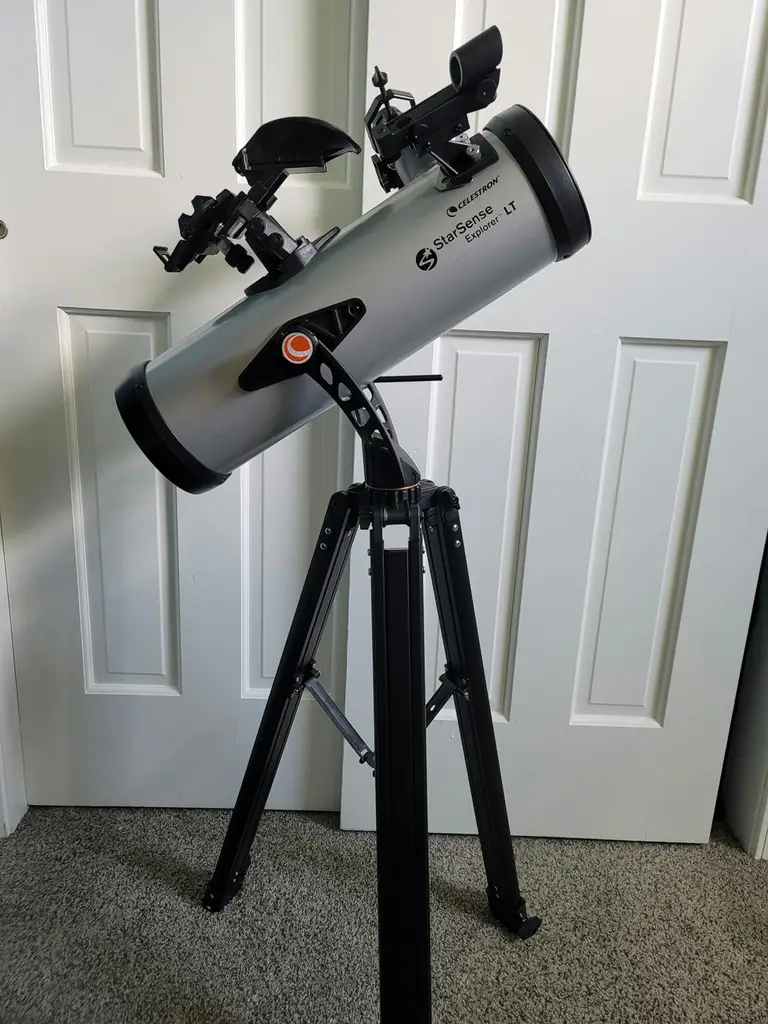
For a family telescope, portability matters because you want to be able to bring it out when the weather and viewing conditions are right without turning the whole process into a major project. The included equipment makes the package feel like a sensible starting point for someone who is new to astronomy.
That said, the exact accessories depend on which StarSense Explorer model you purchase, so it is worth checking the contents of the particular version before ordering.
The Stand Could Be Better
My biggest complaint is the stand. At times, the telescope shakes more than I would like, which can make viewing frustrating. When you are trying to observe something through a telescope, stability matters because even small movements can make the object difficult to keep centred in the eyepiece.
This is particularly noticeable when you are trying to get a clear view at higher magnification. The more you magnify an object, the more obvious small movements can become. It is not a deal-breaker for us, but I would have preferred a sturdier stand.
For a beginner telescope, especially one intended to be used by a child, a stable mounting system makes the experience much more enjoyable. You do not want to spend too much time waiting for the shaking to settle when you are excited to look at something.
This is the main area where I think the overall setup could be improved.
Additional Eyepieces and Filters Are Worth Considering
Although I am happy with the telescope as a beginner setup, additional accessories can help you get more out of it. Different eyepieces provide different magnifications, so having a selection can give you more flexibility when observing the Moon, planets and other celestial objects.
A Barlow lens can also increase the magnification of a compatible eyepiece, although higher magnification does not automatically mean a better view. The telescope’s optical limits, atmospheric conditions and the stability of the mount all affect how much useful detail you can see.
A Moon filter is another accessory some people like because it reduces the brightness of the Moon’s image, particularly when observing it near its brighter phases. Whether you need one depends on your preferences and the eyepieces you use. I would not rush to buy every accessory immediately. I would start with the equipment included in the kit, learn how to use the telescope, and then decide what additional eyepieces or filters would genuinely improve the experience.
One important distinction: ordinary filters and additional magnification accessories are not substitutes for a proper solar filter. Never point the telescope at the Sun without a suitable, correctly fitted solar filter designed for that purpose, as doing so can cause permanent eye damage.
What I Like
- Excellent for beginners: A good introduction to astronomy for someone who has never owned a telescope.
- Great lunar viewing: My son loves looking at the Moon, and the views are very good.
- Good optical performance for the price: The viewing quality has made us happy with the purchase.
- App-guided navigation: The tutorials help make setup and locating objects less intimidating.
- A complete starter kit: The included equipment gives beginners a practical starting point.
- Portable design: It is convenient to move and set up for viewing.
- Good value: Overall, we are satisfied with what we paid.
What I Don’t Like
- The stand can be shaky: This is my main complaint because it can interfere with viewing.
- Additional accessories may be desirable: Depending on what you want to observe, you may eventually want more eyepieces or filters.
- There is still a learning curve: The app helps, but you still need to learn how to operate the telescope and understand magnification.
Is the Celestron StarSense Explorer Worth It?
For us, yes. I bought this telescope for my son, and it has been a good purchase. He enjoys looking at the Moon, the viewing quality is impressive for the price, and the app-guided setup makes it easier for beginners to get started.
The stand is the main drawback because the shaking can make viewing less comfortable than it should be. However, that has not outweighed the benefits for us. I think this is a good option for families who want to introduce a child to astronomy without immediately investing in a more advanced telescope.
It is also worth remembering that what you can see depends on the specific model, the objects you are observing, local light pollution and atmospheric conditions. The Moon is an excellent starting point, while observing planets and more distant objects requires realistic expectations and suitable viewing conditions.
Who I Think Will Love It
I think the Celestron StarSense Explorer is particularly suitable for people who:
- Are buying their first telescope.
- Want to introduce a child to astronomy.
- Enjoy observing the Moon and planets.
- Want app-assisted help locating celestial objects.
- Prefer a portable telescope that is relatively straightforward to set up.
- Want a beginner-friendly kit without immediately buying lots of separate accessories.
Who Should Think Twice
I would consider other options if you:
- Need a very stable mount for high-magnification viewing.
- Already have significant experience with astronomy and want more advanced equipment.
- Expect the telescope to locate and track objects automatically without manual movement.
- Want to observe very faint deep-sky objects and need a telescope specifically suited to that purpose.
- Expect to achieve the highest possible magnification simply by adding stronger eyepieces.
Alternatives
If you are comparing beginner telescopes, these are a few options worth considering:
- Celestron AstroMaster 70AZ
- Celestron StarSense Explorer LT 80AZ
- Celestron StarSense Explorer 130mm Tabletop Dobsonian
- Sky-Watcher Heritage 130P
Conclusion
I bought the Celestron StarSense Explorer for my son, and overall, we are very satisfied with it. He loves looking at the Moon, and the telescope provides very good views. The kit is portable, the optics are impressive for the price, and the app-guided setup makes it a good introduction to astronomy.
The stand could certainly be better because the shaking can interfere with viewing, but that is the main drawback in an otherwise positive experience. I would recommend it to families and beginners who want to explore the night sky without starting with an overly complicated telescope. It offers a good balance of accessibility, viewing quality and value.
Would I Buy It Again?
Yes. For the price, the viewing experience and how much my son enjoys it, I am happy with the purchase.
Would I Recommend It?
Yes. I think it is a good beginner telescope, particularly for Moon viewing and introducing children to astronomy. Just be aware that the stand could be more stable, and consider additional accessories only when you know what you need.
Also read my similar review of the Din Glow Projector