

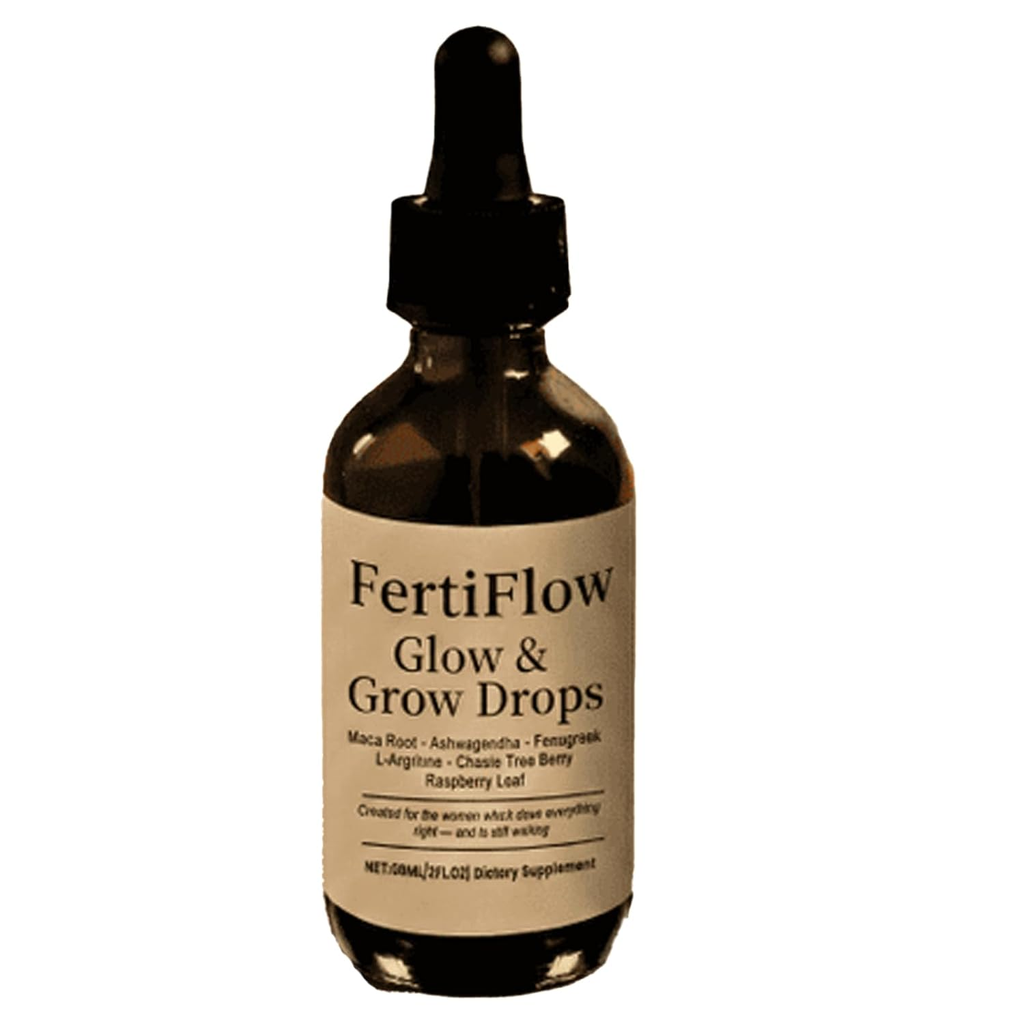
FertiFlow Glow & Grow Drops are marketed to women who want to improve their fertility naturally, with promises of better egg quality, more regular cycles, balanced hormones, and a greater chance of getting pregnant. The product is also promoted through emotional testimonials from women who say they conceived after struggling with infertility or undergoing unsuccessful IVF cycles.
Those are powerful stories, especially for anyone who has spent months or years trying to conceive. But I wanted to know whether the product’s ingredients and evidence justify those promises. I also looked into the company’s product information, dosing instructions, and refund policy. What I found gave me several reasons to be cautious.
Key Takeaways
- I could not verify that FertiFlow improves fertility or increases pregnancy rates. The company makes claims about egg quality, hormone balance, and conception, but I could not establish that the finished product has been tested in a reliable clinical trial.
- The product information is inconsistent. The website contradicts itself about how many ingredients the formula contains, how much to take, and how frequently to take it.
- The refund policy is less reassuring than the marketing suggests. The product is promoted as a 90-day fertility ritual, but the product page’s stated refund window is just seven days after delivery.
- I would not use these drops as a fertility treatment. Some ingredients have been studied individually, but that does not establish that this particular combination will help someone conceive or improve IVF outcomes.
What Are FertiFlow Glow & Grow Drops?
FertiFlow Glow & Grow Drops are a liquid dietary supplement marketed for female reproductive wellness. The company positions them as an alternative to taking multiple fertility supplements separately, claiming that its combination of nutrients supports hormonal health, egg quality, stress management, and cellular energy.
The product page lists a promotional price of $59.99, reduced from an advertised $119.95. It recommends taking the drops consistently for at least three months, suggesting that this period allows users to assess changes in their reproductive health.
The marketing targets women trying to conceive, including women concerned about irregular cycles, polycystic ovary syndrome (PCOS), diminished ovarian reserve, and age-related fertility changes. It also features testimonials from women who claim the supplement helped them conceive after unsuccessful fertility treatments.
This is where I think the distinction between a general wellness supplement and a fertility treatment becomes particularly important. A supplement can contain nutrients involved in normal reproductive function without being proven to improve a person’s fertility. And supporting normal cellular function is not the same thing as increasing the likelihood of pregnancy.
I Dug Deeper Into the FertiFlow Formula
The company advertises a blend of 15 research-backed nutrients. Its ingredient descriptions include:
- Ashwagandha
- Coenzyme Q10 (CoQ10)
- Myo-inositol
- N-acetylcysteine (NAC)
- L-arginine
- Raspberry leaf
- Maca root
- Fenugreek
- Selenium
- Vitamin D3
- Folate
- Vitamin B12
- Choline
- Vitamin C
- Zinc
These ingredients have different functions, and some have been investigated for specific reproductive or metabolic outcomes. However, the website does not consistently provide the amount of each ingredient in the formula. Without clear, verifiable doses, it is difficult to determine whether the product contains amounts comparable to those used in relevant research.
That is a significant limitation. A supplement containing a studied ingredient is not necessarily equivalent to the preparation or dose used in a clinical study.
The website contradicts itself about the formula
The product page describes the formula as containing 15 nutrients, but elsewhere it refers to a combination of six ingredients. Another section describes maca root plus 14 additional nutrients. These descriptions may reflect different versions of the sales copy, but the page does not explain the discrepancy clearly.
The dosing instructions are equally confusing. One section recommends two full droppers, or 2 mL, daily. Another describes a two-drop daily ritual, while other sections refer to ten drops and even say to take two droppers twice daily.
Those are materially different instructions. A customer should not have to piece together a supplement’s recommended dose from contradictory sections of a sales page. I would want to see a complete Supplement Facts label, including the amount of every ingredient per serving, before considering this product. I would also want the manufacturer to confirm the correct serving size in writing.
Do the Ingredients Actually Support Fertility?
This is where I would separate the research on individual ingredients from the promises being made about FertiFlow itself.
CoQ10 and egg quality
CoQ10 plays a role in cellular energy production, and researchers have investigated its potential relevance to ovarian function and fertility. Some studies have explored CoQ10 supplementation in women undergoing fertility treatment, including women with diminished ovarian reserve. However, research findings are not sufficient to conclude that every CoQ10 supplement improves egg quality or increases the likelihood of a live birth.
Even if an ingredient has promising preliminary evidence, that does not establish that FertiFlow contains an effective dose or produces the same results.
Myo-inositol and NAC
Myo-inositol has been studied in women with PCOS, particularly in relation to metabolic function and reproductive outcomes. NAC has also been investigated for various reproductive and metabolic effects. However, results can vary according to the population studied, the preparation, the dose, and the outcome being measured. Evidence relating to PCOS cannot automatically be applied to every woman experiencing fertility problems.
FertiFlow’s marketing suggests that its formula supports insulin sensitivity and hormonal balance, but I could not verify that the finished product has been tested to establish those benefits.
Ashwagandha, maca, and fenugreek
These ingredients are commonly promoted in wellness supplements for stress, vitality, and hormonal health. Their presence may sound impressive, but the research supporting specific reproductive outcomes is limited or varies by ingredient and preparation.
For example, evidence that ashwagandha may affect stress does not establish that it improves egg quality or helps women conceive. Similarly, traditional use of maca or fenugreek does not demonstrate that the FertiFlow combination increases pregnancy rates.
Ashwagandha also deserves particular caution. It can cause side effects and may interact with medications. It has been associated with rare cases of liver injury, and its safety during pregnancy is not established. Women who are trying to conceive should discuss it with a qualified healthcare professional before taking a supplement containing it.
The same general principle applies to the other ingredients: their suitability depends on the person’s health, medications, and reproductive circumstances.
The Biggest Problem: The Pregnancy and IVF Testimonials
FertiFlow’s website features stories from women who say they became pregnant after using the drops. Some describe years of negative pregnancy tests, unsuccessful IVF cycles, low ovarian reserve markers, or being advised to consider donor eggs.
One testimonial describes a woman in her early forties who claims that her follicle-stimulating hormone (FSH) level fell from 15 to 9 after taking the product and that she subsequently had a successful pregnancy.
Another describes a woman who says she obtained several good-quality embryos after previously unsuccessful retrievals. These are emotionally compelling stories. But they are not clinical evidence that FertiFlow caused the reported outcomes. A person may become pregnant after starting a supplement without the supplement being responsible. Fertility can also vary between treatment cycles, and individual hormone measurements do not establish that a product improves fertility.
I could not independently verify these testimonials or establish that the reported outcomes were caused by the drops. The website does not provide the kind of controlled clinical evidence needed to establish that connection. I am particularly uncomfortable with the way such stories are used to promote a product to women who may already be worried about their fertility, their age, or the cost of IVF.
A testimonial about a pregnancy after using a supplement is not proof that the supplement made that pregnancy possible.
Can FertiFlow Help Women Avoid IVF?
The company presents the drops as a way to support reproductive wellness and includes marketing that asks whether the product can help women avoid expensive fertility treatments. Although the wording sometimes stops short of an explicit guarantee, the overall presentation encourages customers to associate the product with outcomes such as conception after unsuccessful treatment.
I could not find reliable evidence establishing that FertiFlow improves IVF success rates or allows women to avoid IVF. The US Food and Drug Administration has warned consumers about unproven fertility supplements marketed with claims about treating infertility or improving reproductive outcomes. The Federal Trade Commission has likewise cautioned that fertility-product claims need reliable scientific support.
These warnings do not mean FertiFlow itself has received an FDA warning. I did not establish that it has. They are relevant because the product’s marketing touches on precisely the kinds of outcomes for which strong evidence is necessary. If someone has been advised to consider IVF, has diminished ovarian reserve, or has been trying to conceive without success, I would not recommend delaying a fertility assessment to try these drops for three months.
The appropriate next step depends on the person’s age, reproductive history, and medical circumstances. A supplement should not be treated as a substitute for that assessment.
Does FertiFlow Have Third-Party Testing?
FertiFlow’s website states that the product is made in a GMP-certified US facility and undergoes third-party purity testing. Those claims would be reassuring if independently documented. However, I could not verify a batch-specific laboratory report for the exact Glow & Grow Drops product.
A manufacturing facility’s use of good manufacturing practices does not prove that a particular product improves fertility. Similarly, a purity test does not establish clinical effectiveness.
I would want to see a certificate of analysis identifying the product and batch tested, the laboratory responsible, and the results for relevant quality measures. I would also want the full ingredient label and evidence that the formula contains the quantities claimed.
Until those documents are available and independently verifiable, I would treat the testing statements as claims made by the seller rather than confirmed evidence of product quality.
FertiFlow’s Refund Policy Raises Questions
FertiFlow promotes Glow & Grow as a 90-day ritual, encouraging customers to take the drops for at least three months before assessing their results. However, the product page I reviewed states that customers have just seven days after delivery to request a replacement or refund, with refunds described as subject to approval.
That is a significant difference between the time needed to assess the product according to its own marketing and the time allowed to request a refund.
If the company is encouraging customers to use the product for three months, I would expect the terms of any satisfaction guarantee to be particularly clear. Instead, the seven-day window means customers may have to decide whether to keep the product long before completing the suggested trial period.
I also found a separate promotional article on a FertiFlow-associated domain advertising a 90-day money-back guarantee. I could not establish that this guarantee has the same terms as the seven-day policy on the product page.
That inconsistency needs clarification. Before ordering, I would save the exact offer and refund policy shown at checkout and ask the company to confirm the applicable terms in writing.
Red Flags I Found
Here are the main concerns that stood out during my investigation:
- Conflicting ingredient descriptions: The website alternates between six ingredients, 15 nutrients, and a description of one ingredient plus 14 others.
- Inconsistent dosing instructions: The page refers to two drops, ten drops, two droppers daily, and two droppers twice daily. Those instructions should not conflict on a health product.
- No verified clinical trial of the finished formula: I could not establish that FertiFlow has been tested in a reliable study demonstrating improved pregnancy rates, egg quality, or IVF outcomes.
- Dramatic fertility testimonials: Stories about successful pregnancies and improved fertility markers are presented without independently verifiable evidence that the drops caused the outcomes.
- A short refund window: The product page allows seven days after delivery, despite recommending a three-month trial.
- Conflicting guarantee information: A separate promotional article advertises a 90-day money-back guarantee, which does not match the seven-day policy on the product page.
- Unverified testing claims: The company advertises third-party testing, but I could not verify a batch-specific report for the product.
These findings do not prove that the drops contain no useful ingredients or that every customer testimonial is false. They do, however, leave important questions unanswered about the formula, the evidence, and the terms of purchase.
What Would I Recommend Instead?
If the goal is to improve fertility, I would start with a qualified healthcare professional rather than a product promoted through dramatic pregnancy testimonials. Depending on the circumstances, a clinician may assess ovulation, thyroid function, reproductive hormones, sperm health, or other factors that can affect conception. The appropriate evaluation varies from person to person.
For women who may become pregnant, folic acid is an established part of preconception care because it helps reduce the risk of neural tube defects. However, taking folic acid is not the same as treating infertility, and the appropriate prenatal supplement depends on individual needs.
If you are considering CoQ10, myo-inositol, NAC, or other fertility-related supplements, discuss the evidence and appropriate doses with your clinician. This is especially important if you have PCOS, are undergoing fertility treatment, take medication, or may already be pregnant.
I would not use FertiFlow as a replacement for prescribed treatment, and I would not delay a fertility assessment while waiting to see whether the drops work.
Conclusion: Is FertiFlow Glow & Grow Legit?
My verdict is to approach FertiFlow Glow & Grow Drops with significant caution. I could not establish that the product is a confirmed scam, but I also could not verify the fertility benefits its marketing encourages customers to expect. The ingredients are not all made up, and some have been studied for aspects of reproductive or general health. That is not enough to demonstrate that this particular formula improves egg quality, increases pregnancy rates, or helps women avoid IVF.
What concerns me most is the combination of emotional pregnancy testimonials, unverified claims about fertility outcomes, contradictory dosing instructions, inconsistent ingredient descriptions, and unclear refund terms.
I would not spend $59.99 on these drops based on the claims currently presented. Before considering them, I would want a complete and consistent Supplement Facts label, independently verifiable quality-testing results, reliable clinical evidence supporting the finished product, and written confirmation of the refund policy.
Women struggling to conceive deserve clear information and evidence-based care, not promises that make an expensive supplement seem like the missing piece in their fertility journey.
Also read – I Bought Sea Salt Spray and Curling Sea Clay: Here’s My Honest Review of it