

Willis Judd sells copper and magnetic bracelets that look like ordinary jewellery but are marketed with a much bigger promise: pain relief, improved circulation and better joint mobility. The bracelets are attractive, and some designs are quite elaborate. But when a jewellery company starts presenting magnets and copper as a form of therapy, I think those claims deserve more scrutiny than ordinary product-quality claims.
My main finding: there is a significant difference between buying this bracelet because you like how it looks and buying it because you expect it to relieve arthritis or chronic joint pain.
Key Takeaways
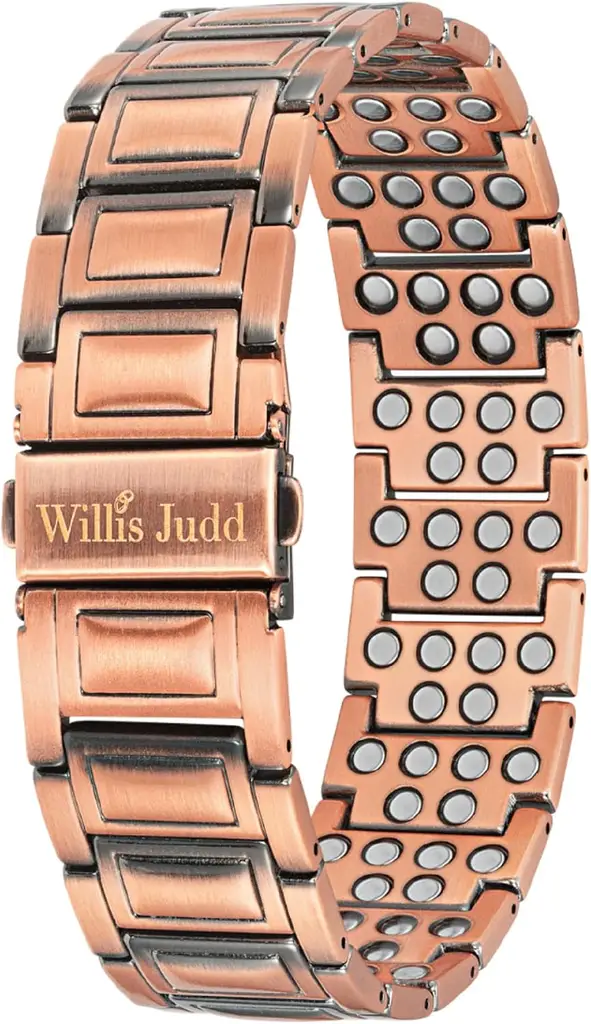
- Willis Judd sells copper jewellery, including magnetic bracelets with multiple magnets embedded in their links.
- The company markets potential benefits such as pain relief, improved circulation, reduced inflammation and better mobility.
- Scientific research has not established that copper bracelets or static magnetic jewellery provide meaningful arthritis pain relief.
- The company advertises money-back guarantees, but its refund conditions include restrictions and fees that customers should examine.
- My verdict: It may be worth considering as jewellery, but I wouldn’t buy it as a treatment for arthritis or joint pain.
What Is the Willis Judd Copper Bracelet?
Willis Judd is a jewellery retailer specialising in copper and magnetic accessories for men and women. Its collection includes copper bangles, magnetic bracelets, necklaces, rings and anklets.
The bracelets come in several designs and strengths. One of the men’s popular models, for example, is advertised as a 21mm-wide bracelet with three magnets per link. Other upgraded versions advertise six magnets per link. The company describes its products as being made from pure copper and presents magnetic therapy as an additional wellness feature.
Depending on the design, the bracelets have adjustable links or flexible fittings, and some come with a tool to help customers resize them. There is nothing particularly unusual about selling copper jewellery. The question is whether the copper and magnets actually provide the health benefits used to promote the products.
Do Copper Bracelets Actually Relieve Arthritis Pain?
Copper bracelets have been marketed for arthritis and joint discomfort for decades. The usual explanation is that copper is absorbed through the skin and helps reduce inflammation or improve joint health. However, there isn’t convincing scientific evidence supporting this explanation.
One particularly relevant study was a randomised, placebo-controlled trial published in PLOS ONE. Researchers examined copper bracelets and magnetic wrist straps in people with rheumatoid arthritis.
The study found no meaningful therapeutic benefit from wearing either the copper bracelets or magnetic wrist straps. They did not provide significant improvements in pain, inflammation or disease activity compared with the control devices. This wasn’t a trial of the Willis Judd brand specifically, but it is directly relevant to the type of jewellery being sold.
The company would need convincing product-specific evidence to demonstrate that its bracelets perform differently. I couldn’t find such evidence.
What About the Magnets and Improved Circulation?
Willis Judd also promotes magnetic therapy, suggesting that the embedded magnets may improve circulation, ease tension and support mobility. The problem is that static magnets, which are the type commonly used in magnetic jewellery, have not been conclusively shown to relieve pain.
The National Center for Complementary and Integrative Health (NCCIH) distinguishes static magnets from certain medical electromagnetic therapies. Some electromagnetic technologies have specific medical applications, but that does not mean an ordinary bracelet containing permanent magnets provides the same benefits.
Adding more magnets doesn’t automatically make a bracelet more therapeutic either. The company’s upgraded models advertise multiple magnets per link, but magnet count is a product specification, not evidence of improved health outcomes.I would therefore be cautious about paying extra for a stronger magnetic version if the main reason is to obtain greater pain relief.
What Are Customers Saying?
Willis Judd displays positive customer testimonials on its website. Some buyers praise the bracelets for their appearance, comfort and durability, while others report improvements in arthritis discomfort and general wellbeing.
The main website also claims that the brand has been worn and loved by more than 96,000 customers. There are positive ratings on external shopping platforms as well. However, these ratings need to be interpreted carefully because they don’t establish that the bracelets provide medical benefits.
A customer saying that a bracelet looks good, fits comfortably or feels sturdy is providing useful feedback about the jewellery. Someone saying their arthritis improved is reporting a personal experience, not demonstrating that the magnets or copper caused the improvement.
I would give more weight to the former when assessing this product.
How Much Does It Cost?
Willis Judd sells several copper bracelet designs, so pricing depends on the model and the country-specific storefront. On its US website, examples include:
- Men’s Triple Power bracelet: approximately $69.99
- Ladies’ Double Strength bracelet: approximately $64.99
- Men’s Golf copper bangle: approximately $42.95
- Men’s upgraded six-magnet bracelet: approximately $92
Prices and promotional discounts can change, and the company advertises storewide offers from time to time. These prices aren’t necessarily unreasonable for jewellery, particularly if the craftsmanship and materials meet the buyer’s expectations. But I wouldn’t pay a premium for the supposed therapeutic strength of the magnets.
What About the Refund Policy?
Willis Judd advertises money-back guarantees, including a 60-day guarantee on some product pages. However, the conditions deserve attention. A separate investigation of the company’s refund information found that the trial terms can require customers to wear the bracelet for at least 30 days before requesting a return. It also reported a $19.99 restocking fee for certain trial returns and restrictions on returning additional bracelets purchased in the same order.
The wording across the promotional and refund pages is not entirely straightforward. A 60-day guarantee may sound generous, but customers should understand exactly which items qualify, whether a fee applies and how much they can expect to receive back. I would ask the company to confirm the applicable terms in writing before purchasing.
Red Flags I Found
The biggest issue is the way the company connects ordinary jewellery with medical-sounding benefits.
Claims about reducing arthritis pain, improving circulation, easing inflammation and supporting mobility suggest that the bracelets do more than simply look attractive. Yet the available scientific evidence doesn’t establish those benefits for copper or static magnetic bracelets.
I also couldn’t find convincing clinical research conducted on the Willis Judd bracelets themselves. The refund conditions are another concern. Advertising a generous guarantee while applying restocking fees and restrictions makes it important for customers to read the actual terms rather than relying on the headline offer.
There is also a safety consideration. The company’s product pages warn against using magnetic bracelets if you have a pacemaker, implanted cardiac device or insulin pump. People who are pregnant are also advised against wearing them. Anyone with an implanted medical device should follow their healthcare professional’s advice about magnetic accessories.
None of these findings proves that Willis Judd is selling counterfeit jewellery or deliberately deceiving every customer. They do, however, give me reasons to question the health-related marketing.
Is Willis Judd Worth Buying?
That depends on what you’re buying it for. If you like the copper appearance, want an adjustable bracelet or are looking for a gift, Willis Judd may be worth considering. In that case, I’d focus on the actual material, construction, sizing, comfort and return conditions. If you’re buying it because you want relief from arthritis, joint pain or poor circulation, I wouldn’t recommend it.
There are established approaches to managing arthritis and joint discomfort, including appropriate medication, physical activity and condition-specific treatment. A copper bracelet shouldn’t replace those options.
Conclusion: Is the Willis Judd Copper Bracelet Legit?
Willis Judd appears to be an operating jewellery retailer selling a range of copper and magnetic accessories. I haven’t found enough evidence to classify the business itself as a scam.
However, the health benefits used to promote its magnetic bracelets are not convincingly supported by scientific research. Copper bracelets have failed to demonstrate meaningful arthritis benefits in controlled research, and there is no established reason to expect that adding more static magnets will change that.
My recommendation: Buy it only if you genuinely like it as jewellery. I wouldn’t spend $50 to $90 expecting it to relieve arthritis, improve circulation or reduce inflammation. The appearance may be worth paying for, but the therapeutic claims aren’t.
Also read – I Bought the Bark Begone Anti-Bark Device: Here’s My Honest Review of it
[…] Also read – Willis Judd Copper Bracelet Review: Does It Really Relieve Arthritis Pain? […]