

I recently came across HoneyPezil, a supplement marketed to people who want better memory, improved concentration and relief from brain fog. Its marketing makes some interesting claims about supporting brain circulation and mental clarity, but I wanted to know whether the formula actually contains enough of the right ingredients to deliver those benefits. I also noticed something unusual while researching the product: several websites appear to present different versions of HoneyPezil, with conflicting ingredient information. So I decided to look into what is actually being sold, what the research says, and whether this supplement deserves your money.
Key Takeaways
- HoneyPezil is marketed as a memory and cognitive support supplement, but its advertised benefits are not supported by clinical trials on the finished product.
- The formula is presented differently across several websites, with conflicting ingredient lists, serving sizes and dosages.
- One published Supplement Facts breakdown lists relatively small quantities of its amino acids, particularly when compared with doses used in relevant research.
- The product’s FDA-registered facility claims should not be confused with FDA approval of the supplement.
- The different websites, sales arrangements and product descriptions make it difficult to establish one clearly documented official product and seller.
- There is insufficient evidence to conclude that HoneyPezil is a proven scam, but there are legitimate reasons to be cautious about buying it.
What Is HoneyPezil?
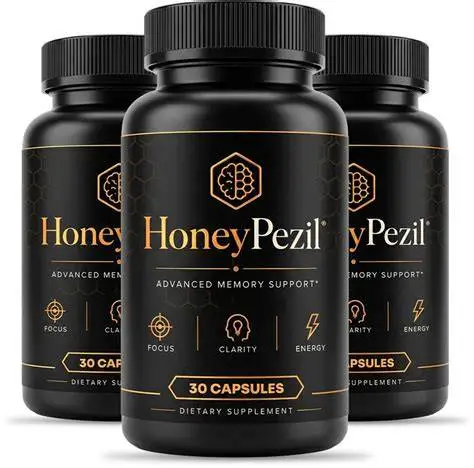
HoneyPezil is a dietary supplement marketed for memory, focus, concentration and mental clarity. Its sales pages target people experiencing forgetfulness, difficulty concentrating and brain fog, presenting the product as a way to support healthy brain function.
The marketing focuses heavily on cerebral circulation, particularly the role of nitric oxide in relaxing blood vessels. The idea is that improving blood flow can help deliver oxygen and nutrients to the brain, supporting cognitive performance. However, HoneyPezil is not a prescription medication or an established treatment for memory disorders. Its own disclaimers state that it is not intended to diagnose, treat, cure or prevent diseases such as Alzheimer’s or dementia.
There is also an unusual detail worth mentioning: despite the word “Honey” in its name, the published ingredient panel I found does not list honey as an ingredient. The product is presented as a capsule supplement, not a honey-based drink or gummy.
HoneyPezil Ingredients: What Is Actually Inside?
This is where the investigation becomes more interesting. The websites associated with HoneyPezil do not consistently describe the same formula.
One version of the product’s Supplement Facts panel lists seven ingredients per capsule:
- Niacin (Vitamin B3): 7.5 mg NE
- Calcium: 18 mg
- L-Arginine: 200 mg
- L-Arginine AKG: 200 mg
- L-Citrulline HCl: 100 mg
- L-Citrulline Malate: 100 mg
- Beta-Alanine: 40 mg
The same version recommends one capsule daily, with 30 capsules per bottle. However, another website presents a six-ingredient formula with different quantities and a two-capsule daily serving. Its listed amounts include 250 mg of L-Arginine, 200 mg of L-Arginine AKG, 200 mg of L-Citrulline HCl, 200 mg of L-Citrulline Malate, 20 mg of niacin and 100 mg of beta-alanine.
These are not minor differences in how the ingredients are described. The actual quantities and recommended daily servings differ. Unless the seller can explain which formulation is currently being manufactured and provide a matching product label, customers cannot confidently determine what they are purchasing.
Do the Ingredients Actually Support Memory and Focus?
HoneyPezil’s formula is built around amino acids associated with nitric oxide production and blood circulation. Some of these ingredients have legitimate uses in nutrition and sports supplementation, but that does not automatically establish their effectiveness as a memory supplement.
L-Arginine and L-Citrulline
Both amino acids participate in the nitric oxide pathway, which helps regulate blood vessel relaxation and circulation. L-Citrulline can increase circulating arginine levels, while L-Arginine is directly involved in nitric oxide production.
Research has examined these ingredients in relation to vascular function and blood flow. However, evidence that they improve memory, prevent cognitive decline or meaningfully relieve brain fog in otherwise healthy adults is much less established.
The quantities listed on one HoneyPezil label are also relatively modest. The formula provides 400 mg of combined arginine ingredients and 200 mg of combined citrulline ingredients per capsule. Research involving these amino acids often uses substantially different doses and investigates outcomes other than memory.
Niacin (Vitamin B3)
Niacin is an essential nutrient involved in normal energy metabolism and nervous system function. A deficiency can cause health problems, so getting adequate vitamin B3 is important.
However, that does not mean taking additional niacin will automatically improve memory or concentration in someone who already gets enough through their diet.
The listed 7.5 mg is a nutritional contribution, not evidence of a powerful cognitive effect.
Beta-Alanine
Beta-alanine is more commonly associated with sports nutrition. It helps increase muscle carnosine levels, which can improve muscular buffering capacity during certain types of exercise.
It is not an established memory-enhancing ingredient. The 40 mg listed on one version of the label is also far below the gram-level daily amounts commonly studied in sports nutrition.
Overall, these ingredients have legitimate biological functions, but the evidence does not establish that this particular combination improves memory or mental clarity.
Is There Any Clinical Evidence Behind HoneyPezil?
I could not identify a published clinical trial testing HoneyPezil as a finished supplement. This distinction matters. A manufacturer can reference studies involving individual ingredients, but those studies do not prove that its particular product works. The ingredients may have been tested at different doses, in different combinations or for entirely different health outcomes.
HoneyPezil’s own marketing acknowledges that its scientific references concern individual ingredients rather than clinical trials of the finished formula. There is therefore no reliable product-specific evidence establishing that HoneyPezil improves memory, reverses brain fog, protects against age-related cognitive decline or prevents dementia.
People experiencing persistent or worsening memory problems should not use a supplement as a substitute for an appropriate medical assessment.
HoneyPezil Pricing and Where to Buy
HoneyPezil is promoted through several websites, and the pricing is not entirely consistent.
One sales page lists the following bundle prices:
- Two bottles: $138, equivalent to $69 per bottle.
- Three bottles: $147, equivalent to $49 per bottle.
- Six bottles: $234, equivalent to $39 per bottle.
Other promotional pages advertise a price of approximately $49 per bottle, while another official-looking website presents a different sales structure.
The pages also advertise a 60-day money-back guarantee. However, buyers should check the actual refund policy and checkout terms associated with the particular website they use. A guarantee advertised on one domain should not automatically be assumed to apply to purchases made through another.
Red Flags Worth Considering
Multiple websites presenting themselves as official sources
I found several domains using the HoneyPezil name, including honeypezilofficial.com, honeeypezil.com and other similarly named websites. Some describe themselves as the authorized seller, while others present themselves as independent information or affiliate sites.
The existence of multiple domains is not proof of fraud. However, it makes it important to establish which business is actually responsible for manufacturing, distributing and selling the product.
Conflicting ingredient information
The difference between the one-capsule and two-capsule formulas is a more substantial concern than ordinary variations in marketing language. Customers should be able to identify the exact formula, serving size and ingredient quantities before placing an order.
Unclear manufacturing and testing claims
One website claims that the product comes from a third-party verified production batch and provides a laboratory name and certificate reference. Another describes an FDA-registered, GMP-certified manufacturing facility.
These are claims made by the seller. I could not independently establish from the available information that every version being advertised corresponds to the same verified batch or that the laboratory documentation confirms the quality of the product currently being sold.
A batch-specific certificate of analysis that can be independently verified would provide more useful reassurance.
FDA registration can be misunderstood
Some of the marketing emphasizes that HoneyPezil is manufactured in an FDA-registered facility. This should not be interpreted as FDA approval of the supplement.
The FDA explicitly states that it does not approve dietary supplements for safety and effectiveness before they are marketed. Facility registration is not the same as product approval or proof that a supplement works.
Cognitive health claims go beyond the available evidence
Memory, concentration and brain fog are meaningful health concerns. A supplement marketed around these issues should have evidence supporting its actual formula and intended benefits.
HoneyPezil’s ingredient research does not establish that the finished product delivers the advertised cognitive improvements.
Is HoneyPezil a Scam?
I would not label HoneyPezil a confirmed scam based on the evidence available. There is a product being marketed, ingredient information has been published, and some of the websites provide business and customer support details. However, that does not mean it is a supplement I would recommend buying.
The inconsistent formulas, overlapping official-looking websites, limited independent verification of manufacturing claims and absence of clinical trials on the finished product make it difficult to assess what customers are actually getting and whether it delivers meaningful benefits.
The biggest issue is that the product’s marketing creates expectations that its available scientific evidence does not support.
If you’re considering HoneyPezil for memory, concentration or brain fog, I would be cautious about spending $100 or more on a multi-bottle package. There are better-established ways to investigate persistent cognitive difficulties, and there is currently insufficient evidence to justify treating HoneyPezil as a proven cognitive support supplement.
My verdict: HoneyPezil is not proven to be a scam, but its effectiveness is unsubstantiated and its inconsistent product information raises legitimate concerns. I would hold off on buying it until the seller provides a consistent label, verifiable manufacturing documentation and clearer evidence behind its claims.
Also read – I Bought Elivora Pumpkin Seed Oil: Here’s What Made Me Hesitate (Honest Review)