

I came across VapoBrain while investigating supplements marketed to people who want better memory, concentration and mental clarity. Its sales pitch is familiar: a daily capsule containing several natural ingredients that supposedly support different aspects of brain function.
At first glance, the formula looks reasonable. It includes ingredients that have appeared in research on memory and cognitive performance. But there is a difference between ingredients having some scientific backing and a finished supplement being proven to work.
I also found something more concerning during the purchasing investigation. Different websites describe VapoBrain using different ingredient combinations, and one purchase link redirected to a completely different product name. Here’s what I found.
Key Takeaways
- VapoBrain is marketed as a cognitive-support supplement containing 30 capsules per bottle.
- One version lists Bacopa monnieri, Ginkgo biloba, phosphatidylserine and huperzine A, but does not disclose their individual quantities.
- Other VapoBrain websites describe a different formula involving Bacopa and citicoline, with one page listing 250 mg and 150 mg respectively.
- The purchase link on one VapoBrain promotional website redirected to a VapoCept checkout, creating uncertainty about the product being sold.
- I could not establish that the finished VapoBrain supplement has undergone clinical trials or independently verified quality testing.
- The ingredients have potential safety concerns and medication interactions, particularly ginkgo and huperzine A.
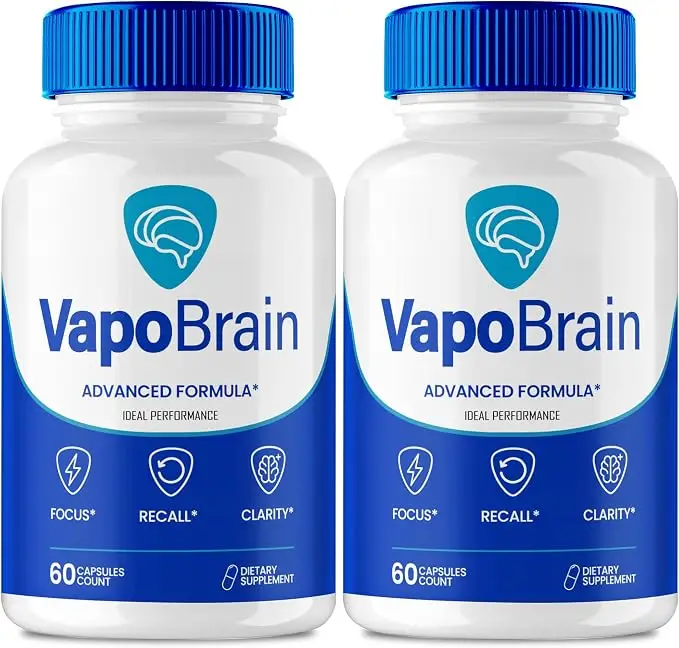
What Is VapoBrain?
VapoBrain is a dietary supplement marketed for cognitive support. It is advertised to adults who want to improve or maintain everyday memory, concentration, recall and mental clarity.
The product is sold in black bottles containing 30 capsules. Its packaging carries the name VapoBrain Advanced Cognitive Support, alongside three main benefit descriptions:
- Energy and focus
- Recall support
- Mental clarity
The marketing presents it as a natural alternative for people looking to support their cognitive performance without relying on prescription medication. However, VapoBrain is not an established treatment for memory loss, dementia, Alzheimer’s disease or other neurological conditions. The websites promoting it also acknowledge that it is a dietary supplement rather than a medicine.
That distinction matters because people experiencing persistent or worsening memory problems need an appropriate medical assessment, not simply an over-the-counter supplement.
VapoBrain Ingredients: What Is Actually Inside?
This is where the investigation becomes complicated.
The website at vapobbrain.com identifies four ingredients:
- Bacopa monnieri
- Ginkgo biloba
- Phosphatidylserine
- Huperzine A
However, it does not publish the quantity of any of these ingredients or provide a complete Supplement Facts panel on the website.
Another website, vappobrrain.com, describes a different formula, highlighting Bacopa monnieri and citicoline. A separate VapoBrain promotional page lists 250 mg of Bacopa and 150 mg of citicoline. These are not interchangeable ingredient lists. I could not establish whether they represent different product versions, different manufacturers or unrelated sellers using the same product name.
Does VapoBrain Actually Improve Memory and Focus?
The individual ingredients provide some scientific rationale for a cognitive-support formula, but that is not enough to establish that VapoBrain works.
Bacopa has shown some potential in studies involving memory and attention. Phosphatidylserine has also been investigated, although the evidence is limited. Ginkgo has produced disappointing results in several large studies, while huperzine A remains an area of investigation with important safety concerns.
The problem is that the available research examines particular ingredients, extracts and doses. It does not establish the effectiveness of VapoBrain’s finished formula.
I could not find a published clinical trial testing VapoBrain itself against a placebo or measuring its effects on memory, concentration or cognitive performance. The lack of disclosed ingredient quantities makes the evidence gap even more significant. Even if an ingredient has shown modest benefits at a particular dose, there is no way to establish whether VapoBrain provides a comparable amount.
I would therefore be cautious about treating its memory and focus claims as demonstrated results.
Different VapoBrain Websites, Different Formulas
This is one of the more important findings from my investigation. Searching for VapoBrain brings up several websites using similar product branding, but their descriptions are inconsistent. For example, vapobbrain.com identifies four ingredients: Bacopa, Ginkgo, phosphatidylserine and huperzine A.
Meanwhile, vappobrrain.com highlights Bacopa and citicoline as its two key ingredients. Another page at vapo-brain.com identifies Bacopa at 250 mg and citicoline at 150 mg.
There is no clear explanation establishing that these are different versions of the same manufactured product. The distinction matters because supplement research is formulation-specific. A person researching Bacopa, Ginkgo and huperzine A cannot assume that the same evidence applies to a product advertised with Bacopa and citicoline.
I also found VapoBrain listings on online marketplaces with different bottle counts and descriptions. These listings do not establish that the products are manufactured by the same company or contain the same ingredients.
The brand name alone is not enough to establish product identity.
VapoBrain Pricing and Money-Back Guarantee
The pricing advertised on vapobbrain.com is based on multi-bottle packages.
The listed offers are:
- Two bottles: $158, plus $9.99 shipping.
- Three bottles: $207, with free shipping.
- Six bottles: $294, with free shipping.
Each bottle contains 30 capsules, making the packages 60-, 90- and 180-capsule supplies respectively. The website advertises a 60-day money-back guarantee. Its refund information says customers should contact the support details in their order confirmation within the 60-day period.
However, there is an important limitation: the website itself states that it does not process orders or refunds. It describes itself as an independent affiliate website, not the manufacturer or seller.
That means the actual seller and its terms matter more than the promotional website’s guarantee summary. I would also avoid committing to a six-bottle package simply because the price per bottle is lower. The product’s formulation and effectiveness have not been sufficiently established to justify purchasing several months’ supply upfront.
The VapoBrain Checkout Redirect: A Significant Concern
This was the most concerning part of the purchasing investigation. The order button on vapobbrain.com led to a third-party checkout route. When I followed it, the destination redirected to a page selling a different product called VapoCept.
This is not simply a difference in website design or payment processing. The product name itself changed before checkout. A customer researching VapoBrain could therefore arrive at a payment page displaying VapoCept instead.
I cannot establish from the redirect alone whether the seller intends VapoCept to be a replacement, a renamed version or an entirely different supplement. I also cannot establish that the two products have identical formulas or manufacturers. But customers should not have to guess what they are purchasing.
Before paying for any supplement, the product name, bottle, ingredients, quantity and checkout description should agree. If a seller changes the product being offered, that change should be explained clearly before payment.
I would not proceed with that particular purchase route unless the seller provides a satisfactory explanation and verifies the exact product being supplied.
What About VapoBrain Customer Reviews?
I could not establish a substantial collection of independently verified customer reviews for the supplement. Some promotional material displays impressive ratings and customer testimonials. However, the pages do not provide sufficient links to independent review records to verify those figures.
There is also a difference between a website publishing a page titled VapoBrain Reviews and an independent customer-review platform collecting feedback from verified purchasers.
I found a Trustpilot listing associated with a VapoBrain-branded page, but it described a brain-training concept rather than providing a reliable review history for the four-ingredient capsule supplement. It should not be treated as evidence of customer satisfaction with the supplement.
I would therefore avoid repeating promotional star ratings or customer counts as established facts. This does not prove that nobody has purchased or benefited from the product. It means the available feedback is insufficient to support a confident assessment of customer experiences.
Is VapoBrain FDA Approved?
I found claims on some promotional pages describing VapoBrain as manufactured in the United States in a GMP-certified or FDA-registered facility. These statements should not be confused with FDA approval of the finished supplement.
The US Food and Drug Administration does not approve dietary supplements for safety and effectiveness before they are marketed. Manufacturers and distributors are responsible for ensuring their products comply with applicable requirements. Similarly, registering a manufacturing facility with the FDA does not mean the agency has tested and approved every supplement produced there.
I could not independently verify VapoBrain’s manufacturer, production facility or third-party quality-testing arrangements.
A credible supplement listing should make it possible to identify the responsible manufacturer and examine the complete product label.
Is VapoBrain Safe?
The ingredients listed on one version of VapoBrain are not automatically harmless because they are natural. Ginkgo may increase bleeding risk, especially when combined with anticoagulants or certain other medications. Huperzine A can affect heart rate and interact with medicines that influence acetylcholine activity. Bacopa may cause digestive discomfort and can potentially interact with certain medications. Phosphatidylserine also deserves consideration alongside a person’s existing medication and health conditions.
I would be particularly cautious about using a formula containing huperzine A without knowing its exact quantity. People taking prescription medication, especially medicines for Alzheimer’s disease, blood clotting, thyroid conditions or heart problems, should consult a qualified healthcare professional before considering the supplement.
Pregnant or breastfeeding individuals should also seek medical advice rather than assuming that a botanical formula is safe. Most importantly, anyone experiencing new or worsening memory problems should seek medical assessment. A supplement should not delay an investigation into possible underlying causes.
Red Flags Worth Considering
Several issues make me hesitant to recommend VapoBrain.
Inconsistent ingredient information: Different websites using the VapoBrain name describe different formulas. There is no clear documentation establishing whether these are legitimate variations of one product or unrelated offerings.
Undisclosed ingredient quantities: The four-ingredient version does not publish the amount of each ingredient. This prevents meaningful comparison with clinical research and makes it difficult to assess safety.
Product name changes at checkout: One purchase link redirected from VapoBrain to VapoCept. The seller has not provided a clear explanation establishing the relationship between the products.
Unverified customer ratings: Promotional ratings and testimonials are not sufficiently linked to independent review records.
Unclear manufacturer identity: I could not independently establish who manufactures the product or verify the production and testing arrangements.
No product-specific clinical evidence: Research involving individual ingredients does not establish that the finished VapoBrain formula improves memory or concentration.
These findings do not prove that every product sold under the VapoBrain name is fraudulent. They do, however, create substantial uncertainty about the product’s identity, quality and advertised benefits.
Should You Buy VapoBrain?
I would not recommend purchasing VapoBrain through the promotional checkout route I investigated. The product identity issue alone is enough reason to pause. A supplement advertised as VapoBrain should not lead customers to a checkout selling VapoCept without a clear explanation.
Even setting that concern aside, the available information does not establish the exact formulation or the quantity of its ingredients. There is also no convincing product-specific clinical evidence demonstrating that it improves memory or focus.
If you are interested in cognitive-support supplements, look for products with complete Supplement Facts panels, clearly identified manufacturers and independently verifiable quality testing. If your concern is actual memory loss rather than general concentration, speak with a healthcare professional. Supplements are not a substitute for diagnosing and treating an underlying condition.
Conclusion
VapoBrain is marketed as a natural cognitive-support supplement, but the available information raises too many questions for me to recommend it confidently.
Its ingredient combination has some scientific rationale, particularly because Bacopa and phosphatidylserine have been investigated for cognitive function. However, the undisclosed quantities and absence of product-specific clinical trials make its advertised benefits difficult to verify.
The more serious concern is the purchasing journey. Different websites describe different formulas, and one order link redirected to VapoCept instead of maintaining the VapoBrain product identity. I would not label every VapoBrain listing a confirmed scam based on these findings. However, I would treat the investigated sales route as high-risk and avoid ordering until the seller clearly establishes the product being supplied.
My verdict: Not recommended. The formula is insufficiently documented, its effectiveness is unproven, and the checkout product mismatch is a significant purchasing concern.
Also read – Do the Ovouria Capsules Really Work? My Honest 30-Day Review