

I came across YoBurn while looking into weight-loss supplements promising to make losing stubborn fat easier. The product is marketed as a natural formula that supports metabolism, controls appetite and helps the body burn stored fat. However, the more I examined its website and promotional claims, the less convincing the offer became.
There are concerns about the product’s ingredient information, the scientific support behind its weight-loss claims and the advertising campaign used to attract customers. A separate investigation has also raised questions about fake celebrity endorsements and potentially misleading checkout terms.
Here is what I found.
Key Takeaways
- YoBurn is marketed as a natural weight-management supplement, but its website gives conflicting descriptions of its ingredients.
- The seller claims the formula supports GLP-1 activity, appetite control and fat burning, but provides no product-specific clinical evidence.
- An investigation published in November 2026 reports that some promotional videos use manipulated footage of Dr. Jennifer Ashton and celebrities.
- The website advertises a 60-day money-back guarantee, but customers must follow return authorisation and shipping requirements.
- The available evidence raises serious concerns about the marketing. However, it does not establish that every YoBurn order is fraudulent or that the product itself is adulterated.
What Is YoBurn?
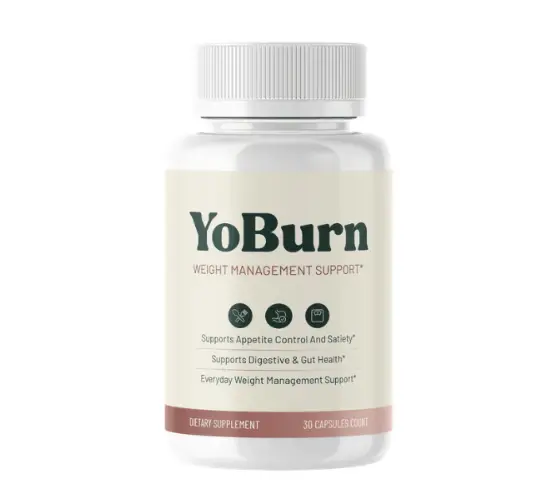
YoBurn is a weight-loss supplement sold in capsule form through yoburn.org. Its website promotes it as a natural, stimulant-free formula intended to support metabolic health, appetite regulation and sustainable weight management.
The marketing focuses heavily on the relationship between gut health, metabolism and GLP-1, a hormone involved in appetite and blood sugar regulation. According to the seller, YoBurn combines prebiotics and probiotics to support beneficial gut bacteria and help regulate hunger.
The website also claims that the supplement supports mitochondrial function, which it connects to improved energy production and fat burning. These are attractive claims, particularly for people looking for an easier way to manage their weight. However, the website does not provide convincing product-specific evidence showing that taking YoBurn produces the advertised results.
YoBurn Ingredients: What Is Actually in the Formula?
This is one of the first things that caught my attention. The YoBurn website does not present a consistently documented formula. One section lists eight ingredients:
- Gymnema sylvestre
- Banaba leaves
- Bitter melon
- Cinnamon bark
- Licorice root
- Juniper berry
- Chromium
- Cayenne pepper
The website provides brief descriptions of these ingredients, linking them to blood sugar regulation, metabolism, appetite control and antioxidant activity. However, a different section of the same website gives another ingredient description. Its FAQ lists chicory root inulin, resistant potato starch and a probiotic blend containing Bifidobacterium infantis, Clostridium butyricum and Akkermansia muciniphila.
These are two substantially different descriptions. The first focuses on botanical ingredients and chromium, while the second describes a prebiotic and probiotic formula.
The seller does not clearly explain whether these are separate blends, whether one list is outdated or whether the product has undergone a formulation change. More importantly, I could not verify a complete Supplement Facts label showing the amounts of each ingredient per capsule.
That matters because an ingredient list alone does not tell buyers whether a supplement contains meaningful quantities. Without individual amounts, it is difficult to compare the formula with doses used in scientific studies or assess potential interactions.
Do YoBurn Ingredients Actually Support Weight Loss?
Some of the ingredients listed by YoBurn have been studied for their possible effects on blood sugar regulation and metabolism. That does not automatically mean they produce meaningful weight loss when combined in this particular supplement.
Gymnema sylvestre, for example, has been investigated for its potential effects on glucose metabolism and sweet taste perception. Bitter melon and banaba have also attracted research interest because of their possible effects on blood sugar.
Chromium is an essential mineral involved in normal nutrient metabolism, but evidence that chromium supplements produce substantial weight loss is limited. Cinnamon has also been studied for metabolic effects, although results vary.
The second ingredient list introduces another set of questions. Chicory root inulin and resistant potato starch are forms of dietary fibre that can act as prebiotics. They can influence gut bacteria, but that does not establish that they will cause significant fat loss.
The same applies to probiotics. Their effects depend on the specific strains, quantities and health outcomes being studied. Simply including probiotic bacteria in a capsule does not prove that the finished product can meaningfully increase GLP-1 activity or reduce body weight.
I could not find a published clinical trial demonstrating that YoBurn itself produces the advertised weight-loss results.
The GLP-1 and Fat-Burning Claims Need More Evidence
YoBurn’s marketing repeatedly refers to GLP-1, appetite regulation and the body’s ability to use stored fat. GLP-1 is a real hormone involved in appetite and glucose regulation. However, mentioning it in a supplement advertisement does not establish that the product can produce the same effects as prescription GLP-1 medications.
The website does not provide a clinical study showing that YoBurn increases GLP-1 levels in humans or produces a meaningful reduction in appetite. Its mitochondrial claims also deserve scrutiny. Mitochondria are involved in cellular energy production, but a supplement cannot establish that it increases fat loss simply by claiming to support mitochondrial function.
The distinction is important: an ingredient may have been studied for a particular biological effect without the finished product having been proven to deliver that effect in people.
The US National Institutes of Health Office of Dietary Supplements notes that there is little scientific evidence that most weight-loss supplements work. It also warns that some products can interact with medication or cause harmful effects.
The Dr. Jennifer Ashton and Celebrity Endorsement Claims
A particularly concerning part of the YoBurn promotion was highlighted in an investigation published by Ibisik on November 20, 2026. The report describes adverts featuring Dr. Jennifer Ashton, a medical professional whose image is allegedly manipulated to make it appear as though she endorses a weight-loss method connected to YoBurn.
It also identifies celebrity names reportedly used in the same promotional campaign, including Whoopi Goldberg, Melissa McCarthy, Kathy Bates and Serena Williams.
The investigation says these promotions use manipulated footage and misleading presentations to create the impression that the product has received endorsements from recognisable public figures. I could not independently authenticate every advert described in that report. Nevertheless, there is no endorsement evidence presented on YoBurn’s official website that establishes these individuals support the product.
This is a serious concern because medical professionals and celebrities can influence purchasing decisions. People may be more willing to trust a supplement when they believe a doctor has recommended it or a familiar television personality has publicly discussed it.
A genuine endorsement should be independently verifiable. A video featuring someone’s face or voice is not sufficient proof that they approved a product.
The Yogurt Recipe and Baking Soda Weight Loss Stories
The same investigation describes promotional stories involving a supposed yogurt recipe and a cheap baking soda weight-loss trick. These stories allegedly lead viewers through news-style pages and lengthy videos before introducing YoBurn as the product they should purchase.
The approach is concerning because it makes the supplement appear connected to a special discovery rather than presenting it as an ordinary commercial product. There is no credible evidence that a simple yogurt or baking soda recipe can reliably melt stubborn fat. The Federal Trade Commission has repeatedly warned about weight-loss promotions that use fake news stories, misleading endorsements and dramatic claims to sell supplements.
If a product depends on a supposedly secret recipe or a medical breakthrough that cannot be independently verified, I would be cautious about the entire sales presentation.
Is YoBurn’s Website Trustworthy?
The official website makes several claims about the product’s quality and manufacturing. It describes YoBurn as manufactured in the United States in an FDA-registered and GMP-certified facility. However, it does not provide enough independently verifiable information to establish the manufacturer’s identity, the specific facility or the product’s quality-control records.
There is also an important distinction between an FDA-registered facility and an FDA-approved supplement. Registration does not mean the FDA has evaluated or approved YoBurn’s safety or effectiveness.
The website itself acknowledges that the FDA has not evaluated its product claims. I also found that yoburn.org was registered on July 12, 2026, according to domain information reported by Scam Detector. A relatively new domain is not proof of fraud, but it does mean there is limited website history from which to assess the seller’s reputation.
The site also directs buyers to an external merchant link for ordering rather than providing a clearly documented manufacturer and seller identity. That makes it harder to establish exactly who is responsible for manufacturing, fulfilment and customer support.
YoBurn Pricing and Money-Back Guarantee
The YoBurn website advertises a promotional price of $49 per bottle and encourages customers to purchase larger packages. It also promotes a 60-day money-back guarantee. However, the refund policy is not quite as effortless as the headline promise might suggest.
According to the website, customers must request and receive a return merchandise authorisation before sending the product back. They must also return it to the address provided, pay the return shipping costs and supply the tracking information.
The policy states that the return authorisation must be requested within 60 days of purchase, with the returned product sent within 14 days of receiving the authorisation. This does not automatically mean the guarantee is fraudulent, but buyers should understand the conditions before ordering.
There is another issue worth mentioning. The official website says orders are one-time transactions with no hidden automatic shipments. However, the November 20 investigation reports that a different YoBurn checkout promotion displayed preselected subscription terms.
I could not independently verify that checkout behaviour, and the discrepancy may reflect different sales funnels or ordering arrangements. Still, it is important to check the final payment page carefully rather than assuming every YoBurn offer has identical terms.
Red Flags to Consider Before Buying YoBurn
Several issues make me reluctant to recommend this supplement.
Conflicting ingredient descriptions: The official website lists two substantially different ingredient combinations without adequately explaining the difference.
No product-specific clinical evidence: The seller makes claims about appetite control, GLP-1 activity, metabolism and fat burning without providing a clinical trial demonstrating that YoBurn produces these effects.
Unverified manufacturing claims: The website mentions US manufacturing and an FDA-registered facility but does not provide sufficient details for independent verification.
Questionable promotional methods: An investigation has raised concerns about manipulated doctor and celebrity videos, as well as misleading news-style weight-loss stories.
Unclear checkout arrangements: The official website describes one-time purchases, while an external investigation reports subscription terms in another checkout flow. Buyers should verify the exact terms presented before paying.
None of these findings independently proves that every bottle is counterfeit or that the supplement contains dangerous substances. However, together they create a level of uncertainty that I would not ignore when purchasing a product intended for regular consumption.
Is YoBurn a Scam or Legit?
I would avoid buying YoBurn based on the evidence available. The biggest concern is not simply that it is a weight-loss supplement with ambitious marketing. It is that the official website does not consistently identify what is inside the product, provides no convincing product-specific evidence for its claims and offers limited information about the manufacturer.
The reported use of manipulated doctor and celebrity endorsements makes the marketing even more troubling. If the promotional campaign relies on making people believe that medical professionals or celebrities support a product when they do not, that is deceptive advertising.
I cannot conclusively establish that YoBurn is a fake product or that every customer will be charged incorrectly. The available evidence does not justify making those claims. However, I also cannot establish that the supplement delivers the weight-loss benefits advertised.
For that reason, I would not recommend spending money on it. A legitimate weight-management supplement should have a clearly documented formula, identifiable seller, transparent purchasing conditions and evidence that supports its claims. YoBurn currently falls short in several of these areas.
If you have already ordered it, check your payment confirmation and the terms attached to your purchase. If you notice unexpected recurring charges, contact the seller and your bank or card provider promptly. Keep copies of your order confirmation and any cancellation or refund requests.
Also read – PupFlex+ Hip and Joint Supplement Reviews: My Brutally Honest Experience