

I bought the Garmin inReach Mini 3 Plus for my husband after I spotted it sitting in his cart. He spends enough time outdoors that I could immediately see why he wanted it, especially for those situations where regular phone service isn’t guaranteed.
What sold me on keeping the purchase was the combination of satellite messaging, location tracking, and SOS. It feels like a genuinely useful safety device rather than just another gadget.
Key Takeaways
- Compact and easy for my husband to carry.
- Satellite messaging is the main reason it’s useful.
- SOS gives me extra peace of mind when he’s somewhere without cell service.
- Voice messaging makes communication easier than typing on the small device.
- Battery life is good for extended outdoor trips.
- The screen and overall design feel much more modern than older satellite communicators.
- The subscription cost is the biggest downside.
- The mapping is useful, but I wouldn’t buy it primarily as a navigation device.
What Is the Garmin inReach Mini 3 Plus?
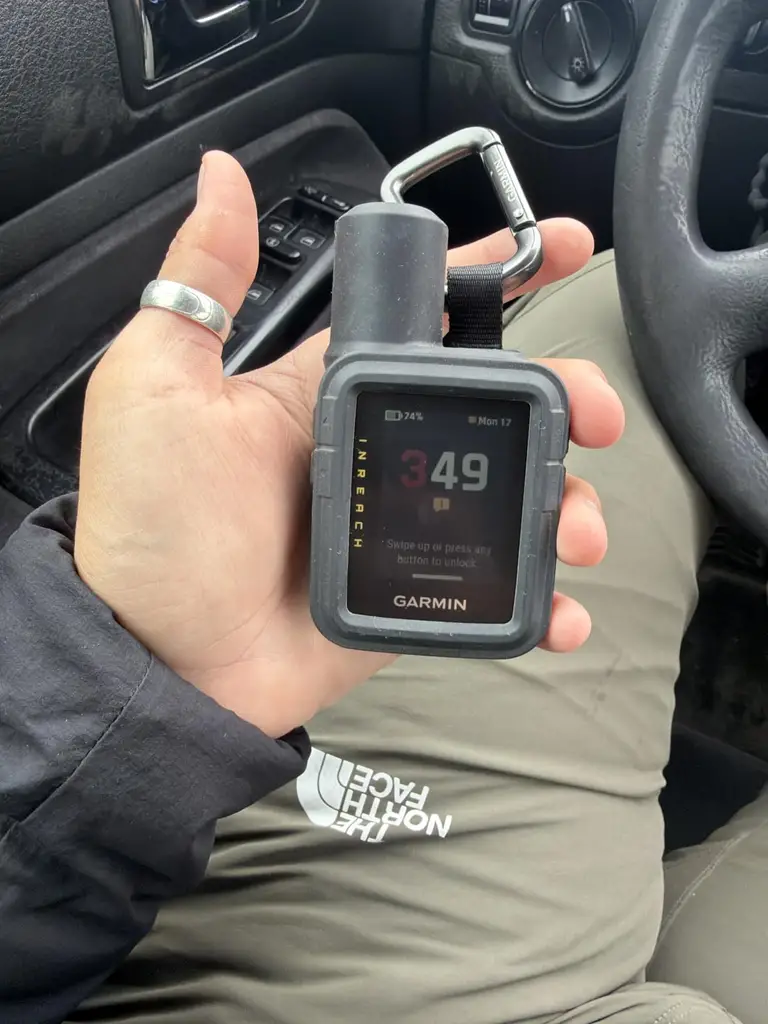
The Garmin inReach Mini 3 Plus is a compact satellite communicator that allows you to send and receive messages, share your location, use interactive SOS, and stay connected in areas without normal cellular service.
The Plus model also adds features like voice and photo messaging, which makes it more versatile than a basic satellite communicator.
Why I Bought It
I didn’t actually go searching for this one myself. I noticed it in my husband’s cart and immediately understood why it was there. He’s the kind of person who can find a reason to take an outdoor trip, and I liked the idea of him having something that could still communicate when his phone couldn’t get a signal. A phone is great until there is no network, and then it becomes a very expensive rectangle.
The SOS capability was probably what made me most comfortable with the purchase. It’s one of those features I hope he never needs, but I’d rather know he has it than wish he did later.
My Experience With the Garmin inReach Mini 3 Plus
The first thing I liked was how compact it is. My husband can take it along without it becoming another bulky piece of equipment he has to make room for.
The device feels sturdy enough for the kind of outdoor use it’s intended for, and I don’t get the impression that it’s something that needs to be babied. That’s important to me because equipment like this is supposed to go places where a delicate gadget probably shouldn’t.
The satellite messaging is the part I find most useful. Being able to communicate without relying on cellular coverage makes the device feel worthwhile, particularly when he’s somewhere remote. The messages aren’t going to behave exactly like WhatsApp messages on a strong 5G connection, of course. Satellite communication can take longer, and I think that’s something you have to accept when buying a device like this. The point isn’t speed. It’s having a connection when your normal one isn’t available.
The voice messaging feature is another nice addition. Typing a long message on a small device isn’t exactly my idea of fun, so being able to send a voice message makes more sense for longer communication.
The location-sharing feature is also one I appreciate as the person at home. Knowing that he can share his location gives me another layer of reassurance when he’s somewhere I can’t simply call him and expect the phone to ring.
And then there’s the SOS function. I haven’t had to use it, and I am very happy to keep it that way. But knowing the feature is there makes me feel better about him being somewhere without reliable cell coverage. It’s not something I bought because I expected an emergency… It’s something I bought because emergencies are precisely when having the right equipment matters.
Battery Life
The battery life has also been good for what we need. Garmin rates the Mini 3 Plus for up to 350 hours in certain low-power tracking configurations, although actual battery life depends heavily on tracking frequency and how much you’re using the other features.
For my husband’s trips, the important thing is simply not having to constantly worry about the device dying halfway through.
What I Didn’t Love
My biggest issue is the cost. The device isn’t cheap, and then there’s the additional satellite subscription to think about. That makes it difficult to recommend for someone who spends almost all their time somewhere with reliable cellular coverage.
I also wouldn’t buy it primarily for navigation. It has useful mapping and navigation features, but if that’s your main priority, there are better Garmin devices designed specifically around that.
The app side can also take some getting used to. Garmin has several apps and services involved depending on what you’re trying to do, and I think the overall experience could be simpler.
Is the Garmin inReach Mini 3 Plus Worth It?
For my husband, yes. The reason is that he’s actually the type of person who can benefit from a satellite communicator. If this were something sitting in a drawer 95% of the year, I’d have a much harder time justifying the price and subscription.
But when you’re regularly going somewhere your phone may not work, the value becomes much clearer. The ability to communicate, share your location and access SOS without cellular service is what makes the Mini 3 Plus different from the average GPS gadget.
Who I Think Will Love It
I’d consider it for someone who regularly:
- Hikes or backpacks in remote areas.
- Camps away from cellular coverage.
- Takes long outdoor trips.
- Travels through areas with unreliable phone service.
- Wants dedicated emergency communication.
- Needs reliable location sharing while off-grid.
Who Should Skip It
I’d skip it if you:
- Rarely leave areas with cell service.
- Mainly want a navigation device.
- Don’t want another monthly subscription.
- Already have another satellite communicator.
- Expect satellite messages to work as quickly as cellular messages.
Alternatives
- Garmin inReach Mini 2
- Garmin inReach Messenger Plus
- Garmin GPSMAP H1i Plus
Conclusion
Buying the Garmin inReach Mini 3 Plus wasn’t originally on my radar. I saw it in my husband’s cart, looked at what it actually did, and understood why he wanted it.
For someone who spends time outdoors and goes beyond reliable cell coverage, I think it makes a lot of sense. The satellite messaging, location sharing and SOS are genuinely useful features, and the compact size means it’s easy to take along.
The subscription is still a considerable extra cost, but in this case, I think the added safety and communication are worth it.
Would I buy it again?
Yes. Especially for my husband, given how often he can find himself somewhere that regular phone service isn’t guaranteed.
Would I recommend it?
Yes, but only if you’ll actually use the satellite features. If you’re almost always within cell coverage, it’s probably more gadget than you need.
Also read my similar review of the Reel Yaks Radar