

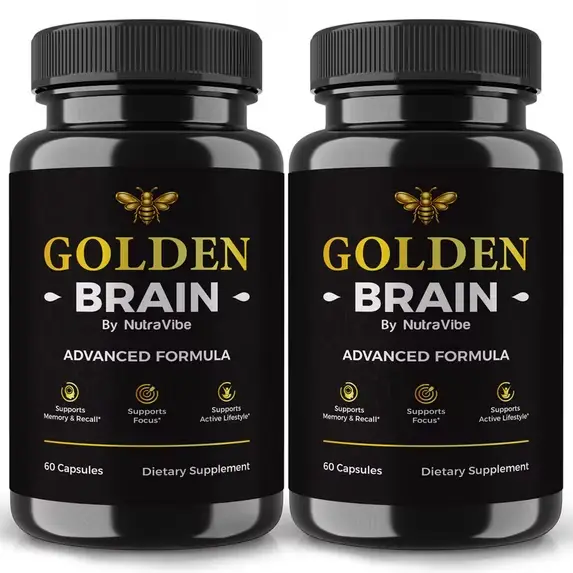
Golden Brain is promoted online as a brain-health supplement that supposedly improves memory, restores mental clarity, and may even reverse Alzheimer’s disease. The advertisements make the product sound like a major medical breakthrough, often tying the story to Bill Gates, celebrity endorsements, and a supposedly hidden discovery involving honey and other natural ingredients.
But there is a serious problem with this sales pitch. The Bill Gates endorsement has not been authenticated, and the campaign has been associated with fake news-style presentations and extraordinary claims about treating dementia. So, is Golden Brain legit? Let’s take a closer look.
Key Takeaways
- The Bill Gates endorsement used in the promotion is not genuine or verified.
- Claims that Golden Brain can reverse Alzheimer’s disease or dementia in 45 days are not supported by credible clinical evidence.
- Fake celebrity endorsements and fabricated news-style advertisements have been documented in the brain-supplement market.
- There are different products and websites using the Golden Brain name, so the exact bottle and seller matter.
- I would not buy this supplement based on the celebrity endorsement or medical promises used to sell it.
What Is Golden Brain?
Golden Brain is marketed as a brain-health supplement intended to support memory, focus, and mental clarity. The version promoted through the suspicious advertisements is tied to a much more dramatic story: that a simple natural discovery can reverse memory loss and potentially restore cognitive function in people with Alzheimer’s disease.
The marketing often starts with a supposed breakthrough involving honey, cinnamon, or a special memory-supporting recipe. It then directs viewers toward a supplement, presenting the product as the result of research supposedly connected to Bill Gates or other well-known figures.
That is where I would start asking questions. A familiar face in a video is not proof that someone endorsed a product, and a convincing-looking news presentation does not establish that a medical discovery is real.
It is also worth noting that other products and websites use the Golden Brain name. Their formulas and marketing may differ, so I would not assume that every bottle sold under that name contains the same ingredients or comes from the same seller.
I Dug Deeper Into the Bill Gates Connection
The supposed Bill Gates endorsement is one of the biggest warning signs surrounding this campaign. I found no credible evidence establishing that Gates developed, funded, or endorsed the Golden Brain supplement being promoted through these advertisements. Recent reporting describes the campaign as using manipulated celebrity footage and fake news-style presentations to sell a supposed memory treatment. The sales story should not be confused with an authentic announcement from Gates or a genuine medical news report.
This is not an entirely new tactic, either. The Federal Trade Commission previously took action against sellers of cognitive supplements that used deceptive websites, unsupported brain-enhancement claims, and false celebrity endorsements. Its case specifically described advertisements that falsely associated Bill Gates and other prominent figures with supplements.
That history does not automatically establish who operates every current Golden Brain website. It does, however, show why I would be wary of an advertisement that relies on celebrity authority instead of verifiable evidence.
If Bill Gates really backed a major Alzheimer’s breakthrough, there should be a way to verify the announcement through credible sources, not just a long promotional video that ends by asking viewers to buy a supplement.
Can Golden Brain Really Reverse Alzheimer’s?
This is the claim I would pay the most attention to because it goes far beyond ordinary promises about concentration or everyday mental performance.
Alzheimer’s disease is a complex neurological condition. Claims that a supplement can reverse it within 45 days require substantial clinical evidence. A dramatic video, a testimonial, or a list of supposedly natural ingredients cannot establish that result.
I found no credible clinical evidence establishing that the Golden Brain product promoted in this campaign reverses Alzheimer’s disease or dementia. The promotional claims should therefore not be treated as established medical facts.
Some nutrients and other compounds are studied for their possible effects on brain function. That does not mean that taking them will restore lost memories, reverse neurological damage, or cure dementia. Evidence for an individual ingredient also cannot automatically be applied to an entire supplement.
Anyone experiencing persistent memory problems should seek medical assessment rather than relying on a product promising a rapid cure. Supplements should not replace prescribed treatment or delay an evaluation.
What About the Ingredients?
The ingredients need to be assessed against the exact product label, rather than the story told in the advertisement.
Some versions of the Golden Brain name appear on websites describing different formulas. One website lists baobab fibre, L-arabinose, spermidine, and konjac glucomannan, while another describes a different combination involving royal jelly and nootropic botanicals. These differences make it especially important to check which product is actually being sold.
Even if a formula contains ingredients with legitimate research behind them, that would not prove that the finished supplement improves memory or treats Alzheimer’s disease. The amounts used, the quality of the research, and the specific health outcome being studied all matter.
I would also want to see the full Supplement Facts label, the amount of each active ingredient, and credible evidence relating to the finished product. A vague reference to scientific research is not enough.
The Red Flags I Wouldn’t Ignore
The main concern is the way Golden Brain is promoted.
The celebrity endorsement: The supposed Bill Gates connection has not been authenticated. I would not treat footage or quotations in the advertisement as genuine endorsements.
The medical promises: Claims about reversing Alzheimer’s or dementia in a matter of weeks are extraordinary. The promotional campaign does not establish that the supplement can deliver those results.
The news-style presentation: A video can imitate a television report without being one. Logos, familiar faces, interviews, and dramatic headlines do not independently verify a medical claim.
The product identity: Different websites use the Golden Brain name and describe different formulas. Before making any purchase, I would want to know exactly which product is being sold and who is responsible for it.
The sales pressure: If the advertisement pushes viewers toward a purchase before providing a verifiable formula and credible clinical evidence, I would leave the page rather than let the urgency make the decision for me.
These warning signs do not establish the chemical contents of every bottle carrying the name Golden Brain. They do give me ample reason to reject the advertising story as a trustworthy basis for purchasing a memory supplement.
Is Golden Brain a Scam?
Based on the specific Bill Gates promotion, I would treat the marketing as deceptive and avoid purchasing the product through that sales funnel.
The fake or unverified endorsement is a major concern, and the claims about reversing Alzheimer’s are not supported by credible product-specific evidence. The wider supplement market has also been the subject of documented regulatory action involving fake celebrity endorsements and unsupported cognitive-enhancement claims.
However, I would distinguish between the deceptive advertisement and the contents of every product sold under the same name. Without independently testing a particular bottle and verifying its seller, I cannot claim that every product using the Golden Brain name is chemically identical or counterfeit.
That distinction does not make the advertisement acceptable. A product does not become a proven treatment simply because a bottle arrives after payment, and a money-back guarantee would not make the medical claims legitimate.
Conclusion
I would skip Golden Brain when it is being sold through the Bill Gates endorsement and rapid Alzheimer’s-reversal story. The endorsement has not been authenticated, the medical promises lack credible supporting evidence, and the marketing uses warning signs associated with deceptive brain-supplement campaigns.
I also would not recommend trying it as an alternative to medical care for memory loss or dementia. If a particular Golden Brain product has a different formula and a separate seller, that version needs to be evaluated on its own evidence rather than borrowing credibility from the name.
For me, the biggest issue is not whether a supplement contains an ingredient that might support general health. It is whether the seller is being truthful about what the product can do. In this case, the Bill Gates story is not a reason to buy.
Also read – NocturneCraft Nightmare Projector Review: What to Know Before Buying