

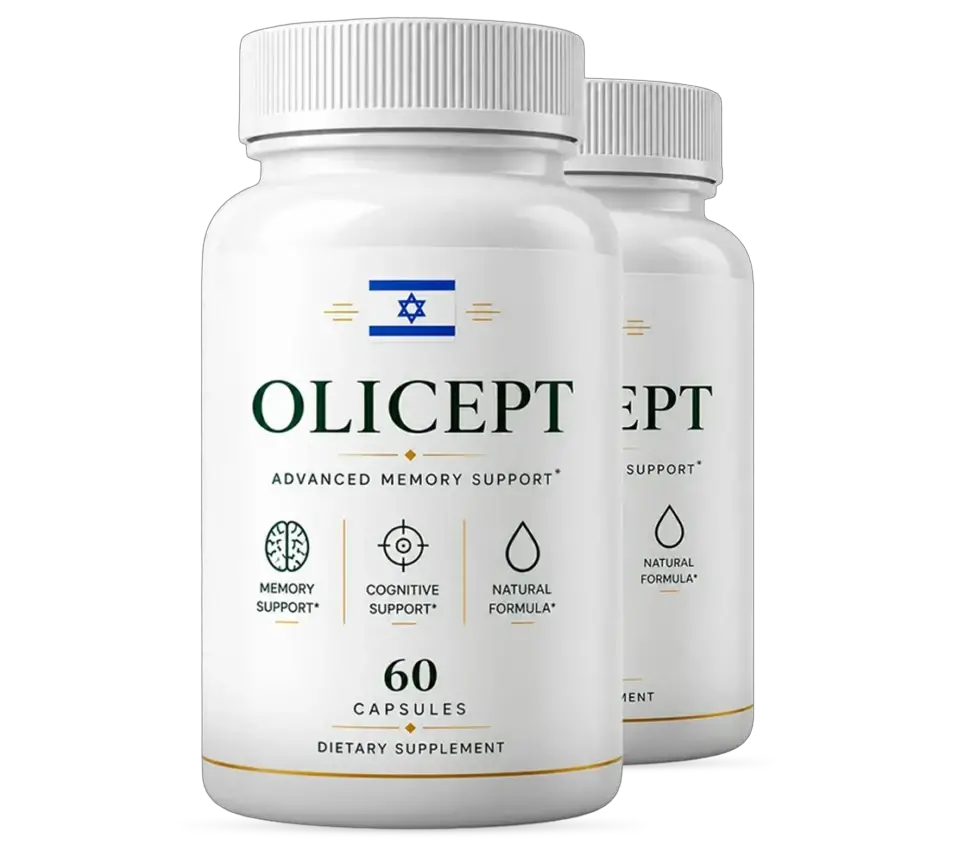
Olicept is a dietary supplement marketed to adults who want to improve memory, concentration and mental clarity. Its six-ingredient formula combines traditional herbal extracts with compounds associated with brain-cell function and energy production. The company describes it as a simple daily solution for people experiencing forgetfulness, brain fog and difficulty maintaining focus.
Some of its ingredients have been investigated for cognitive health, so the formula is not entirely without scientific rationale. However, there is a difference between research on individual ingredients and evidence that a finished supplement produces the advertised results. Olicept also leaves some important questions unanswered about its ingredient quantities and clinical testing.
Key Takeaways
- Olicept contains six advertised ingredients: bacopa monnieri, ginkgo biloba, huperzine-A, phosphatidylserine, acetyl-L-carnitine and St. John’s wort.
- It is marketed for memory, focus, learning and mental clarity, with one capsule recommended daily.
- Some ingredients have been studied for cognitive benefits, but there is no published clinical trial demonstrating that Olicept’s complete formula works.
- The company does not publicly disclose the individual ingredient quantities on its main product pages.
- St. John’s wort and ginkgo have important medication interactions that potential buyers should consider.
- The advertised 60-day money-back guarantee and discounted multi-bottle packages deserve closer examination.
What Is Olicept?
Olicept is a brain-health dietary supplement sold in vegetable capsules. It is marketed primarily to adults experiencing everyday forgetfulness, reduced concentration, mental fatigue and difficulty recalling information. The company describes it as an advanced memory support formula, with each bottle containing 60 capsules. Its recommended serving is one capsule daily with water, preferably in the morning.
According to the manufacturer, the six ingredients work together to support different aspects of cognitive function, including memory formation, circulation, neurotransmitter activity and cellular energy.
The product is also advertised as stimulant-free, non-GMO and gluten-free. The company says it is manufactured in the United States in an FDA-registered, GMP-certified facility. However, these manufacturing claims should not be confused with FDA approval of the supplement itself. Dietary supplements are not approved by the FDA for effectiveness before being marketed.
Ingredients and Formula
Olicept contains six advertised active ingredients.
- Bacopa monnieri: A traditional Ayurvedic herb frequently used in memory supplements. Some clinical research has investigated its potential effects on memory and attention.
- Ginkgo biloba: A plant extract marketed for circulation and cognitive support. Research has examined its potential effects on cognitive impairment, although findings have been inconsistent.
- Huperzine-A: A compound derived from Chinese club moss. It inhibits acetylcholinesterase, an enzyme that breaks down acetylcholine, a neurotransmitter involved in learning and memory.
- Phosphatidylserine: A phospholipid found in cell membranes, including those of brain cells. It has been investigated for its potential role in cognitive function.
- Acetyl-L-carnitine: A form of carnitine involved in cellular energy metabolism. It has been studied for possible effects on neurological and cognitive health.
- St. John’s wort: A flowering herb more commonly researched for its potential effects on mild to moderate depression and mood.
The combination covers several different areas of cognitive health, but there is an important transparency problem. Olicept’s main sales page names all six ingredients but does not publicly provide their individual quantities. The company says the exact amounts appear on the bottle’s Supplement Facts panel.
Without those figures, buyers cannot determine whether the formula contains meaningful quantities of each ingredient or compare its doses with those used in clinical research.
Does Olicept Actually Work?
The presence of recognised brain-health ingredients does not automatically make Olicept an effective memory supplement. Each ingredient has a different research history, and the strength of the available evidence varies.
Bacopa is one of the more interesting ingredients. A systematic review and meta-analysis of randomised controlled trials examined its effects on cognitive performance. Some findings suggested improvements in memory and attention, although the research also had limitations involving study quality, dosage and duration.
Ginkgo has a much less convincing record. Despite its popularity in memory supplements, the National Center for Complementary and Integrative Health (NCCIH) reports that there is no conclusive evidence supporting its effectiveness for cognitive health conditions.
Huperzine-A has also been investigated for memory and cognitive impairment. However, research involving this compound does not establish that the amount contained in Olicept, which the company does not publicly disclose, would produce comparable effects.
Phosphatidylserine and acetyl-L-carnitine have their own research histories, but findings from individual studies cannot establish that combining them with the other four ingredients produces additional benefits.
The biggest limitation is that I could not find a published clinical trial testing Olicept’s complete six-ingredient formula. The company therefore cannot rely on research involving bacopa, ginkgo or huperzine-A individually as proof that its finished product improves memory, clears brain fog or prevents age-related cognitive decline.
Is Olicept Safe?
The formula deserves more attention from a safety perspective than its marketing suggests. St. John’s wort is particularly important because it can interact with numerous medications. According to the NCCIH, it can reduce the effectiveness of certain birth control pills, antidepressants, blood thinners, heart medications, cancer treatments and other prescription drugs. Combining it with certain antidepressants can also cause potentially serious serotonin-related side effects.
Ginkgo may increase bleeding risk, particularly when taken alongside blood-thinning medications such as warfarin. Huperzine-A affects acetylcholine activity and may cause side effects such as nausea, sweating, dizziness and changes in heart rate. It may also interact with medications that affect the cholinergic system. Bacopa can cause digestive discomfort, while acetyl-L-carnitine may cause gastrointestinal symptoms or restlessness in some people.
These are not minor considerations for a supplement marketed to older adults, who may already be taking several prescription medications.
Olicept’s own website warns about interactions involving St. John’s wort, ginkgo and huperzine-A. Anyone taking prescription medication should have a pharmacist or healthcare professional review the complete formula before considering it.
Pricing, Subscriptions and Refund Policy
Olicept uses discounted multi-bottle packages rather than focusing on individual purchases.
The advertised offers include:
- Two bottles: $158, or $79 per bottle.
- Three bottles: $207, or $69 per bottle.
- Six bottles: $294, or $49 per bottle.
Each bottle contains 60 capsules, and the company recommends one capsule daily. This means a single bottle is advertised as approximately a two-month supply. The larger packages offer lower prices per bottle, but they also require customers to spend considerably more upfront. Buying six bottles before establishing whether the formula is suitable may not be a sensible decision.
The company advertises a 60-day money-back guarantee and describes purchases as one-time payments rather than automatic subscriptions. However, the full refund conditions should be checked at checkout. The sales page’s description of a no-questions-asked guarantee is not a substitute for reading the actual terms governing returns and refund requests.
Customer Reviews
The main Olicept sales website advertises a 4.8 out of 5 rating from more than 1,310 customer reviews.
Testimonials describe improvements in name recall, concentration, afternoon mental fatigue and general clarity. Some customers claim they noticed changes after approximately six weeks of use. However, these testimonials are displayed by the seller, and I could not independently verify the review count or establish whether all the displayed experiences came from verified purchases.
I also found an independent investigation by MalwareTips questioning the product’s promotional marketing and the absence of clinical evidence for the finished formula.
Interestingly, another website publishing Olicept information explicitly acknowledges that there are no published clinical trials of the complete six-ingredient combination and that the individual ingredient doses are not publicly disclosed. That distinction is important. Positive testimonials may describe genuine customer experiences, but they cannot establish that the product consistently improves cognitive performance.
Red Flags to Consider
There are several reasons to approach Olicept cautiously:
- Undisclosed ingredient quantities: The company names six active ingredients but does not publish their individual amounts on its main sales pages.
- No product-specific clinical trial: Research on individual ingredients does not establish that the finished combination improves memory or concentration.
- Significant medication interactions: St. John’s wort and ginkgo can interact with commonly prescribed medications, potentially making the supplement unsuitable for some customers.
- Broad cognitive claims: Promises involving memory, focus, mental energy and brain fog are not supported by clinical testing of Olicept itself.
- Aggressive bundle pricing: The largest discount requires purchasing six bottles, potentially committing customers to a product before they know whether it suits them.
- Unverified customer statistics: The advertised review count and customer experiences are not independently established.
None of these concerns proves that Olicept is counterfeit or that the company is deliberately defrauding customers. They do, however, raise questions about whether the product offers enough transparency and evidence to justify its marketing.
Is Olicept a Scam or Legit?
Olicept appears to be a real dietary supplement with six identifiable ingredients and an established online sales page. Several ingredients have been investigated for their potential effects on cognitive function, although the evidence varies considerably.
The main problem is that the company has not established that its particular formula produces the memory and focus improvements advertised. It also does not publicly disclose individual ingredient quantities, making it difficult to assess the strength of the product.
More importantly, St. John’s wort and ginkgo introduce medication-interaction risks that should not be overlooked, especially when the supplement is marketed to older adults.
I would not classify Olicept as a confirmed scam based on the available information. However, I would not recommend purchasing it solely on the promise of improved memory or protection against cognitive decline. The ingredient research is not a substitute for product-specific evidence, and the missing dosage information makes the formula difficult to evaluate properly.
Also read – I Bought the Crystal Vision Glasses: Here’s My Honest Review