

I bought the Vivitar 4K Camcorder because I wanted a dedicated video camera, but my experience has been a little underwhelming. It has some nice features, including a touchscreen, a tripod and a lightweight design that makes it comfortable to hold. However, the video quality hasn’t impressed me, the battery doesn’t last particularly long, and I’ve encountered some frustrating recording limitations. It’s a fairly basic camcorder, but I expected a little more from something advertised as a 4K camera.
Key Takeaways
- Very lightweight and comfortable to hold for extended periods.
- Includes a strap and tripod, which are useful additions.
- Touchscreen makes reviewing footage convenient.
- Zoom works, but its movement isn’t particularly smooth.
- Video quality and colour reproduction are disappointing.
- External microphone improves audio capture, but an annoying ringing or static-like sound remains.
- Long recordings are split into multiple files, with missing seconds between some clips.
- Battery life is relatively short, and my package arrived without the advertised 32GB SD card.
What Is the Vivitar 4K Camcorder?
The Vivitar 4K Camcorder is a compact digital video camera designed for recording videos, vlogging, family events and general content creation. Depending on the particular model and bundle, it comes with features such as a touchscreen display, digital zoom, rechargeable battery, external microphone support and tripod compatibility.
The camera is marketed around its 4K video recording capability, making it an option for people who want a dedicated camcorder without investing in more expensive professional equipment.
It is worth noting that Vivitar sells several camcorders under similar 4K branding, so the exact specifications and included accessories can differ between models and bundles.
My Experience With the Vivitar 4K Camcorder
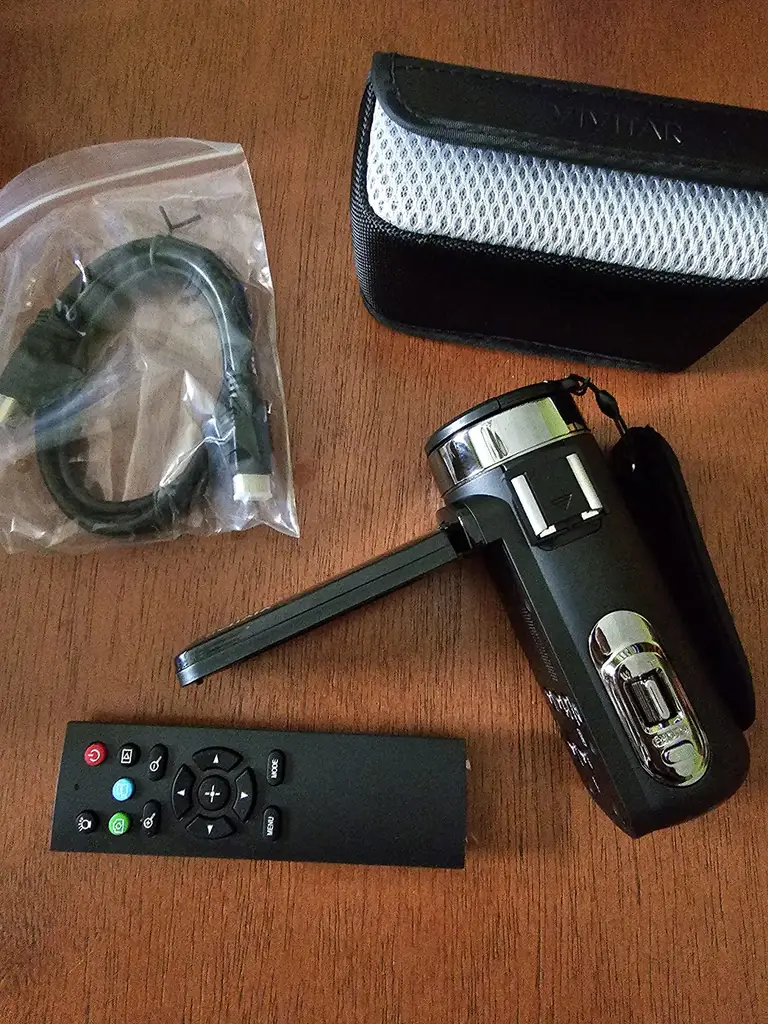
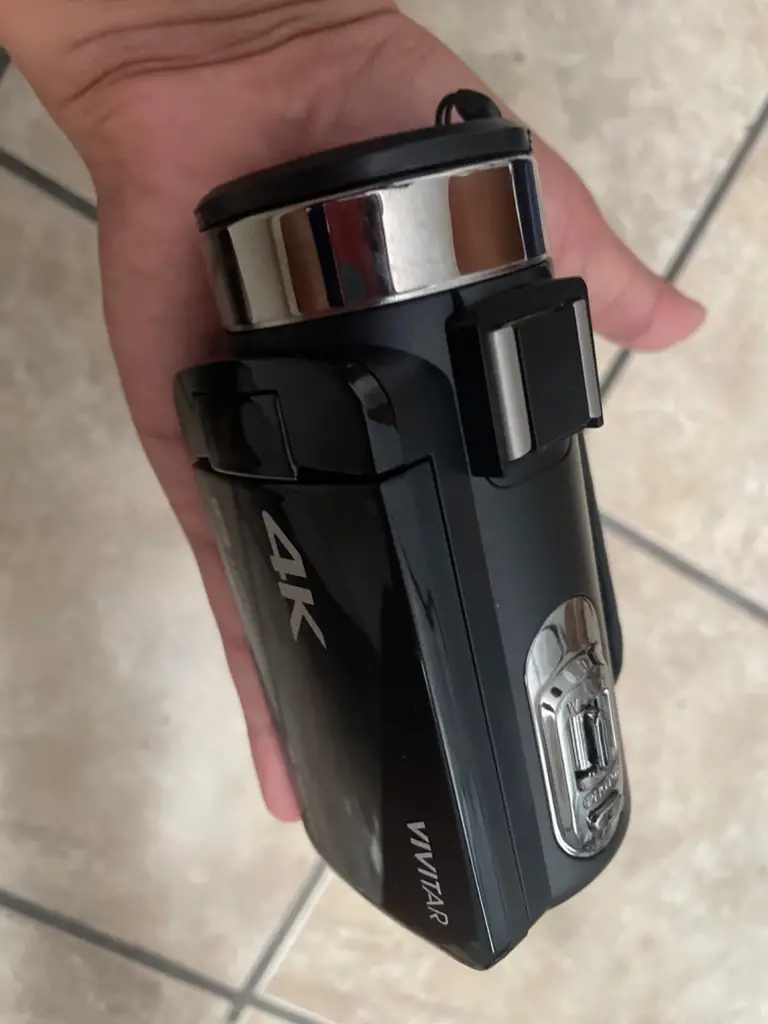
The first thing I noticed when I unboxed this camera was its size. It’s considerably smaller than I expected from the product pictures, and it’s also incredibly lightweight. In fact, it feels almost suspiciously lightweight. However, I eventually found that this was one of its advantages. Because it doesn’t weigh much, I can hold it for extended periods without experiencing much discomfort. It also comes with a strap, which makes carrying and handling it easier.
Mine also came with a tripod, which I appreciated. Having the option to mount the camera instead of holding it throughout a recording session is convenient.
The touchscreen is another feature I genuinely like. It makes navigating the camera and reviewing recorded footage much easier. I enjoy being able to look through my recordings directly on the camera rather than having to transfer everything before checking whether I’ve captured what I wanted.
The zoom is functional too, although I wouldn’t describe it as particularly impressive. It works reasonably well for bringing distant subjects closer, but the movement isn’t very smooth. It can feel a little jerky, which isn’t ideal when you’re trying to record something continuously.
Unfortunately, the actual video quality is where my excitement starts to disappear. If you’re accustomed to recording with a recent iPhone or Samsung smartphone, you might find the footage disappointing. The colours look somewhat washed out, and the overall picture quality doesn’t have the crispness I expect from a camera advertised as 4K.
I wouldn’t confidently say that it records at 720p or 1080p instead, because I haven’t independently verified the actual resolution of the footage. But visually, it doesn’t give me the impressive 4K experience I was expecting.
Audio recording has also been a bit of a struggle. The built-in microphone wasn’t picking up sound particularly well, so I decided to purchase an external microphone. Thankfully, adding the microphone improved the sound capture. However, I noticed an annoying ringing or static-like noise that appears when I start recording. It’s distracting, especially when you’re trying to capture clean audio. I haven’t been able to establish exactly what’s causing it, but it’s something I wish weren’t there.
Another major limitation is recording time. I noticed that when I recorded a video lasting approximately 30 minutes, the camera saved it as four separate files. That wouldn’t necessarily be a problem on its own, but there were a few seconds missing between the files.
This meant that when I played the recordings back in sequence, the footage wasn’t completely continuous. There were noticeable little gaps, almost as though someone had edited out a few seconds between clips. That’s particularly annoying when you’re trying to record something without interruptions.
I also had an issue with the accessories included in my package. The product description indicated that a 32GB SD card was supposed to come with the camera, but mine didn’t. I had to use a memory card I already had at home. I don’t know whether other buyers received theirs, but it was disappointing to discover that something advertised as part of the package was missing.
Battery life is another area where I think the camera could be better. It doesn’t last particularly long, so I’ve learned to expect to recharge it after every use. If you’re planning extended recording sessions, you’ll need to keep battery levels in mind.
Overall, I would describe this as a basic camcorder. It has enough features to make recording convenient, but the image quality, audio issues and recording interruptions prevent me from being genuinely impressed.
Pros and Cons
Pros
- Lightweight and easy to hold.
- Comfortable for extended recording sessions.
- Includes a carrying strap.
- Comes with a tripod.
- Touchscreen makes navigation and playback convenient.
- Functional digital zoom.
- Supports an external microphone.
Cons
- Smaller than expected.
- Video quality is disappointing for a camera advertised as 4K.
- Colours appear washed out.
- Built-in microphone doesn’t capture sound particularly well.
- External microphone produces an annoying ringing or static-like noise during recording.
- Zoom movement isn’t smooth.
- Long recordings are split into multiple files with gaps between clips.
- Battery life is relatively short.
- Advertised 32GB SD card was missing from my package.
Is the Vivitar 4K Camcorder Worth the Money?
I’m not entirely convinced. I appreciate that this isn’t a professional filmmaking camera, and I didn’t necessarily expect it to compete with expensive dedicated video equipment. However, when a product is marketed as a 4K camcorder, I expect the video quality to be one of its strongest features. Unfortunately, that’s not what I experienced.
The lightweight design, touchscreen and included tripod are nice additions, but they don’t compensate for the disappointing footage. The recording interruptions are particularly frustrating because they make the camera less suitable for capturing longer events or uninterrupted videos.
I also think the missing SD card and relatively short battery life take away from the overall value. For a basic camera, it might be adequate for someone with modest expectations. But if you’re purchasing it specifically because you want sharp, high-quality 4K footage, I would think twice.
Would I Recommend the Vivitar 4K Camcorder?
I’m hesitant to recommend it. There are things I genuinely like about this camera. It’s lightweight, comfortable to hold and has a touchscreen that makes reviewing footage convenient. The included tripod is useful, too. However, I wouldn’t recommend it to someone who prioritises video quality. The washed-out colours, disappointing sharpness and audio issues make it difficult to overlook the limitations.
I also wouldn’t choose it for recording long events where continuous footage is important. Having several seconds disappear between recording files is not something I want to deal with when capturing something I might not get another opportunity to record.
Who Should Buy It and Who Should Avoid It?
Who might consider it:
- Beginners looking for a simple dedicated camcorder.
- Casual users who prioritise lightweight equipment.
- People who mainly record short videos.
- Buyers who want a touchscreen and basic zoom functionality without investing in expensive equipment.
Who should avoid it:
- Content creators who need crisp, detailed footage.
- Anyone expecting smartphone-level image quality.
- People who frequently record long, uninterrupted videos.
- Users who need reliable audio without additional equipment.
- Anyone looking for a dependable camera for professional work.
Alternatives to Consider
If you’re looking for a dedicated video camera, these are worth comparing:
- Panasonic HC-V900
- Canon VIXIA HF G70
- Sony FDR-AX43A
- DJI Osmo Pocket 3
Conclusion
The Vivitar 4K Camcorder is a basic camera with a few convenient features, but I expected more from it. I like how lightweight it is, appreciate the touchscreen and find the included tripod useful. Unfortunately, the video quality isn’t particularly impressive, the colours look washed out, and the audio recording has been troublesome even after adding an external microphone.
The interruptions during longer recordings are another major disappointment, especially when you want continuous footage.
I wouldn’t call it completely useless, but I also wouldn’t describe it as a particularly good 4K camera. If video quality is your priority, I’d recommend looking at other options before spending your money on this one.
Also read my similar review of the Arlo Pro Wireless Security Camera