

Joint Genesis is marketed as a different kind of joint supplement. Instead of focusing mainly on familiar ingredients like glucosamine and chondroitin, it puts Mobilee®, a patented hyaluronan-based ingredient, at the centre of its formula. The pitch is that restoring healthy hyaluronan levels can improve joint lubrication, reduce friction, and make stiff or painful joints move more comfortably.
That actually gave me something worthwhile to investigate because Mobilee isn’t just a marketing name… it is a real branded ingredient with human research behind it. So I looked at the actual formula, the doses, the research behind Mobilee and the supporting ingredients, and then compared all of that with the much bigger promises being made by Joint Genesis. The result is more interesting than I expected.
Key Takeaways
- Joint Genesis is a five-ingredient joint-health supplement centered around Mobilee®.
- The formula reportedly contains 80 mg of Mobilee, 100 mg of Boswellia serrata, 100 mg of French maritime pine bark extract, 100 mg of ginger, and 5 mg of BioPerine.
- Mobilee is a genuine patented hyaluronan matrix that has been studied in humans.
- There is some evidence that Mobilee may improve joint comfort and function, but that doesn’t mean Joint Genesis can repair damaged cartilage or reverse arthritis.
- The supporting ingredients have varying levels of evidence, and some are used at fairly modest doses.
- I found no clinical trial testing Joint Genesis itself as a finished formula.
- The websites also make some unnecessarily dramatic claims, particularly around “FDA approval” and restoring joints to their younger state.
- Overall, this is one of the more plausible joint formulas I’ve come across, but the marketing still gets ahead of the evidence.
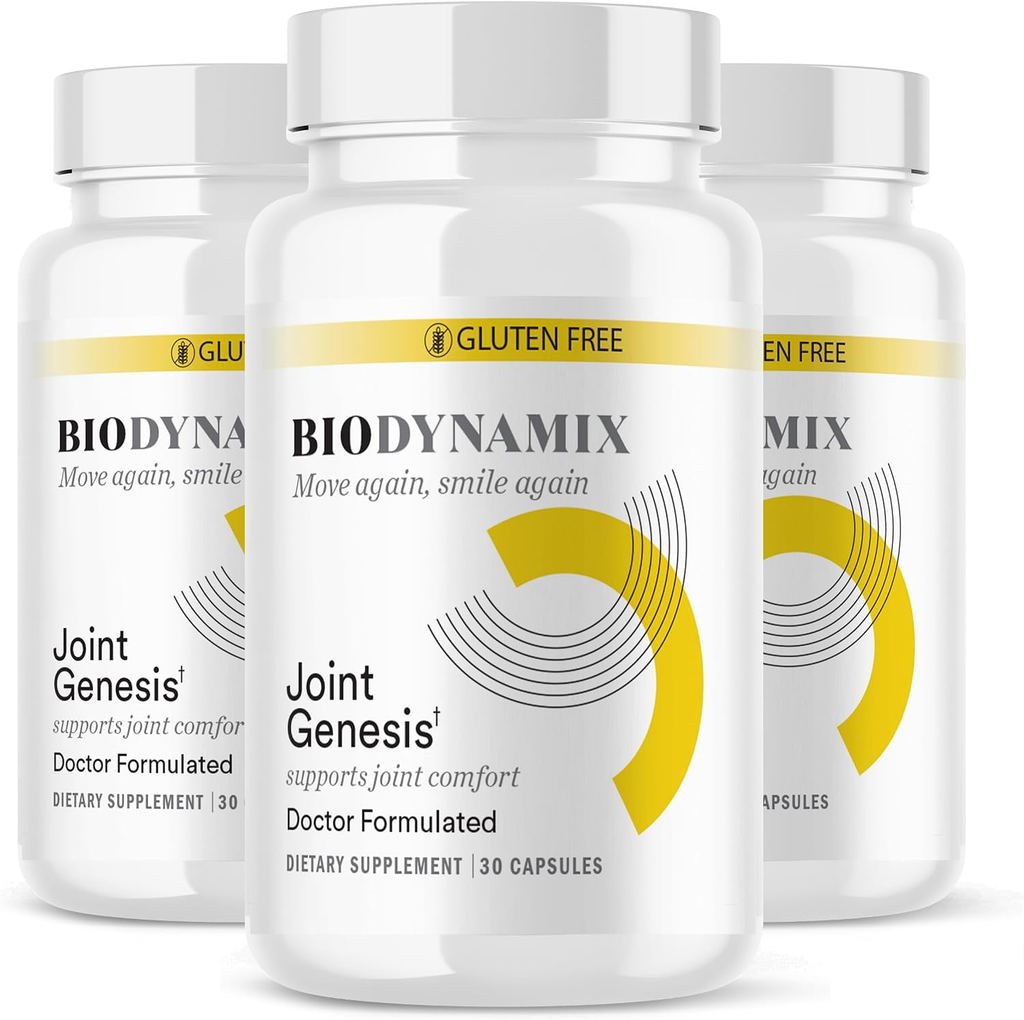
What Is Joint Genesis?
Joint Genesis is a daily capsule supplement marketed for joint comfort, flexibility and mobility.
What immediately separates it from many joint supplements is that it doesn’t lead with glucosamine, chondroitin or MSM. Instead, the central ingredient is Mobilee, a patented formulation containing hyaluronan and other components intended to support the health of synovial fluid.
Synovial fluid is the slippery fluid inside your joints that helps reduce friction and allows the joint surfaces to move smoothly. So the basic theory behind Joint Genesis is actually fairly straightforward:
Better joint lubrication → less friction → easier movement. The question is whether taking Mobilee orally can actually make a meaningful difference.
How Does Joint Genesis Claim to Work?
The company’s explanation is that as we age, the amount and quality of hyaluronan in our joints can decline. Joint Genesis supposedly helps restore that hyaluronan, improving lubrication and cushioning while also supporting cartilage and a healthy inflammatory response.
Some of that biology makes sense. But I wanted to know whether there was evidence that taking this particular ingredient by mouth actually translates into noticeable improvements in humans.
That’s where Mobilee gets interesting.
My Investigation: Mobilee® Is Actually Legitimate
I’ll give Joint Genesis credit here.
When I first started looking into it, I expected Mobilee to be another impressive-sounding proprietary ingredient that existed mainly on a sales page.
It isn’t.
Mobilee is a real branded hyaluronan matrix, and there are published human studies investigating it. One study involving 80 mg of Mobilee reported improvements in joint comfort and some measures of physical function after three months.
That doesn’t prove that everyone taking Joint Genesis will suddenly stop having knee pain.
But it does mean there’s actual human research behind the star ingredient, which already puts this product ahead of a lot of the joint supplements I’ve come across.
The 80 mg Dose
This was another thing I specifically checked. Joint Genesis reportedly uses 80 mg of Mobilee, which matches the dose used in some of the published research.
That’s important because supplement reviews often say something like “this ingredient has been clinically studied” without checking whether the product contains anything close to the studied dose.
Here, at least for Mobilee, the dose appears much more defensible. So far, Joint Genesis was looking pretty good.
But then I looked at the rest of the formula.
The Supporting Ingredients
Boswellia Serrata
Boswellia is a popular ingredient in joint supplements because of its potential anti-inflammatory effects. There is human research suggesting certain Boswellia extracts can improve pain and physical function in people with osteoarthritis.
Joint Genesis reportedly uses 100 mg, which is at the lower end of doses used in some research. The bigger problem is that Boswellia products aren’t all interchangeable.
Different extracts can have very different concentrations of the compounds believed to be responsible for their effects. So simply seeing “Boswellia serrata” on a label doesn’t tell me that the product contains the same standardized extract used in a particular clinical trial.
That’s something I would have liked to see made clearer.
French Maritime Pine Bark Extract
Pine bark extract is included for its antioxidant and anti-inflammatory properties. There is some research into Pycnogenol, a specific branded French maritime pine bark extract, including research involving joint symptoms.
But Joint Genesis appears to list French maritime pine bark extract rather than necessarily using the exact branded extract from those studies.
That’s another small but important distinction. Research on one standardized extract shouldn’t automatically be presented as proof for every generic version of the ingredient.
Ginger
Ginger has some evidence for helping with inflammatory processes and osteoarthritis symptoms.
Joint Genesis uses ginger, but the ingredient is reportedly ginger root powder rather than a standardised ginger extract.
That doesn’t make it useless. It just means I wouldn’t assume that the amount in Joint Genesis will reproduce results from studies using concentrated extracts.
BioPerine
BioPerine is a branded form of black pepper extract containing piperine. It’s commonly included in supplements because piperine can increase the absorption of certain compounds.
The dose in Joint Genesis is reportedly only 5 mg, which is a standard amount for BioPerine.
It isn’t really there to treat your joints directly. Its job is primarily to potentially improve the absorption of other ingredients.
Does Joint Genesis Really “Restore” Joint Fluid?
This was one of the claims I wanted to be particularly careful with.
Joint Genesis describes Mobilee as increasing hyaluronan in synovial fluid and sometimes uses language suggesting that it can restore or replenish joint lubrication.
There is some evidence that oral Mobilee can influence markers related to synovial hyaluronan. But that doesn’t mean the supplement is literally pouring new lubricant into your knees.
And it certainly doesn’t mean it can rebuild severely damaged cartilage. That’s where the marketing needs to be toned down.
Supporting joint lubrication is plausible. Reversing structural joint damage is a much bigger claim. I didn’t find evidence that Joint Genesis can regenerate worn cartilage or reverse osteoarthritis.
Red Flags to Consider
The “FDA Approved” Claim
This one appeared on several Joint Genesis websites. Some pages display an “FDA Approved” badge while the accompanying text actually says that the product is manufactured in an FDA-registered facility.
Those are not the same thing. The FDA doesn’t approve dietary supplements for effectiveness before they are sold in the way it approves prescription medications.
So I wouldn’t interpret that badge as meaning the FDA has tested Joint Genesis and confirmed that it relieves joint pain.
The “First-of-Its-Kind” Marketing
Joint Genesis is repeatedly described as a revolutionary or first-of-its-kind formula combining Mobilee with four other research-backed nutrients.
I don’t find that particularly meaningful.
The interesting part of the product is that it uses a legitimate branded hyaluronan ingredient at a researched dose. It doesn’t need a “first in the world” story to make that interesting.
“Nourishes Cartilage” and Similar Claims
The websites make claims about nourishing cartilage and supporting cartilage health. Supporting the environment around a joint is not the same thing as rebuilding cartilage.
If someone has established osteoarthritis, I wouldn’t use Joint Genesis with the expectation that it will reverse the underlying structural changes.
Does Joint Genesis Actually Work?
This is where my verdict is more positive than it has been for a lot of the supplements we’ve looked at. There is a legitimate scientific basis for the main ingredient.
Mobilee has human research behind it, and the 80 mg dose used in Joint Genesis appears to correspond to doses investigated in clinical studies.
That’s meaningful.
But I still wouldn’t call Joint Genesis clinically proven. Why? Because the evidence I’m finding is primarily on Mobilee and individual ingredients, not on Joint Genesis as a complete product.
There’s a difference between:
“80 mg of Mobilee has been studied in humans.”
and:
“Joint Genesis has been clinically proven to relieve joint pain.”
The first has supporting evidence. I couldn’t establish the second. So I think a reasonable expectation would be potential support for joint comfort and mobility, rather than expecting a damaged knee to suddenly become brand new.
Potential Side Effects
The ingredients in Joint Genesis are generally used in dietary supplements, but that doesn’t mean everyone will tolerate them perfectly.
Possible issues could include:
- Stomach upset
- Nausea
- Headache
- Allergic reactions
- Interactions with medications
Boswellia, ginger and piperine can also interact with certain medications, particularly medications affecting bleeding or drug metabolism.
Anyone with significant joint pain, swelling or loss of mobility should also avoid assuming that the problem is simply “aging joints.” Persistent joint symptoms can have many causes.
Pricing and Where to Buy
The Joint Genesis websites currently advertise prices ranging from roughly $39 to $69 per bottle, depending on which sales page and package you’re looking at.
The sales pages also promote substantial discounts and long money-back guarantees.
I’d pay attention to the actual checkout price, rather than the large crossed-out “regular price” because the various Joint Genesis websites don’t appear to use a single consistent price.
Alternatives
If I were looking for joint support, I’d first consider what I’m actually trying to accomplish. For general joint health, regular exercise, particularly resistance training, can be surprisingly useful.
For osteoarthritis-related pain, evidence-based options can include physical therapy, weight management where appropriate, topical or oral pain medications, and other treatments depending on the joint and severity.
As for supplements, glucosamine and chondroitin have been studied extensively, although the evidence is mixed and results vary considerably.
Joint Genesis is at least interesting if you’re specifically interested in hyaluronan-based joint support, rather than simply buying the most familiar joint supplement on the shelf.
What To Do If Scammed
If you purchased Joint Genesis because you believed it was FDA-approved or that it could rebuild damaged cartilage, save screenshots of those claims.
Keep your:
- Order confirmation
- Receipt
- Product packaging
- Sales-page screenshots
- Emails from the seller
- Shipping information
The different Joint Genesis sites advertise money-back guarantees, with some claiming periods as long as 180 days.
If the product was misrepresented or you encounter unauthorized recurring charges, contact the seller first and then your payment provider if necessary.
Conclusion
I went into this expecting Joint Genesis to be another generic joint supplement dressed up with fancy scientific terminology.
It isn’t quite that.
The biggest thing working in its favour is Mobilee. It’s a legitimate, patented ingredient; there is actual human research behind it, and the 80 mg dose used in Joint Genesis appears to match the dose investigated in clinical studies.
The rest of the formula is reasonable too, although I have more reservations about the doses and standardization of ingredients like Boswellia, ginger and pine bark.
Where I think Joint Genesis loses some credibility is in the marketing. Claims about “restoring” joints, nourishing cartilage and the repeated FDA-approved imagery make the product sound more medically proven than it actually is.
I also couldn’t find a clinical trial showing that Joint Genesis itself, as a finished five-ingredient formula, produces the results being advertised.
So no, I wouldn’t call it a miracle for arthritis. But unlike some of the products I’ve investigated, I also wouldn’t dismiss it as nonsense.
Also read – I Bought Lumeo Eros Gummies for My Husband — Here’s Our Honest Review