

ProXental is marketed as a natural dental gel that you apply directly to your gums twice a day to support healthier gums, fresher breath, stronger enamel and overall dental health. It contains ingredients like xylitol, aloe vera, sage, thyme, clove, peppermint oil and ferulic acid, so at first glance, it sounds like a pretty harmless addition to a normal oral-care routine.
But then I started looking more closely at what ProXental is actually claiming to do. Some versions of the marketing make it sound like this little tube can repair dental damage, reverse problems with your teeth and gums, and even save people from expensive dental procedures. That is a much bigger promise than simply freshening your breath. So, is ProXental legit? Let’s take a closer look.
Key Takeaways
- ProXental is a real topical dental gel sold by Simple Promise, not an imaginary product.
- The formula contains some reasonable oral-care ingredients, particularly xylitol and several botanical extracts.
- I couldn’t find a clinical trial showing that ProXental itself can repair cavities, cracks, damaged enamel or receding gums.
- Some ProXental websites make dramatically stronger claims than the main Simple Promise product page.
- I would consider it an optional oral-care product, not a replacement for toothpaste, dental treatment or a dentist.
What Is ProXental?
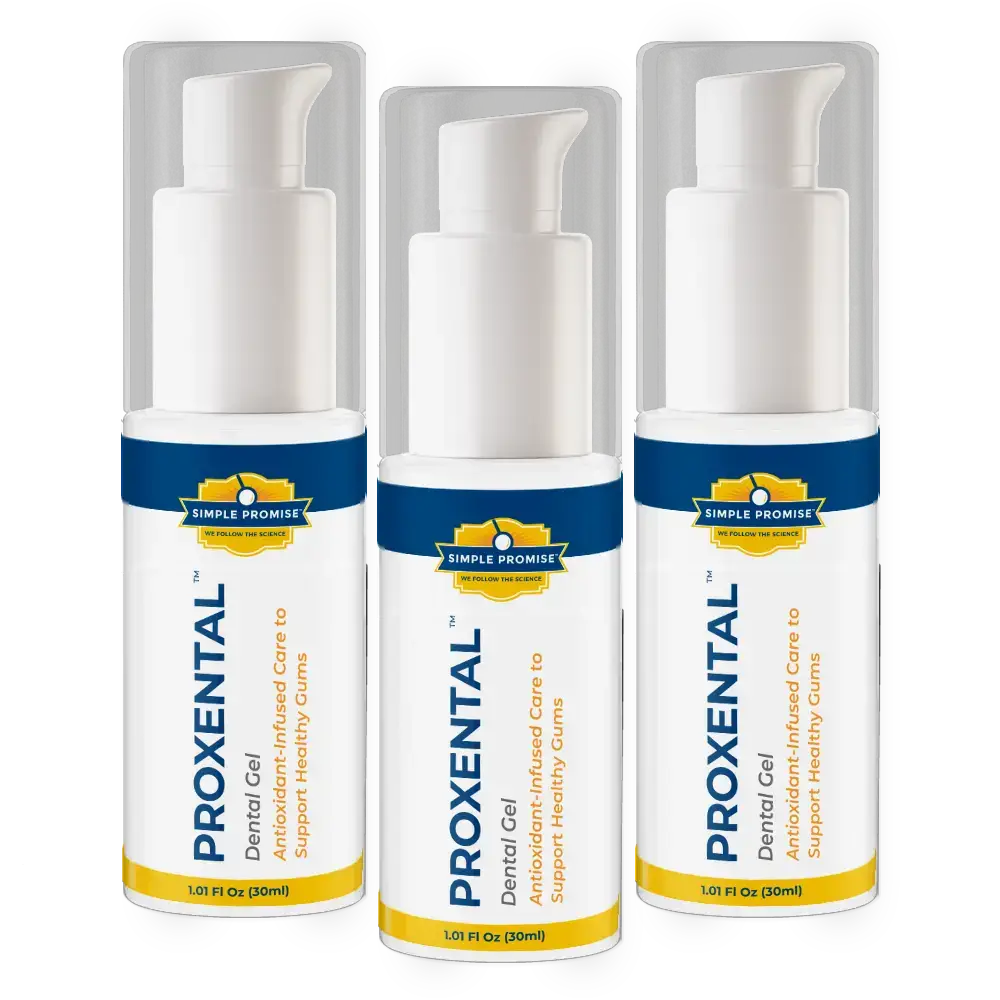
ProXental is a 30-day dental gel from Simple Promise. The current product page says to apply a small amount to the upper and lower gums twice a day after brushing, using your fingertips, a cotton swab or a soft toothbrush. The current formula includes aloe vera, xylitol, sage, clove, ferulic acid, thyme, peppermint oil and cucumber extract. The product is marketed around gum health, fresh breath, oral comfort and maintaining stronger teeth.
The current price is $69 for one bottle, $49 per bottle when buying three, or $39 per bottle when buying six. The company also advertises free shipping and a 365-day money-back guarantee.
Why I Looked Into ProXental
What made me curious about ProXental wasn’t the basic idea of a dental gel. That’s perfectly reasonable. It was the much bigger story attached to the product. Some ProXental marketing describes it as using a “Hollywood Smile Method” and claims that it can remineralize teeth, repair gum tissue, reduce bleeding and swelling, eliminate bad breath and even offer a natural alternative to expensive dental procedures.
That is where I start asking questions. There is a big difference between supporting oral hygiene and repairing dental disease.
Can ProXental Actually Repair Teeth?
This is where I would be careful. The Simple Promise product page says ProXental is useful for people who have experienced cavities, cracks, pain, swelling, demineralisation, or bad breath, and its marketing talks about supporting enamel strength and tooth health. But I couldn’t find a clinical trial showing that the finished ProXental gel repairs cavities or cracked teeth.
Early enamel demineralisation can sometimes be reversed or arrested through appropriate remineralisation strategies, particularly fluoride-based care. But that doesn’t mean a botanical gel can rebuild a tooth that has already developed a cavity or physically repair a cracked tooth.
Once we’re talking about an actual cavity, significant enamel damage, an infected tooth or a structural crack, that’s a dental problem. A tube of gel isn’t going to replace the treatment.
The Xylitol Claim Isn’t Completely Crazy
This is probably the ingredient I’d give the most credit to. The ADA recognizes xylitol among non-fluoride agents that have been investigated for caries prevention, although its evidence-based guidance describes the evidence as limited and says these products should be considered adjuncts rather than replacements for standard oral care.
That’s important because ProXental doesn’t need to contain a revolutionary ingredient to be useful. Xylitol plus a pleasant topical gel may make it a reasonable addition to someone’s routine. But “reasonable addition to oral hygiene” is a much smaller claim than “repairs your teeth.”
The Biggest Problem I Found: The Marketing
This is where ProXental started losing me. The main Simple Promise page is relatively restrained. It talks about supporting gum health, fresh breath, oral comfort and dental health. It also explicitly says the product’s statements have not been evaluated by the FDA and that it isn’t intended to diagnose, treat, cure or prevent disease. But other ProXental websites are much more aggressive.
One version calls it a “game-changing dental gel” that can “restore your oral health naturally” and claims it can remineralise teeth, repair gum tissue and replace expensive dental treatments. Another version claims ProXental can strengthen tooth enamel, maintain healthy gums and provide long-lasting fresh breath while calling itself a natural alternative to conventional dental care.
That’s too much for me. If the actual product is simply a topical oral-care gel that supports hygiene and fresh breath, say that. There is no reason to turn it into a miracle dental treatment.
And Then There’s the “FDA Approved” Language
This is another thing I noticed on some ProXental websites. They use language such as “FDA Approved” while explaining that the product is manufactured in an FDA-registered facility. Those are not the same thing.
Being manufactured in an FDA-registered facility does not mean the FDA approved ProXental as a treatment for dental disease. In fact, the main Simple Promise page itself uses the much more appropriate disclaimer that the product’s statements have not been evaluated by the FDA.
So I would not use the “FDA approved” wording on those other sites as evidence that ProXental has been medically approved.
What About Those Amazing Customer Reviews?
This is another area where I would keep my expectations in check. The Simple Promise product page currently displays nine reviews, all five-star, including claims about healthier gums and reduced bleeding.
The company also has a broader reviews page featuring ProXental testimonials. But there’s an important detail buried on the actual product page: Simple Promise says testimonials in its advertising are from real customers who were compensated for their time, with names changed for privacy.
That doesn’t mean the testimonials are fake. It does mean I wouldn’t treat them as independent evidence that the product works. And when I see claims like “this stopped my toothache” or that a product saved someone from major dental work, I definitely want something stronger than a testimonial before believing it.
Is ProXental Effective?
For something relatively modest, possibly. I can see how a gel containing xylitol, soothing botanicals and essential oils could make someone’s mouth feel fresher or more comfortable.
But I couldn’t find convincing evidence that ProXental itself can:
- repair cavities
- rebuild cracked teeth
- reverse significant enamel damage
- regenerate receding gums
- replace fillings, root canals or other dental procedures
Those are very different claims from supporting everyday oral hygiene. And the ADA continues to recommend the basics: brushing twice a day with fluoride toothpaste and cleaning between the teeth daily. That’s not nearly as exciting as a “Hollywood Smile Method,” but it has considerably more evidence behind it.
Is ProXental a Scam?
I wouldn’t call ProXental a scam. There is a real product, a disclosed formula and an identifiable seller. The ingredients aren’t inherently ridiculous, and there is at least some legitimate reasoning behind using ingredients such as xylitol in oral care. What I would call questionable is the way some of the marketing stretches the product’s potential.
The product itself is much easier for me to accept as a supplementary oral-care gel than as a treatment capable of repairing damaged teeth and gums.
Pricing and Where to Buy
Simple Promise currently lists ProXental at $69 for one bottle, $147 for three, or $234 for six. The company advertises a 365-day money-back guarantee.
I wouldn’t immediately buy six bottles just because the per-bottle price looks better. If I wanted to try ProXental, I’d start with one. There’s no reason to stock up on a product I haven’t even established that I like.
Who Might Like ProXental?
I could see this appealing to someone who wants an additional product for fresh breath or general gum comfort and likes the idea of a botanical gel. The formula isn’t particularly alarming, and the topical format is convenient. But I’d keep its role firmly in the supplementary oral-care category.
Who Should Skip It?
I’d skip it if you’re buying it because you have a cavity, cracked tooth, persistent toothache, significant gum bleeding or receding gums and you’re hoping to avoid seeing a dentist.
That’s exactly when I would do the opposite. A dental problem that needs treatment isn’t going to disappear because a product has xylitol and herbal extracts in it. I’d also skip it if you’re expecting dramatic whitening or a complete “smile transformation.” The evidence doesn’t justify those expectations.
Conclusion
ProXental is actually more reasonable than its strongest marketing makes it sound. The formula contains recognisable oral-care ingredients, including xylitol, and there’s nothing about the basic concept of a topical dental gel that strikes me as inherently ridiculous. Xylitol itself has been studied for oral health, although the evidence is not strong enough to make it a substitute for standard dental care.
My problem is that the marketing sometimes takes a perfectly ordinary oral-care product and turns it into something much bigger. Claims about repairing teeth, regenerating gum tissue, reversing dental problems and replacing expensive dental procedures go well beyond what I could verify for the finished ProXental product.
My verdict: ProXental isn’t an obvious scam, but I would treat it as an optional oral-care product, not a dental treatment.
If you simply want something extra for fresh breath and gum care, I can understand trying it. But if you have an actual dental problem, I’d save the $69 and put that money toward a dentist instead.
Also read – I Bought the Ascend Skin Body Butter: Here’s My Brutally Honest Review