

I first came across VoltSaver X because the promise is exactly the kind that gets my attention when electricity bills start getting ridiculous. The product is tiny, apparently takes seconds to install, and supposedly works quietly in the background to make your home’s electricity use more efficient. No new appliances, no complicated installation and, according to the marketing, no major lifestyle changes. Just plug it into a wall and watch the power bill supposedly come down.
That sounds incredibly convenient, which is exactly why I did not want to take the advertisement at face value. I wanted to know what this little device is actually doing, whether the electrical explanation behind it makes sense, and, more importantly, whether there is independent evidence that VoltSaver X can produce the kind of household savings being advertised. I also found another part of the purchasing process that I think deserves just as much attention as the device itself.
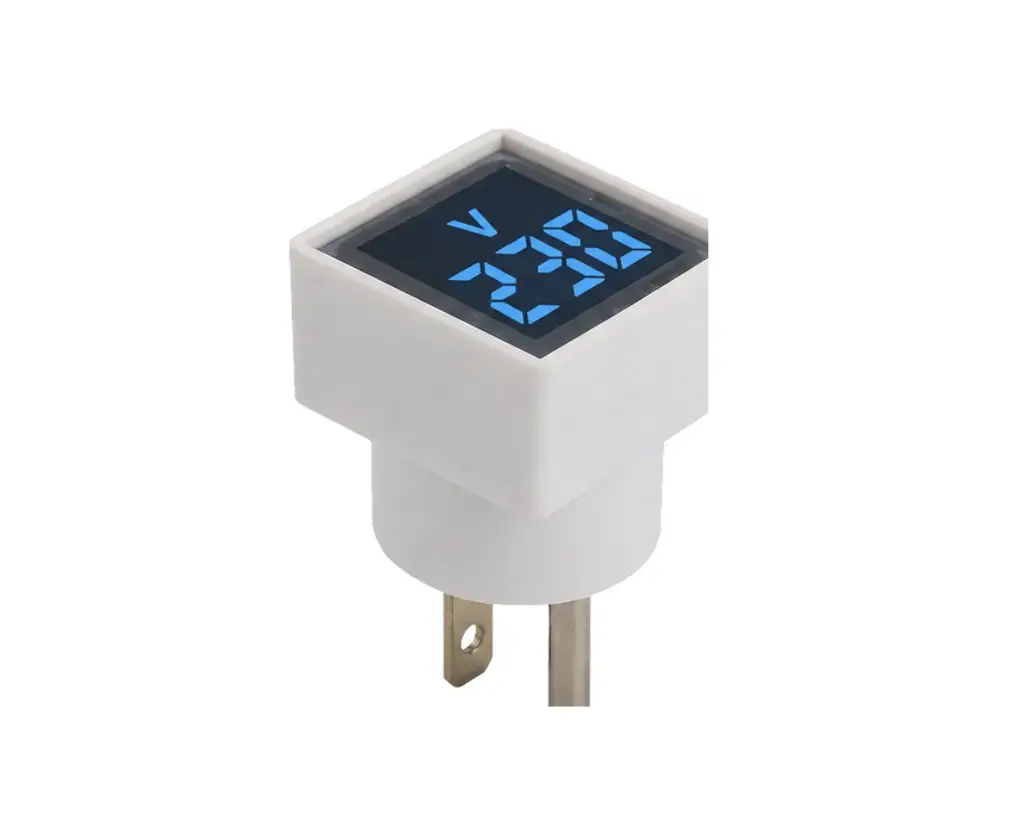
What Is VoltSaver X?
VoltSaver X is marketed as a small plug-in electricity-saving device. The basic pitch is that the unit somehow improves the way electricity moves through your home, helping appliances operate more efficiently while reducing wasted electricity and lowering your monthly utility bill.
The advertising uses legitimate-sounding electrical terminology involving voltage, power flow, power factor and electrical efficiency. That is important because the technology sounds much more complicated than the little box actually looks.
There are legitimate electrical concepts behind some of this language. Power-factor correction, for example, is a real engineering practice that can reduce certain electricity costs under particular commercial and industrial billing arrangements.
But that does not automatically mean a tiny plug-in device can dramatically reduce the amount of electricity an ordinary household consumes.
That is the claim I wanted to investigate.
Can a Tiny Plug Really Lower the Whole Household’s Electricity Bill?
This is where I become skeptical. Think about what is actually consuming electricity inside a home: your air conditioner has to move heat, your refrigerator has to run its compressor, your water heater has to heat water, your washing machine has to run its motor, your dryer has to generate heat, your television and computers need electricity to operate.
A device plugged into another outlet does not simply make all of those appliances require less energy. If VoltSaver X genuinely reduces the amount appearing on my electricity meter, I want to know exactly what changed.
- Which appliance consumed less?
- By how much?
- Under what conditions?
- How was it measured?
- What was the baseline?
- And was the result independently reproduced?
Those are the questions I would expect a serious electricity-saving product to answer. Instead, the marketing largely asks me to accept that the device improves the electrical system and therefore saves me money. That is not enough for me.
The Power Factor Explanation Needs Some Context
This is probably the most important technical distinction in the entire review. Power factor is real. Power-factor correction is real. But power factor does not mean the same thing as household electricity consumption.
The U.S. Department of Energy discusses power-factor correction in the context of commercial and industrial facilities where utilities may apply demand or power-factor-related charges. In those circumstances, correcting poor power factor can produce genuine financial benefits.
That is a very different situation from telling a typical homeowner that plugging a small device into an ordinary outlet will substantially reduce the home’s electricity bill.
So if VoltSaver X is relying on power-factor correction as its explanation, I would want the seller to explain exactly how that mechanism applies to the utility tariff of an ordinary residential customer.
Otherwise, a real electrical concept is being used to support a much broader claim than the evidence necessarily establishes.
The Biggest Problem Is the Lack of Independent Testing
This is what I kept coming back to. I could find claims about VoltSaver X reducing electricity costs, improving electrical efficiency and helping appliances operate better.
What I could not find was convincing independent testing of the finished VoltSaver X product demonstrating those savings in an ordinary household. That matters enormously.
If someone tells me a $20 or $30 gadget can reduce my electricity bill by a meaningful percentage without changing my appliances or habits, I want actual measurements.
- Give me a utility-grade meter.
- Show me the baseline.
- Run the household under controlled conditions.
- Plug the device in.
- Measure the difference.
- Repeat the test.
That would tell me something. A testimonial saying, “My electricity bill went down after I plugged this in,” does not. A monthly electricity bill changes for countless reasons. Weather changes. Air-conditioning use changes. Occupancy changes. Appliance usage changes. Utility rates change.
Without controlling for those things, I cannot reasonably attribute a lower bill to a small plug-in device.
Then I Found the Inovira Connection
This is where the story became more interesting. The VoltSaver X product has been associated with Inovira Home, but I could not find a current VoltSaver X listing in Inovira’s public catalogue.
Instead, the current Inovira energy-saving page promotes a similar-looking product called PowerPlug Pro. That does not prove PowerPlug Pro and VoltSaver X are physically identical, so I would not make that claim.
It could be a renamed product. It could be an older sales funnel. It could be a related product. Or it could simply be another device using the same marketing concept. But the fact that the currently visible Inovira offer uses a similar electricity-saving pitch is something I would want to understand before buying.
If the product name changes between the advertisement, the checkout page, the confirmation email and the package that arrives at my door, I want the seller to explain why.
The $49.99 Monthly Membership Is the Part I Would Really Watch
This is where I think buyers need to pay attention. Inovira’s current VIP membership page advertises a $49.99 monthly membership. That is not a one-time purchase price for the electricity-saving device.
It is a recurring charge. And that changes the economics completely. A person might see an inexpensive power-saving gadget and think, “I’ll give it a try.” But if the checkout also enrolls that person in a $49.99-per-month membership, the cost of the experiment can quickly become much larger than the cost of the device.
At $49.99 per month, three months of membership alone would be $149.97. Six months would be $299.94. Suddenly, this is no longer a cheap little electricity gadget.
The Membership Pricing Is Also Inconsistent
This is one of the things I found particularly concerning. Inovira’s public membership pages do not appear to give one completely consistent monthly price. One page advertises the VIP membership at $49.99 per month.
Another FAQ section describes a 12-day introductory period followed by a $29.99 monthly charge. A separate membership page again describes a $49.99 monthly charge for first-time buyers. Those are not the same price.
I have not personally placed an order, so I cannot tell you what amount a particular customer’s card would actually be charged. But that is precisely why I would want clarification before entering my payment information.
A recurring membership should have one clear price, one clear billing date and one clear explanation of how the introductory period works.
The Guest Checkout Matters
There is an important nuance here. The membership is not necessarily something that every customer is secretly forced into. Inovira’s pages also present a guest purchasing option. That means the sensible thing for a shopper is to slow down at checkout and look at exactly what is selected.
If the page offers a discounted VIP option and a more expensive guest option, compare the total long-term cost, not just the amount displayed next to the product.
A $10 discount today is not a discount if it comes with a $49.99 monthly membership that you never intended to keep. This is one of those situations where taking a screenshot of the checkout page before paying would be a very good idea.
The Advertising Makes the Savings Feel Easier Than They Are
I think this is one of the strongest psychological parts of the VoltSaver X marketing. The electricity bill is the problem. VoltSaver X is the simple solution.
Plug it in, leave it there, and save money. That is an extremely attractive proposition because it removes the annoying part of energy efficiency.
But genuine energy savings normally come from changing something that actually consumes energy. A more efficient air conditioner uses less electricity to provide the same cooling. A smart thermostat can reduce how long heating or cooling operates.
An efficient refrigerator can use less electricity to perform the same job… A power strip can disconnect standby loads.
Those mechanisms make intuitive physical sense. VoltSaver X needs to demonstrate what mechanism produces its claimed whole-house savings.
And Then There Is the “Electrical Protection” Claim
The marketing also associates the device with benefits such as stabilizing electricity and protecting appliances from damaging electrical spikes. Again, those are separate claims. A device that reduces energy consumption is not automatically a surge protector. A surge protector has specific electrical components and ratings designed to divert transient voltage.
So if a seller tells me that VoltSaver X both saves substantial amounts of electricity and protects my appliances, I want to see the specifications for both functions.
I would look for an identifiable manufacturer, model number, electrical rating and appropriate safety certification. A green indicator light on a plug-in box does not tell me that it has meaningfully protected my refrigerator or television from a surge.
The Social-Media Demonstrations Don’t Prove the Product Works
Some of the VoltSaver X promotion relies heavily on video demonstrations and expert-looking explanations. That can be persuasive because electricity is one of those subjects where most people, myself included, are not going to open up an electrical panel and start testing power quality ourselves. But a video is still advertising unless the underlying test can be independently verified.
One investigation into the VoltSaver X promotion also reported that footage associated with Michael Harrington of the Backyard Maine YouTube channel was being presented in a way that appeared to associate him with the product. I would be particularly cautious here because genuine footage of an established DIY or electrical creator can give an advertisement credibility that has nothing to do with whether the creator actually endorsed the product.
I would not treat a recognizable face in an advertisement as proof of endorsement unless the creator independently confirms it.
What I Think Is Actually Happening With VoltSaver X
After stripping away the electrical terminology, the story becomes much simpler. VoltSaver X is a small plug-in device being marketed as a solution to expensive household electricity bills.
The underlying electrical concepts used in the marketing are not necessarily fictional. Power factor, voltage regulation and power quality are all legitimate subjects. The problem is the leap from those concepts to the promise of meaningful whole-house savings.
I could not find convincing independent evidence showing that VoltSaver X itself produces the dramatic household savings implied by the advertising. And once the Inovira membership enters the picture, I become even less interested in taking the marketing on faith.
Is VoltSaver X a Scam?
I would not say that every VoltSaver X customer is guaranteed to lose money or that the device has been proven fraudulent in a laboratory.
That would go beyond the evidence I found. But I also would not recommend buying it based on the advertised electricity savings. The lack of independent product-specific testing is enough to make me sceptical of the core claim.
The recurring membership is a separate concern. Inovira publicly advertises a recurring VIP charge, and its pages currently contain inconsistent monthly-price information. That is something I would want completely clarified before entering my card details.
So for me, there are actually two separate questions: Does the device save electricity?
I have not seen enough independent evidence to say yes. Could the purchase become more expensive than expected because of a recurring membership?
Yes, that is a possibility the checkout needs to be scrutinized for. Those should not be confused with each other.
What I Would Want to Know Before Buying
Before I paid for VoltSaver X, I would want the seller to answer these questions:
- What exactly does the device change electrically?
- What is the measured reduction in kilowatt-hours?
- What was the household’s baseline consumption?
- What utility tariff was used?
- Was the test performed independently?
- Can the complete test report be provided?
- What appliances were included?
- Does the device actually reduce energy consumption or only alter power factor?
- What is the exact manufacturer and model number?
- What electrical safety certification does the unit have?
- Is it actually a surge protector, and what is its rating?
- Is VoltSaver X the same product currently marketed as PowerPlug Pro?
- Is the Inovira VIP membership optional?
- What is the exact recurring price?
- When does the recurring charge begin?
- How do I cancel it?
- What appears on my credit-card statement?
If the seller cannot answer those questions clearly, I would keep my money.
Conclusion
VoltSaver X is exactly the sort of product I would be tempted to try when an electricity bill gets out of hand because the proposed solution is so easy. That is also why I think it deserves scrutiny.
There are legitimate electrical technologies involving power factor, voltage regulation and power quality. But those concepts do not automatically prove that a tiny plug-in device can substantially reduce the electricity consumed by an entire household.
I could not find convincing independent evidence that VoltSaver X delivers the dramatic savings being promoted. Then there is the Inovira purchasing system, where a separate recurring VIP membership is advertised at $49.99 per month on one page, while another public page references $29.99 after an introductory period. That is far too important a detail to gloss over when someone is deciding whether a supposedly inexpensive gadget is worth trying.
So I would not buy VoltSaver X because an advertisement tells me it will slash my electricity bill. If the product really works as dramatically as claimed, the seller should be able to prove it with independent electrical measurements.
Until then, I would rather reduce the electricity bill by targeting the appliances that actually consume the electricity than trust a little box in the wall to somehow make the entire house more efficient.
Also read – Stakeglobals.com Review: 5 Solid Reasons Why You Should Avoid This Site
[…] Also read – VoltSaver X Review: The $49.99 Monthly Charge You Need to Know About […]