

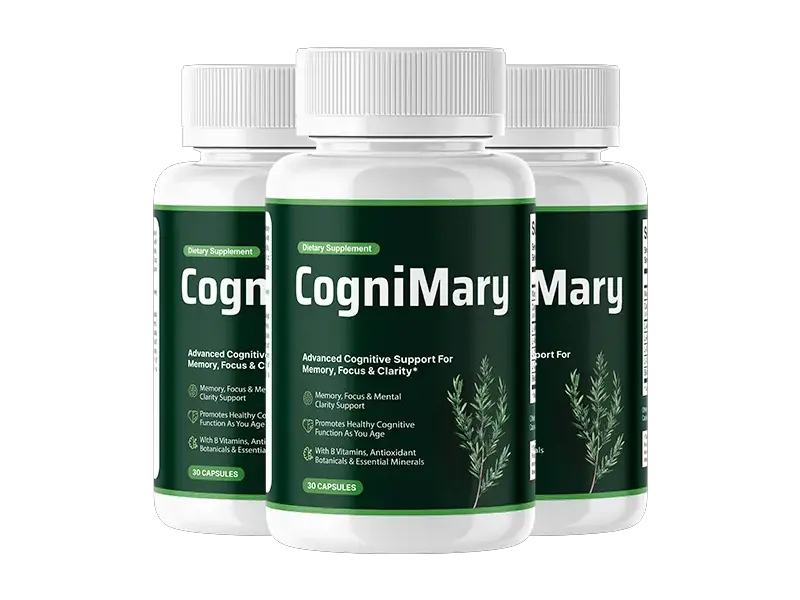
CogniMary is marketed as a natural memory and focus supplement for adults who want sharper recall, better concentration and improved mental clarity. The formula includes several ingredients that have actually been studied for cognitive health, which makes this one more interesting than the usual mystery “brain booster.”
But there is a major problem once you start comparing the different CogniMary websites: they do not all describe the same formula. So, is CogniMary legit? Let’s take a closer look.
Key Takeaways
- CogniMary is marketed as a daily supplement for memory, focus and mental clarity.
- Several websites list rosemary, bacopa, ginkgo biloba and phosphatidylserine.
- Other CogniMary pages promote a completely different formula involving L-arginine, L-citrulline, beta-alanine and niacin.
- The finished CogniMary product has no verified clinical trial showing that it improves memory or prevents cognitive decline.
- Some individual ingredients have legitimate research behind them, but that does not prove the finished supplement works.
What Is CogniMary?
CogniMary is a once-daily capsule marketed as a cognitive-support supplement. The main version currently promoted online describes it as a non-stimulant formula designed to support memory recall, focus and mental clarity. The product is aimed particularly at adults who are worried about forgetfulness, difficulty concentrating or the general feeling that their mental sharpness is declining.
The company recommends one capsule daily and promotes longer-term use, with three- and six-bottle packages heavily pushed on the sales pages.
That part is fairly typical for the supplement industry. What makes CogniMary more complicated is that several websites using the CogniMary name give completely different descriptions of what is actually inside the bottle.
How It Claims to Work
The main CogniMary formula is built around four ingredients:
- Rosemary extract
- Bacopa monnieri
- Ginkgo biloba
- Phosphatidylserine
The marketing assigns each ingredient a particular role. Rosemary and bacopa are presented as the memory and recall components, ginkgo is positioned around circulation and blood flow, while phosphatidylserine is described as supporting brain-cell structure and cognitive function.
There is some legitimate research behind each of these ingredients. Bacopa, for example, has been studied in randomized trials involving memory and attention. Rosemary has also been investigated for cognitive performance, while phosphatidylserine has been studied in older adults with memory complaints. Ginkgo biloba has an extensive research history, although its cognitive benefits are much less straightforward than supplement advertising often suggests.
The problem is that none of this establishes that the four ingredients, in the specific amounts used by CogniMary, produce the results claimed by the company.
Reality vs. Claims
This is where I would separate CogniMary from the more outrageous memory supplements. The company does acknowledge on some of its newer pages that the research it cites concerns the individual ingredients rather than the finished CogniMary formula. That is an important distinction.
There is also no credible evidence that CogniMary can reverse Alzheimer’s disease, dementia or established cognitive impairment. A supplement containing herbs associated with memory support should not be confused with a treatment for a neurological disease.
However, the marketing still uses language about “finding your sharpness again,” remembering names more easily and experiencing noticeably better focus. Those are difficult outcomes to establish from testimonials alone.
The company claims thousands of customers and displays very high review scores on its own websites. Those figures are seller-controlled and should not be treated as equivalent to an independently verified clinical outcome.
Let’s Look at the Listed Ingredients
The most commonly published CogniMary formula contains: Rosemary extract: Studied for possible effects on memory and cognitive performance, although human evidence is still limited compared with established medical treatments. Bacopa monnieri: One of the more interesting ingredients in the formula. Several human studies have examined standardized bacopa extracts for memory, attention and information processing, with some positive findings after sustained use. Ginkgo biloba: Extensively studied for circulation and cognitive function. Results for improving cognition in healthy people or treating dementia have been inconsistent, so it should not be treated as a proven memory enhancer. Phosphatidylserine: A naturally occurring phospholipid found in cell membranes, including brain tissue. Some clinical studies have reported modest cognitive benefits, but the evidence is not conclusive.
The problem is that the ingredient information is not consistent across the different CogniMary sites. Some newer pages claim that these four ingredients are fully disclosed with their dosages, while other versions of the brand list a completely different group of ingredients, including L-arginine, L-citrulline, beta-alanine and niacin.
That is not a small discrepancy. Those are entirely different formulas aimed at producing cognitive effects through completely different mechanisms.
Red Flags to Consider
Different Websites List Different Formulas
This is the biggest issue I found. One CogniMary website lists rosemary, bacopa, ginkgo and phosphatidylserine. Another CogniMary website describes a formula based around L-arginine, L-citrulline, beta-alanine and niacin.
A product should not have several completely different formulas circulating under the same name without a clear explanation. It makes it difficult to know which bottle a customer is actually supposed to receive and which formula the company’s claims are referring to.
The Product Is Very New as a Brand
The CogniMary trademark application currently on record was filed in September 2026 by an individual applicant. That does not prove anything negative about the supplement, but it is worth noting when a website simultaneously presents the product as though it has an enormous established customer base.
A claimed customer count is not the same thing as independently verified evidence of a long operating history.
No Finished-Product Clinical Trial
This is the most important scientific limitation. There are studies on bacopa. There are studies on rosemary. There are studies on ginkgo and phosphatidylserine. But I could not verify a properly conducted clinical trial showing that CogniMary itself improves memory, attention or cognitive performance.
The company’s own newer material actually acknowledges this distinction. That makes the ingredient research useful background information, but it cannot be used as proof that the finished capsule works.
“FDA Registered” Does Not Mean FDA Approved
Some CogniMary pages prominently mention an FDA-registered manufacturing facility and even use imagery suggesting certification or approval.
That wording needs to be understood correctly. Dietary supplements are not approved by the FDA for effectiveness before they are sold. A manufacturing facility being registered with the FDA is not the same thing as the FDA approving CogniMary.
The company’s own disclaimer correctly states that its cognitive claims have not been evaluated by the FDA.
The Six-Bottle Push
The sales pages strongly encourage customers to buy six bottles, presenting the package as a 180-day supply and claiming that around 96% of customers choose that option.
That is a marketing statistic supplied by the seller, not independent evidence that six months of treatment is necessary. It also means a first-time buyer is encouraged to spend hundreds of dollars before knowing whether the product does anything for them.
The current pages state that purchases are one-time orders rather than automatic subscriptions, which is useful, but I would still check the exact checkout terms before paying.
Is CogniMary Effective?
CogniMary is not a product I would dismiss as completely nonsensical. Bacopa, rosemary, phosphatidylserine and ginkgo are real substances with published research behind them. Of those, bacopa is particularly interesting because some controlled trials have found improvements in aspects of memory after several weeks of consistent use.
But that is not enough to establish that CogniMary works. The exact extract, dose, standardization and combination all matter. If a study uses 300 mg of a standardised bacopa extract, for example, that does not tell me what happens when a different amount or preparation is placed into a four-ingredient capsule.
The formula inconsistency makes this even harder to assess. I would therefore describe CogniMary as an unproven cognitive supplement containing some legitimate research-backed ingredients, rather than a proven memory enhancer.
And I would be particularly cautious if an advertisement makes it sound like the product can reverse dementia, Alzheimer’s disease or serious memory decline. Those are medical conditions that require proper evaluation and should not be treated with an online supplement.
Possible Safety Concerns
Ginkgo biloba is the ingredient I would pay the most attention to from a medication-interaction perspective. Ginkgo may increase bleeding risk, particularly when combined with anticoagulant or antiplatelet medications. Anyone taking blood thinners or with a bleeding disorder should speak with a healthcare professional before using a ginkgo-containing supplement.
The other ingredients are not automatically dangerous, but “natural” does not mean interaction-free. Anyone who is pregnant, breastfeeding, taking prescription medication or dealing with a diagnosed medical condition should check the actual label with a healthcare professional before starting it.
Pricing and Where to Buy
The current CogniMary offers I found are structured around three packages:
- 30-day supply: about $89
- 90-day supply: about $177 total, or $59 per bottle
- 180-day supply: about $294 total, or $49 per bottle
The six-bottle package is heavily promoted as the best value. There are also different CogniMary domains using different promotional language, so I would not assume that every website carrying the name represents the same seller or even the same formula.
Before paying, check the exact product name, ingredient panel, number of bottles, final price, shipping charge and refund terms.
What To Do If You Already Bought
If you already purchased CogniMary, check the bottle itself rather than relying on the advertisement. Look for the Supplement Facts panel, ingredient amounts, manufacturer information, lot number and expiration date. Compare those details with the website you ordered from.
If your bottle contains rosemary, bacopa, ginkgo and phosphatidylserine, that is different from a page describing an L-arginine, L-citrulline, beta-alanine and niacin formula. Photograph the label if the information does not match the advertisement.
If you take blood thinners or other medication, particularly medication that affects bleeding, check the actual ingredient list with your doctor or pharmacist before continuing.
And if you bought it because you are experiencing significant or worsening memory problems, do not let the supplement delay a proper medical assessment.
Conclusion
CogniMary is more complicated than a simple “scam or legit” label. There are legitimate ingredients behind its main formula, particularly bacopa, rosemary and phosphatidylserine, and the company does make an important distinction on some of its newer pages between ingredient research and research on the finished product.
But I still would not recommend buying it. The biggest reason is the formula inconsistency. Multiple websites using the CogniMary name describe completely different ingredients, making it difficult to know which formula is actually being sold. There is also no verified clinical trial demonstrating that the finished CogniMary product improves memory or prevents cognitive decline.
My conclusion: CogniMary may be a real supplement, but it is not a proven memory treatment, and the inconsistent formulas are too significant for me to overlook. I would only consider it after the company clearly identifies one official formula, publishes exact doses and provides a verifiable explanation for the different versions currently circulating online.
Also read –
[…] Also read – CogniMary Review: Scam or Legit? The Truth About Its Memory and Focus Claims […]