

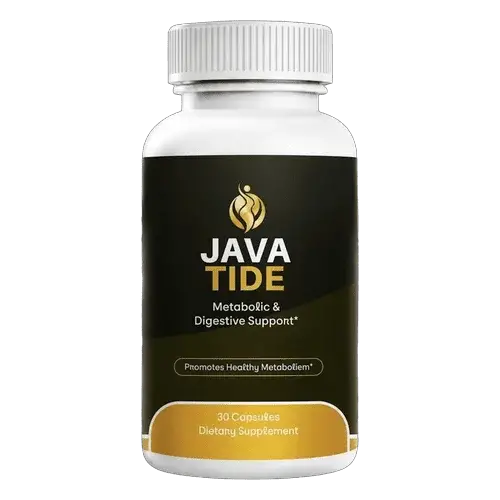
JavaTide is marketed as a natural weight-management supplement that works through the gut microbiome rather than stimulants or fat-burning chemicals. It combines prebiotic fibre, resistant starch and probiotics, with the company claiming that this combination can support metabolism, appetite control and healthy weight loss.
The formula is more plausible than many of the questionable weight-loss supplements I investigate, but there are still some important gaps between what JavaTide actually discloses and what the marketing promises. So, is JavaTide legit? Let’s take a closer look.
Key Takeaways
- JavaTide is a capsule marketed for gut health, metabolism and weight management.
- Its published formula contains chicory root inulin, potato resistant starch and a probiotic blend.
- The company does not clearly disclose the CFU count or full details of all probiotic strains.
- The doses of the prebiotic ingredients are relatively small compared with amounts used in some human research.
- JavaTide appears to be a real supplement, but its weight-loss claims are stronger than the product-specific evidence.
What Is JavaTide?
JavaTide is a daily dietary supplement sold in vegetarian capsules. The recommended serving is one capsule per day, and the product is positioned as a stimulant-free alternative to traditional weight-loss supplements.
Rather than relying on caffeine or other stimulants, JavaTide focuses on the gut microbiome. The basic idea is that certain types of dietary fiber and resistant starch can feed beneficial gut bacteria, while probiotics introduce specific microorganisms.
The company then connects this gut-health approach to weight management, appetite, blood sugar and metabolism.
That concept is not completely unreasonable. The gut microbiome is an active area of metabolic research. The question is whether taking one JavaTide capsule provides enough of the relevant ingredients to produce the weight-loss effects suggested by the advertising.
How It Claims to Work
JavaTide says its formula works by feeding beneficial bacteria and introducing probiotic organisms associated with metabolic health.
The product’s main ingredients are chicory root inulin and potato resistant starch, both of which can reach the large intestine and be fermented by gut bacteria. The company says this helps create a healthier microbial environment that can support digestion, appetite regulation and metabolism.
It also promotes a probiotic blend that includes Akkermansia muciniphila, a bacterium that has attracted considerable scientific interest because of its association with metabolic health.
This is where the marketing needs to be separated from the evidence. An association between a bacterium and metabolic health does not mean that swallowing a supplement containing that bacterium will cause weight loss. Human studies also depend heavily on the particular strain, dose, formulation and duration.
Reality vs. Claims
There is legitimate science behind the general concept of prebiotics, resistant starch and the gut microbiome. Inulin is a well-established prebiotic fiber, and resistant starch can also be fermented by gut bacteria. Research has found that these substances can influence the composition and activity of the microbiome and may have effects on satiety or metabolic markers. But JavaTide’s marketing takes that basic science and turns it into much broader promises, including accelerating fat burning, suppressing appetite, reducing fat storage, detoxifying the body and supporting lean muscle growth.
Those are very different claims.
The presence of a prebiotic or probiotic does not automatically mean that a person will burn more body fat. And there is no evidence that JavaTide itself acts like a weight-loss medication.
The company also uses testimonials claiming substantial improvements in weight, blood sugar, energy and metabolism. Testimonials can describe individual experiences, but they are not a substitute for a controlled clinical trial.
Let’s Look at the Listed Ingredients
The published JavaTide formula contains three active ingredient groups per capsule:
Chicory Root Inulin: 211 mg. This is a prebiotic fiber that can be fermented by intestinal bacteria.
Potato Resistant Starch: 100 mg. Resistant starch reaches the colon largely undigested and can be fermented by gut microbes.
Probiotic Blend: 36 mg. The company identifies the blend as containing multiple probiotic organisms, including Akkermansia muciniphila. Publicly available brand information does not consistently disclose the full strain information or CFU count for the entire blend.
The dose issue is important. A total of 311 mg of inulin plus resistant starch is quite small compared with the gram-level amounts commonly used in research on prebiotic fibres. And with probiotics, the weight in milligrams tells you very little about potency. What matters is the number of viable organisms, usually expressed as CFUs, along with the specific strains.
JavaTide does not make that information sufficiently clear publicly.
Red Flags to Consider
The Probiotic Details Are Incomplete
The company heavily emphasises its probiotic component, particularly Akkermansia muciniphila, but the full strain information and CFU counts are not clearly disclosed. That matters because probiotics are not interchangeable. Two products can contain the same species but different strains, and those strains can behave differently.
If the company wants to build its marketing around a particular microorganism, I would expect complete strain identification and potency information.
The Prebiotic Doses Are Small
The formula contains 211 mg of inulin and 100 mg of resistant starch. Those are legitimate ingredients, but they are measured in hundreds of milligrams rather than grams. That makes the company’s claims about appetite, metabolism and fat burning difficult to compare with studies using substantially larger quantities.
This does not prove that the ingredients are ineffective at JavaTide’s dose. It simply means the research cannot be transferred directly to the product without evidence.
Weight-Loss Claims Go Beyond the Formula
The sales page says JavaTide can accelerate fat burning, suppress appetite, improve metabolism, support lean muscle growth and detoxify the body. Those are broad claims for a three-component supplement.
The most reasonable interpretation of the formula is that it may provide some prebiotic and probiotic support. That is considerably narrower than saying it will actively burn fat or produce significant weight loss.
No Finished-Product Clinical Trial
I could not verify a properly conducted human clinical trial showing that JavaTide itself causes meaningful weight loss. This is probably the most important distinction in the entire review.
There is research on inulin. There is research on resistant starch. There is research on Akkermansia. But JavaTide is a particular combination at particular doses.
Ingredient research cannot automatically be presented as evidence that the finished bottle produces the same outcome.
“FDA Registered Facility” Is Not FDA Approval
JavaTide says it is manufactured in an FDA-registered facility and uses an FDA/GMP manufacturing claim. That does not mean JavaTide itself is FDA approved.
Dietary supplements are not pre-approved by the FDA for effectiveness before they are marketed. A facility being registered with the FDA is also not equivalent to the FDA approving the supplement’s weight-loss claims.
The company’s own disclaimer acknowledges that its claims have not been evaluated by the FDA.
Countdown Timers and “96% Choose Six Bottles”
The sales page uses a countdown timer, large savings claims and statements that 96% of customers choose the six-bottle option. Those are sales tactics rather than evidence that the product works.
The six-bottle offer is also presented as a 180-day supply, meaning buyers are encouraged to commit to six months before knowing whether the product will actually benefit them.
Is JavaTide Effective?
JavaTide is more scientifically plausible than a typical “melt belly fat” supplement because its formula is built around real prebiotic and probiotic concepts. That does not mean the product itself has been proven to cause significant weight loss.
The biggest problem is the gap between the science and the actual formula. JavaTide promotes chicory root inulin, potato resistant starch and a three-strain probiotic blend. The brand also specifically talks about Akkermansia muciniphila and its connection to metabolic health. There is legitimate research on this bacterium and on prebiotic fibers, but that research cannot automatically be transferred to JavaTide.
In particular, the company does not clearly disclose the complete probiotic strain information and CFU count needed to compare the product with human studies. The available product information also does not provide enough detail to independently establish whether the doses correspond to amounts that have demonstrated meaningful effects in clinical research.
There is another important issue: I could not verify a clinical trial on JavaTide itself showing that people taking this finished product lose significant amounts of weight.
So while the underlying concept is reasonable, the evidence for the actual bottle is still weak.
Possible Side Effects
The ingredients in JavaTide can potentially cause digestive symptoms, particularly because inulin and resistant starch are fermentable carbohydrates.
Some people may experience gas, bloating, abdominal discomfort or changes in bowel movements when increasing prebiotic fiber. These effects can be more noticeable in people who are sensitive to certain fermentable carbohydrates.
The probiotic component may also cause temporary digestive changes when first introduced.
Anyone with an existing gastrointestinal condition, who is pregnant or breastfeeding, or who takes medication should discuss the formula with a healthcare professional before using it.
The company recommends taking one capsule daily and refrigerating the bottle after opening because of the probiotics.
Pricing and Where to Buy
JavaTide is sold through several websites using very similar sales pages. The current offers I found are:
- 2 bottles: $158 total, or $79 per bottle
- 3 bottles: $207 total, or $69 per bottle
- 6 bottles: $294 total, or $49 per bottle
The six-bottle package is repeatedly presented as the “best value,” with the page claiming that 93% or 96% of customers choose six bottles depending on the version of the website.
That is a strange statistic to use as a sales argument, particularly when the company is asking someone who has never tried the product to purchase a six-month supply upfront.
The good news is that the current sales page explicitly says the purchase is a one-time order with no automatic renewal. It also advertises a 60-day money-back guarantee, although one version of the guarantee requires at least 30 days of use before requesting a refund.
I would still save the exact checkout page and confirmation email because the product is being promoted across multiple domains with slightly different wording.
What To Do If You Already Bought
If you already purchased JavaTide, check the bottle against the ingredients and claims on the sales page you used. Pay particular attention to the probiotic information. If the packaging does not identify the strains or provide meaningful potency information, that makes it difficult to know exactly what you are taking.
Keep your order confirmation and screenshots of the original offer, particularly if you purchased one of the larger bundles.
If you develop persistent bloating, abdominal pain, diarrhea or another concerning reaction, stop using the product and speak with a healthcare professional.
And if you bought JavaTide specifically because you have diabetes, insulin resistance or another metabolic condition, do not use it as a substitute for prescribed treatment or medical monitoring.
Conclusion
JavaTide is not one of the most obviously suspicious weight-loss supplements I have come across. There is a legitimate scientific concept behind its formula: prebiotic fibers and certain probiotics can influence the gut microbiome, and the microbiome is being actively studied in relation to metabolic health.
But the marketing stretches that concept much further than the evidence allows. The company talks about activating fat-burning bacteria, suppressing appetite, improving metabolism, reducing fat storage, detoxifying the body and supporting lean muscle. Those are significant claims for a one-capsule-per-day supplement that does not have a verified clinical trial demonstrating those outcomes.
The missing probiotic strain and CFU information is also a major limitation. If Akkermansia muciniphila is central to the marketing, I want to know exactly which strain is being used, how much is present and whether the product has been tested for potency and stability.
My conclusion: JavaTide appears to be a real supplement, but I would not buy it expecting significant weight loss. The underlying gut-health idea is plausible, but the finished product has not been adequately demonstrated to deliver the dramatic metabolism and fat-burning benefits promoted by the sales pages.
The $294 six-bottle offer is especially something I would avoid committing to upfront. If someone still wants to try it, a single bottle makes far more sense than paying for six months based on marketing claims that have not been properly established.
Also read – Thepokecrew.com Review: Unreliable Online Shopping Store to Approach Cautiously