

Glycoguard Blood Balance is marketed as a daily supplement for blood sugar support, insulin sensitivity and metabolic wellness. The product promises a more natural way to support healthy glucose levels, using a combination of berberine, cinnamon bark, alpha-lipoic acid, chromium and bitter melon.
At first glance, this is actually a more believable formula than some of the blood-sugar supplements I’ve investigated. The ingredients aren’t random. Several have been studied specifically for glucose metabolism and insulin sensitivity.
But that doesn’t automatically mean Glycoguard works. The biggest question I had while researching it was whether there’s evidence for Glycoguard itself, rather than evidence that individual ingredients might have some effect. And there’s another issue I wasn’t expecting: the website selling Glycoguard is extremely new, and the site itself says it is an independent marketing website rather than the manufacturer or distributor.
Key Takeaways
- Glycoguard is marketed as a blood-sugar and metabolic-health supplement.
- The main formula contains berberine, cinnamon bark, alpha-lipoic acid, chromium and bitter melon.
- The recommended serving is two capsules per day.
- The company does not claim that Glycoguard treats diabetes and acknowledges that the finished product has not undergone its own clinical trial.
- The individual ingredients have varying degrees of research behind them, but that doesn’t establish that Glycoguard itself works.
- The label lists all five active ingredients but does not provide the individual milligram amounts, which makes it difficult to compare the product with doses used in research.
- The glyco-guard.com domain appears to have been registered only recently, on August 23, 2026, according to a third-party investigation.
- Glycoguard is also appearing on Walmart through a third-party seller under the S.O LABS Store, with no customer reviews on the product listing at the time I checked.
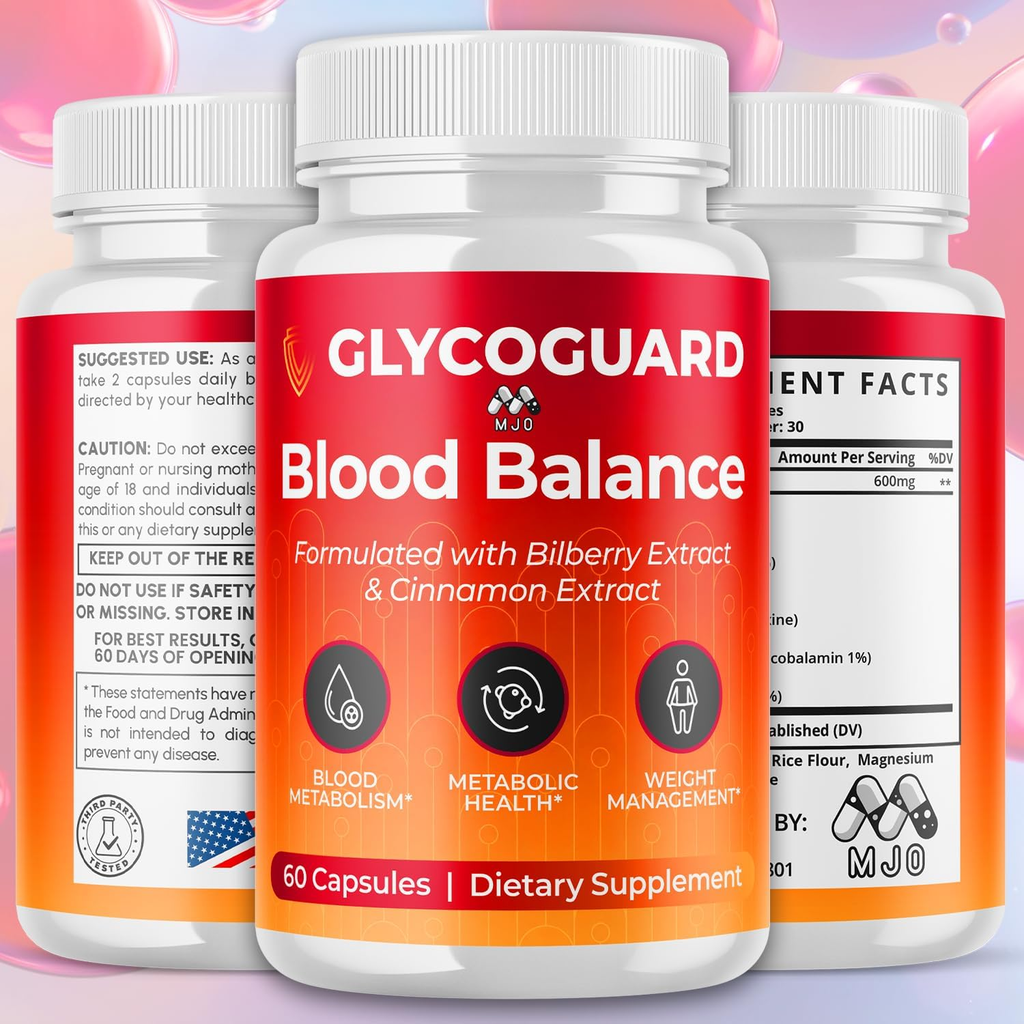
What Is Glycoguard Blood Balance?
Glycoguard Blood Balance is a dietary supplement marketed toward adults who want additional support for healthy blood sugar levels and metabolic wellness.
The official-looking Glycoguard website describes it as a twice-daily capsule containing five plant-based or nutritional ingredients. It specifically emphasises that the product is nutritional support rather than a treatment for diabetes or another diagnosed blood-sugar condition.
That disclaimer is important. Blood-sugar supplements are particularly easy to market because “supports healthy glucose” can sound almost identical to “lowers blood sugar.”
They’re not the same thing.
How Glycoguard Claims to Work
The basic idea behind the formula is fairly straightforward. Berberine and bitter melon are positioned around glucose metabolism, cinnamon and chromium around insulin sensitivity and glucose regulation, while alpha-lipoic acid provides antioxidant and metabolic support.
On paper, that sounds reasonable. But the important missing piece is a clinical trial on Glycoguard’s actual five-ingredient formula.
The Glycoguard website itself acknowledges that the finished product has not undergone its own clinical trial. So, what we’re really looking at is ingredient-level evidence, not product-level evidence.
That’s a meaningful difference.
Reality vs. Claims
I actually think Glycoguard’s formula deserves more credit than many of the blood-sugar supplements I’ve come across. Berberine isn’t a meaningless ingredient. Neither are alpha-lipoic acid, cinnamon or bitter melon.
There is legitimate research behind this category. But the formula has one major weakness: I don’t know how much of each ingredient you’re getting.
And that makes the marketing difficult to evaluate. If a study finds an effect from a particular amount of berberine, I can’t assume Glycoguard will produce the same effect simply because “berberine” appears on its label.
The same goes for cinnamon and bitter melon. So I wouldn’t say the ingredients are fake. I’d say the evidence has been borrowed from the ingredients rather than demonstrated for the finished product.
Red Flags to Consider
The Individual Ingredient Doses Aren’t Listed
This is probably my biggest product-specific concern. Glycoguard says the formula contains five active ingredients but doesn’t break out the individual amounts in the label information presented online.
For a blood-sugar supplement, that’s not ideal. If you’re selling a formula based heavily on research around particular compounds, consumers should be able to see exactly how much they’re taking.
The Website Is Extremely New
Glyco-guard.com was registered on August 23, 2026, making the website only days old at the time of this investigation.
A new website isn’t proof of fraud. Every legitimate company has to start somewhere. But it does mean that claims about thousands of satisfied customers or an established track record should be viewed carefully if there isn’t an independently verifiable history behind them.
It’s an Independent Marketing Website
This one is particularly interesting. The Glycoguard website reportedly states in its terms that it is an independent marketing website and not the manufacturer, seller or distributor of Glycoguard.
That’s important because someone landing on the site could reasonably assume they’re dealing directly with the company that makes the supplement. They’re apparently not.
The Walmart Product Has No Reviews
Glycoguard is also listed on Walmart as a 60-capsule product sold by S.O LABS Store for about $18–$19. The product listing currently shows zero ratings and zero reviews.
That’s not a bad review. It’s actually more basic than that: there isn’t enough customer feedback to tell us anything.
Does Glycoguard Actually Work?
This is where my answer gets nuanced. The ingredients may have genuine blood-sugar-related effects. Glycoguard itself hasn’t demonstrated that it works.
Berberine is the strongest part of the formula from an evidence standpoint. Cinnamon, bitter melon and alpha-lipoic acid also have legitimate research behind them, although the evidence and applications vary.
But because the exact doses aren’t disclosed, I can’t determine whether Glycoguard is providing amounts comparable to those used in research.
And because there isn’t a clinical trial on the finished product, I can’t tell you that taking two Glycoguard capsules a day will meaningfully lower your blood glucose.
That’s a much bigger claim than the evidence supports.
Is Glycoguard Safe?
I wouldn’t automatically call the formula unsafe. But blood-sugar supplements deserve more caution than a generic multivitamin.
Berberine and some of the other ingredients may influence glucose metabolism, which could matter if someone is already taking medication that lowers blood sugar.
That is one reason the manufacturer’s own warning that Glycoguard isn’t intended to treat diabetes shouldn’t be ignored. And if someone has diabetes or another diagnosed glucose disorder, I would not use Glycoguard as a replacement for prescribed treatment.
Pricing and Where to Buy
The Glycoguard website advertises the supplement at $39 per bottle when purchasing certain bundles, while Walmart currently has a 60-capsule listing around $18–$19 through a third-party seller.
That price difference is significant enough that I’d check the seller carefully before purchasing. If you’re buying through Walmart, note that the product is sold by S.O LABS Store and fulfilled by Walmart, rather than necessarily being sold directly by the manufacturer.
What To Do If You Were Scammed
If you purchased Glycoguard because you were promised that it would normalise your blood sugar or reverse diabetes, save the advertisement and checkout page.
Keep your order confirmation and check exactly what you were charged. If the product doesn’t match the description, contact the seller and request a refund.
If you’re unexpectedly enrolled in recurring billing, cancel it in writing and keep confirmation of the cancellation.
And if you bought Glycoguard because you have elevated blood sugar or diabetes, don’t stop prescribed medication or monitoring because of the supplement.
Conclusion
Glycoguard is actually one of the more interesting blood-sugar supplements I’ve looked at because the formula isn’t built around completely implausible ingredients.
Berberine has legitimate research behind it. Cinnamon, bitter melon and alpha-lipoic acid have also been investigated for different aspects of glucose and metabolic health. So I’m not looking at the ingredient list and thinking, “None of this makes sense.”
The problem comes when we move from ingredients to Glycoguard. The company doesn’t disclose the individual amounts of its five active ingredients, so I can’t tell whether the formula provides research-relevant doses. And the finished product hasn’t been clinically tested to demonstrate that it actually produces the promised benefits.
Then there’s the business side. The main website appears to be extremely new, and its own terms reportedly identify it as an independent marketing website rather than the manufacturer or seller. Glycoguard is also appearing on Walmart through a third-party seller with no product reviews.
So, is Glycoguard Blood Balance a scam? I don’t think there’s enough evidence to call it a definitive scam. But I also wouldn’t call it a proven blood-sugar supplement.
Also read – I Tried the Vigewell Glycolic Body Stick — Worth Buying? My Honest Review