

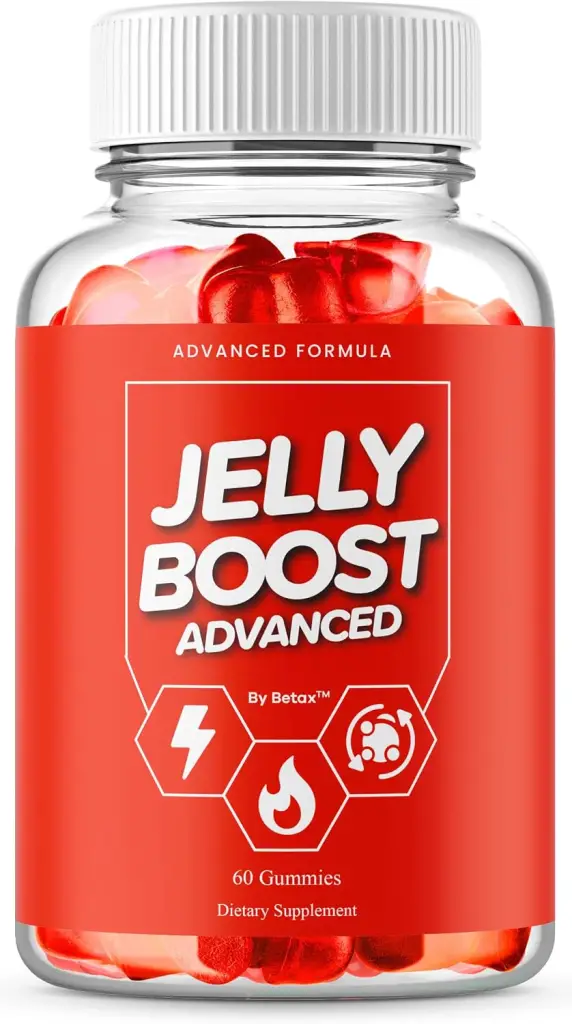
Jelly Boost Gummies are marketed as a weight-management supplement designed to support metabolism, energy, blood sugar balance, and fat utilization. The product is promoted as an easy-to-take gummy alternative to traditional weight-loss capsules.
There are some familiar ingredients behind the marketing, but the bigger issue is the lack of evidence showing that Jelly Boost itself produces meaningful weight loss. I also found some transparency problems that make the product harder to evaluate than its advertising suggests.
Key Takeaways
- Jelly Boost is marketed primarily as a weight-management supplement.
- The seller highlights ingredients including apple cider vinegar, BHB salts, apple pectin, beetroot powder, green tea extract, and chromium across its various sales pages.
- No clinical trial testing the finished Jelly Boost formula was identified.
- A complete, readable Supplement Facts panel was not available on the pages reviewed.
- The advertised customer rating could not be independently authenticated.
- The product has a money-back guarantee, but the wording around when the 60-day period begins appears inconsistent.
What Are Jelly Boost Gummies?
Jelly Boost is a direct-to-consumer dietary supplement sold in gummy form and promoted for weight management, metabolism, energy, and general metabolic health. The marketing emphasises supporting the body’s natural energy production rather than relying on harsh stimulant-based fat burners.
That positioning makes it sound considerably more sophisticated than a conventional weight-loss gummy, but the actual question is whether the ingredients and doses can produce the promised effects.
How Do Jelly Boost Gummies Claim to Work?
The marketing presents Jelly Boost as working through several pathways, including metabolism, blood sugar regulation, fat utilization, and cellular energy production.
Green tea extract is said to support thermogenesis and fat metabolism, while chromium is promoted for normal insulin function and blood sugar metabolism. Other versions of the product’s sales material highlight apple cider vinegar, BHB salts, apple pectin, and beetroot powder.
The basic theory is plausible enough: ingredients that influence appetite, energy metabolism, or blood sugar could potentially contribute to weight management. That doesn’t mean the finished gummy will produce significant weight loss.
What Does the Evidence Say?
Green tea extract has some evidence for a small effect on energy expenditure and fat oxidation, particularly when it contains catechins such as EGCG. The effect is generally modest rather than dramatic.
Apple cider vinegar has been investigated for effects on blood glucose and appetite, but evidence for substantial long-term weight loss is limited.
Apple pectin is a soluble fiber that can contribute to digestive health and satiety, although there is no strong evidence that it independently causes significant fat loss.
Chromium is involved in normal glucose metabolism, but supplementation doesn’t reliably produce major weight loss in people who aren’t deficient.
Beetroot contains dietary nitrates that may support nitric oxide production and exercise performance. That’s potentially useful for physical activity, but it’s a stretch to turn that into a direct fat-burning claim.
The important distinction is that these studies concern individual ingredients. I couldn’t identify a clinical trial testing Jelly Boost Gummies as a finished product.
Red Flags to Consider
No Clinical Trial on Jelly Boost
This is the biggest problem with the product’s effectiveness claims.
The available research may provide some evidence for individual ingredients, but no published clinical trial demonstrating that Jelly Boost itself causes meaningful weight loss was identified.
That means claims about the finished gummy need to be treated as marketing rather than clinically demonstrated results.
The Complete Supplement Facts Panel Is Hard to Verify
The product’s sales pages discuss several active ingredients, but a complete, readable Supplement Facts panel wasn’t identified during the review.
This matters because knowing that a gummy contains green tea or chromium isn’t enough. The dose determines whether it can reasonably be compared with doses used in scientific research.
The Formula Information Isn’t Completely Consistent
Different Jelly Boost pages emphasize somewhat different formulations. One page highlights green tea extract and chromium, while another describes apple cider vinegar, BHB salts, apple pectin, and beetroot powder as the four key ingredients.
That doesn’t automatically mean the product is fake, but it makes the formulation harder to pin down. A consumer should be able to determine exactly what is in the bottle without having to piece the formula together from different sales pages.
The 4.9/5 Rating Isn’t Independently Verified
The product’s sales material promotes a very high customer rating, but independent verification of that rating wasn’t available in the sources reviewed.
That’s worth keeping in mind when evaluating testimonials or claims that thousands of customers have achieved dramatic results.
The “Baking Soda Recipe” Connection Is Unsubstantiated
Some online content connects JellyBoost with a supposed “baking soda recipe.” However, the investigation I found noted that this connection wasn’t supported by the brand material reviewed.
This is a good example of why viral weight-loss content surrounding a product shouldn’t automatically be treated as part of the manufacturer’s actual formula or instructions.
Ingredients
The ingredients highlighted across the Jelly Boost marketing include:
- Apple cider vinegar
- BHB salts
- Apple pectin
- Beetroot powder
- Green tea leaf extract
- Chromium
However, because the publicly accessible information isn’t completely consistent and a full readable Supplement Facts panel wasn’t identified, I wouldn’t assume this is an exhaustive list without checking the actual bottle.
Do Jelly Boost Gummies Actually Work?
There is nothing particularly revolutionary about the ingredients being promoted.
Some may provide modest support for blood sugar regulation, satiety, energy metabolism, or exercise performance. But that doesn’t establish that Jelly Boost will cause noticeable fat loss.
The most realistic expectation would be supplementary support alongside diet and physical activity, not a gummy that independently causes substantial weight loss.
If someone loses weight while taking Jelly Boost, it would be difficult to determine how much came from the supplement itself versus changes in calorie intake, exercise, appetite, or other lifestyle factors.
Potential Side Effects
Depending on the final formulation and individual sensitivity, possible side effects may include:
- Stomach discomfort
- Nausea
- Bloating
- Changes in bowel movements
- Acid reflux, particularly from apple cider vinegar
- Headache
People taking medication for diabetes or other chronic conditions should speak with a healthcare professional before using a product marketed for blood sugar and metabolic support.
Pricing and Availability
Jelly Boost is sold directly to consumers through online sales pages. Seller-advertised packages reviewed in July 2026 included two-, three-, and six-bottle bundles, with prices ranging from approximately $49 to $79 per bottle, depending on the package.
A 60-day satisfaction guarantee is also advertised, although the available policy language appears inconsistent about whether the 60-day period begins when the order is placed or when it ships.
That is something I’d clarify before purchasing.
Alternatives
For weight management, the fundamentals still have considerably stronger evidence than gummies: maintaining an appropriate calorie intake, eating adequate protein and fiber, exercising regularly, getting enough sleep, and addressing medical factors that may affect weight.
For people who need more substantial weight loss, discussing evidence-based treatment options with a healthcare professional is far more reliable than stacking multiple over-the-counter fat burners.
What To Do If You Were Scammed
If you purchased Jelly Boost and the product never arrived, arrived damaged, differed from the advertisement, or resulted in unexpected charges, contact the seller and request a refund.
Keep your order confirmation, payment receipt, screenshots of the sales page, product photographs, and all communication with the seller. If the seller doesn’t resolve the problem, contact your payment provider.
Conclusion
Jelly Boost isn’t completely implausible. Green tea extract, apple cider vinegar, pectin, chromium, and beetroot are all legitimate nutritional ingredients with varying degrees of research behind them.
The problem is that the evidence doesn’t establish that Jelly Boost itself produces meaningful weight loss. The lack of a finished-product clinical trial, difficulty verifying the complete Supplement Facts panel, inconsistent presentation of the formula, and unverified customer-rating claims all make the marketing considerably more convincing than the evidence.
I’d classify Jelly Boost as a plausible but poorly substantiated weight-management supplement rather than an outright scam. It may provide some nutritional or metabolic support, but the available evidence doesn’t justify expecting dramatic fat loss from the gummies.
Also read – I Tried the Kailo Pain Relief Patch: Was It Worth It? Here’s My Honest Review