

When a supplement promises to repair damaged nerves, relieve burning pain, and restore sensation in your hands and feet, it is making a pretty significant promise. People dealing with neuropathy are often desperate for relief, especially when the discomfort interferes with walking, sleeping, or doing everyday things.
NervoFlow is marketed as a natural solution for nerve pain, tingling, numbness, and damaged nerves. Its sales page promises nerve regeneration, improved circulation, and lasting relief, while encouraging customers to buy several months’ worth of capsules to get the best results.
But I wanted to know what was actually behind those promises. Does NervoFlow contain ingredients with credible evidence for treating neuropathy? Is the product’s FDA-related marketing accurate? And what happens when you look beyond the testimonials and money-back guarantee? I investigated the product’s claims, ingredient information, pricing, and available customer complaints. There are several issues worth examining before spending money on this supplement.
Key Takeaways
- NervoFlow’s nerve-regeneration claims are not established. I could not verify clinical trials demonstrating that the advertised product repairs damaged nerves or restores the protective myelin sheath.
- The FDA-related marketing is misleading if interpreted as product approval. The website advertises an FDA-registered manufacturing facility, but the FDA does not approve dietary supplements for safety and effectiveness before they are sold.
- The ingredient information is inconsistent across websites. The NervoFlow.org and NervoFlow.net pages list different formulations despite using the same product name.
- The money-back guarantee deserves scrutiny. The product is advertised with a 60-day guarantee, but complaints about similarly named NerveFlow products describe difficulties obtaining refunds. I could not establish that every complaint relates to the exact product sold through NervoFlow.org.
What Is NervoFlow?
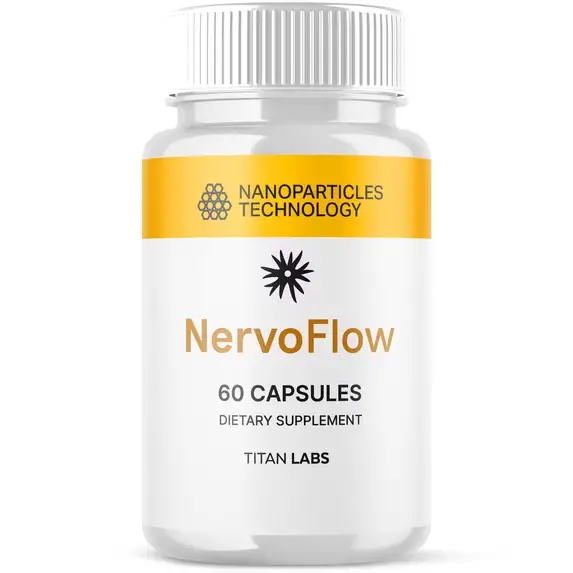
NervoFlow is a dietary supplement marketed for nerve health and relief from symptoms such as tingling, numbness, burning sensations, and nerve discomfort. The product’s sales pages suggest that its ingredients can help reduce inflammation, improve circulation, support nerve regeneration, and repair damage to nerve fibres. The marketing is aimed particularly at people experiencing neuropathy or persistent nerve pain.
The NervoFlow.org website describes the supplement as a natural formula intended to support nerve health and claims that it can help repair damaged nerves and rebuild the myelin sheath, the protective covering around many nerve fibres. The NervoFlow.net website makes similar promises, including improved mobility, reduced pain, and nerve regeneration.
These are substantial claims. Nerve pain is not a single condition with one universal cause. It can result from diabetes, vitamin deficiencies, certain medications, nerve compression, injuries, and other medical conditions. The appropriate treatment depends on the underlying cause.
A supplement that provides nutritional support is not automatically capable of repairing nerve damage or treating the conditions responsible for it. That distinction becomes especially important when examining NervoFlow’s ingredients and the evidence behind its advertised benefits.
How Does NervoFlow Claim to Work?
NervoFlow’s marketing focuses on several supposed mechanisms.
Nerve regeneration: The seller claims that its formula helps repair damaged nerve fibres and rebuild the myelin sheath. This suggests that the product can do more than temporarily ease discomfort. It implies that it can help reverse underlying nerve damage.
Reduced inflammation: The websites attribute anti-inflammatory and antioxidant effects to the ingredients, suggesting that reducing inflammation can help protect nerves and improve their function.
Improved circulation: The product is also promoted as a way to improve blood flow and the delivery of oxygen and nutrients to nerve tissues.
Pain relief: Certain ingredients are described as naturally soothing nerve discomfort, reducing tingling, and relieving burning sensations.
These mechanisms sound convincing when presented together. However, explaining a possible biological effect is not the same as proving that a finished supplement produces the advertised result in humans.
To establish that NervoFlow repairs nerves, for example, the seller would need credible evidence demonstrating that the specific formulation produces meaningful improvements in nerve function. A general explanation of how antioxidants or herbs work does not establish that. I could not verify independent clinical trials demonstrating that NervoFlow, as advertised, regenerates damaged nerves or reliably treats neuropathy.
That is the first major limitation of the product’s marketing.
The Investigation: What I Found
The FDA Claim Is Not What It Sounds Like
NervoFlow’s sales pages prominently advertise an FDA-registered, GMP-certified manufacturing facility and use an “FDA Approved Facility” label. The language is intended to reassure customers about the product’s quality and safety. But there is an important distinction here.
The US Food and Drug Administration does not approve dietary supplements for safety and effectiveness before they are marketed. A manufacturing facility’s registration does not mean that the FDA has tested and approved every supplement produced there.
GMP, or Good Manufacturing Practice, refers to manufacturing quality standards. Compliance with applicable manufacturing requirements is important, but it does not prove that a supplement delivers the medical benefits advertised.
I could not verify FDA approval of NervoFlow as a treatment for neuropathy or nerve damage. To be fair, the product is marketed as a dietary supplement, and supplements are not automatically required to undergo the same premarket approval process as prescription medicines. The absence of FDA approval alone does not establish that a supplement is fraudulent.
The problem is the impression the marketing can create. A consumer seeing “FDA Approved Facility” might reasonably interpret it as evidence that the product itself has been evaluated and approved for nerve repair. It has not been established by that claim.
My concern: NervoFlow uses regulatory language to reassure potential customers, but the distinction between a registered manufacturing facility and an FDA-approved medical treatment needs to be made clear.
The Ingredient Lists Do Not Match Across the Websites
This is one of the more interesting findings. The NervoFlow.org and NervoFlow.net websites use the same product name, advertise the same $49 introductory price, promote a 60-day money-back guarantee, and make very similar claims about nerve regeneration.
However, their ingredient descriptions differ.
The NervoFlow.org website lists ingredients including:
- Passion flower herb powder
- Marshmallow root
- Corydalis powder
- Prickly pear
- Californian poppy seeds
- Magnesium stearate
Its page also refers to alpha-lipoic acid and B vitamins when discussing the supposed benefits of the formula, even though those ingredients do not appear in its detailed ingredient list.
The NervoFlow.net website lists a different group of ingredients:
- Turmeric
- An unspecified root extract
- Alpha-lipoic acid
- Coenzyme Q10
- L-carnitine
- Magnesium glycinate
These are not identical ingredient lists. There could be an explanation. The company might have changed the formula, or the websites might represent different versions of the product. But I could not establish which explanation applies, whether the sites share the same manufacturer, or which formulation a customer will actually receive.
That is a significant transparency problem for a supplement sold on the strength of its ingredients. If you are buying a supplement for nerve discomfort, you should be able to identify exactly what is inside the bottle. You should not have to choose between different ingredient lists published under the same product name.
I would want the seller to clarify the current formulation and provide a complete Supplement Facts label before making a purchase.
Can NervoFlow Actually Regenerate Damaged Nerves?
This is the central question, and it is where the marketing gets ahead of the evidence. The product pages describe NervoFlow as capable of repairing nerve damage, rebuilding the myelin sheath, improving nerve signalling, and supporting the regeneration of nerve fibres.
Those claims suggest a treatment that addresses the underlying problem rather than simply providing nutritional support. But I could not verify independent clinical trials establishing that NervoFlow achieves these results.
The Website Testimonials Are Not Independent Clinical Evidence
NervoFlow’s websites display testimonials from people who claim to have experienced improvements in numbness, tingling, mobility, and general comfort after using the supplement.
Some testimonials describe changes within two or three weeks. Others use much stronger language, describing the product as life-changing. These stories may sound reassuring to someone struggling with nerve pain. But they cannot establish that the supplement works as advertised.
There are several reasons for caution. First, the testimonials are presented on websites selling the product. I could not independently verify the identities of the reviewers or establish that their experiences were documented under controlled conditions.
Second, symptoms can change for many reasons. Someone might experience an improvement because of changes in medication, diet, blood glucose management, physical activity, or the natural course of their condition. Third, feeling less pain does not necessarily mean damaged nerves have regenerated.
The websites also make claims about thousands of satisfied customers, but I could not independently verify those figures. This does not prove the testimonials are fabricated. It means they should be treated as promotional claims rather than proof of effectiveness.
For a product promising to repair nerve damage, I would put considerably more weight on independent clinical evidence than on testimonials selected by the seller.
The Pricing Creates Pressure to Buy in Bulk
The NervoFlow.org and NervoFlow.net websites advertise a price of approximately $49 per bottle and promote discounts of up to $780. They also encourage customers to buy three- or six-bottle packages. The websites use urgency-based language such as “limited time,” “today only,” and warnings that stock may run out or prices may increase.
They also state that the ingredients work best after at least 90 days of consistent use, making larger packages seem like the sensible choice.
There is nothing inherently wrong with offering a discount for buying multiple bottles. The concern is asking customers to commit to several months of an unproven product before establishing whether it works for them. That is particularly important when the target audience includes people experiencing persistent pain. They may be willing to spend more because they are desperate for relief.
I would not recommend purchasing six bottles simply because the website presents that package as the best value. A lower price per bottle does not make a product effective, and a large initial purchase increases the amount of money at stake if the supplement does not help.
The supposed savings also need context. A displayed reference price is a marketing figure, not independent evidence that the product normally sells at that price.
What Do Customer Complaints Reveal?
I found customer complaints about a business listed by the Better Business Bureau under the name NerveFlow. The complaints include reports of disappointing results, difficulties obtaining refunds, and problems with customer service. Several customers say the supplement did not improve their neuropathy symptoms. Others describe lengthy refund processes, requests to return unused bottles at their own expense, and delays after the returned products had been received.
One complainant reported being offered a partial refund before eventually receiving a full refund after returning the product. Another described repeated attempts to obtain a refund for a product that had not helped. These are individual accounts recorded by the BBB, not independently verified findings about every transaction.
There is an important limitation: I could not establish that the BBB-listed NerveFlow business is the same seller operating NervoFlow.org or NervoFlow.net. The similar name alone is not enough to attribute those complaints to either website.
The complaints are still relevant to anyone researching the broader NervoFlow/NerveFlow product name, but they should not be presented as proof that the operator of NervoFlow.org engaged in the same conduct.
I also found a BBB Scam Tracker report from a consumer who said the product received contained B vitamins that were not listed on the website they had used to make the purchase. The consumer also described difficulty obtaining a refund.
Again, I could not verify that this report concerns the exact formulation and seller operating NervoFlow.org. The key point is that there are complaints associated with a similarly named product, but the relationship between the sellers and formulations remains unclear. That uncertainty reinforces the need to verify the exact seller and the ingredients on the bottle before buying.
Does NervoFlow Actually Work?
Based on the evidence I could verify, I would not recommend NervoFlow as a proven treatment for neuropathy or damaged nerves. That does not mean every ingredient is useless or that nobody could experience any improvement while taking the supplement.
Some ingredients have been studied for particular biological effects or health conditions. But that is not the same as proving that NervoFlow’s specific formula relieves neuropathic pain, repairs damaged nerves, or restores sensation.
The product’s most impressive claims concern nerve regeneration. Those claims require evidence that goes beyond testimonials and general explanations of how antioxidants, vitamins, or herbs work.
I could not verify independent clinical trials establishing that the advertised product delivers those benefits. The inconsistent ingredient lists make the situation more concerning. Before evaluating effectiveness properly, consumers need to know which formulation they are buying and the amounts of each ingredient it contains.
My conclusion is that NervoFlow’s advertised medical benefits remain unproven based on the evidence I could verify. I would not spend money on it expecting damaged nerves to regenerate or neuropathy to disappear.
NervoFlow Pricing: Is It Worth the Money?
The websites advertise NervoFlow at approximately $49 per bottle, with discounts for buying multiple bottles. The exact total depends on the package and any promotion displayed at checkout.
The price alone does not tell us whether the product offers good value. To make that judgment, I would want to know:
- The complete ingredient list and the amount of each ingredient.
- The identity of the manufacturer.
- Whether the finished product has undergone independent quality testing.
- What clinical evidence supports the claims about nerve pain and regeneration.
- The actual refund conditions and the cost of returning unwanted bottles.
I could not verify all of that information. Given the lack of established product-specific evidence, I would not recommend purchasing a six-month supply simply to qualify for a discount. If the product fails to help, the larger purchase leaves more money tied up in something that has not delivered the promised benefit.
My advice is to avoid buying in bulk based on the seller’s claims alone.
What About the 60-Day Money-Back Guarantee?
NervoFlow advertises a 60-day money-back guarantee and describes the offer as risk-free. The website says customers who are dissatisfied can contact the seller to request a refund. However, I could not independently verify how consistently refunds are processed for purchases made through these specific websites.
Complaints associated with a similarly named NerveFlow business describe difficulties obtaining refunds, including delays and requests to return unused bottles at the customer’s expense. Because I could not establish that this is the same seller, those reports should be treated as a warning about the broader product-name ecosystem rather than proof about NervoFlow.org.
Before buying, I would read the full refund policy and confirm the following in writing:
- Whether opened bottles qualify for a refund.
- Whether all bottles must be returned.
- Who pays return shipping.
- Whether the 60-day period starts on the order date or delivery date.
- Whether the product must be received by the seller before the deadline.
- Which company actually processes the refund.
Save a copy of the policy and the product page at the time of purchase. Do not rely solely on the headline promising a refund. A money-back guarantee can reduce financial risk when it is clear and honoured. It does not establish that a product works.
What Are Better Alternatives to NervoFlow?
The most useful alternative depends on what is causing the nerve symptoms.
If You Have Persistent Numbness, Tingling, or Burning Pain
Start by getting the cause investigated rather than assuming you need a nerve-support supplement.
Diabetes, vitamin B12 deficiency, nerve compression, certain medications, and other conditions can cause nerve symptoms. Treating the underlying cause may be more important than taking a supplement marketed for general nerve health.
If You Have Diabetic Neuropathy
Work with your healthcare professional to manage blood glucose and discuss treatments appropriate for your symptoms. Some treatments are designed to manage neuropathic pain, even when they do not reverse the underlying nerve damage.
A supplement should not replace prescribed treatment or proper diabetes management.
If a Nutritional Deficiency Is Suspected
A clinician can help determine whether you have a deficiency and whether supplementation is appropriate. Taking additional vitamins without knowing whether you need them is not automatically beneficial.
If You Want to Try a Supplement
Choose a product with a complete ingredient label, clearly disclosed doses, an identifiable manufacturer, and credible quality-control information.
Look for evidence supporting the actual formulation and intended use, rather than relying on a list of ingredients that have been studied individually.
Most importantly, do not delay medical assessment because a supplement promises to repair nerves naturally.
What to Do If You’ve Already Bought NervoFlow
If you purchased the product and are dissatisfied, take the following steps.
- Keep your order confirmation and receipt. These establish the seller, purchase date, and amount paid.
- Save the product listing. Keep screenshots of the ingredient list, advertised benefits, and money-back guarantee.
- Check the bottle’s actual label. Compare the ingredients on the packaging with the website used to make the purchase.
- Request a refund in writing. Ask for the precise return instructions and address, and keep a copy of your message.
- Keep proof of any return. Use a trackable shipping method if you must send the bottles back.
- Contact your payment provider if necessary. If the seller does not resolve a legitimate dispute, ask your bank or card provider about its dispute process and applicable deadlines.
- Stop taking the supplement if you experience an adverse reaction. Contact a healthcare professional if symptoms are significant or persistent.
- Do not discontinue prescribed treatment. If you take medication for neuropathy or an underlying condition, speak with your clinician before making changes.
If the product’s label differs from the website, preserve photographs of both. That discrepancy may be relevant when requesting a refund or disputing the purchase.
Conclusion: Should You Buy NervoFlow?
I would not buy NervoFlow expecting it to repair damaged nerves or treat neuropathy. The product’s marketing makes substantial promises, including nerve regeneration, rebuilding the myelin sheath, improved circulation, and relief from persistent nerve pain. But I could not verify independent clinical evidence demonstrating that the advertised formulation delivers those results.
The ingredient information is another concern. NervoFlow.org and NervoFlow.net publish different ingredient lists while using the same product name and making similar medical claims. The seller needs to clarify which formulation customers are actually receiving.
Customer complaints about a similarly named NerveFlow business raise questions about product effectiveness and refunds, although I could not establish that the complaints relate to the exact seller operating NervoFlow.org.
I would not label NervoFlow a confirmed scam based on the available evidence. That would go further than the evidence supports. But I also would not accept its claims at face value. The problem is the gap between what the product promises and what I could verify.
My verdict: NervoFlow’s nerve-regeneration claims remain unproven, its ingredient information is inconsistent across websites, and I would not recommend buying it as a treatment for neuropathy.
Also read – Mudmasky Glow-Up Cleanser Review: Is It Worth Buying? I Bought It
[…] Also read – Is NervoFlow Legit or a Scam? FDA Claims, Customer Complaints, and Effectiveness […]