

If you have ever searched for a way to stop snoring without wearing a bulky machine or an uncomfortable mouthpiece, SleepEase Pro probably sounds appealing. It promises quieter nights using a small device placed beneath the chin, with gentle electrical stimulation supposedly helping to keep the airway open.
The marketing goes much further than promising a quieter night, though. SleepEase Pro is advertised as a solution for sleep apnea, with claims of quick results and benefits that may continue even after you stop using it.
So, I looked beyond the sales pitch. I examined the product’s advertised technology, the company’s regulatory claims, its refund policies, and customer feedback. What I found raises questions that anyone considering spending money on this device should understand first.
Key Takeaways
- The FDA claim is contradictory. The SleepEase Pro sales page advertises the device as FDA approved, but the legal notice on SleepEasePro.co says it is not FDA cleared.
- Evidence for the product’s medical claims is missing. I could not verify independent clinical evidence establishing that SleepEase Pro treats obstructive sleep apnea or delivers the lasting benefits advertised.
- The refund promise deserves a closer look. SleepEasePro.co advertises a 100-day guarantee, but its written policy contains conditions and excludes adhesive patches from refunds. Customers reviewing the separate SleepEasePro.net website also report refund difficulties.
- Customer experiences are mixed, with serious complaints. Some reviewers report reduced snoring, while others describe device failures, skin reactions, delayed deliveries, and difficulties obtaining refunds. These reports are not clinical evidence, but they are worth considering.
What Is SleepEase Pro?
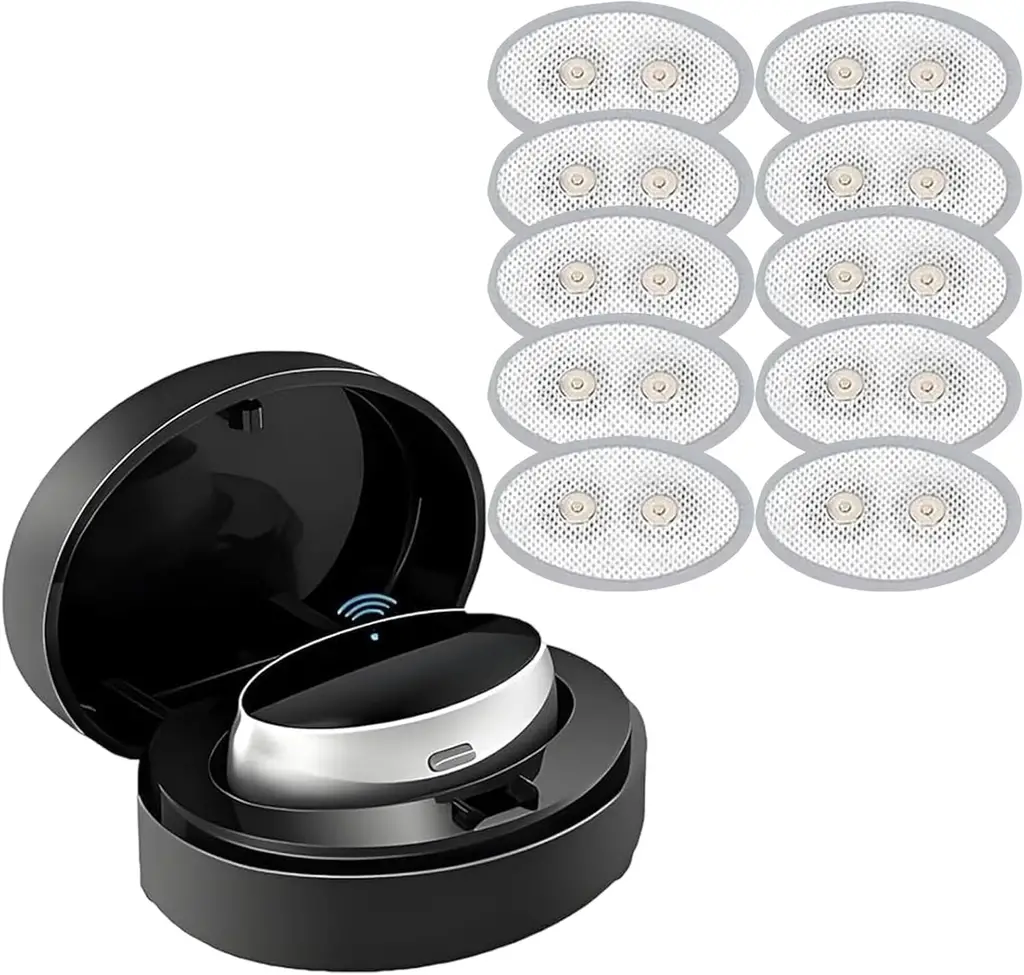
SleepEase Pro is a wearable anti-snoring device designed to sit beneath the chin. It uses adhesive patches to make contact with the skin and delivers small electrical impulses. According to the product’s marketing, these impulses stimulate muscles around the throat, helping prevent the airway from narrowing during sleep. The intended result is less snoring and easier breathing.
The product is presented as a convenient alternative to traditional sleep-apnea equipment. Its advertising emphasizes that it is small, quiet, non-invasive, and easier to use than a continuous positive airway pressure machine, commonly called CPAP. The sales page also makes much bigger promises. It describes SleepEase Pro as a leading solution for snoring and sleep apnea, claims results can begin on the first night, and promotes doctor approval and FDA approval.
Those are substantial claims for a small wearable device. The important question is not whether the product looks convenient. It is whether the device has credible evidence supporting the results it promises.
I also found SleepEase Pro branding on several websites, including SleepEasePro.us, SleepEasePro.co, and SleepEasePro.net. The websites should not automatically be treated as one business. Although the names and product positioning are similar, I could not establish from the information reviewed that all three domains share the same operator, ownership, policies, or supply chain.
That distinction matters when researching customer complaints and deciding which refund policy applies to a purchase.
How Does SleepEase Pro Claim to Work?
SleepEase Pro’s central claim is that electrical stimulation can help keep the airway open while a person sleeps. The device is placed beneath the chin, where adhesive patches deliver electrical impulses. The seller says this stimulation activates muscles involved in maintaining an open airway, reducing tissue movement or airway narrowing associated with snoring.
The idea may sound convincing because electrical stimulation is a real technology used in medicine and rehabilitation. But the existence of a technology does not prove that a particular consumer product uses it effectively.
There are several separate questions here:
- Does the device deliver the intended electrical stimulation reliably?
- Does that stimulation produce a meaningful effect on the muscles involved in snoring?
- Does the effect reduce snoring consistently during sleep?
- Can the device safely and effectively treat obstructive sleep apnea?
- Does using it for several months produce lasting benefits after treatment stops?
Evidence supporting one of these points would not automatically establish the others. For example, a device might reduce audible snoring in some people without treating the repeated breathing interruptions, drops in oxygen levels, and other problems associated with obstructive sleep apnea.
SleepEase Pro’s advertising blurs that distinction by presenting snoring reduction and sleep-apnea treatment together. Those are not interchangeable outcomes.
I could not verify independent clinical evidence specific to SleepEase Pro that establishes its advertised effectiveness for treating sleep apnea or proves that any improvement continues after a person stops using it. That does not establish that the device can never help anyone. It means the product’s strongest claims have not been adequately substantiated by the evidence I could verify.
The Investigation: What I Found
The FDA Approval Claim Does Not Match the Legal Notice
This was the clearest problem I found. The SleepEase Pro sales page advertises the device as FDA approved. It also uses phrases such as “doctor approved” and presents the product as a solution for sleep apnea. However, SleepEasePro.co’s own legal notice states that SleepEase Pro is a wellness and lifestyle device, is not FDA cleared, and is not intended to diagnose, treat, cure, or prevent any disease.
Those statements are difficult to reconcile with a sales page advertising FDA approval and promoting the device for sleep apnea. There is an important distinction between FDA approval, FDA clearance, and registration. The US Food and Drug Administration explains that a medical-device establishment being registered or a device being listed in a database does not, by itself, mean the product has been approved or cleared.
I could not verify an FDA approval or clearance record that establishes the advertised SleepEase Pro device is authorized for the sleep-apnea treatment claims made on its sales page.
That is not the same as proving that no related product or component has ever appeared in an FDA database. The key issue is that the seller’s broad approval claim needs to be supported by an identifiable regulatory record covering the actual device and its intended use. Until that evidence is provided, I would not treat the FDA-approved claim as established fact.
My concern: A health product should not rely on the authority of a regulator to sell itself while its own legal notice disclaims FDA clearance and disease-treatment purposes.
The Website’s Own Disclaimer Raises Questions About the Medical Claims
The legal notice on SleepEasePro.co describes the device as a wellness and lifestyle product and says it is not intended to diagnose, treat, cure, or prevent disease. Yet the sales page uses the headline “Eliminates Snoring & Sleep Apnea” and markets SleepEase Pro as a solution for both conditions.
That is a significant difference in how the product is presented.
Someone shopping for a wellness gadget to try to reduce ordinary snoring is making a different decision from someone seeking treatment for diagnosed obstructive sleep apnea. The latter may have a medical condition requiring proper diagnosis and treatment. A disclaimer does not automatically resolve concerns about the claims made elsewhere on a website. Consumers need to understand what the product is actually intended and authorized to do, and what evidence supports those uses.
I would want the seller to explain this contradiction clearly before considering the device for anything beyond an unverified attempt at reducing snoring.
The Clinical Evidence Is the Missing Piece
SleepEase Pro advertises dramatic outcomes, including quick results and claims about improving sleep-apnea symptoms. Its sales page also features testimonials describing major improvements in sleep and health.
But testimonials are not a substitute for controlled clinical studies. A convincing study of a device intended to treat sleep apnea would need to establish that it improves meaningful measures of the condition, not simply that some users or their partners think they snore less.
It would also need to address safety, how consistently the device works, which patients might benefit, and whether any improvement continues over time.
I could not verify independent clinical trials specific to SleepEase Pro that establish these outcomes. I also could not verify evidence that using the device for several months creates a lasting improvement that allows users to stop treatment. That is a particularly important claim because it suggests a lasting physiological change rather than a benefit that depends on continuing to use the device.
Without reliable evidence, I would treat these promises as marketing claims, not established medical facts.
Three Websites, Different Policies, and an Unclear Connection
Another issue is the appearance of multiple websites using the SleepEase Pro name. The product is advertised on SleepEasePro.us and SleepEasePro.co. A separate SleepEasePro.net website also exists.
SleepEasePro.co identifies HYPENEST LLC as the company operating that website. Its legal notice provides a contact email associated with the .co and .us domains.
That establishes a stated connection between those two domains. It does not establish that SleepEasePro.net has the same operator.
Why does this matter? Because a customer researching the product could come across a review, a refund policy, or a complaint relating to one domain and assume it applies to another. That assumption may be wrong.
I would not attribute complaints about the .net website to HYPENEST LLC without evidence connecting them. Equally, I would not assume the policies of one website apply to a purchase made through another.
The practical lesson is simple: check the exact website, company name, and refund policy before buying. Save the page and order confirmation so you can establish which seller accepted your payment. The existence of multiple domains does not, on its own, prove that the product is counterfeit, dropshipped, or part of a scam. It does make clear identification of the seller important.
The 100-Day Money-Back Guarantee Has Conditions
SleepEasePro.co promotes a 100-day money-back guarantee. That sounds reassuring, particularly for a device whose results may not be immediately obvious. However, the written SleepEasePro.co return and refund policy contains conditions that consumers should read before purchasing.
The policy says returns require approval and instructions from the company. It also states that adhesive patches are not refundable and that the guarantee period must not have expired. The policy says approved refunds are issued after the returned item has been received and inspected. The same policy states that defective or damaged items should be reported within 48 hours of delivery. It also describes a lifetime warranty for electronic defects, while excluding consumable adhesive patches and certain kinds of damage.
These details matter because a headline promising a refund is not the same as an unconditional right to return every part of a purchase. The sales page’s language about a refund without needing to return the product also needs to be read alongside the written policy, rather than assumed to apply in every circumstance. I cannot conclude from the wording alone that the company will refuse a valid refund. I can say that anyone buying should understand the conditions and retain evidence of the guarantee advertised at the time of purchase.
There is another caution: SleepEasePro.net publishes a different refund policy. It says its return period is 60 days, excludes change-of-mind refunds, and generally limits refunds to products with functional defects.
Because I could not establish that the .net site has the same operator as the .co and .us sites, these policies should not be treated as one company’s rules. The policy that matters is the one belonging to the website through which the customer actually bought the product.
What Are Customers Saying About the Device?
I examined the Trustpilot profile for SleepEasePro.net. At the time of checking, it displayed eight reviews and a score of approximately 2.4 out of 5. The profile itself warns that the reviews may not be representative. The small sample is not enough to establish a reliable overall failure rate, and these reviews concern the .net website. They should not automatically be attributed to the operator of SleepEasePro.co or SleepEasePro.us.
Nevertheless, the reports identify several issues worth investigating.
- Device failures: Some reviewers say their devices stopped functioning after only a few nights. One customer reported that the product worked for approximately four nights before failing.
- Skin irritation and swelling: Several reviewers describe irritation or reactions where the patches contacted their skin. Some report seeking help or refunds after stopping use. These are individual accounts, not medically verified findings, but they raise a reasonable question about patch tolerability.
- Delivery and customer-service problems: Reviewers also describe long delivery times, difficulties contacting the seller, and disputes about refunds. Some say they had to contact their payment provider to pursue reimbursement.
- Positive experiences: Not every reviewer was negative. At least one customer reported that snoring had become quieter after about a month of use.
That positive report should not be dismissed simply because other customers had poor experiences. But neither does one positive testimonial establish that the device reliably treats snoring or sleep apnea. The most defensible conclusion is that the feedback is mixed, with a concerning pattern of complaints about reliability, skin reactions, and customer service in this small sample.
These are reports from customers, not independently verified investigations into the company’s conduct. They are reasons to exercise caution, not proof that every complaint is accurate or that every purchaser will experience the same problems.
Red Flags to Consider
Here are the main warning signs I would weigh before buying SleepEase Pro.
Conflicting Regulatory Claims
The sales page advertises FDA approval, while the legal notice on SleepEasePro.co says the device is not FDA cleared. That discrepancy needs a clear, documented explanation.
Medical Promises Without Verified Product-Specific Evidence
The seller promotes the device for sleep apnea, but I could not verify independent clinical evidence establishing that SleepEase Pro safely and effectively treats the condition.
Claims of Fast Results and Lasting Benefits
Promises of results from the first night and benefits that continue after stopping use should be supported by credible evidence. I could not verify evidence establishing those outcomes for this product.
A Guarantee That Requires Careful Reading
The 100-day guarantee is appealing, but the written policy includes conditions, requires return authorization, and excludes adhesive patches from refunds. Read the actual policy rather than relying on the headline.
Complaints About Malfunctioning Devices and Skin Reactions
Customers reviewing SleepEasePro.net have reported device failures, skin irritation, and swelling. These reports are not conclusive, but they are relevant when evaluating a product that makes prolonged skin contact and is intended for repeated use during sleep.
Multiple Domains With Unclear Relationships
The similar website names could confuse consumers trying to identify the seller, verify policies, or find the right customer-service contact. Confirm the company behind the exact domain before paying.
Testimonials That Make Dramatic Health Claims
Claims about major improvements in health, sleep-apnea symptoms, or medical test results should not be accepted as proof simply because they appear in a testimonial. Ask for independent evidence that directly supports the product’s intended use.
My advice: If a seller cannot provide a clear regulatory record, credible clinical evidence, transparent company information, and an understandable refund policy, there is little reason to rush into buying its health product.
Does SleepEase Pro Actually Work?
Based on the evidence I could verify, I would not recommend SleepEase Pro as a proven treatment for obstructive sleep apnea. That conclusion is not the same as saying the device cannot reduce snoring for anyone. Some customers report improvement, and individual experiences can vary. The problem is that I could not verify independent evidence establishing how reliably this particular device works, whether people might benefit, or whether it can safely treat sleep apnea.
The regulatory contradiction makes the situation more concerning. A product marketed as FDA approved should be able to substantiate that claim. Here, the sales page’s wording conflicts with the legal notice on SleepEasePro.co. There is also no sound basis for assuming that reducing the sound of snoring means the underlying cause of sleep apnea has been treated. A person could snore less and still experience dangerous interruptions in breathing during sleep.
That distinction is too important to ignore simply because a device is cheaper, smaller, or more convenient than established treatment.
My verdict is that SleepEase Pro’s advertised medical benefits remain unproven based on the evidence I could verify. The combination of unsupported claims, conflicting regulatory language, and customer complaints means I would be cautious about spending money on it.
SleepEase Pro Pricing: Is It Worth the Money?
When I checked the SleepEasePro.us sales page, the advertised price was $149.50, with a higher reference price shown alongside it. The page also presented the offer as a bundle with additional items and a lifetime device warranty. Prices and promotions can change, so this should be treated as the price displayed at the time of checking, not a guaranteed current price.
A discount does not automatically make a product good value. The more important question is what the buyer is getting for the money.
For SleepEase Pro, I would want clear answers to the following:
- What clinical evidence supports the device’s claimed benefits?
- What regulatory authorization, if any, covers its intended use?
- How much do replacement adhesive patches cost?
- What exactly does the warranty cover?
- What conditions apply to a refund?
- Who is responsible for resolving a defective-device claim?
Without satisfactory answers, it is difficult to judge whether the price represents good value.
I would also avoid assuming that the product’s reference price reflects what it normally sells for elsewhere. A displayed discount is a marketing feature, not evidence of quality or effectiveness.
Before purchasing, check the total checkout price, shipping charges, replacement-patch costs, and the written refund terms. Keep screenshots of any promotional promises you may later need to rely on.
What Are Better Alternatives to SleepEase Pro?
The right alternative depends on whether the problem is ordinary snoring or obstructive sleep apnea.
For Snoring Without Sleep Apnea
Some people may benefit from positional changes, addressing contributing factors, or a suitable oral appliance. The best option depends on the cause of the snoring. The American Academy of Sleep Medicine and the American Academy of Dental Sleep Medicine recommend oral appliances for appropriate adults seeking treatment for primary snoring. For people with obstructive sleep apnea who choose oral-appliance treatment, they recommend a custom, adjustable appliance overseen by a qualified dentist rather than an uncustomized device.
That does not mean every mouthpiece will work for everyone. It means there is published clinical guidance supporting properly selected oral-appliance therapy.
For Diagnosed Obstructive Sleep Apnea
CPAP and other appropriate positive-airway-pressure treatments are established options for adults with obstructive sleep apnea. The American Academy of Sleep Medicine recommends positive airway pressure treatment for adults in several relevant clinical circumstances.
For people who cannot tolerate CPAP or prefer another option, a qualified clinician can discuss whether an oral appliance or another treatment is appropriate. The choice should be based on the person’s diagnosis and circumstances, not on a seller’s claim that a consumer gadget can replace medical treatment.
If You Suspect You Have Sleep Apnea
Do not assume that snoring is the only problem. Repeated pauses in breathing, waking up gasping, and excessive daytime sleepiness are reasons to seek medical assessment.
A proper evaluation can establish whether sleep apnea is present and help determine which treatment is appropriate. That is more useful than trying an unverified device and assuming quieter snoring means the condition has disappeared.
What to Do If You’ve Already Bought SleepEase Pro
If you have purchased the device and are unhappy with it, take practical steps to protect yourself.
- Save your evidence. Keep the order confirmation, receipt, product listing, screenshots of the advertised guarantee, and any messages with customer support.
- Check the exact seller. Confirm whether you bought from SleepEasePro.us, SleepEasePro.co, SleepEasePro.net, or another website. Do not assume that one site’s policy applies to another.
- Make your refund request in writing. State your order details, explain the problem, and refer to the guarantee or refund terms advertised when you purchased.
- Keep records of every contact attempt. Save emails, dates, responses, and any return instructions.
- Contact your payment provider if necessary. If the seller does not resolve a legitimate dispute, ask your bank or card provider about its dispute or chargeback process. Time limits and eligibility vary.
- Stop using the device if you experience a reaction. If the patches cause significant irritation, swelling, or skin damage, discontinue use and seek medical advice where appropriate. Do not keep reapplying them simply to satisfy a guarantee.
- Do not stop prescribed sleep-apnea treatment on the device’s promise alone. Speak to your clinician before changing established treatment.
A written guarantee is useful only if you understand its conditions and have evidence of what was promised. Keeping records gives you a stronger basis for pursuing a resolution.
Conclusion: Should You Buy SleepEase Pro?
I would not buy SleepEase Pro as a treatment for sleep apnea based on the evidence currently available to me. The product is marketed with impressive promises, but I could not verify independent clinical evidence establishing that it delivers the medical benefits advertised. More importantly, its sales page claims FDA approval while the legal notice on SleepEasePro.co says the device is not FDA cleared.
Customer feedback also raises concerns about device reliability, skin reactions, and refund difficulties on the separate .net website. Those reviews do not prove that every customer will have a bad experience, but they are not reassuring. Could some users experience less snoring? Possibly. The available testimonials suggest that some people believe they have. But that is not enough to establish reliable effectiveness, and it certainly does not prove that the device treats obstructive sleep apnea.
The biggest issue is the gap between what the marketing promises and what I could verify. When a product makes medical claims, consumers should not have to guess whether its regulatory status is being represented accurately or whether its promised results have been independently demonstrated.
Until the seller provides clear evidence supporting its claims, I would put my money toward an established option recommended for the actual problem rather than rely on SleepEase Pro’s marketing.
Also read – Is FortBite Tooth Powder Worth It? My Brutally Honest Review After Use
[…] Also read – SleepEase Pro Reviews: Is It Legit or a Waste of Money? Read This Before Buying […]