

I bought the Okura Cookware pan because I was interested in its titanium construction and the promise of effortless non-stick cooking. It looked beautiful in the pictures, and the hammered surface was particularly interesting because the brand claimed it helped prevent food from sticking. Unfortunately, my experience has been quite different. I’ve cooked eggs, chicken breast, stir-fry chicken and pasta in it, and I can confidently say that this hasn’t been the convenient non-stick experience I paid $109 for.
Key Takeaways
- Attractive appearance and a distinctive hammered cooking surface.
- Heavy construction, almost identical in weight to my Plateful titanium pan.
- Food sticks despite using cooking oil.
- The grooves collect burnt food and make cleaning difficult.
- Eggs stuck badly, even during my attempts to cook them with oil.
- Handle requires assembly and may need occasional tightening.
- Looks remarkably similar to another titanium pan I own.
- At $109, I don’t consider it good value for money.
What Is Okura Cookware?
Okura Cookware sells a range of cookware, including its hand-hammered titanium frying pan. The pan is marketed as a naturally non-stick alternative to conventional coated cookware.
According to the manufacturer, the cooking surface is made from Grade 1 titanium rather than having a conventional PTFE or ceramic non-stick coating. Its distinctive hammered texture is supposed to help food release by reducing direct contact between food and the metal while retaining a thin layer of cooking fat.
The company also advertises the pan as PFAS-free, dishwasher-safe and suitable for different heat sources, including gas and induction. It claims that the titanium construction is durable enough to last for decades. One important distinction is that this isn’t intended to behave exactly like a conventional coated non-stick pan. Okura recommends preheating it on medium heat for two to three minutes, adding oil or butter, and allowing food to develop a crust before moving it.
My Experience With Okura Cookware
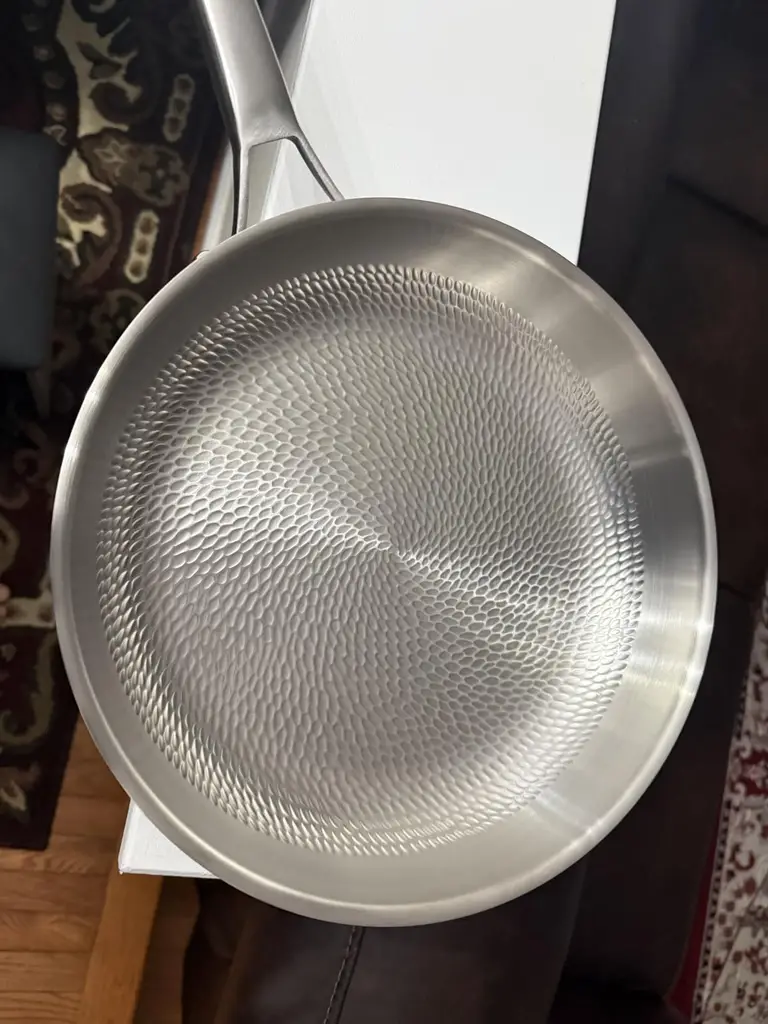
My pan took some time to arrive, but it eventually got to me in reasonably good condition. Visually, I actually like it. It’s aesthetically pleasing, and the hammered design gives it an interesting appearance. However, the first thing I noticed was how heavy it was. This is not a lightweight pan by any means.
I also had to assemble the handle myself because it didn’t arrive attached to the pan. I’ve owned cookware that required this before, and one thing I’ve noticed is that the handles can become loose over time and need repeated tightening. I’m concerned this might eventually become another issue with this one.
Unfortunately, the biggest disappointment has been its cooking performance. The first thing I tried making was eggs without oil. They stuck terribly. I initially thought perhaps I needed to use some oil, so I tried again with a little. Although the eggs didn’t burn as badly, they still stuck to the bottom of the pan.
I subsequently used it to prepare chicken breast and stir-fry chicken, among other meals. I applied some oil before cooking the chicken breast, but parts of the food still stuck and burnt onto the surface.
This is particularly frustrating because the entire selling point is that the pan is supposed to offer excellent food release. I wasn’t expecting to have to struggle with stuck food after spending this much money on cookware advertised as naturally non-stick.
Cleaning has been another headache. The hammered grooves are supposed to be part of what makes this pan special. According to the manufacturer, the textured surface helps retain cooking fat and improve food release. In my experience, however, those little grooves have become places where burnt food and residue get trapped.
Instead of food lifting off easily during washing, I find myself having to work at removing the stuck bits. It’s especially annoying because the design that was supposed to make cooking easier has made cleaning more tedious.
And then there’s the question of what this pan is actually made of. The company advertises a Grade 1 titanium cooking surface, but I doubt that. What I can say is that it behaves much more like an uncoated stainless-steel pan than the effortless non-stick cookware I thought I was buying.
Interestingly, I already own a Plateful titanium pan, and the two look eerily similar. They also feel almost identical in weight. I actually weighed both, and the difference was negligible. Their cooking performance has been remarkably similar too, particularly when it comes to food sticking.
I’m not claiming they come from the same manufacturer, because I have no evidence to establish that. But the resemblance is striking enough to make me wonder how different these products really are.
At this point, I don’t want two pans sitting in my kitchen that look almost identical and give me essentially the same disappointing experience. I paid $109 for the Okura pan, and I’m genuinely unhappy with the purchase. I’m currently trying to process a refund, although I know I’ve already passed the stated refund window. So far, I haven’t had much success, but I’m still hoping something works out.
I really don’t want to keep a pan that I have little interest in using.
Pros and Cons
Pros
- Attractive hammered design.
- Aesthetically pleasing appearance.
- Solid, substantial construction.
- No conventional chemical non-stick coating, according to the manufacturer.
- Suitable for different cooking surfaces.
Cons
- Food sticks even when cooking oil is used.
- Eggs stick badly.
- Burnt food becomes trapped in the hammered grooves.
- Cleaning is more difficult than expected.
- Very heavy.
- Handle requires manual assembly.
- Potential for the handle to need retightening.
- Doesn’t deliver the effortless non-stick experience advertised.
- Expensive for the cooking performance I experienced.
Is Okura Cookware Worth the Money?
For $109, I expected considerably more. The pan looks good, and I appreciate that it doesn’t rely on a conventional synthetic non-stick coating. However, that doesn’t automatically make it a good purchase.
My main reason for buying it was the advertised food-release performance. I wanted cookware that would make everyday cooking and cleaning easier. Instead, I’m dealing with stuck food, burnt residue and grooves that make washing more difficult. I also find the weight excessive. The fact that it weighs almost the same as my Plateful pan, despite the marketing emphasis on titanium’s lighter weight, makes the overall experience even less impressive.
I wouldn’t say the pan is completely useless. It can certainly be used for cooking. But at this price, I expect more than a good-looking piece of cookware that performs like an ordinary uncoated metal pan.
Would I Recommend Okura Cookware?
No, not based on my experience. I understand that titanium cookware requires a different cooking technique from conventional non-stick pans. I also understand that the manufacturer recommends preheating, using fat and allowing food to release naturally before moving it.
However, my experience with eggs, chicken breast and other meals has been disappointing. Food still sticks, and the cleaning process is more demanding than I expected.
I also wouldn’t want to spend $109 on a pan that requires this much effort while being marketed around convenience and easy food release.
Who Should Buy It and Who Should Avoid It?
Who might consider it:
- People specifically interested in uncoated titanium cookware.
- Experienced cooks comfortable with managing heat and cooking fat.
- Buyers who prioritise durability and avoiding conventional non-stick coatings over effortless food release.
Who should avoid it:
- Anyone expecting traditional non-stick performance.
- People who frequently cook eggs without oil.
- Anyone who dislikes scrubbing stuck food from cookware.
- Buyers looking for lightweight frying pans.
- Anyone expecting a ready-to-use pan without assembling its handle.
Alternatives to Consider
If you’re looking for cookware that offers a more predictable cooking experience, consider:
- Tramontina Tri-Ply Clad
- All-Clad D3 Stainless
- T-fal Ultimate Hard Anodized
- OXO Ceramic Professional
Conclusion
Okura Cookware looks beautiful, but I haven’t enjoyed using it. The food sticks, the hammered grooves make cleaning unnecessarily difficult, and the pan is considerably heavier than I expected. I also had to assemble the handle myself, which isn’t something I particularly appreciate at this price.
What makes the purchase even more frustrating is how similar it looks and feels to my Plateful titanium pan. I already have one pan that gives me this kind of cooking experience, and I certainly don’t need another.
I paid $109 and genuinely regret the purchase. I’m currently trying to get my money back because I simply don’t want to keep it. My verdict? If you’re buying Okura because you expect effortless non-stick cooking, I would think very carefully before spending your money.
Also read my similar review of the Plateful Pan