

I wanted to look into Rosedil because hair-growth supplements are one of those products that can sound convincing without necessarily delivering the results people expect. The idea of taking two capsules a day to get thicker, fuller hair is appealing, especially if you’re dealing with shedding or thinning. But I wanted to know whether Rosedil has the ingredients, evidence and transparency to justify its price.
What I found was a product with a potentially reasonable nutritional formula, but some important questions about its effectiveness, seller transparency and the conflicting websites using its name.
Key Takeaways
- Rosedil is marketed as a hair-support supplement containing biotin, zinc, vitamin C, B vitamins and horsetail extract.
- Its advertised biotin dose is 4,620 mcg per two-capsule serving, far above the daily amount most adults need.
- There is limited scientific evidence that taking extra biotin improves hair growth in people who are not deficient.
- The advertised price ranges from $49 to $79 per bottle when purchasing bundles, with larger upfront payments required.
- Multiple websites use the Rosedil name for different products, making it important to verify the seller and actual label.
- My verdict: I would not buy it specifically to regrow hair without stronger evidence that the formula offers benefits beyond ordinary nutritional supplementation.
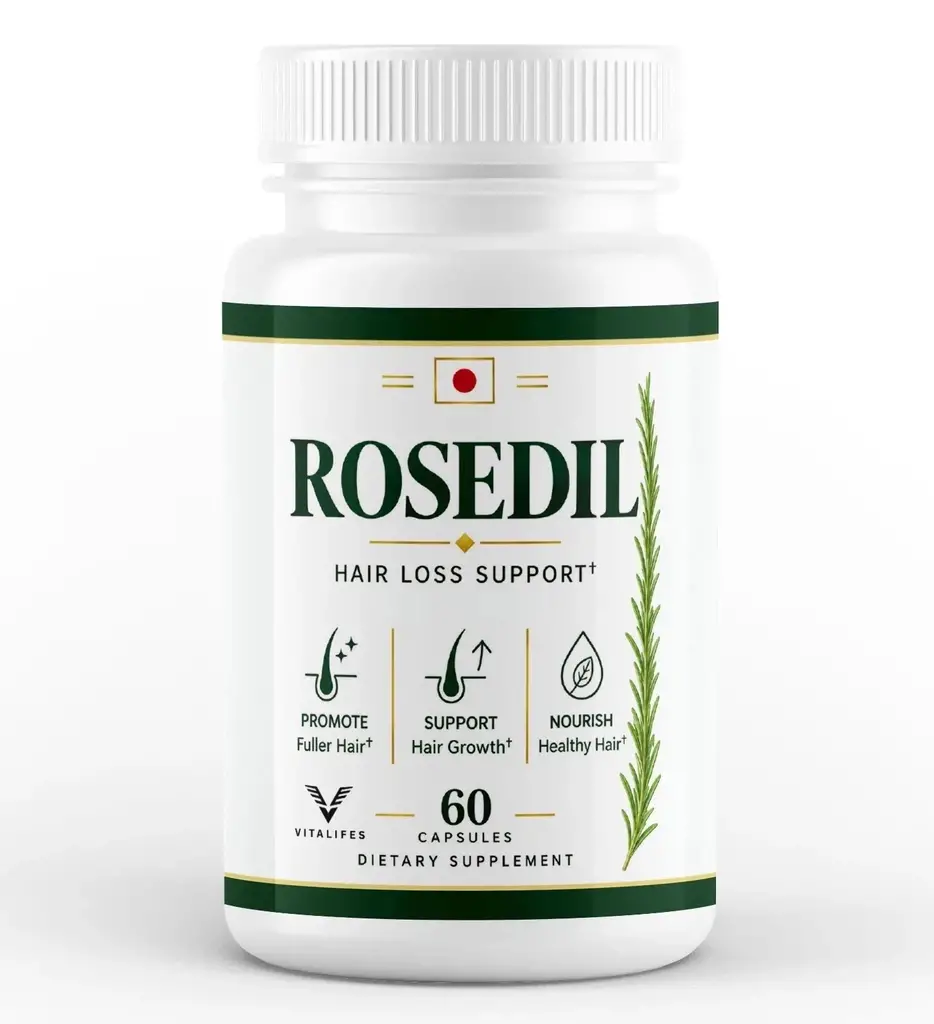
What Is Rosedil?
Rosedil is sold as a daily hair-support supplement designed for people concerned about thinning, shedding, breakage or hair that looks less full than it used to. The hair-focused product page describes a formula containing eight nutrients intended to support healthy hair. It recommends taking two capsules daily and suggests using the supplement consistently for several months.
The idea is straightforward: provide nutrients involved in normal bodily functions and hair health, then allow the body to use them as part of its normal growth cycle. That sounds reasonable in principle. The question is whether this particular combination will make a noticeable difference for someone who is already getting enough of those nutrients through their diet.
That distinction matters because hair loss is not always caused by a nutritional deficiency. Genetics, hormonal changes, illness, stress, medication and certain scalp conditions can all contribute to thinning. A vitamin supplement will not necessarily address the underlying cause.
I Dug Deeper Into Rosedil’s Ingredients
The hair-focused website lists the following amounts per two-capsule serving:
| Ingredient | Advertised amount |
|---|---|
| Biotin | 4,620 mcg |
| Vitamin C | 157 mg |
| Zinc | 12 mg |
| Horsetail extract | 25 mg |
| Vitamin B3 (niacin) | 30 mg |
| Vitamin B5 | 14 mg |
| Vitamin B6 | 1.6 mg |
| Calcium | 11 mg |
The website also lists gelatin, microcrystalline cellulose, silicon dioxide, magnesium stearate and titanium dioxide among the other ingredients. These are the amounts advertised on the product page. I could not independently verify the formula through laboratory testing or establish that every website using the Rosedil name sells an identical product.
Biotin: The Main Selling Point
Rosedil contains 4,620 mcg of biotin per serving. That is 4.62 mg, or approximately 154 times the adequate daily intake of 30 mcg for adults. The large number might look impressive on a label, but more does not automatically mean better hair growth.
According to the US National Institutes of Health, biotin deficiency can cause hair loss, but deficiency is uncommon. There is little scientific evidence that biotin supplements improve hair growth in otherwise healthy people who already get enough of the vitamin.
A review of the available clinical studies also found that the evidence does not support high-dose biotin as a reliable hair-growth treatment for people without a documented deficiency. That doesn’t mean biotin is useless. It means correcting a deficiency is different from taking a large dose in the hope of growing thicker hair when a deficiency has not been established.
There is also a safety consideration. High-dose biotin can interfere with certain laboratory tests, potentially producing misleading results, including in some thyroid tests and cardiac investigations. Anyone taking Rosedil should tell their healthcare professional and laboratory staff before having blood tests.
Zinc and Vitamin C
Zinc is involved in normal cell function, and severe zinc deficiency can contribute to hair problems. However, taking additional zinc does not automatically improve hair growth in someone whose zinc levels are already adequate. The advertised 12 mg serving is within the range commonly found in nutritional supplements. Whether it provides a meaningful benefit depends partly on a person’s existing dietary intake and nutritional status.
Vitamin C contributes to collagen formation and helps the body absorb non-haem iron from plant foods. Those functions are relevant to general health, but they do not establish that Rosedil will reverse hair loss.
If someone is losing hair because of an iron deficiency, for example, a supplement containing vitamin C but no iron would not directly correct that deficiency.
Horsetail Extract and the B Vitamins
Horsetail extract is commonly included in hair and nail products because of its association with silica. However, Rosedil’s advertised dose is only 25 mg, and I could not find convincing clinical evidence demonstrating that this amount improves hair growth.
The B vitamins also have legitimate roles in normal metabolism. But having an ingredient that contributes to normal bodily function is not the same as proving that taking extra amounts makes hair grow faster or thicker. Overall, the formula contains recognisable nutritional ingredients, but I found no convincing clinical evidence that the finished Rosedil product produces significant hair regrowth.
Does Rosedil Actually Regrow Hair?
This is where I would lower my expectations. Rosedil’s marketing focuses on supporting stronger, fuller-looking hair. That is a less specific promise than claiming to reverse a diagnosed hair-loss condition, but customers may still interpret it as a promise of visible growth.
I could not find a published clinical trial demonstrating that Rosedil itself reduces shedding, increases hair density or stimulates new growth. There is an important difference between supporting normal hair health and treating hair loss. If someone’s hair is thinning because of inadequate nutrition, correcting the deficiency may help. If the cause is hereditary pattern hair loss, a hormonal issue or a scalp condition, a general supplement may do very little.
I would also be cautious about testimonials showing dramatic transformations. Before-and-after photographs cannot establish that a supplement caused the improvement, especially when lighting, styling, hair length and other treatments may differ. Without a controlled study of the finished product, I would consider Rosedil’s hair-growth benefits unproven.
The Other Rosedil Websites Are Confusing
One of the more concerning details I found is that Rosedil does not have a consistent online identity. The hair-focused website, Therosedil.com, advertises the eight-nutrient formula described above. Another Rosedil website, Getrosedil.com, contains unfinished ingredient information and explicitly says that its final formula and usage instructions still need confirmation.
I also found a separate Rosedil promotion describing a daily wellness product for adult men, with claims relating to energy and stamina rather than hair growth. These pages do not establish that all the products are identical or that they come from the same manufacturer.
There are legitimate reasons for similar brand names to exist, and the existence of several websites does not by itself prove fraud. However, when different pages use the same name for different purposes, customers need to verify exactly which product they are purchasing.
I would want the seller to provide a complete Supplement Facts label, the responsible company’s legal name, manufacturing information and evidence of independent quality testing before placing an order.
Rosedil Pricing: Is It Worth the Money?
The hair-focused website advertises the following package options:
| Package | Advertised total | Cost per bottle |
|---|---|---|
| Two bottles | $158 plus $9.99 shipping | $79 |
| Three bottles | $207 | $69 |
| Six bottles | $294 | $49 |
These are the advertised package prices, not independently verified checkout totals. The seller says that shipping is free on the three- and six-bottle packages and advertises a 60-day money-back guarantee. The six-bottle package costs $294 upfront. That is a considerable commitment for a supplement whose product-specific effectiveness has not been established.
The website suggests using Rosedil for three to six months. However, that recommendation should not be confused with evidence that the product produces results after that period.
I would not spend nearly $300 on six bottles simply because the seller says consistent use is necessary. I would first want convincing evidence that the formula works for the problem I am trying to address.
What About Customer Reviews?
I found very little independent customer feedback that could reliably establish whether Rosedil works. One Trustpilot profile associated with a Rosedil hair-support website had only one review. Another profile associated with the Rosedil name also had only one review and described the product in the context of hair loss.
That is nowhere near enough feedback to establish a reliable pattern of customer satisfaction or dissatisfaction. It also means I cannot confidently claim that customers are experiencing widespread hair growth, that orders are consistently fulfilled or that the refund policy works as advertised.
The seller’s own testimonials are not a substitute for independent evidence, particularly when the product’s identity and formulation are not consistently documented across websites.
Is Rosedil FDA Approved?
I found no evidence that Rosedil is FDA-approved as a hair-loss treatment. In the United States, dietary supplements are generally not approved by the FDA for safety and effectiveness before they are marketed in the way prescription medicines are. A claim that a product is manufactured in an FDA-registered facility does not mean the FDA has approved the supplement or confirmed that it grows hair.
Likewise, a GMP claim is not proof that the finished product delivers the advertised results. Manufacturing standards and clinical effectiveness are separate questions.
Rosedil’s marketing should therefore be assessed on the actual formula, reliable quality documentation and evidence supporting its claims, not simply on the presence of manufacturing badges.
Red Flags I Found
No convincing product-specific clinical evidence
I could not find a controlled clinical trial demonstrating that Rosedil itself produces meaningful hair growth.
A very high biotin dose
The advertised 4,620 mcg dose is much higher than the amount most adults need daily. That does not automatically make it dangerous, but it does not establish a hair-growth advantage and introduces the possibility of interference with certain laboratory tests.
Multiple websites using the same name
The hair-support pages do not all provide the same level of formula information, and another promotion uses the name for men’s energy and stamina support.
Limited independent customer feedback
The small number of reviews I found is insufficient to judge the product’s real-world effectiveness or the reliability of its seller.
Expensive multi-bottle packages
The lowest advertised price requires buying six bottles for $294 upfront. I would want much stronger evidence before making that commitment. These issues do not prove that every bottle sold as Rosedil is fraudulent. They do, however, make me reluctant to recommend it.
What Would I Recommend Instead?
If your main concern is hair shedding or thinning, I would first try to establish what is causing it rather than immediately purchasing a high-dose vitamin supplement. Depending on the pattern and symptoms, a healthcare professional may consider nutritional deficiencies, thyroid problems, hormonal changes, medication effects or hereditary hair loss.
For diagnosed pattern hair loss, topical minoxidil is an established treatment option for many people. It is not suitable for every situation, and it requires consistent use, but its evidence base is stronger than that of an untested supplement formula.
If a nutritional deficiency is identified, correcting that specific deficiency makes more sense than taking a broad supplement simply because its marketing promises fuller hair. If you prefer to use a supplement, I would choose one with a complete label, a clearly identified manufacturer and credible quality-testing information. I would not pay a premium for a product merely because it contains a large amount of biotin.
Conclusion: Should You Buy Rosedil Capsules?
My recommendation is to skip Rosedil if your main goal is proven hair regrowth. The formula advertised on its hair-support website contains legitimate nutrients, and correcting a nutritional deficiency can be helpful when that deficiency is contributing to hair loss. However, I found no convincing evidence that Rosedil’s particular combination produces meaningful regrowth in people who are not deficient.
The high biotin dose also deserves more scrutiny than the marketing gives it, especially because biotin can interfere with certain blood tests. I am not calling Rosedil a confirmed scam. I cannot establish that every product using the name is fraudulent, and the ingredients listed on the hair-focused page are not inherently suspicious. My concern is that the evidence for the advertised results is weak, independent customer feedback is limited, and the product’s online identity is confusing.
For me, that is not enough to justify spending $158 to $294 on a multi-bottle package.
Also read – I Bought Vue Nose Patches for Cleaner Pores: Worth Trying? My Honest Review