

Sugar Reset Drops is marketed as a natural supplement for blood sugar support, with claims about reducing cravings, supporting healthy glucose levels and improving metabolic health. But some of the advertising takes a much more dramatic approach, presenting a supposed “Asian honey drink” discovery and connecting the story to physician Dr. William Li.
The problem is that I found no credible evidence that Dr. Li endorsed Sugar Reset Drops or created a diabetes remedy involving the product. There are also multiple Sugar Reset websites presenting different versions of the formula, which raises another question: what exactly are you buying? So, is Sugar Reset Drops legit? Let’s take a closer look.
Key Takeaways
- Sugar Reset Drops is marketed as a liquid blood-sugar support supplement.
- Some advertising connects the product to a supposed “Asian honey drink” or secret diabetes recipe involving Dr. William Li.
- I found no credible evidence that Dr. William Li endorsed Sugar Reset Drops or created this product.
- The current formula described on several sites contains chromium plus a 22-ingredient proprietary blend.
- Individual ingredient dosages within that blend are not disclosed.
- Other Sugar Reset websites describe a completely different six-ingredient formula.
- There is no published clinical trial showing that the finished Sugar Reset formula treats diabetes or meaningfully controls blood sugar.
- Some of the sales pages use extremely high customer-review numbers that come directly from the seller rather than an independent review platform.
- The product itself carries a disclaimer stating that it is not a treatment for diabetes and should not replace prescribed medication.
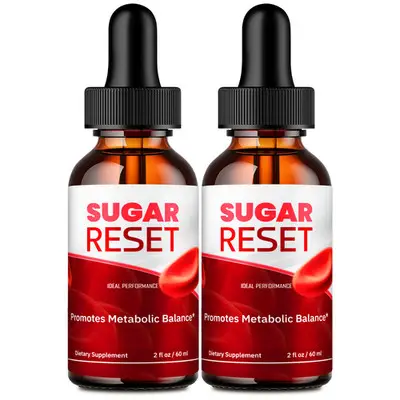
What Is Sugar Reset Drops?
Sugar Reset Drops is a liquid dietary supplement marketed toward people who want help supporting normal blood-sugar levels and metabolic health. The current product pages describe it as a once-daily liquid containing chromium picolinate alongside a botanical and amino-acid blend. One version says the product comes in a 2 fl oz bottle containing 60 one-millilitre servings.
The marketing is aimed at concerns such as afternoon energy crashes, sugar cravings and the feeling that carbohydrate-heavy meals affect you more than they used to. Importantly, the more recent sales pages explicitly say Sugar Reset is not a diabetes treatment and should not replace medication or blood-glucose monitoring.
That disclaimer is sensible. Unfortunately, some of the advertising surrounding the product is considerably more aggressive.
The Dr. William Li “Asian Honey Drink” Story
This is the part that immediately caught my attention. Some Sugar Reset advertising is built around a supposed discovery involving an “Asian honey drink” or natural recipe that can supposedly have a dramatic effect on blood sugar. The story is presented in a way that makes it sound as though Dr. William Li uncovered or promoted this approach.
I found no credible evidence that Dr. William Li endorsed Sugar Reset Drops, created the product or developed an “Asian honey drink” as a Sugar Reset treatment.
That distinction is important because Dr. Li is a real physician and scientist with an established public profile. Putting his name or apparent likeness next to a blood-sugar product gives the advertisement an entirely different level of credibility.
A person scrolling through one of these videos could reasonably believe they are watching an actual doctor explain a legitimate medical discovery when they are really being directed toward a commercial supplement.
How the Marketing Funnel Works
The campaign follows a familiar supplement-scam formula. First, it presents a common health concern: blood sugar, insulin resistance, cravings or diabetes.
Then comes the supposed secret. Instead of saying that the product is simply a supplement containing several botanical ingredients, the advertisement introduces a supposedly overlooked discovery… in this case, the “Asian honey drink.”
Then comes the authority. A recognisable doctor or health personality is brought into the story, creating the impression that the discovery has medical backing.
Finally, the viewer is sent to a sales page for Sugar Reset Drops. That sequence is effective because the viewer isn’t initially being asked to buy a bottle. They’re being sold a story first.
By the time the product appears, it feels like the logical answer to the medical problem introduced at the beginning.
Let’s Look at the Listed Ingredients
This is where things get confusing. Several current Sugar Reset websites describe the product as chromium picolinate plus a 200 mg proprietary blend containing 22 ingredients. Those ingredients include Gymnema leaf, African mango, green tea, maca, Panax ginseng, grape seed, guarana, astragalus, coleus forskohlii, grapefruit and several amino acids. Chromium is listed separately at 0.7 mcg per serving.
The major problem is that the 200 mg is shared across the entire blend. The amount of each individual ingredient is not disclosed. That makes it difficult to determine whether any particular ingredient is present at an amount comparable to doses used in research.
And then there is another issue: other websites selling Sugar Reset describe a six-ingredient formula consisting of chromium, Gymnema, African mango, green tea, maca and Panax ginseng, without presenting the same 22-ingredient blend.
That inconsistency is something I would want explained before purchasing.
Red Flags to Consider
The Supposed Dr. William Li Endorsement
This is the biggest problem with the advertising. There is no credible evidence that Dr. William Li endorsed Sugar Reset Drops or created the “Asian honey drink” treatment being used to sell it.
A legitimate doctor discussing blood-sugar research is one thing. Taking that person’s reputation and attaching it to a commercial supplement is another.
If a video makes you believe a specific physician personally recommends Sugar Reset, I would verify that claim directly through the physician’s official website or verified social-media accounts before believing it.
Multiple Versions of the Formula
I would also be cautious because the Sugar Reset name currently appears across several different websites with somewhat different descriptions of what’s actually inside the bottle.
One version says chromium plus a 22-ingredient, 200 mg proprietary blend. Another describes six key nutrients. Another describes the product as having six active ingredients without the same 22-ingredient formulation.
This doesn’t automatically prove that the product is fake, but it makes the marketing much harder to evaluate. If you’re selling one supplement, consumers should be able to determine exactly which formula they’re purchasing.
The Proprietary Blend
Even the more detailed 22-ingredient version has a transparency problem. The ingredients are named, but the individual quantities aren’t disclosed. You therefore know that the entire blend weighs 200 mg, but you don’t know how much of that 200 mg is Gymnema, green tea, ginseng, African mango or any of the other ingredients.
That’s particularly relevant when the marketing leans heavily on scientific research. Research on an ingredient doesn’t tell us whether the tiny amount contained in this particular blend is enough to reproduce the effect seen in a study.
No Finished-Product Clinical Trial
This is another important distinction. Sugar Reset’s own website acknowledges that there is no clinical trial on the finished Sugar Reset formula and that the available evidence relates to individual ingredients.
So when you see references to research on chromium, Gymnema, green tea or other ingredients, don’t interpret that as proof that Sugar Reset itself has been clinically proven.
It hasn’t.
Seller-Provided “Verified” Reviews
Some Sugar Reset websites display enormous numbers of supposedly verified customers and reviews. One current site claims more than 9,000 verified orders and a 4.76/5 rating, while another claims more than 19,000 verified customers and a 4.9/5 rating.
Those numbers sound impressive, but they are displayed on websites selling the product. They aren’t equivalent to independent clinical evidence or an independently verified review database.
A company’s own customer count can tell you how many orders it claims to have processed. It cannot tell you whether the supplement treats diabetes.
Efficacy
Some of the ingredients in Sugar Reset are legitimate subjects of scientific research. Chromium, for example, has a biological role in carbohydrate metabolism, while ingredients such as Gymnema and ginseng have also been studied for various metabolic effects.
But that doesn’t establish that Sugar Reset can “reset” your blood sugar. The finished product hasn’t been clinically tested, many ingredient doses aren’t disclosed, and the more dramatic claims come from marketing rather than evidence demonstrating that the product can treat diabetes.
That distinction matters enormously.
If you’re simply looking for a dietary supplement to accompany an otherwise healthy lifestyle, that’s one thing. If you have diabetes or prediabetes and are considering Sugar Reset as a way to control your blood sugar, I would not rely on it. The product itself says it is not a diabetes treatment and should not replace prescribed medication.
Is Sugar Reset Drops a Scam?
I’d separate the product from the advertising campaign here. I don’t have enough evidence to say that every bottle of Sugar Reset is fake or that every customer is being deliberately defrauded. There is a real product, published ingredient information and an identifiable seller behind at least some versions of the brand. One current site identifies the distributor as Rivermark Wellness LLC and provides a business address and contact information.
The marketing, however, is much more concerning. If you’re being shown a video suggesting that Dr. William Li discovered or endorses an “Asian honey drink” for diabetes and that Sugar Reset is the answer, I would not trust that endorsement without independently verifying it.
And if different websites are simultaneously presenting different Sugar Reset formulas, I’d want to know exactly which version is being sold before putting any money down.
Pricing and Where to Buy
Current Sugar Reset websites advertise prices starting around $49 per bottle, with larger packages reducing the advertised per-bottle cost. A six-bottle package is currently listed at $294 on one sales site. The advertised guarantee is generally 60 days, although the exact terms should be read before ordering.
I would also pay attention to the final checkout amount rather than the large discount percentages displayed on the sales page. A “65% off” or “90% off” banner is marketing; the amount actually charged to your card is what matters.
What To Do If You Already Bought Sugar Reset Drops
If you purchased the drops because you believed Dr. William Li personally recommended them, save the advertisement that convinced you to buy.
Keep screenshots of the video, sales page, checkout price, order confirmation and credit-card statement. If the product or endorsement was materially different from what you were shown, document that before contacting the seller.
If you were charged more than expected or notice additional charges, contact your payment provider promptly. And if you have diabetes or another condition requiring medication, don’t stop or reduce prescribed treatment because of anything you saw in a Sugar Reset advertisement.
Conclusion
Sugar Reset Drops is not automatically a scam simply because it is a blood-sugar supplement. There is a real product being sold, and some of its ingredients have been studied individually.
The problem is the story being used to sell it. The Dr. William Li “Asian honey drink” narrative makes Sugar Reset sound like the result of a secret medical discovery, but I found no credible evidence that Li endorsed the product or created the treatment being advertised. The product also has no clinical trial demonstrating that the finished formula treats diabetes, while some versions use a proprietary blend that conceals individual ingredient quantities.
Then there is the confusing part: multiple Sugar Reset websites currently describe different formulas while using essentially the same product name.
For me, that is enough to exercise serious caution. I would not buy Sugar Reset because a video makes it appear that Dr. William Li discovered or endorsed it, and I would absolutely not use it as a substitute for legitimate diabetes treatment.
The drops may be a real supplement. The “secret Asian honey drink” story is where the marketing starts looking a lot less trustworthy.
Also read – Zuvaire.com Review: Legit or Scam Online Shopping Store? Find Out