

I came across Vital Flush through a blood pressure promotion featuring a supposed medical expert named Dr. Peter Harrington. The presentation uses a frightening message about surviving a heart attack with permanent disabilities to introduce what sounds like a simple, natural solution. But before I would trust a supplement promoted this way, I wanted to know who this doctor actually is, what Vital Flush contains, and whether the product has any evidence behind the promises being made.
Key Takeaways
- The doctor’s credentials raise serious questions. The promotion claims a prestigious Johns Hopkins career, but I could not establish an independent connection between the advertised speaker and the position he supposedly held.
- The product’s medical claims go beyond the evidence presented. Vital Flush contains aged garlic extract and raw honey, but research involving garlic does not automatically prove that this particular formula treats high blood pressure.
- The pricing encourages larger purchases. The advertised options are $89 for one bottle, $138 for two, and $168 for three, before any applicable shipping charges.
- The sales presentation is the biggest concern. Fear-based medical messaging, an unverified professional endorsement, and the gap between ingredient research and product-specific evidence are reasons to approach this offer cautiously.
What Is Vital Flush?
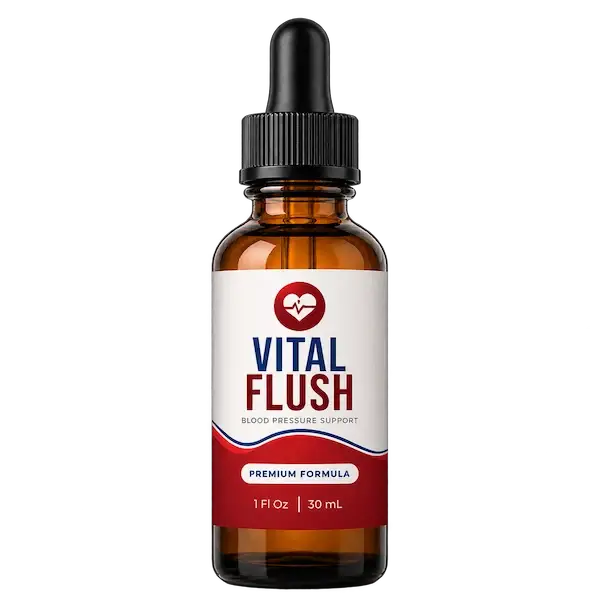
Vital Flush, also styled VitalFlush, is a liquid dietary supplement marketed for blood pressure support and cardiovascular health. It comes in a small 30 mL amber glass dropper bottle, with each bottle advertised as a 30-day supply.
The product’s ingredient information identifies aged garlic extract as the active ingredient and raw honey as the other ingredient. Garlic supplements have been studied for their potential effects on blood pressure, which gives the product a plausible starting point. However, there is a substantial difference between researching an ingredient and establishing that a particular commercial formula produces a specific medical benefit.
Vital Flush is sold through a dedicated website that also hosts its promotional presentation. Rather than simply explaining the formulation and presenting the available evidence, the marketing leans heavily on a dramatic medical story featuring Dr. Peter Harrington.
That distinction matters. I am not evaluating garlic as a food or claiming that every garlic supplement is useless. I am investigating whether the product being sold can substantiate the claims and authority used to persuade people to buy it.
How Does Vital Flush Claim to Work?
The promotion revolves around blood pressure, cardiovascular health, and the fear of surviving a serious medical event only to experience lasting disability. The proposed solution is presented as a simple, natural routine that could help people protect their health. The associated website discusses aged garlic extract and points to research on garlic’s potential cardiovascular benefits. Some research suggests that certain garlic preparations may modestly reduce blood pressure in people with hypertension.
However, that does not establish that Vital Flush prevents heart attacks, reverses arterial damage, or delivers all the outcomes implied by the sales presentation.
To make those connections responsibly, the seller would need to establish what is in the finished formula, the amount provided per serving, and whether the product itself has been tested for the claimed outcomes. The presence of a studied ingredient is not a substitute for that evidence.
The promotion also makes the remedy sound reassuringly simple. But a simple routine is not necessarily an effective treatment, and natural ingredients are not automatically safe for everyone. Garlic supplements can interact with medications, including blood thinners.
Anyone considering Vital Flush should have the complete product label reviewed by a healthcare professional rather than relying on assurances in promotional comments.
The Investigation: What I Found
The Dr. Peter Harrington Problem
This is where I would start before spending a single dollar. The Vital Flush presentation reportedly introduces Dr. Peter Harrington as a vascular medicine specialist with 30 years of experience and nine years in a senior position at Johns Hopkins. The advertised title is Chief of Hypertension and Vascular Medicine. The presentation also attributes textbook contributions and national health panel involvement to him.
Those are significant professional claims. If a doctor has held such a prestigious position, there should be a way to connect the person’s identity, qualifications, career history, and published work to the institution being named.
I could not establish that connection for the speaker in this promotion. Johns Hopkins’ official information identifies Oscar Cingolani as the leader of its Resistant Hypertension Center. That does not establish every historical appointment at the institution, but it does not corroborate the advertised Harrington biography either.
There is also an important distinction between finding a genuine doctor named Peter Harrington and verifying the particular person featured in a supplement advertisement. A shared name is not proof that the doctor in the promotion holds the claimed credentials or endorses Vital Flush.
The presentation also reportedly uses a Top Cardiologist 2025 distinction without clearly identifying the organization responsible for the award. I would want to see an independently verifiable professional profile, the institution’s confirmation, and identifiable publications or appointments before accepting those claims. The promotional biography itself is not independent verification.
The Sales Presentation Uses Fear to Sell Reassurance
The second issue is how the product is introduced. Rather than beginning with the formula, its dosage, or the limits of the available research, the presentation focuses on the frightening possibility of surviving a heart attack but suffering permanent consequences.
That is an emotionally powerful way to sell something. People living with hypertension may already worry about strokes, heart attacks, their independence, and the possibility of leaving their families without support. A presentation that speaks directly to those fears can make an advertised remedy feel much more important than it has been shown to be.
The concern about cardiovascular disease is legitimate. The problem is using that concern to establish confidence in a product before demonstrating that the product delivers the promised benefit. A persuasive medical story is not a clinical trial. Neither is a dramatic personal narrative proof that a particular supplement can prevent the outcome being described.
The Garlic Research Does Not Prove Vital Flush Works
I also looked at the relationship between the product’s ingredient information and its scientific claims. Garlic has been studied for potential cardiovascular benefits, and some evidence suggests that particular garlic supplements may produce modest reductions in blood pressure. That is worth acknowledging rather than dismissing outright.
However, the Vital Flush science information acknowledges that its cited studies concern aged garlic extract rather than clinical trials of the finished Vital Flush formula. That is a significant limitation.
Different garlic preparations can contain different amounts of relevant compounds, and their effects cannot automatically be treated as interchangeable. Without sufficiently detailed ingredient quantities and product-specific clinical evidence, I cannot establish that Vital Flush produces the results suggested by its marketing.
The evidence also does not establish that the drops prevent heart attacks, reverse arterial damage, or allow someone to avoid prescribed hypertension treatment. The seller’s use of research about an ingredient may sound scientific, but readers should pay attention to what was actually tested. A study involving one preparation of garlic is not proof that every product containing garlic delivers the same result.
The Website and Checkout Raise Questions Worth Checking
The Vital Flush website offers three packages and directs buyers to a CartPanda checkout. CartPanda is a payment platform, and its presence alone does not prove that a seller is fraudulent. Equally, a functioning checkout does not establish that the product’s medical claims are legitimate.
The product pages identify the brand and ingredients, but the information I reviewed did not establish a clearly traceable manufacturer or provide enough formulation detail to compare the product confidently with the research being cited. I also found a discrepancy worth noting in the refund information. The sales page advertises a 60-day money-back guarantee, while some secondary descriptions of the offer have referred to a 90-day guarantee. Buyers should rely on the written terms applicable to the actual checkout and order, not assume that every page or advertisement promises the same period.
Before ordering, I would want the seller’s legal identity, full label, manufacturer details, shipping charges, and complete return conditions. Those are basic details for assessing a supplement purchase, particularly one being promoted with strong medical claims.
Red Flags to Consider
The first red flag is the unverified medical endorsement. The promotion relies on a supposedly distinguished physician, yet the professional history presented in the advertisement has not been independently substantiated.
The second is the emotional sales approach. Emphasizing the possibility of a devastating cardiovascular event can pressure viewers into continuing with a presentation and considering a purchase before they have evaluated the evidence.
The third is the gap between ingredient research and product claims. Aged garlic extract has been studied, but the available information does not establish that Vital Flush itself produces the advertised medical outcomes.
The fourth is the lack of sufficient formulation detail to make a meaningful comparison with the research. Knowing that a bottle contains aged garlic extract and honey is not the same as knowing the relevant amounts and whether they match a studied preparation.
Finally, the purchase terms deserve closer scrutiny. The price per bottle falls when customers buy larger packages, but that encourages people to spend more upfront on a product whose effectiveness remains unestablished. The refund conditions should also be reviewed before payment.
None of these observations, taken individually, proves every possible allegation of fraud. Together, however, they provide ample reason not to accept the promotional claims at face value.
Does Vital Flush Actually Work?
I cannot establish that Vital Flush works as the blood pressure treatment its promotion appears to suggest. That is not the same as saying garlic has no cardiovascular benefits. Some garlic preparations may modestly lower blood pressure, but those findings do not automatically apply to this particular product.
The important missing evidence is a reliable demonstration that the finished Vital Flush formula, at its recommended dosage, delivers the specific benefits being promoted.
I would also be wary of customer comments describing improved readings. Even when an individual’s experience is genuine, a change in blood pressure does not establish that a supplement caused it. Readings can vary with measurement technique, medication adherence, activity, stress, and other factors.
The more serious concern is the possibility that someone might trust the presentation enough to reduce or discontinue prescribed medication. Vital Flush should not be used as a replacement for established hypertension treatment, and anyone considering it should consult their healthcare professional about possible interactions.
A product does not need to be completely ineffective to be marketed misleadingly. The issue here is that the confidence created by the presentation exceeds what the available product-specific evidence establishes.
Vital Flush Pricing: Is It Worth the Money?
The advertised US pricing is:
- One bottle: $89 for a 30-day supply.
- Two bottles: $138 total, or $69 per bottle.
- Three bottles: $168 total, or $56 per bottle.
Shipping is calculated at checkout, so the final cost may be higher. The three-bottle option is presented as the best value because it lowers the price per bottle. However, $168 is still a substantial upfront purchase for a supplement whose advertised medical benefits have not been established through product-specific clinical evidence.
I would not recommend choosing a larger package simply because the per-bottle price looks better. A discount does not make an inadequately substantiated product more effective.
The money-back guarantee may appear to reduce the risk, but customers should read the applicable written policy before ordering. Confirm the refund period, how it is calculated, whether opened bottles qualify, who pays return shipping, and how to initiate a return.
My position is straightforward: I would not spend $89, let alone $168, on Vital Flush based on the Dr. Peter Harrington presentation.
What Are Better Alternatives to Vital Flush?
For someone concerned about high blood pressure, I would prioritize options with clearer evidence and established medical oversight.
A validated home blood pressure monitor, used correctly, can help someone track their readings and share the results with their clinician. It does not treat hypertension, but it provides useful information for making treatment decisions.
A consultation with a qualified healthcare professional is another important step, particularly for persistent high readings or concerns about current medication. A clinician can review the person’s measurements, medical history, and treatment options.
Lifestyle changes may also help manage blood pressure. Depending on the individual, these can include reducing excess sodium, following a balanced dietary pattern, exercising regularly, moderating alcohol intake, and addressing sleep problems.
For people who want to explore garlic supplements specifically, a pharmacist or clinician can help assess the available evidence, ingredient quantities, and possible medication interactions. That is preferable to relying on an unverified medical endorsement.
These options do not promise a secret cure. Their advantage is that they focus on monitoring, established care, and decisions based on an individual’s actual health needs.
What to Do If You’ve Already Bought Vital Flush
If you have already placed an order, start by checking the confirmation email and the amount charged. Keep a copy of the package you selected, the product claims shown at the time of purchase, and the refund terms.
If you want to cancel or request a refund, contact the seller using the details in your order confirmation and ask for the applicable return instructions in writing. Keep records of your correspondence and check the deadline in the policy that applied to your purchase.
If the seller does not resolve a legitimate billing dispute, contact your payment provider to ask about its dispute process and deadlines. Describe accurately what happened and retain the relevant documentation.
If you have already received the drops, keep the bottle and its complete ingredient label available for a pharmacist or clinician to review. This is particularly important if you take prescription medication.
Most importantly, do not stop or reduce prescribed blood pressure medication because of the promotional video or an advertised natural remedy.
Conclusion
I would avoid Vital Flush as a blood pressure treatment. The problem is not simply that it contains garlic or that it is sold online. The concern is the combination of an unverified medical endorsement, emotionally charged marketing, insufficient product-specific evidence, and a sales process that encourages larger purchases.
The advertised Dr. Peter Harrington credentials have not been independently substantiated in the material I reviewed. Meanwhile, research on aged garlic extract does not establish that the finished Vital Flush formula delivers the medical outcomes implied by its promotion.
I cannot conclude from these findings alone that every transaction involving Vital Flush is fraudulent, or that the product contains no potentially useful ingredient. But I can conclude that the promotional presentation does not provide a sufficient basis for trusting it as a hypertension treatment.
I would keep my money, continue evidence-based blood pressure care, and avoid making a medical decision based on this sales pitch.
Also read – Is Ncrovoprime.com a Legit Online Shopping Store? Read This Before Placing an Order