

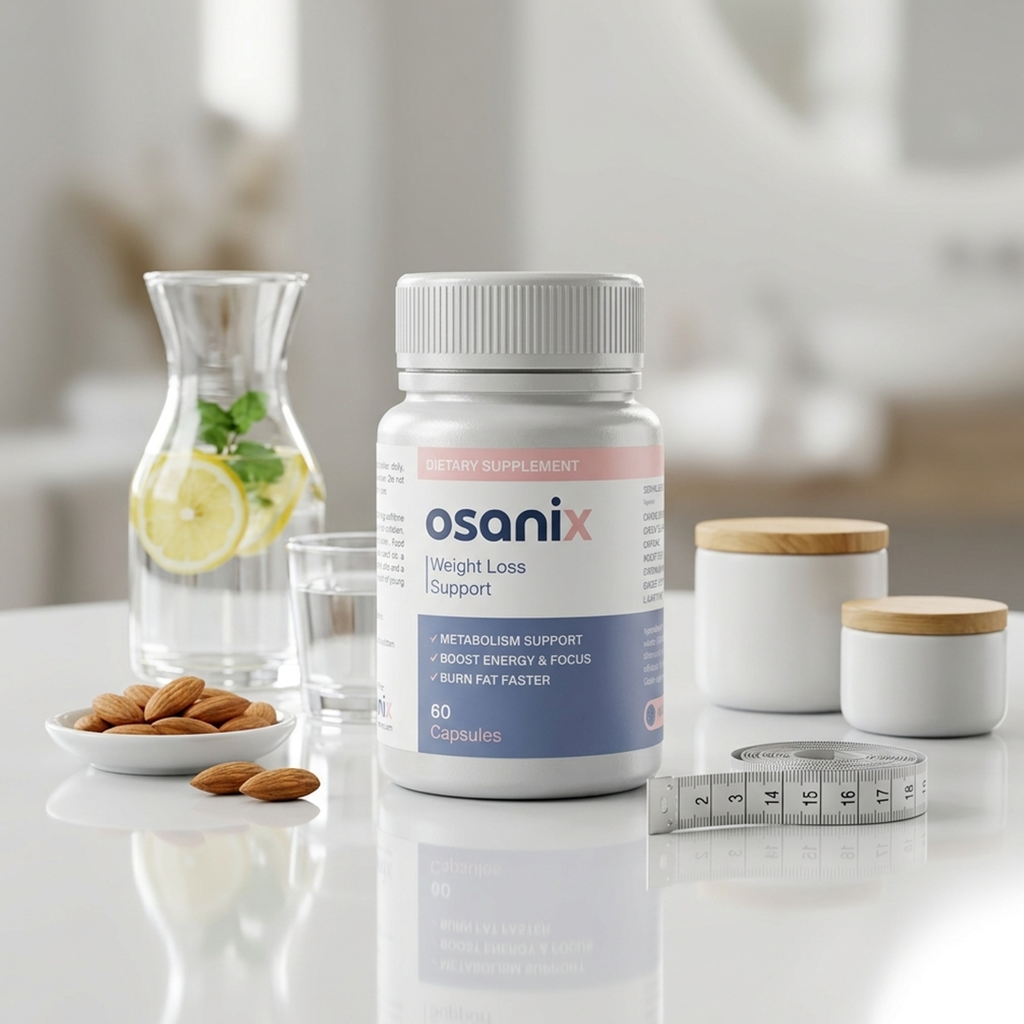
Osanix is a caffeine-containing weight-management supplement marketed to support metabolism, appetite control, energy, and fat loss. It is sold as capsules rather than tablets, despite some websites calling them “Osanix tablets.”
Unlike some of the mystery supplements we’ve investigated, Osanix does have a reasonably identifiable formula. The problem is that the evidence behind several of its ingredients is fairly modest, while some of the online advertising makes much bigger weight-loss promises than the science supports.
Key Takeaways
- Osanix is a stimulant-based weight-management supplement.
- Formulations found online include green tea extract, caffeine, cayenne, ginger, chromium and L-carnitine, with some versions also listing wheat fiber.
- One published product listing gives 100 mg caffeine per capsule, while another gives 61 mg per capsule and recommends two capsules daily. The conflicting formulations are worth noting.
- There is no convincing clinical trial showing that Osanix itself causes major weight loss.
- Claims of losing 11–22 lb or more in a short period are not supported by evidence for the finished product.
- The caffeine may provide a modest energy/thermogenic effect, but that is very different from a powerful fat-burning effect.
What Is Osanix?
Osanix is marketed as a plant-based dietary supplement for weight management. Its advertising focuses on metabolism, appetite, energy and fat burning, rather than presenting it as a prescription-style obesity treatment.
One important clarification: Osanix is not Ozalyn, Ozempic, or a GLP-1 medication. There are also multiple websites selling or describing Osanix, which makes checking the exact label important before purchasing.
How Does Osanix Claim to Work?
The formula is essentially a thermogenic + appetite/energy support combination. Green tea and caffeine are intended to increase energy expenditure and alertness. Cayenne and ginger are commonly included in thermogenic formulas, while chromium is marketed for normal glucose metabolism. L-carnitine is supposed to assist with fatty-acid metabolism.
The theory sounds impressive when all of those mechanisms are placed together, but the individual effects are generally small, and combining several ingredients doesn’t automatically produce a powerful fat-burning effect.
What Does the Evidence Say?
Green Tea
Green tea catechins, particularly EGCG, have been studied for weight management. There is evidence of a small potential effect on energy expenditure and body weight, but it isn’t remotely comparable to the effect of prescription weight-loss medication. The amount and standardisation of green tea extract matter considerably.
Caffeine
This is probably the ingredient doing the most obvious work. Caffeine can temporarily increase alertness and energy expenditure and may slightly increase thermogenesis. It can also make exercise feel easier. But your body doesn’t suddenly start melting large amounts of stored fat because you swallowed a caffeine capsule.
Cayenne
Capsaicin may modestly increase thermogenesis and reduce appetite in some circumstances. Again, the effect is relatively small.
Chromium
Chromium is involved in normal glucose metabolism, but supplementation has not consistently produced meaningful weight loss in otherwise healthy people.
L-Carnitine
L-carnitine is involved in transporting fatty acids into mitochondria, which sounds tailor-made for a fat-burning supplement. Unfortunately, the body already produces and stores carnitine, and taking a small additional amount doesn’t automatically translate into increased fat loss. Evidence for weight reduction from supplementation is modest at best.
So yes, the formula contains ingredients with legitimate biological functions. No, the formula doesn’t have evidence demonstrating dramatic weight loss.
Red Flags to Consider
The Marketing Is Much More Aggressive Than the Evidence
One Osanix sales funnel asks users how much weight they want to lose and then generates projected results such as 20 kg of weight loss and an 880-calorie-per-day “metabolism boost.”
That’s where I become very sceptical. An 880-calorie daily increase in energy expenditure would be enormous. There is no convincing evidence that taking Osanix produces anything remotely like that.
The “University of Toronto” Claims Are Questionable
The same sales page invokes studies allegedly showing dramatic weight loss among participants and uses those figures to support Osanix.
But the page doesn’t provide enough information to independently establish that those studies actually tested Osanix.
A study about dieting or an individual ingredient isn’t a clinical trial of Osanix. This is a classic supplement-marketing technique: take legitimate scientific language and position the product next to it until the consumer subconsciously connects the two.
Different Websites Give Different Formulas
This is particularly interesting.
One listing reports:
- Green tea extract — 150 mg
- Caffeine — 100 mg
- Wheat fiber — 600 mg
- Ginger — 60 mg
- Cayenne — 40 mg
- Chromium — 40 mcg
- L-carnitine — 50 mg
Another product listing identifies a substantially different formulation, including caffeine anhydrous, guarana, apple cider vinegar, zinc, copper, vitamin B6, chromium, cayenne and Siberian ginseng, with 61 mg caffeine per capsule.
That means you cannot safely assume that every bottle being sold online as “Osanix” has the same formula. That’s a pretty important purchasing warning.
Customer Testimonials Don’t Prove Weight Loss
Some online reviews describe losing several pounds, reduced cravings and smaller waist measurements. Those experiences may be genuine, but they’re uncontrolled anecdotes.
Someone taking Osanix may simultaneously have changed their diet, reduced calories, exercised more, or simply experienced normal fluctuations in weight.
Before-and-after testimonials are not a substitute for a randomized controlled trial.
Ingredients
The most consistently reported Osanix formula contains:
- Green tea extract
- Caffeine
- Cayenne pepper extract
- Ginger extract
- Chromium picolinate
- L-carnitine
- Wheat fiber in some versions
Because different sellers publish different formulations, check the physical label before taking the product rather than relying on an online ingredient list.
Does Osanix Actually Work?
Possibly, but probably nowhere near what the advertising suggests. The caffeine and green tea extract could provide a modest increase in energy expenditure, while the stimulant effect may make some people feel more energetic and potentially more active.
If Osanix helps someone stick to a calorie-controlled diet, it could indirectly contribute to weight loss. But I would not expect the capsule itself to produce dramatic fat loss.
The most realistic assessment is: Osanix may provide modest thermogenic and energy support, but it is not a powerful fat burner and has not been demonstrated to produce the dramatic weight loss shown in its advertising.
Potential Side Effects
The biggest consideration is caffeine.
Depending on the exact formulation, users may experience:
- Jitters
- Increased heart rate
- Anxiety
- Headache
- Insomnia
- Restlessness
- Stomach irritation
Cayenne and ginger may also cause gastrointestinal discomfort, particularly on an empty stomach. The caffeine content is particularly important because different Osanix listings report different amounts. One formulation provides 100 mg per capsule, while another lists 61 mg per capsule and recommends two capsules daily.
That could mean 122–200 mg of caffeine per day from Osanix alone, depending on which formulation you receive.
Add coffee, tea, energy drinks or pre-workout on top of that and the stimulant load can climb quickly.
Pregnant or breastfeeding women, people under 18, and people with certain medical conditions or taking medications should avoid using it without appropriate professional advice.
Pricing and Availability
Prices vary substantially depending on the seller and package. One online listing currently gives £27.99 for 60 capsules, while the direct-to-consumer sales funnel advertises promotional pricing around £49.95 per package.
Given the inconsistent formulas and multiple websites selling the product, I’d be particularly careful about buying Osanix from an unfamiliar third-party seller.
Alternatives
If your goal is weight loss, there are much better-supported options. For modest weight reduction, the foundation remains a sustainable calorie deficit, adequate protein, resistance training, regular movement and sufficient sleep.
For people with obesity or weight-related medical problems, clinically evaluated prescription weight-management treatments have substantially stronger evidence than supplements such as Osanix.
And if you specifically want a caffeine-based supplement, you can at least compare the caffeine dose directly rather than paying for a proprietary “fat-burning” narrative around it.
What To Do If You Were Scammed
If you purchased Osanix and received nothing, received a different product, or were charged more than expected, contact the seller and request a refund.
Keep your order confirmation, receipt, screenshots of the advertisement, photographs of the bottle and all correspondence. If the seller refuses to resolve the issue, contact your payment provider.
Conclusion
Osanix is not the most ridiculous weight-loss supplement we’ve investigated. There are recognisable ingredients in the formula, and caffeine and green tea extract have some evidence for modest effects on energy expenditure.
The problem is the gap between modest science and spectacular marketing. Claims suggesting that Osanix can boost metabolism by hundreds of calories per day or produce dramatic weight loss in a matter of weeks aren’t supported by convincing evidence.
The inconsistent ingredient information across different Osanix listings is another concern. If you’re buying it, the exact bottle and label matter because the formulations circulating online don’t appear to be identical.
Also read – TASTY GAINS Creatine Gummies Review: Worth Buying? I Bought It