

FastLean Pro caught my attention because of one very convenient promise: you can supposedly get the benefits of fasting without actually fasting. According to its marketing, the supplement activates a “fasting switch” in the body, encouraging fat burning and autophagy while you continue eating normally.
That sounded impressive enough to investigate. So I looked into the ingredients, the science behind this supposed “fasting switch,” and the rather dramatic scientific claims being used to sell Fast Lean Pro. What I found made me much less convinced than the sales page wants you to be.
Key Takeaways
- Fast Lean Pro is a powdered weight-loss supplement marketed as a way to mimic intermittent fasting.
- Its current formula lists ingredients including Fibersol-2, chromium, vitamin B12, niacin, Sukre, and a Biogenic Polyamine Complex.
- The main claim is that these ingredients can activate fasting-related metabolic pathways and autophagy without requiring you to stop eating.
- I couldn’t find clinical evidence showing that Fast Lean Pro itself can reproduce the metabolic effects of fasting or cause significant weight loss.
- The marketing also uses Nobel Prize research on autophagy in a way that makes the product appear much more scientifically established than it is.
- Fast Lean Pro has also been advertised with misleading FDA-related language.
- After looking into the formula and the claims, I wouldn’t consider Fast Lean Pro a proven weight-loss supplement.
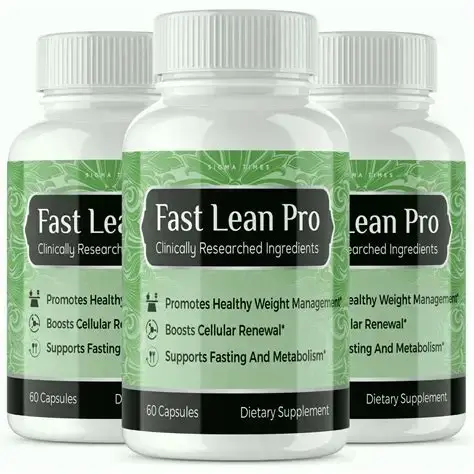
What Is Fast Lean Pro?
Fast Lean Pro is a powdered dietary supplement designed to be mixed into a drink. Its entire marketing strategy revolves around making weight loss sound easier than traditional dieting.
Instead of fasting, the company says you can take Fast Lean Pro and supposedly activate the same metabolic mechanisms that occur when your body is deprived of food. The current sales page describes the product as a way to enter a “fasting state,” burn fat, reduce appetite and encourage cellular renewal.
That’s a pretty big promise. So naturally, I wanted to know what exactly is in this powder that is supposedly capable of doing all that.
How Does Fast Lean Pro Claim to Work?
The explanation starts with autophagy. Autophagy is a genuine cellular process. In simple terms, cells can break down and recycle damaged or unnecessary components. Fasting and nutrient deprivation can influence pathways involved in this process.
And this is where Fast Lean Pro’s marketing gets clever. The sales material takes this legitimate science and presents the idea of a “fasting switch” that can supposedly be activated without actually fasting. One version of the sales page even asks, “Can you fast without fasting?” before introducing Fast Lean Pro as the answer.
That sounds fantastic on paper. But once I started looking at the actual ingredients, the story became much less convincing.
My Investigation: What’s Actually in Fast Lean Pro?
The current formula lists six main components: Biogenic Polyamine Complex, niacin, Fibersol-2, vitamin B12, chromium and Sukre.
And this is where I think it’s important to separate what these ingredients actually do from what the marketing suggests they do.
Fibersol-2
Fibersol-2 is a type of soluble dietary fiber. This is probably one of the easier ingredients to understand. Fiber can contribute to fullness and digestive health, and increasing fiber intake can certainly be useful for someone trying to manage their weight.
But there’s a big difference between helping you feel fuller and putting your body into a fasting state. I couldn’t find evidence that Fibersol-2 can reproduce the complex hormonal and metabolic changes that occur during actual fasting.
Chromium
Chromium is involved in normal glucose and insulin metabolism, which is why you’ll find it in plenty of weight-management supplements. But the presence of chromium doesn’t automatically translate into substantial fat loss.
The Fast Lean Pro marketing gives chromium a much more impressive job description, claiming that it can improve insulin sensitivity and boost autophagy.
That’s where I’d be careful. An ingredient having a role in a biological pathway doesn’t mean that taking it in a supplement will activate that pathway strongly enough to produce the advertised outcome.
Vitamin B12
B12 is an essential nutrient involved in normal energy production and neurological function. If someone is deficient in B12, correcting that deficiency can obviously make a significant difference to their health.
But B12 isn’t a fat burner. Taking additional B12 when you’re already getting enough doesn’t mean your body suddenly starts burning substantially more calories.
Niacin
Niacin, or vitamin B3, is also involved in energy metabolism. Again, that’s a legitimate biological function. But the marketing appears to take that normal function and turn it into a weight-loss mechanism.
The fact that a vitamin participates in energy metabolism doesn’t mean supplementing with it will cause meaningful fat loss.
Sukre
This was one of the ingredients I found harder to evaluate. Fast Lean Pro describes Sukre as supporting fat loss, liver health, blood sugar and cardiovascular function.
But the sales material doesn’t give me enough information to confidently determine how much of this ingredient is being used or whether the particular formulation has been clinically tested for the results being advertised.
That’s a problem when the entire product is being sold on the strength of its supposed metabolic effects.
Biogenic Polyamine Complex
This is probably the ingredient most closely connected to the autophagy story. Polyamines, including spermidine, spermine and putrescine, are real compounds involved in cellular processes, and spermidine in particular has been investigated in relation to autophagy.
But here’s the important distinction:
Research into polyamines is not the same as a clinical trial showing that Fast Lean Pro activates autophagy enough to mimic fasting.
The current marketing claims that its polyamine complex can keep the body’s fasting pathways partially activated even while you’re eating normally.
I couldn’t find convincing clinical evidence establishing that claim for Fast Lean Pro itself.
The Nobel Prize Connection
This is where my skepticism increased considerably.
Fast Lean Pro’s advertising repeatedly references Japanese scientists and Nobel Prize research surrounding autophagy. Some versions of the marketing specifically feature Yoshinori Ohsumi, who won the 2016 Nobel Prize in Physiology or Medicine for his discoveries concerning autophagy.
Ohsumi’s research is absolutely legitimate. The problem is the way Fast Lean Pro uses it. I couldn’t find evidence that Ohsumi developed Fast Lean Pro, endorsed it, or had anything to do with the supplement.
The product’s marketing essentially takes a genuine Nobel-winning discovery and places it next to a commercial weight-loss product, creating the impression that the Nobel Prize validates Fast Lean Pro.
It doesn’t. The Nobel Prize was awarded for fundamental research into the mechanisms of autophagy—not for discovering a Fast Lean Pro weight-loss formula.
That’s a very important distinction.
Red Flags to Consider
The “Fasting Switch” Isn’t a Proven Product Mechanism
The phrase sounds scientific, but it isn’t evidence that Fast Lean Pro can reproduce fasting.
Actual fasting involves changes in nutrient availability, insulin, energy balance and multiple metabolic pathways. You can’t establish that a supplement mimics all of this simply because some of its ingredients are involved in related biological processes.
The FDA Language Is Misleading
This one really stood out to me.
Fast Lean Pro’s website displays an “FDA Approved” badge, while elsewhere the company says the product is made in an FDA-registered facility.
Those statements are not equivalent. In fact, the company’s own FAQ says that the FDA doesn’t review dietary supplements in the same way it reviews drugs.
So calling attention to an “FDA Approved” badge can easily leave consumers with the impression that the FDA has evaluated Fast Lean Pro’s effectiveness.
There is no evidence presented that it has.
The Company Says the Product Is Suitable for Everyone
The FAQ makes an unusually broad claim that Fast Lean Pro has been designed for “all ages and medical conditions.”
That is not a claim I’d take seriously. A six-ingredient supplement cannot reasonably be assumed to be appropriate for every age group, medical condition and medication combination.
“Lab Testing” Is Used to Support the Tea and Coffee Claim
The company also says that lab testing showed that autophagy is accelerated when Fast Lean Pro is added to tea or coffee, because compounds in tea and coffee supposedly turbo-charge cellular renewal.
I wanted to know more about that testing. What I couldn’t find was a properly published clinical study demonstrating that Fast Lean Pro + tea or coffee produces meaningful increases in human autophagy or weight loss.
That’s another example of a scientific-sounding statement that is much harder to verify than the sales page makes it seem.
The Sales Page Wants You to Buy a Lot
The company’s FAQ recommends ordering the largest amount to “stock up,” claiming the product sells quickly and could take months to restock.
That’s classic urgency marketing. And considering I couldn’t find strong clinical evidence for the product in the first place, I certainly wouldn’t buy a six-month supply because a sales page told me I might miss out.
Does Fast Lean Pro Actually Work?
After going through the formula, this is where I land: I don’t think there’s enough evidence to support the main claims.
There are reasonable ingredients here. Fiber can help with satiety. B12 and niacin are essential nutrients. Chromium has a role in glucose metabolism. Polyamines are genuinely interesting from a cellular-biology perspective.
But none of those facts establish that Fast Lean Pro can make your body believe it’s fasting.
And I couldn’t find a clinical trial on the finished Fast Lean Pro formula demonstrating significant weight loss.
That’s the evidence I would actually want to see.
Instead, the marketing starts with a fascinating biological concept, autophagy, and works backwards to make the supplement sound like it has mastered that concept.
Potential Side Effects
The company’s FAQ makes broad safety claims, but I’d still be cautious with a multi-ingredient supplement like this.
Depending on individual sensitivity and dosage, potential issues could include:
- Digestive discomfort
- Bloating
- Nausea
- Headache
- Niacin-related flushing
- Interactions with medications
And if you’re taking prescription medication or have an underlying medical condition, I wouldn’t rely on a manufacturer’s blanket statement that the product is suitable for everyone.
Pricing and Where to Buy
The current Fast Lean Pro website advertises the product for $49 per bottle, reduced from a stated $99 price.
The company also advertises a 180-day money-back guarantee and encourages larger multi-bottle purchases.
I wouldn’t let a long refund period persuade me to buy several bottles upfront, though. A money-back guarantee tells me something about the seller’s return policy; it doesn’t tell me whether the supplement works.
Alternatives
If the goal is genuine weight loss, I’d put much more confidence in approaches that don’t require a mysterious “fasting switch”:
- Creating a sustainable calorie deficit
- Eating enough protein and fiber
- Resistance training
- Regular physical activity
- Getting adequate sleep
- Evidence-based medical weight-management options when appropriate
And if you’re specifically interested in fasting, actual time-restricted eating or intermittent fasting has considerably more evidence behind it than a supplement claiming to reproduce fasting while you continue eating normally.
What To Do If You Were Scammed
If you bought Fast Lean Pro because you believed the Nobel Prize or FDA claims, keep screenshots of the advertisement and sales page.
Save your:
- Order confirmation
- Payment receipt
- Product packaging
- Advertisement/video
- Emails from the seller
- Shipping information
The company’s support page says charges may appear as CLKBANK*FastLeanPro, so ClickBank may also be relevant if there’s a billing or refund dispute.
Conclusion
After researching Fast Lean Pro, I don’t think the problem is that every ingredient is nonsense. The problem is how much the marketing asks those ingredients to accomplish.
Autophagy is real. Fasting really does affect metabolic pathways. Yoshinori Ohsumi really did win a Nobel Prize for his work on autophagy.
But I couldn’t find evidence that Fast Lean Pro can simply flip a “fasting switch” and reproduce the benefits of actual fasting while you continue eating normally.
The Nobel Prize connection is particularly misleading, and the FDA language doesn’t hold up to scrutiny either. Add in the aggressive sales tactics and the lack of a clinical trial on the finished product, and I don’t see enough here to justify the confidence the advertisements try to create.
My conclusion: I’d pass on Fast Lean Pro.
Also read – Is UsBest1.com a Legit Online Shopping Store? Find Out Before Placing an Order