

Can Coffee and Peppers Peptide actually support weight loss, metabolism, and energy, or is it another trendy wellness product mixing stimulant ingredients with peptide buzzwords to sound more advanced than it really is?
Coffee and Peppers Peptide appears to position itself as a metabolism-support supplement designed to promote fat burning, appetite control, and energy using stimulant-style ingredients and peptide-focused branding.
In this review, we dug through the marketing claims, ingredient logic, and customer experiences to see whether the product offers anything genuinely innovative or mainly relies on hype-heavy fitness marketing and trendy terminology.
Key Takeaways
- Marketed for fat burning, metabolism, and energy support
- Uses stimulant-style positioning involving coffee and pepper ingredients
- “Peptide” branding sounds more scientific than the available evidence
- Weight-loss claims appear stronger than the research supports
- Results likely depend heavily on diet, activity, and stimulant tolerance
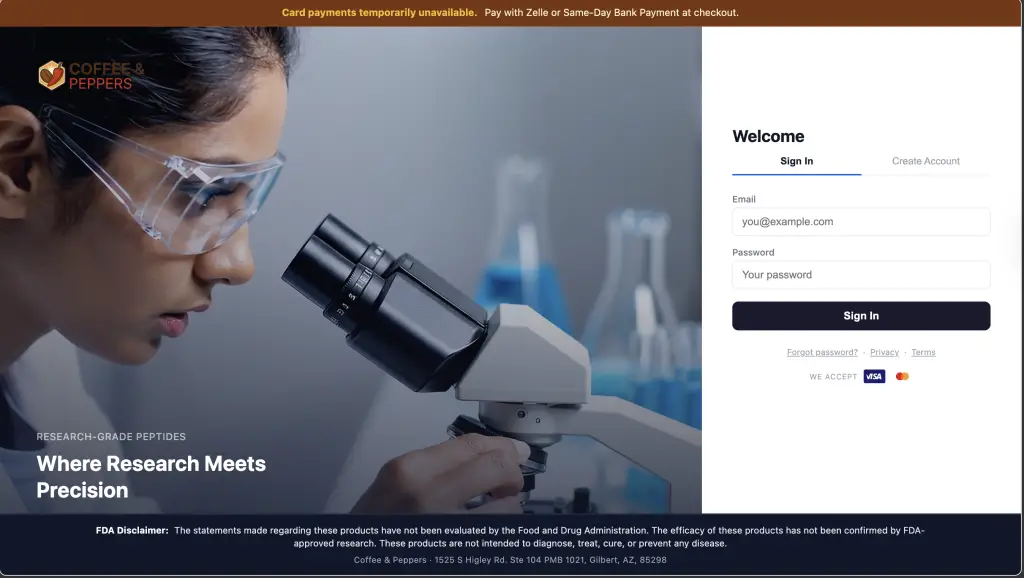
What is the Coffee and Peppers Peptide?
Coffee and Peppers Peptide appears to be a wellness or metabolism-support supplement marketed around combinations involving:
- coffee-derived stimulants
- pepper or thermogenic ingredients
- metabolism support
- appetite-control claims
- peptide-focused branding
The marketing strongly leans into concepts like fat burning, thermogenesis, metabolic activation, energy enhancement, and body transformation.
And once we looked deeper, the product started feeling very similar to many other stimulant-style fat burners already circulating online… just with more modern “peptide” language layered on top.
At its core, it’s a stimulant-oriented wellness supplement… not a scientifically proven fat-loss breakthrough.
How It Claims to Work
The product claims to support weight management by increasing thermogenesis, metabolism, and energy expenditure.
The marketing suggests it may help with appetite control, calorie burning, energy levels, metabolism, and fat-loss support
Some promotional materials also strongly imply users can accelerate body-transformation results with consistent use.
The overall message is basically “boost metabolism and burn more fat naturally”.
Red Flags to Consider
The word “peptide” makes the product sound more advanced than it may be
One thing that immediately stood out was how heavily the branding leaned into peptide terminology. Right now, “peptides” are one of the biggest trends in wellness and fitness marketing because they sound futuristic and science-driven.
But during our research, it wasn’t clear that the product’s marketing confidence matched strong product-specific scientific evidence.
Stimulant effects can be mistaken for fat burning
Many people interpret sensations like sweating, energy spikes, appetite suppression, jitters, and increased heart rate as proof that a supplement is “melting fat.”
But those feelings do not automatically translate into major long-term weight loss.
Thermogenic marketing often exaggerates results
The deeper we looked, the more obvious it became that the advertising strongly leaned into transformation-style promises.
Words like burn, shred, activate, accelerate, and melt fat can create expectations far beyond what most supplements realistically deliver.
Results likely depend far more on lifestyle changes
Most meaningful fat-loss results associated with products like this usually come from calorie control, dieting, exercise, long-term consistency… not the supplement alone.
That distinction often gets minimised in marketing.
Customer experiences appear inconsistent
Some users online describe increased energy or reduced appetite, while others report little noticeable fat-loss difference or unpleasant stimulant effects.
Honestly, that inconsistency is extremely common with thermogenic supplements.
No product-specific clinical validation
During our research, we couldn’t find peer-reviewed human studies proving that Coffee and Peppers Peptide significantly improves fat-loss outcomes.
Does It Really Work?
It may temporarily increase energy or suppress appetite for some users depending on stimulant sensitivity and expectations.
But after comparing the marketing claims to the available evidence, the product does not appear capable of producing the dramatic body-transformation effects implied in many advertisements.
Any noticeable results are likely to depend far more on overall lifestyle habits than the supplement itself.
Pricing
Coffee and Peppers Peptide products are commonly sold between $30–$80, often with bundle discounts and subscription-style promotions.
What To Do If Scammed
If a metabolism supplement starts sounding like a shortcut to effortless fat burning or rapid transformation, it’s usually worth slowing down and separating stimulant effects from actual long-term weight-loss science.
Conclusion
After digging through the claims, ingredient logic, and customer feedback, Coffee and Peppers Peptide felt much more like a standard stimulant-style fat burner than a revolutionary peptide breakthrough.
It’s not necessarily fake, but the marketing clearly pushes the science much further than the available evidence comfortably supports.
In reality, it functions more as a thermogenic wellness supplement using trendy peptide branding… marketed like advanced metabolic technology.
Also read – Is the Zazawin.com Crypto Gaming Platform Legit? 5 Solid Reasons to Avoid This Site