

Peptides have exploded in popularity lately across fitness, anti-ageing, and wellness spaces. Online marketing often frames them as cutting-edge compounds capable of improving recovery, body composition, energy, skin quality, and even longevity.
Ascend BioLabs appears to position itself around peptide-based wellness and performance products marketed toward optimisation, recovery, and physique-focused consumers.
In this review, we dug through the science, marketing style, and broader peptide-industry concerns to see whether Ascend BioLabs appears genuinely evidence-driven or mainly benefits from the growing “biohacking” trend and futuristic wellness marketing.
Key Takeaways
- Markets peptide-related wellness and performance products
- Peptides are heavily hyped in fitness and anti-aging spaces right now
- Some peptides have legitimate scientific research interest
- Evidence varies dramatically depending on the specific peptide involved
- Marketing in this industry often stretches far beyond what’s clinically proven
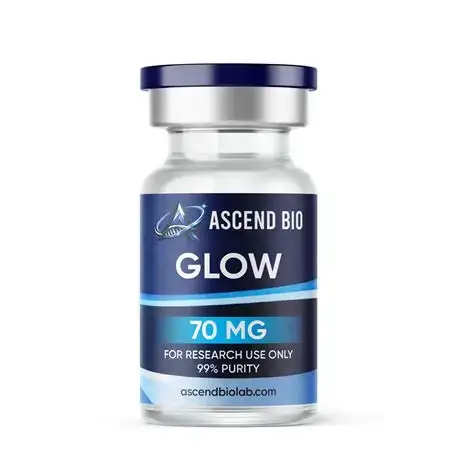
What is the Ascend BioLabs Peptides?
Ascend BioLabs appears to operate in the peptide and wellness space, offering products associated with:
- recovery support
- fitness optimization
- anti-aging marketing
- body composition goals
- wellness enhancement
The branding strongly leans into modern biohacking and performance culture. And once we looked deeper, the biggest issue wasn’t necessarily peptides themselves… it was how aggressively the entire industry often markets them as near-miracle optimisation tools.
Because “peptides” can mean very different things scientifically, depending on the actual compound involved. At its core, this category is a highly hyped wellness and performance niche with extremely mixed levels of scientific evidence.
How It Claims to Work
Peptide-based wellness products are commonly marketed around the idea that certain amino-acid chains may help influence biological processes connected to:
- recovery
- muscle support
- skin health
- metabolism
- energy
- performance
The overall message in this industry is usually something like “optimise your body at a deeper biological level”. And that futuristic framing is a huge part of the appeal.
Red Flags to Consider
The peptide industry is heavily driven by hype right now
One thing that immediately stood out was how aggressively peptides are marketed online as “next-level” wellness tools.
Words like optimization, regeneration, recovery enhancement, longevity support, and biological performance can make products sound much more proven than they actually are.
Influencer marketing often outruns the science
A huge amount of peptide popularity currently comes from:
- fitness influencers
- wellness podcasts
- biohacking communities
- transformation testimonials
rather than large-scale long-term clinical evidence. That gap between hype and research is important to keep in mind.
Not all peptides have equal evidence
One thing we noticed during research is that the term “peptides” gets treated like one unified category.
But scientifically, different peptides can have:
- completely different mechanisms
- different evidence levels
- different safety considerations
- different regulatory concerns
That nuance often disappears in marketing.
Wellness claims can become extremely broad
Depending on the product or promotional material, peptide marketing may hint at support for muscle growth, fat loss, recovery, ageing, energy, cognition, skin quality and sleep.
Whenever one category starts sounding like a solution for nearly every aspect of human performance, it’s worth approaching the claims carefully.
Long-term evidence is often limited
For many peptide-related wellness uses, long-term human data remains limited or still evolving.
That doesn’t automatically make the products ineffective, but it does mean the confidence of the marketing sometimes exceeds the maturity of the evidence.
Does It Really Work?
That depends heavily on the specific peptide involved, the formulation quality, and the actual claim being made.
Some peptide-related approaches may have legitimate research interest in certain medical or recovery contexts.
But after comparing the broader marketing culture to the actual evidence, many wellness claims in this space appear significantly exaggerated.
The industry often markets experimental or limited-evidence concepts like fully established optimisation breakthroughs.
Pricing
Peptide-related wellness products are often sold at premium pricing, with costs varying significantly depending on the compound and marketing positioning.
What To Do If Scammed
If a peptide product starts sounding like a shortcut to total physical or biological optimisation, it’s usually worth slowing down and separating emerging research from aggressive marketing language before spending large amounts of money.
Conclusion
After digging through the peptide industry, scientific evidence, and marketing culture, Ascend BioLabs felt much more like part of the broader biohacking and optimization trend than a clearly proven wellness breakthrough.
That doesn’t automatically mean every product is useless. But the marketing language surrounding peptides often sounds far more settled and scientifically certain than reality comfortably supports.
In practice, this category functions more as a heavily hyped wellness and performance niche built around emerging science, optimisation culture, and futuristic marketing.
Also read – DREO Smart Fan Review: Worth the Hype? My Honest Thoughts After Use