

I bought 1MD Nutrition VisionMD because I spend hours in front of a computer every day, and I wanted something that could help with eye strain while also supporting my long-term eye health.
The formula looked impressive on paper, but after giving it plenty of time, I couldn’t honestly say the results matched my expectations.
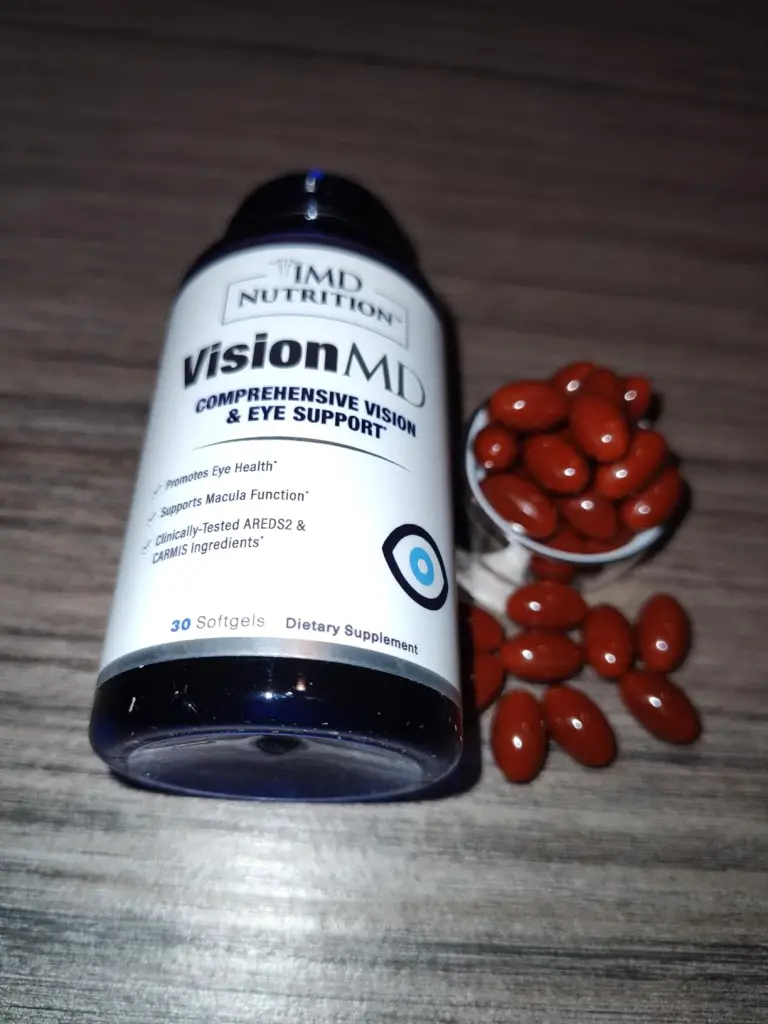
What Is 1MD Nutrition VisionMD Eye Supplement?
1MD Nutrition VisionMD is a daily eye health supplement formulated with lutein, zeaxanthin, astaxanthin, vitamin A, vitamin E, lycopene, and mixed carotenoids. The company says it’s based on nutrients used in the AREDS2 and CARMIS studies and is designed to support macular health, visual clarity, eye comfort, and protection against oxidative stress from aging and prolonged screen time.
Unlike basic eye vitamins, VisionMD focuses heavily on carotenoids that naturally accumulate in the retina and macula, which is one of the reasons it initially caught my attention.
Why I Bought It
Working on a computer for most of the day has definitely taken a toll on my eyes.
By evening, I’d often notice fatigue, occasional dryness, and that familiar feeling where everything just seemed slightly harder to focus on after staring at a screen for hours. When I came across VisionMD, it sounded like exactly the kind of supplement I had been looking for.
The marketing also gave me confidence. References to clinical studies and premium ingredients made it seem like this was more than just another generic eye vitamin.
My Experience Using It
Taking the supplement was easy enough. The softgel wasn’t particularly difficult to swallow, and I didn’t experience any stomach discomfort or obvious side effects while using it.
I also knew going in that eye supplements aren’t supposed to produce overnight results, so I committed to taking it consistently instead of expecting immediate improvements.
As the weeks went by, I kept paying attention to whether my eyes felt less tired after long workdays or whether I noticed clearer vision or improved comfort while using digital devices.
Honestly, the changes were much smaller than I expected.
Some days I thought my eyes felt slightly less fatigued, but the improvement was subtle enough that I couldn’t confidently credit the supplement. My vision didn’t suddenly seem sharper, nighttime glare didn’t become noticeably better, and my daily screen time still left my eyes feeling tired by the end of the day.
By the time I finished the bottle, I was disappointed because the marketing had led me to expect much more noticeable benefits.
Ease of Use
One thing I genuinely appreciated was how simple the supplement was to take.
The softgels were easy enough to incorporate into my daily routine, and I never had to remember multiple doses throughout the day since it only requires one capsule daily.
Pros & Cons
Pros
- Contains well-researched eye health ingredients
- Convenient one-capsule daily dosage
- Easy-to-swallow softgels
- No noticeable side effects in my experience
- Focuses on long-term eye health rather than quick fixes
Cons
- Results were subtle for me
- Expensive compared to many other eye supplements
- Marketing creates high expectations
- Benefits may take months to notice, if at all
- Difficult to tell whether it’s making a meaningful difference
Product Claims vs. Reality
VisionMD is marketed as supporting visual acuity, macular health, eye comfort, reduced digital eye strain, and long-term vision protection through clinically studied ingredients.
I don’t question that the formula contains ingredients with scientific research behind them. Lutein and zeaxanthin, in particular, are well-studied nutrients for eye health.
Where I became less convinced was the expectation of noticeable day-to-day improvements.
For someone expecting a sharper vision or significant relief from screen fatigue, I think the marketing may create expectations that are difficult to consistently meet.
Is It a Scam?
No, I wouldn’t call VisionMD a scam. The ingredients are legitimate, the formulation appears thoughtfully designed, and it’s produced by an established supplement company that provides third-party testing information for the product.
My hesitation comes from the way the benefits are presented.
Much of the company’s promotional material relies on customer surveys conducted among repeat users rather than large clinical trials on the finished product itself. While the individual ingredients have supporting research, that doesn’t necessarily mean every person taking VisionMD will experience the kinds of improvements highlighted in the advertising.
Personally, I felt like I was paying for a premium supplement without seeing premium results.
Customer Feedback
Customer opinions are generally positive, especially among people who take the supplement for several months. Many users report improvements in eye comfort, reduced dryness, and less screen-related fatigue.
At the same time, there are also users who say they noticed very little difference despite consistent use, particularly considering the product’s relatively high price. That mix of reviews felt much closer to my own experience than the overwhelmingly enthusiastic testimonials featured in the marketing.
Alternatives to Consider
- PreserVision AREDS 2
- Ocuvite Adult 50+
- MacuHealth
Conclusion — Would I Recommend It?
I’m on the fence. I don’t think VisionMD is a bad supplement, and I certainly don’t think it’s misleading about what’s inside the bottle. The ingredients are solid, and there’s legitimate science supporting many of them.
My problem is that I expected to feel a noticeable difference, and I simply didn’t.
If you’re looking for a long-term nutritional supplement and understand that the benefits may be gradual, or even impossible to notice, you may still find it worthwhile.
But if you’re hoping to take one capsule a day and suddenly experience clearer vision or dramatically less eye strain, I think you’re likely to end up feeling the same way I did: optimistic at first, then gradually wondering whether it’s really doing enough to justify the cost.
Also read – SleepEase Pro Review: Does It Really Work? Claims vs Reality