

SodaFit Drops are marketed as an easy, natural way to boost metabolism, curb cravings and burn fat, with some sales pages going as far as claiming that the drops can help people lose weight “effortlessly.” The product is taken as a liquid under the tongue or mixed into water, which makes it look like a convenient alternative to weight-loss pills.
But SodaFit turned out to be more complicated than I expected. There isn’t just one clearly defined SodaFit formula online. I found different liquid products carrying the SodaFit name, with substantially different ingredient lists, while a separate SodaFit marketing funnel is associated with the viral “baking soda weight-loss trick.” That made me want to separate the actual ingredients from the marketing and figure out exactly what we’re dealing with.
Key Takeaways
- SodaFit Drops are marketed for weight loss, appetite control and metabolism.
- The version sold through SodaFit’s official-looking site contains ingredients including grape seed, guarana, African mango, green tea and other botanical compounds.
- Another SodaFit liquid listing has a substantially different formula containing ingredients such as maca, African mango, guarana, gymnema, forskolin, raspberry ketones, L-glutamine, L-arginine, GABA and chromium.
- A separate version of the SodaFit marketing campaign is connected to the viral baking-soda weight-loss trick and celebrity-style promotional videos.
- The sales site claims SodaFit supports ketosis, increases metabolism and suppresses appetite, but I couldn’t find a clinical trial showing that SodaFit itself produces significant weight loss.
- The site says the product is manufactured in an FDA-registered facility. That does not mean SodaFit itself is FDA-approved.
- The claim that SodaFit is completely free of side effects is too broad, particularly because some versions contain stimulants such as guarana.
- I wouldn’t buy SodaFit based on the weight-loss promises alone.
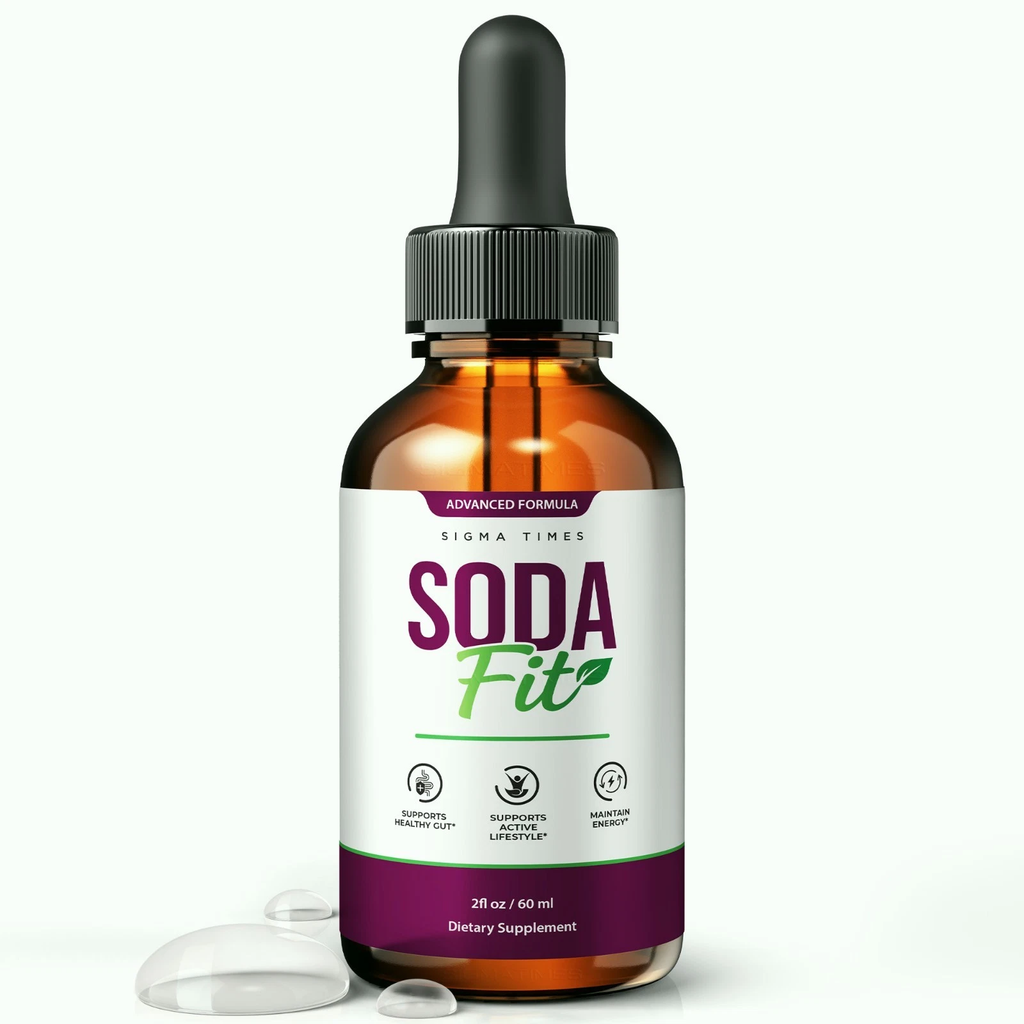
What Is SodaFit Drops?
SodaFit Drops are a liquid dietary supplement marketed primarily toward people trying to lose weight.
The official-looking SodaFit site says the product is designed to:
The recommended use on that site is two full droppers under the tongue before breakfast, or mixed into water.
That’s a pretty straightforward product. What isn’t straightforward is what exactly is in the bottle you’re buying.
My Investigation: Which SodaFit Are We Talking About?
This is the first thing that really caught my attention.
I found a SodaFit liquid product whose ingredient list includes: Grape seed extract, Guarana, African mango, Green tea, Maca, Gymnema, Forskolin, Raspberry ketones, GABA, Ginseng, Chromium, L-arginine, L-glutamine, Beta-alanine, L-tryptophan, Cayenne… among other ingredients.
But the SodaFit site I found lists a different presentation of the formula, highlighting grape seed, guarana and African mango while describing a broader plant-based formulation.
Then there’s another SodaFit version documented by ScamAdviser that contains yet another combination, including maca, African mango, green tea, guarana, L-carnitine and GABA.
That’s not a minor discrepancy. If I’m investigating a supplement, I want to be able to answer:
“What exactly is in SodaFit?”
And right now, the answer depends on which SodaFit you’re looking at.
How Does SodaFit Claim to Work?
The marketing revolves around several mechanisms.
Boosting Metabolism
SodaFit says its ingredients can increase metabolic activity so the body burns more calories.
Increasing Fat Burning
The product claims to promote fat oxidation and ketosis, essentially encouraging the body to use stored fat for energy.
Suppressing Appetite
Several ingredients are positioned as helping control cravings and reduce overeating.
Increasing Energy
Guarana and other ingredients are supposed to provide energy and help users remain active. All of those mechanisms sound plausible enough when presented individually.
But I kept coming back to one question:
Where is the evidence that the complete SodaFit formula actually produces meaningful weight loss?
I couldn’t find it.
What About the Ingredients?
This is where SodaFit gets more interesting. Some of its ingredients aren’t completely made up.
Guarana
Guarana is naturally high in caffeine. That can increase alertness and temporarily increase energy expenditure, which explains why it’s popular in weight-loss supplements.
But caffeine isn’t magic fat-burning powder. Any metabolic effect is generally modest, and the stimulant effect can also cause problems for people who are sensitive to caffeine.
So if SodaFit makes you feel more energetic, that doesn’t necessarily mean it’s melting body fat.
African Mango
African mango seed extract has been investigated for weight management and metabolic health. Some small studies have reported possible effects on body weight and metabolic markers, but the overall evidence isn’t strong enough for me to call African mango a proven weight-loss treatment.
And once again, even positive research on African mango doesn’t prove that SodaFit works.
Green Tea
Green tea extract is one of the most common ingredients in weight-management supplements. Certain green tea compounds can have modest effects on thermogenesis and energy expenditure.
But the effect is nowhere near the dramatic results that weight-loss advertisements often imply.
Gymnema
Gymnema sylvestre has been investigated for glucose metabolism and may influence sugar absorption and appetite.
That’s potentially interesting, but it’s not evidence that Gymnema causes substantial fat loss.
Forskolin
Forskolin is another ingredient frequently marketed as a fat burner. There has been some research into its effects on body composition, but the evidence is limited and inconsistent.
Again, I wouldn’t use its presence as proof that SodaFit works.
Raspberry Ketones
This is one I was particularly sceptical about. Raspberry ketones became extremely popular after being marketed as a natural fat-burning compound.
But the evidence in humans is nowhere near as impressive as the marketing would have you believe. Having raspberry ketones in a supplement doesn’t establish that you’ll lose weight.
The “Baking Soda Weight-Loss Trick”
This is where SodaFit becomes considerably more interesting from a scam-investigation perspective. A separate SodaFit marketing campaign has been associated with videos promoting a supposed baking soda weight-loss trick. The basic funnel starts by promising viewers a cheap homemade recipe involving baking soda and other ordinary kitchen ingredients.
Instead of simply giving them the recipe, the presentation eventually transitions into a supplement pitch. That’s an extremely clever sales strategy.
You’re not initially being asked:
“Would you like to spend $50 on a weight-loss supplement?”
You’re being offered a free trick. Once you’ve invested time watching the video, the seller introduces the idea that ordinary baking soda isn’t enough and that a specially formulated product is needed.
And suddenly, you’re at a checkout page.
Does Baking Soda Burn Fat?
No. Baking soda is sodium bicarbonate. It can neutralise stomach acid, but that doesn’t mean drinking it causes your body to burn stored fat.
There is no established mechanism by which swallowing baking soda makes abdominal fat disappear. So if an advertisement claims:
“Dr. Oz revealed the baking soda trick doctors don’t want you to know,”
I’d immediately start looking for the source of the video rather than accepting the celebrity association as evidence.
Current investigations into this SodaFit funnel found no verified Dr. Oz endorsement of the supposed baking soda weight-loss method.
Red Flags to Consider
The Product Isn’t Consistently Defined
This is probably my biggest problem with SodaFit. Different products carrying the SodaFit name have different formulas.
That means a review saying “SodaFit contains X, Y and Z” can actually be wrong depending on which bottle the reader purchased.
A legitimate supplement brand should make it easy to identify the exact manufacturer, formula and seller. Here, the picture is considerably messier.
The “No Side Effects” Claim
The SodaFit site says:
“SodaFit is natural and does not cause any side effects.”
I don’t like that claim. One documented formula contains guarana, which is a caffeine source.
Caffeine can cause things like:
- Jitters
- Increased heart rate
- Anxiety
- Insomnia
- Headaches
- Digestive discomfort
And supplements containing multiple active botanicals can potentially interact with medications.
So “natural” does not equal “side-effect free.”
The FDA-Registered Facility Language
The SodaFit site emphasizes that the product is manufactured in the United States in an FDA-registered and GMP-certified facility.
That sounds reassuring. But there’s an important distinction:
FDA registration of a manufacturing facility ≠ FDA approval of SodaFit. Dietary supplements aren’t generally approved by the FDA for effectiveness before they are sold.
So I would not interpret that badge as evidence that the FDA has tested SodaFit and determined that it causes weight loss.
“93% of Customers Order Six Bottles”
The website says 93% of customers order six bottles and recommends the six-month package as the best option.
That is a very specific statistic. But I couldn’t find independent evidence verifying it. It’s also a classic example of a sales page using social proof to encourage a larger purchase.
If you haven’t even established whether one bottle works, I wouldn’t let a “93% of customers” statement convince me to buy six.
Countdown and Discount Marketing
SodaFit’s site prominently advertises a limited-time price of $49 per bottle, discounts and a 60-day money-back guarantee.
Other SodaFit pages use urgency tactics and countdown-style offers. A discount isn’t inherently suspicious.
But when it’s combined with dramatic weight-loss promises and a complicated sales funnel, I’d rather take my time and investigate before handing over my card details.
Does SodaFit Actually Work?
This is where I land:
The ingredients may have individual effects, but there isn’t enough evidence to conclude that SodaFit itself causes significant weight loss.
Some ingredients may modestly influence appetite, energy expenditure or glucose metabolism. Guarana can provide caffeine; green tea may have small metabolic effects; African mango and gymnema are interesting research subjects.
But none of that establishes that two droppers of SodaFit will make someone lose substantial amounts of body fat.
And I couldn’t find a good randomised clinical trial on the finished SodaFit product demonstrating meaningful weight loss. That’s the evidence I’d want.
Potential Side Effects
Because the formulas vary, the risks depend on which SodaFit you’re actually taking. Products containing guarana or green tea extract may provide caffeine and could cause stimulant-related side effects.
Other botanical ingredients may affect blood sugar, blood pressure or medication metabolism.
I would be particularly cautious if you:
- Take blood-pressure medication
- Take diabetes medication
- Are sensitive to caffeine
- Are pregnant or breastfeeding
- Have cardiovascular problems
- Take multiple prescription medications
And I wouldn’t assume that a product is safe simply because the label says “100% natural.”
Pricing and Where to Buy
One SodaFit site currently advertises the product at $49 per bottle, with larger packages offering substantially greater discounts. It also advertises a 60-day money-back guarantee.
Other SodaFit listings have shown different prices depending on the seller.
That makes it particularly important to check the exact seller, bottle, ingredient label and total checkout price before ordering.
What To Do If You Were Scammed
If you purchased SodaFit because you were promised dramatic weight loss or because you believed a celebrity had endorsed it, save screenshots of the advertisement.
Keep:
- The original ad
- The sales-page URL
- Your order confirmation
- Payment receipt
- Product label
- Emails from the seller
- Any screenshots showing the promised results
If the product you received isn’t the one advertised, or the seller refuses to honor its refund policy, contact the seller first and keep records of the correspondence.
If unauthorized charges appear, contact your card issuer or payment provider.
Conclusion
SodaFit Drops aren’t necessarily a bottle of completely meaningless ingredients. There are recognizable ingredients here, and several have been studied for things like metabolism, glucose regulation or appetite.
But that’s not enough for me to call SodaFit a proven weight-loss supplement. What bothers me more is the marketing ecosystem surrounding the name.
I found different SodaFit formulas, different sellers and a separate marketing funnel built around the viral baking-soda weight-loss trick. The official-looking site also makes broad claims about boosting metabolism, promoting ketosis and suppressing appetite without providing convincing clinical evidence that the finished product actually delivers meaningful weight loss.
And the “no side effects” and “FDA registered facility” language makes the product sound more medically established than it actually is.
So, is SodaFit a scam? I’d be careful with that word. I don’t have enough evidence to say that every product sold under the SodaFit name is fraudulent.
But I would not trust the viral weight-loss story surrounding it, and I certainly wouldn’t buy six bottles because a sales page tells me that 93% of customers supposedly do the same.
Also read – I Tried the Gluvelessia Hair Growth Roll-On — Worth Trying? My Honest Review