

Mayaverra Drops are marketed as natural lymphatic drainage drops that promise to reduce facial puffiness, swollen-looking ankles and legs, bloating and fluid retention. The company says the plant-based formula helps the body eliminate excess water without using harsh diuretics.
But the more I looked into Mayaverra, the more questions came up around the actual formula, the evidence behind the lymphatic-drainage claims and the company selling it. There are also some pretty serious customer-service complaints surrounding the store. So, are Mayaverra Drops legit? Let’s take a closer look.
Key Takeaways
- Mayaverra is a liquid herbal supplement marketed for lymphatic drainage and fluid retention.
- The formula contains four botanical ingredients, but their individual amounts aren’t disclosed.
- There is no clinical trial showing that the finished Mayaverra formula reduces swelling or improves lymphatic drainage.
- The company’s website is very new and has accumulated poor independent customer feedback.
- The product itself appears to be a generic formula also sold under other names, making the brand’s claims harder to evaluate.
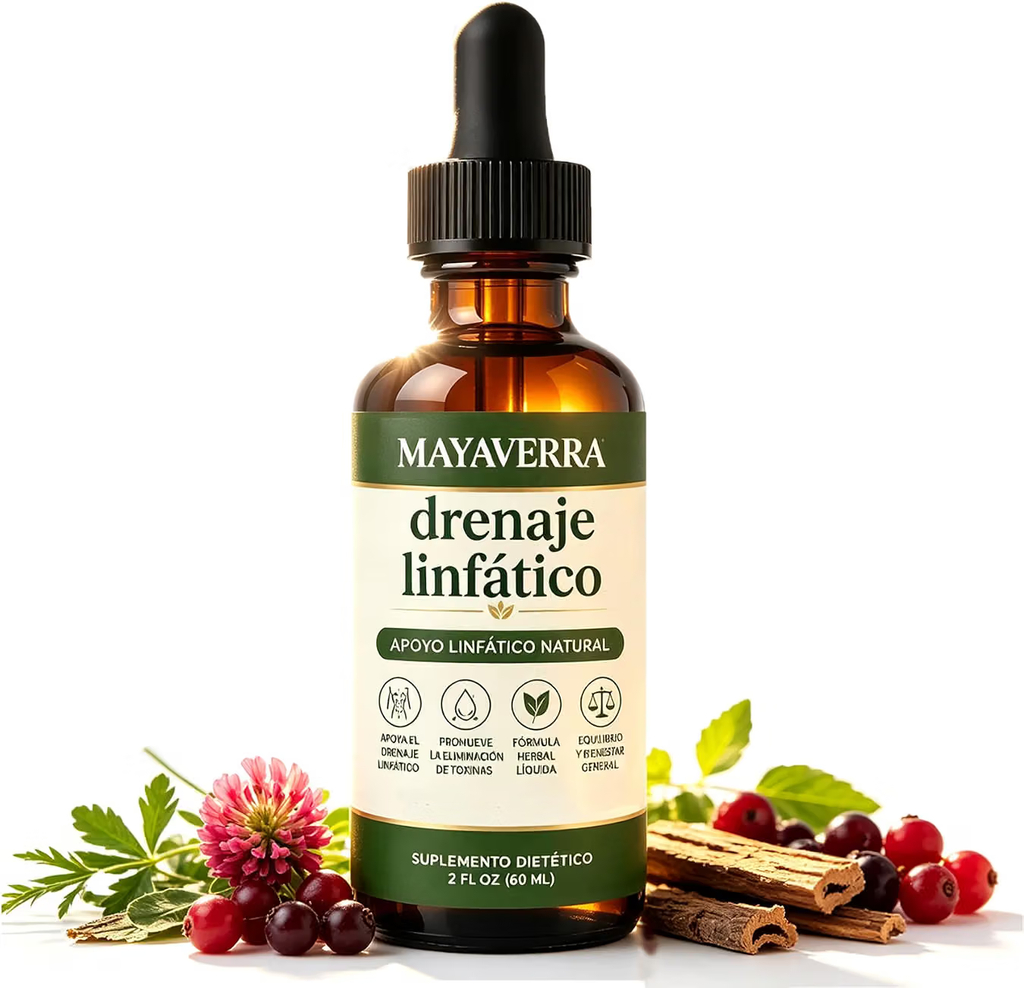
What Are Mayaverra Drops?
Mayaverra Lymphatic Drainage Drops are a liquid botanical supplement designed to be taken once or twice daily. The company recommends adding 1–2 ml to water, tea or juice, or placing the drops directly under the tongue.
The product is marketed primarily toward people who feel bloated, puffy or heavy, particularly around the face, abdomen, legs and ankles. The central promise is that Mayaverra can help the body’s natural lymphatic system move excess fluid and eliminate what the company calls accumulated “waste” or “toxins.”
The company also describes the product as vegan, gluten-free, sugar-free and free from alcohol and harsh diuretics.
Those characteristics may sound appealing, but they don’t establish that the drops actually do what the marketing promises.
How It Claims to Work
Mayaverra says its four-plant formula works in three stages. First, the active ingredients supposedly “unlock” dormant lymphatic channels. Then the formula is said to mobilise excess water trapped in tissues and move it toward the body’s natural elimination pathways. Finally, the company claims that removing this “cellular waste” restores energy and produces clearer-looking skin.
That sounds very scientific at first glance, but there is a problem with the terminology. The lymphatic system isn’t a set of dormant channels waiting for a supplement to switch them on. It is an active part of the body’s circulatory and immune systems. Lymph movement is influenced by muscle activity, breathing, pressure changes and normal physiological processes.
There is no good evidence that drinking Mayaverra “unlocks” sleeping lymphatic channels in the way the sales page describes.
Reality vs. Claims
Mayaverra does contain real medicinal plants, and some have traditional uses related to fluid balance, circulation or inflammation. But traditional use isn’t the same as clinical proof.
The company’s strongest claims are about reducing facial swelling, heavy legs and fluid retention, yet I couldn’t find a clinical trial testing the complete Mayaverra formula for those outcomes.
There’s also an important distinction between temporarily losing water and treating the reason someone is retaining fluid. If someone takes a product that causes increased urination, the scale might move and puffiness might temporarily decrease. That doesn’t mean the product has improved lymphatic function or removed toxins.
And persistent swelling can have many causes, including medication effects and medical conditions. It isn’t something I would automatically treat as ordinary “water weight.”
Let’s Look at the Listed Ingredients
Mayaverra’s current formula contains four botanicals: Galium aparine (cleavers) is traditionally used in herbal medicine for urinary and lymphatic support. However, the clinical evidence supporting its use for treating fluid retention is limited. Stillingia sylvatica (stillingia/root of the queen) has a history in traditional herbal medicine, but there is very little high-quality human evidence establishing that it improves lymphatic drainage. Trifolium pratense (red clover) contains isoflavones and has been studied for several health applications, particularly around menopause. That research doesn’t establish that red clover drains excess lymphatic fluid. Zanthoxylum americanum (prickly ash) has traditional uses involving circulation and digestion, but again, that doesn’t prove it can produce the dramatic drainage effects advertised by Mayaverra.
And there is one important piece missing from the label: individual dosages.
The company names the four plants but doesn’t clearly disclose how much of each is present in the daily serving. That makes it difficult to compare the formula with any research on the individual ingredients.
Red Flags to Consider
The “Lymphatic Detox” Story Is Overstated
Mayaverra repeatedly uses language about “detoxification,” “cellular waste” and excess fluid being trapped in tissues. That’s effective marketing because it gives the impression that something unhealthy is accumulating inside the body and that these drops are going to flush it out.
But your body already has organs and systems responsible for processing and eliminating waste. The lymphatic system also has a specific physiological role that is considerably more complicated than simply carrying “toxins” away.
I would therefore be very cautious about treating Mayaverra as a detox product.
No Finished-Product Clinical Trial
This is probably the biggest issue for me. The company talks about the properties of its individual plants, but I couldn’t find a published clinical trial demonstrating that Mayaverra Drops themselves reduce facial puffiness, swollen legs, bloating or lymphatic fluid retention.
That distinction matters. Research showing that an individual herb has a particular biological effect doesn’t prove that a four-herb liquid containing an undisclosed amount of that ingredient will reproduce the effect.
The Website Is Very New
The Mayaverra domain was registered on March 11, 2026, meaning the store has only a short operating history. A new business isn’t automatically suspicious. Plenty of legitimate companies start new websites.
But in this case, the limited history matters because there is already a substantial amount of negative independent feedback surrounding the store. One recent review of the website reported 53 Trustpilot reviews averaging only 1.8 out of 5, with complaints involving orders, customer service and refunds.
That’s not evidence that every Mayaverra customer has a bad experience, but it’s certainly information I wouldn’t ignore.
The Return Policy Has a Particularly Strange Clause
Mayaverra advertises a 30-day satisfaction guarantee, which sounds reassuring. But the written return policy reportedly says that customers who refuse delivery can receive only 30% of their money back, with the company retaining the other 70%.
That’s an unusually harsh condition. If I order something and decide I don’t want it, I would expect the company’s return policy to explain a straightforward return process. Penalising a customer so heavily for refusing delivery is enough to make me read the refund terms very carefully before ordering.
The Product Isn’t Particularly Unique
I also found Mayaverra Drops being sold on third-party marketplaces alongside very similar products under other names. One eBay listing for the Mayaverra product even includes a buyer review saying the package was supposed to be Mayaverra but arrived as a different product called Lymphora, although the buyer thought the ingredients appeared compatible.
That doesn’t establish that Mayaverra itself is counterfeit. But it does suggest that this type of four-herb liquid formula may be a generic/private-label product rather than a proprietary formulation developed specifically by Mayaverra. That makes the company’s elaborate “three-phase lymphatic detox” story harder to take at face value.
The Review Numbers Are Seller-Controlled
The Mayaverra product page currently claims 4.8/5 and more than 12,000 women trusting the product. Those figures appear directly on the company’s own website.
By contrast, independent review platforms paint a considerably less flattering picture, with complaints about fulfillment, refunds and customer service. That doesn’t prove the company’s on-site testimonials are fake. It does mean I wouldn’t use the 12,000-customer claim as independent evidence that the drops work.
Is Mayaverra Effective?
There is simply not enough evidence for me to call Mayaverra an effective lymphatic-drainage supplement. The ingredients are real, and some have traditional uses related to circulation or fluid balance. But there is no good evidence showing that this particular combination, at the undisclosed doses used in Mayaverra, produces the promised reduction in puffiness or fluid retention.
The company’s claim that the formula can “stimulate dormant lymphatic channels” is also much stronger than what I could substantiate.
If someone happens to feel less bloated after taking it, that doesn’t necessarily mean their lymphatic system has been improved. Changes in hydration, diet, bowel movements and normal fluctuations in water weight can all affect how the body looks and feels.
So my assessment is that Mayaverra is an unproven herbal wellness product rather than a clinically established lymphatic treatment.
Pricing and Where to Buy
The current Mayaverra website lists the drops at around €34.90, discounted from €39.90.
The site also promotes:
- 30-day satisfaction guarantee
- Free shipping promotions
- 40% seasonal-sale messaging
- Vegan, gluten-free and sugar-free formula
The store ships to countries including Spain, Mexico, Chile and the United States.
Given the concerns around the company, I would save screenshots of the product page, price and refund policy before ordering anything.
What To Do If You Already Bought Mayaverra
If you’ve already purchased the drops, keep your order confirmation and photograph the bottle and label when it arrives.Compare the actual ingredients with the formula advertised when you ordered, especially because similar products appear to circulate under different brand names.
If you’re taking medication or have a medical condition associated with swelling or fluid retention, I’d speak with a healthcare professional before using a drainage supplement.
And if you’re experiencing persistent swelling in your face, legs, feet or elsewhere, don’t assume it’s simply excess water that needs to be flushed out. Persistent or unexplained swelling deserves an explanation rather than a detox product.
If you decide the product isn’t for you, follow the company’s formal return process rather than simply refusing the package, given the unusual refund penalty attached to refused deliveries.
Conclusion
Mayaverra Drops are not necessarily a completely fake product. The bottle appears to contain a real four-herb formula, and the ingredients themselves are legitimate plants with histories of traditional use. But that’s about as far as I would take the evidence.
There is no clinical trial showing that Mayaverra improves lymphatic drainage, the individual ingredient doses aren’t disclosed, and the company’s “dormant lymphatic channels” and detoxification story goes well beyond what the available evidence supports.
The store itself also raises concerns, particularly its very recent domain, poor independent customer feedback and unusually restrictive clause for refused deliveries. And the fact that apparently similar formulas are sold under other names makes the product look less unique than the marketing suggests.
My conclusion: I would skip Mayaverra Drops. If you’re dealing with occasional bloating or ordinary fluctuations in water weight, there are much simpler ways to address those issues. If you’re dealing with persistent swelling, I would want to know why it’s happening rather than trying to flush it away with an unproven herbal formula.
Also read – Garmin inReach Mini 3 Plus Review: Is It Worth Buying? I Bought It
[…] Also read – Mayaverra Drops Review: Are These Lymphatic Drainage Drops Legit or a Scam? […]