

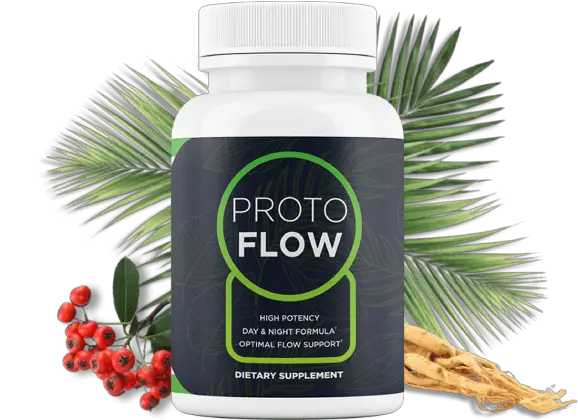
ProtoFlow is marketed as a natural men’s wellness supplement designed to support prostate health, urinary comfort, circulation, stamina and male vitality. Its sales pages present the formula as a broad solution for men dealing with the kind of urinary and prostate problems that become more common with age.
But ProtoFlow gets messy once you start comparing the different versions of its own formula. Some websites list eight botanicals, another lists 12 ingredients with completely different amounts, while another version contains seven familiar prostate ingredients in a proprietary blend. The lack of a consistent label is enough to make me question exactly what customers are buying. So, is ProtoFlow legit? Let’s take a closer look.
Key Takeaways
- ProtoFlow is marketed for prostate, urinary and overall men’s wellness.
- Different ProtoFlow websites list different formulas and different numbers of ingredients, which is a major red flag.
- Some of the ingredients have legitimate research behind them, but that does not prove the finished ProtoFlow formula works.
- Several versions hide individual ingredient amounts inside a proprietary blend.
- I would skip ProtoFlow until the company can provide one consistent, verifiable Supplement Facts label.
What Is ProtoFlow?
ProtoFlow is a capsule-based dietary supplement marketed primarily toward men concerned about prostate and urinary health. The current sales material says it is intended to support normal prostate, bladder and reproductive-system function while also promoting circulation, energy, stamina and male vitality.
That positioning is worth paying attention to because ProtoFlow isn’t really marketed as just a prostate supplement. The formula has been built around a mixture of traditional men’s-health herbs, some of which are associated more with libido, energy or circulation than prostate function.
The product is generally sold in multi-bottle packages, with one current sales page listing $79 per bottle for two bottles, $59 per bottle for three and $49 per bottle for six, along with a 60-day money-back guarantee.
How It Claims to Work
The basic pitch is that ProtoFlow combines several botanicals that supposedly work on different aspects of men’s health at the same time. Saw palmetto is positioned as the prostate ingredient, while Chinese ginseng, damiana, muira puama, epimedium and catuaba are associated with energy, stamina and male vitality. Hawthorn and cayenne are used to support the circulation side of the formula.
The problem is that combining a bunch of herbs doesn’t automatically make the finished product clinically effective. Research on an individual ingredient can tell us something about that ingredient at a particular dose and preparation, but it cannot establish that ProtoFlow produces the same result.
Reality vs. Claims
There is some legitimate science behind the general concept, but it is much less impressive than the marketing makes it sound.
Take saw palmetto, probably the most recognisable prostate ingredient in ProtoFlow. It has been studied extensively for urinary symptoms associated with benign prostatic hyperplasia (BPH), but the evidence is inconsistent. NCCIH currently says a 2023 review of 27 studies found little or no benefit from saw palmetto alone for BPH symptoms.
There is also older research that produced more favourable results, which explains why saw palmetto continues to appear in prostate supplements. A Cochrane review found some improvements in urinary symptoms and flow, while later higher-quality research has been considerably less convincing. In other words, calling saw palmetto “clinically proven” without explaining the disagreement would be misleading.
ProtoFlow’s marketing also leans heavily on the idea that its ingredients have been “scientifically proven.” But the research cited on one of its own websites consists of studies concerning individual ingredients and related mechanisms, rather than a clinical trial demonstrating that the finished ProtoFlow formula improves prostate function.
That’s an important distinction.
Let’s Look at the Listed Ingredients
This is where ProtoFlow becomes particularly difficult to evaluate. One current version lists eight botanicals: saw palmetto, Chinese ginseng, cayenne pepper, damiana, muira puama, epimedium, hawthorn berries and catuaba.
Another ProtoFlow website claims there are 12 fully disclosed ingredients, including hawthorn at 250 mg, epimedium at 250 mg, damiana at 200 mg, muira puama at 200 mg, ginkgo at 120 mg, Chinese ginseng at 120 mg, tribulus at 120 mg, catuaba at 84.5 mg and saw palmetto at 84.5 mg, along with inosine, oat straw, cayenne, vitamin E and niacin.
Yet another label analysis identifies a seven-ingredient proprietary blend containing saw palmetto, beta-sitosterol, Pygeum africanum, pumpkin seed extract, lycopene, zinc and selenium, with none of the individual amounts disclosed.
Those aren’t minor differences. They are completely different formulas. And that is the biggest problem I have with ProtoFlow.
Red Flags to Consider
The Formula Keeps Changing
I would expect one supplement to have one identifiable formula. ProtoFlow doesn’t appear to meet that basic standard. Depending on which website you land on, you’re looking at eight ingredients, 12 ingredients or a seven-ingredient prostate blend.
That makes it impossible to confidently evaluate the product from the advertising alone.
Proprietary Blends Hide the Important Numbers
Even where ProtoFlow does provide an ingredient list, some versions don’t tell you how much of each ingredient you’re actually getting. One independent analysis specifically noted that none of the seven ingredients on the analyzed label had an individual disclosed dose.
That’s a problem because dosage matters enormously when you’re comparing a supplement with clinical research.
For example, many saw palmetto studies have used around 320 mg per day. If a product doesn’t tell you how much saw palmetto is actually inside its proprietary blend, you cannot determine whether you’re getting a research-relevant amount or a token quantity.
“FDA Registered” Doesn’t Mean FDA Approved
ProtoFlow websites describe the product as being manufactured in an FDA-registered facility. That is not the same thing as FDA approval of ProtoFlow.
Dietary supplements are not approved by the FDA for effectiveness before being sold in the way prescription medications are. NCCIH specifically notes this distinction when discussing herbal products.
So I would not treat the FDA language as evidence that ProtoFlow has been independently validated.
The Formula Includes Ingredients With Medication Concerns
The broader ProtoFlow formulas include herbs such as Chinese ginseng and hawthorn. NCCIH notes that Asian ginseng can interact with certain medications, including some blood-pressure drugs, statins and antidepressants, while hawthorn can also interact with medications and has its own safety considerations.
That makes the marketing of a broad multi-herbal product something I would take seriously rather than assuming “natural” automatically means harmless.
Efficacy
ProtoFlow has a plausible ingredient concept, but that’s about as far as I am comfortable taking it.
Saw palmetto has been studied extensively, although the modern evidence is mixed. Pygeum, where it appears in one of the ProtoFlow formulas, has somewhat more encouraging evidence for short-term improvement in certain BPH symptoms, but NCCIH still describes the evidence as limited and notes that studies have been small, short and inconsistent in their preparations and doses.
The bigger issue is that ProtoFlow itself has not been clinically established as an effective finished formula. I couldn’t find a published randomized clinical trial demonstrating that the particular product being sold today improves urinary flow, reduces prostate enlargement or reliably eliminates nighttime urination.
So I wouldn’t say ProtoFlow is completely unsupported. I would say the evidence being used to sell it is mostly ingredient-level evidence, and the actual product doesn’t have the same level of proof.
Pricing and Where to Buy
Current ProtoFlow sales pages advertise packages around $79 per bottle for two bottles, $59 per bottle for three and $49 per bottle for six, with a 60-day money-back guarantee.
The bigger issue for me isn’t necessarily the price. It’s making sure the bottle you’re ordering corresponds to the formula being advertised.
With multiple ProtoFlow websites displaying different ingredient lists, I would save screenshots of the exact product page, ingredient panel, price and refund terms before purchasing.
What To Do If You Already Bought It
If you’ve already purchased ProtoFlow, keep your receipt, order confirmation and screenshots of the claims made at the time of purchase.
If you’re taking medication or have been diagnosed with a prostate or urinary condition, it’s also worth checking the ingredients with a healthcare professional before continuing. This is particularly important with multi-herbal formulas because “natural” does not eliminate the possibility of drug interactions.
And if you’re experiencing persistent urinary symptoms, don’t assume they’re simply an enlarged prostate. Frequent urination, weak flow, pain, blood in the urine or difficulty urinating can have different causes and deserve proper evaluation.
Conclusion
ProtoFlow is not a product I can confidently call a scam based solely on the evidence available. There is a real supplement being marketed under the name, and several of the herbs associated with it have legitimate histories of research.
But the product itself is far too inconsistent for me to recommend it. The number and identity of the ingredients change from one ProtoFlow website to another, some versions conceal individual doses, and the scientific evidence being used to support the product largely comes from studies of individual ingredients rather than ProtoFlow itself.
My conclusion: I would skip ProtoFlow for now. A prostate supplement should not be this difficult to identify. If the company wants customers to trust the formula, the first step should be simple: publish one consistent Supplement Facts panel, disclose the actual doses and identify the manufacturer clearly.
Also read – Funssey.com Review: Fake or Legit Online Shopping Store? Find Out